Numerous mental and physical health advantages come from gardening, whether it’s done inside or outside, such as reducing stress and boosting the intake of fresh fruits and vegetables. Additionally, there’s no greater satisfaction than enjoying food you’ve grown yourself. Moreover, gardening can be done indoors, no matter how small your living area is.
Having your own herbs allows you to have some control over your consumption, as you can track the origin of the plants, the methods used for fertilization, and how fresh they are. If you end up with more herbs than you need, you can preserve them by freezing or drying for future use. Beyond the health advantages, an indoor herb garden can be visually appealing, whether it’s a lush green wall or a subtle touch of nature indoors. To gain some guidance and advice on starting an indoor herb garden, we reached out to Sam Tall, the second-generation owner ofCity Farmers Nursery in San Diego.
Read more: 13 Top Houseplants to Include in Your Kitchen
Learn the Top Herbs for Indoor Cultivation
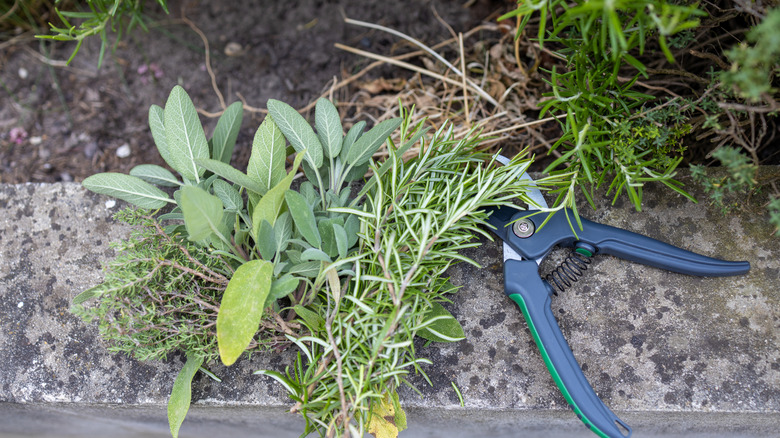
Before we get into the details of expanding your indoor herb garden, it’s important to figure out what you want to grow. Beginners might want to think about which herbs are simplest to cultivate. Basil, mint, parsley, chives, and thyme are often seen as the most straightforward herbs to grow indoors, but each has its own specific requirements. Some herbs do well in direct sunlight, while others prefer a shaded area; some need regular watering, while others can survive without water for longer periods; and some require consistent trimming, while others don’t. Additionally, not every herb is suitable for indoor growth.
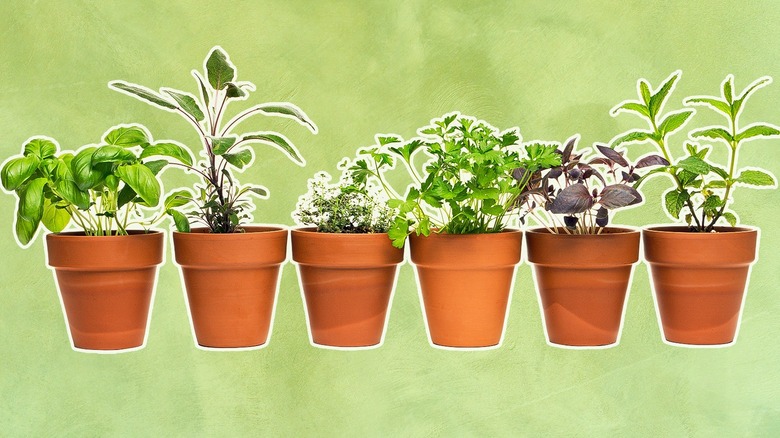
Most of us don’t have large amounts of indoor space, so you’ll need to narrow your selection to herbs that you’ll actually use in your cooking. Parsley, thyme, basil, rosemary, mint, and cilantro are some of themost common culinary herbs. You might also explore herbs that keep well, such as sage, rosemary, thyme, and oregano. After all, this is both a beautiful and practical garden.
Think About Where to Place Your Plants
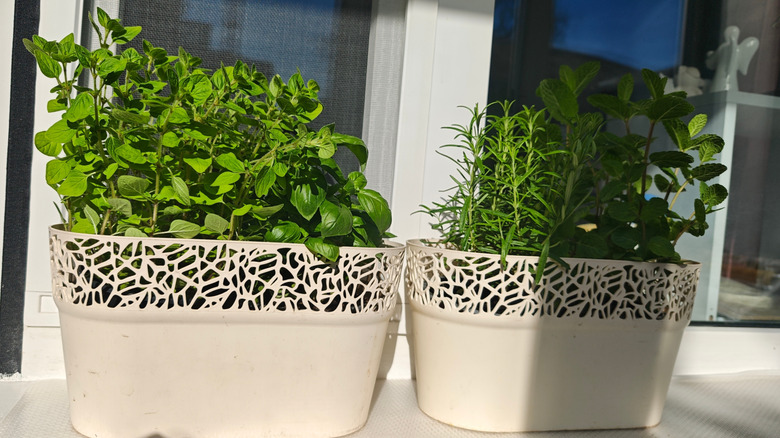
Every plant needs a certain level of sunlight to develop properly. In the northern hemisphere, a window that faces south provides the highest likelihood of receiving full sunlight. If you have an appropriate window, there are numerous varieties of herbs you can cultivate. Basil, thyme, oregano, rosemary, tarragon, bay, lavender, and sage all do well when exposed to direct sunlight..
If you don’t have a window that faces south, there’s still hope. Herbs such as parsley, chives, dill, and mint can grow well in both full sun and partial shade, making them great options for indoor growing or for those living in colder areas with limited daylight. Some herbs, like cilantro and lemon balm, do better in shadier conditions. Additionally, certain herbs need cooler temperatures; for instance, cilantro, dill, and parsley thrive in cooler weather.
All types of herbs need at least four hours of sunlight each day, while plants that thrive in the sun require between six and eight hours. Therefore, selecting the right location for growing is crucial before purchasing plants or seeds.
Make Sure Your Plants Receive Proper Growing Conditions
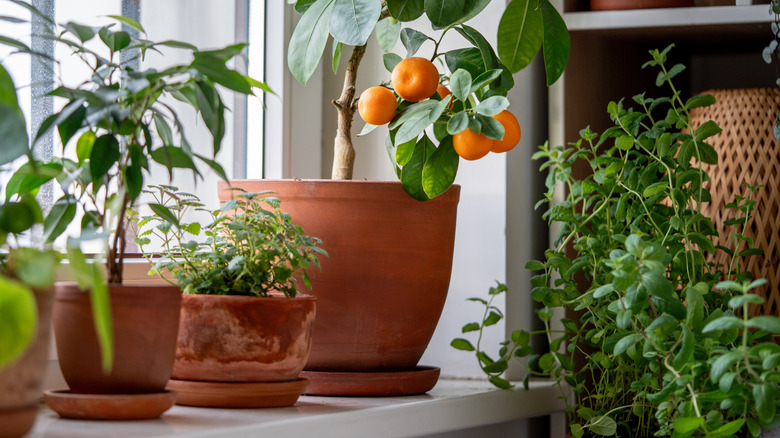
Fed up with not having the ideal sunny area for your indoor herb garden? Don’t worry; there are several techniques you can use to establish those conditions in your darker areas. The first is to rotate your plants every week, moving those at the back and farther from the light closer to the window, turning them 90 degrees so that the light source illuminates all sides and prevents them from becoming stretched out.
Now, plants require light, but it doesn’t have to be direct sunlight. You can utilize reflective surfaces, such as aluminum foil or white walls, to redirect light toward the plants. Additionally, artificial lighting can be used. Sam Tall, owner of City Farmers Nursery, suggests using a reliable brand of full-spectrum lights. “Cheaper LEDs don’t provide the necessary spectrum for herbs to thrive,” he explains.
Select the Appropriate Kind of Soil
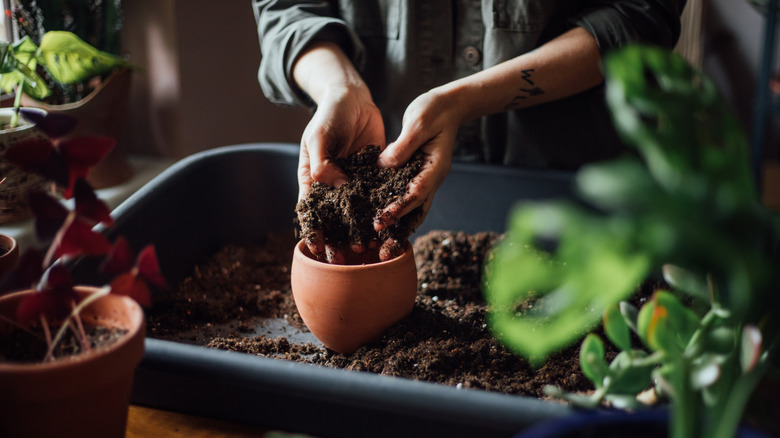
Herbs thrive in soil that is porous and able to hold moisture — you don’t want them to sit in water or become too dry. Target a sandy loam soil with a pH ranging from 5.5 to 8.5. The container you use is also significant, according to Sam Tall. “If the pots are glazed with a glossy finish, go for a soil that drains more effectively. Unfinished clay or plastic pots usually offer good drainage, so standard potting soil is sufficient.”
Now, to add complexity, various herbs need slightly different soil depths, but this challenge is simplified by categorizing herbs into families. The Lamiaceae family consists of rosemary, thyme, sage, oregano, and mint. These plants, typical of the Mediterranean region, favor drier soil and growing environments, and can do well in shallow containers with properly drained soil. The Apiaceae family contains cilantro, cumin, dill, fennel, and parsley. Similar to carrots, their roots grow deep into the ground, meaning they need deeper containers.
Ensure Proper Watering Techniques
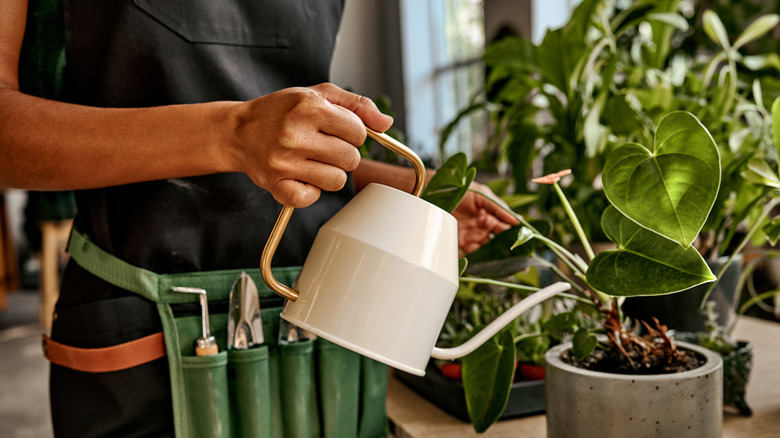
Overwatering can be deadly for indoor plants and herbs. Determining the proper amount of water your plant needs can be challenging. Giving too little will result in the plant dying, while giving too much can lead to the same outcome. Sam Tall states, “With water, less is more. These herbs like to dry out between waterings, so a bit of ‘benign neglect’ is actually beneficial for them.”“Check if a plant requires watering by inserting your finger into the pot. If it feels wet, there’s no need to water it for another day or two; if it’s dry, it’s time to add water. For smaller plants, lift the pot. If it feels extremely light and dry, that indicates it needs hydration. The objective is to keep the soil damp, but not excessively wet or saturated.
When hydrating your indoor herbs, make sure to water the soil instead of the foliage to avoid decay. If your herbs are placed on a tray, check that they do not remain in standing water for longer than 15 minutes.
When and How to Feed Your Herbs
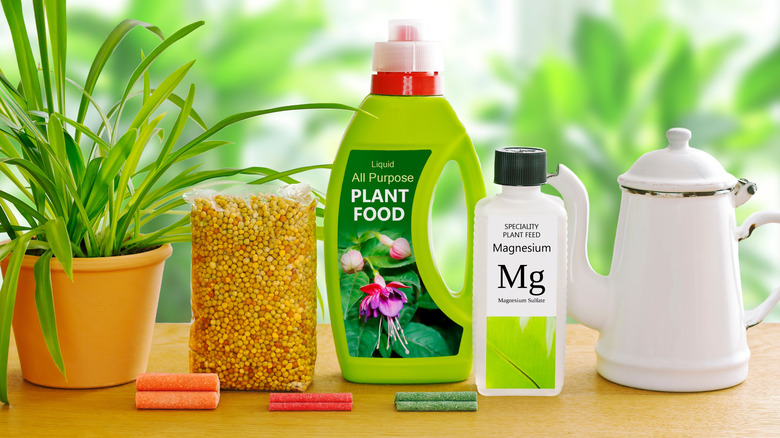
Indoor herbs may lack essential nutrients. The most frequent deficiencies include nitrogen, which leads to yellow leaves, and iron, causing yellowing between the leaf veins. To prevent this, it’s important to regularly nourish your plants.
Sam Tall suggests that his customers look for an organic fertilizer that can be applied every three to four weeks. “If you give your plants too much fertilizer, you’ll definitely notice. The tips could get burned, or the entire plant might suffer,” he explains. “If you’re unsure about the amount to use, it’s better to use less than you think is necessary. You can always add more later, but it’s difficult to remove excess fertilizer once it’s been applied.” Keep in mind that the amount of food your herbs need changes depending on the season. In the summer, when they’re growing quickly, they may need feeding as often as once a week. However, during the colder months, once a month is enough.
When it comes to nourishing your herbs, go organic — because ultimately, you’ll be consuming the final result. Organic fertilizers are typically plant-derived and can include ingredients such as seaweed and nettle. Animal-based fertilizers come from sources like fish, bone meal, and poultry manure. These fertilizers come in different forms, such as powders, pellets, granules, and liquids.
Prune And Refresh Regularly
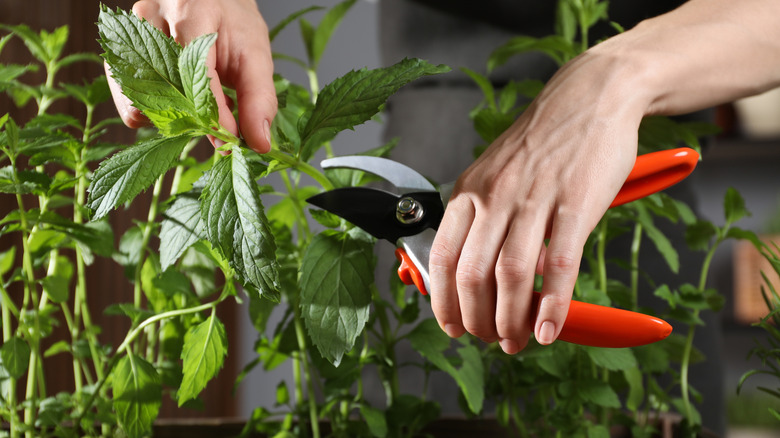
It might appear unusual, but consistently trimming your herbs can lead to denser and more compact growth. You should aim to prevent tall, thin plants that have mostly stems and few leaves. These leggy plants develop when the growing environment isn’t ideal, causing the plant to grow quickly in an effort to reach light. To stop plants from becoming leggy, Sam Tall explains, “Occasionally cutting back just 1 or 2 inches from the tips can prompt the lower nodes to develop and produce new growth, resulting in a more robust appearance.” He also mentions that it’s crucial to remove spent flowers after the plant has finished blooming, as this “fools the plant into believing it hasn’t produced seeds. This can stimulate additional blossoms or new growth.”
Herbs can be either perennial, meaning they live for multiple years, or annual. Outdoor-grown annual herbs usually die off during the winter and must be replanted in the spring. When grown indoors, some annual herbs may survive for up to a year, but they will eventually need to be replaced. Basil, cilantro, and dill are commonly considered annual herbs, so if they appear weak or unhealthy, it might be time to plant new ones.
Reduce Expenses by Cultivating Your Plants from Seed
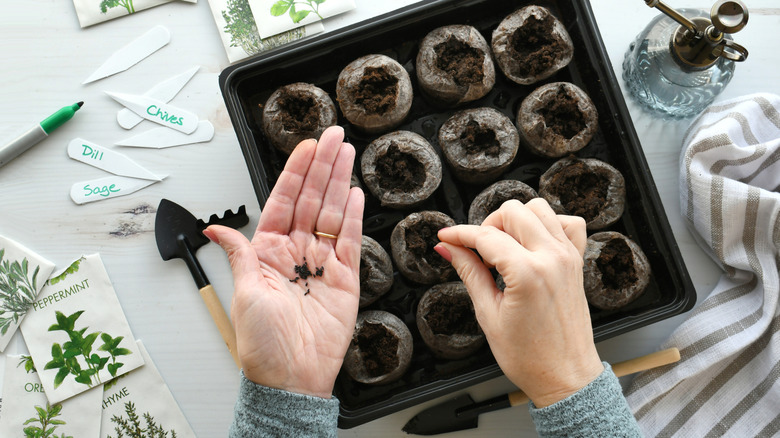
Starting an indoor herb garden can be expensive. By the time you purchase containers, soil, and fertilizer, you may find yourself with a significant expense. Purchasing herb seedlings can add to the cost. A more budget-friendly alternative is tocultivate your own from seeds.
You can purchase seeds at low cost from various stores or gardening centers. To start planting, just fill a container with soil, press it down until it’s even, scatter some seeds, and then cover them lightly with another layer of soil. Gently water using a fine mist, put them in a warm and sunny area, and you’re all set. Make sure to label your seedlings, as it’s easy to confuse them if you’re growing multiple types. Keep the soil damp. When the seedlings are large enough to handle, transfer them into individual pots. Over time, you’ll have your own herbs for much less than buying seedlings.
Propagate Cuttings or Plant Plug Plants
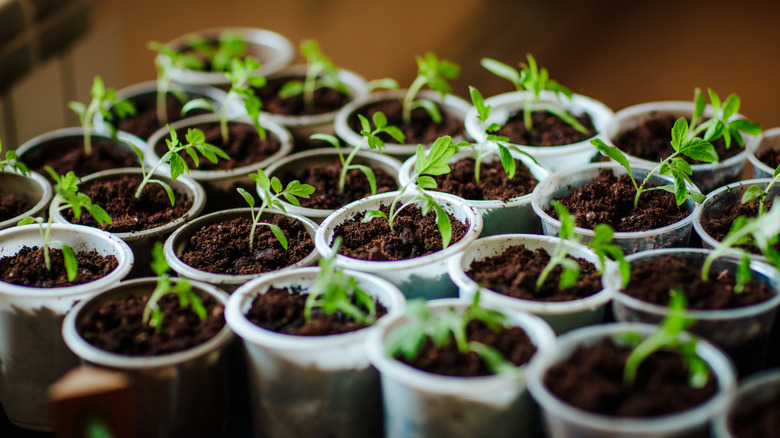
Young plants can be more advantageous than seeds, particularly for those new to gardening. “For beginners, I suggest starting with plants that are already growing,” says Sam Tall. “It’s not the most cost-effective option, but it provides a head start and helps you understand the plants better.”
You have the option to purchase herbs as seedlings or young plants known as plug plants, which can be moved into separate pots. Purchasing plug plants removes the hassle of starting from seeds. Alternatively, you canregrow store-bought herbs; the “living herbs” found in the supermarket can be separated into individual plants or smaller clusters and cultivated in their own containers.
Replicate Optimal Conditions During Winter
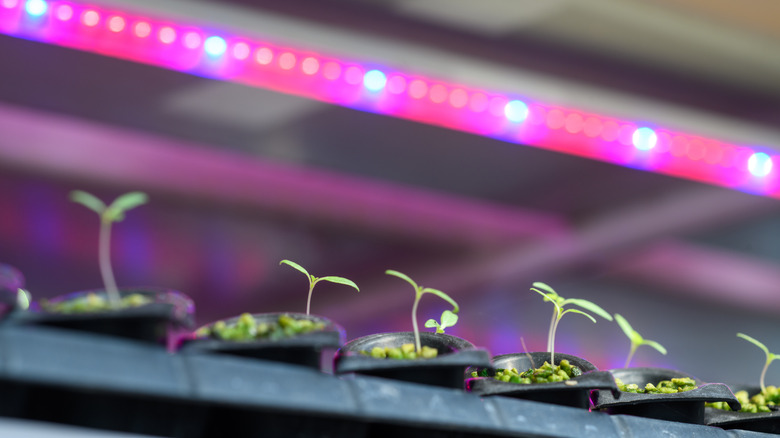
The secret to maintaining your herbs through the winter is to recreate the best outdoor growing conditions. You should ensure your plants receive at least four hours of sunlight each day and maintain temperatures between 65 F and 75 F. In addition to checking the room’s temperature, pay attention to where you place your plants. If they are on a cold windowsill or near a heater, you might need to move them to a more suitable location..
If your herbs are having difficulty during the long winter nights, think about incorporating LED grow lights to meet their light needs. Plants use light to generate energy through photosynthesis. However, not every type of light is equal. Natural sunlight contains a range of light colors, but for plant development, red and blue light are the most crucial. When setting up lighting for indoor plants, just using a regular desk lamp won’t be enough. You can install LED or fluorescent lights that either replicate sunlight or offer blue light, which helps plants process energy, along with red light, which supports plant growth and flowering.
Keep Pests At Bay
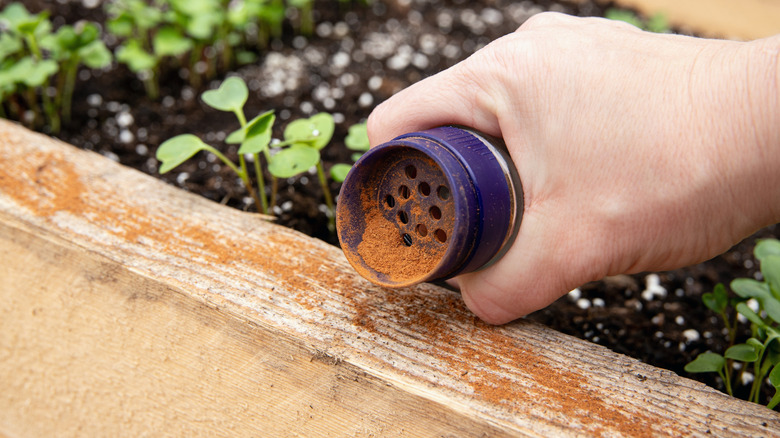
Even if your plants are inside, they can still be affected by pests. These unwanted visitors can eat your herbs before you notice. Typical pests are aphids, which target new leaves, and spider mites, which live on the bottom of leaves and cause harm.
Considering that you are cultivating herbs for consumption, it’s best to steer clear of the simplest approach, which involves using chemicals on the plants. Rather, it’s crucial to look for alternative, chemical-free methods. The most effective, though more labor-intensive, technique is to eliminate pests by hand. Frequent checks help you detect pests when the infestation is still minor – you can then remove them manually or with a pair of tweezers. If the number of pests is too high to handle this way, then trycinnamon powder, neem oil, rubbing alcohol, or soapy water.
Be Cautious While Picking Your Herbs
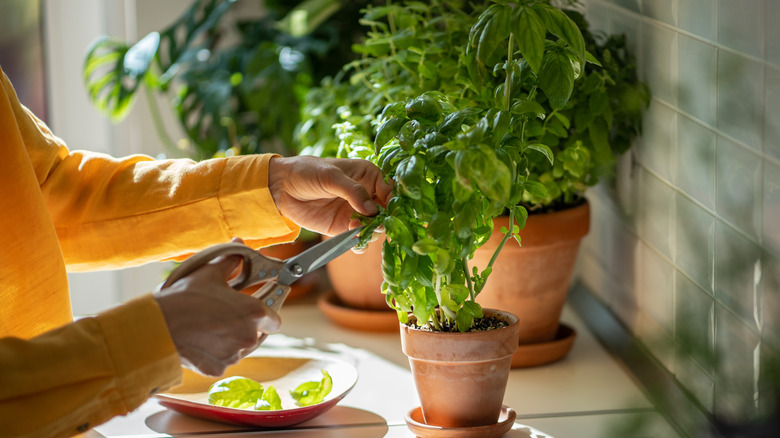
After they have completed their growth, indoor herbs can be picked whenever desired. Although it’s wonderful to use fresh herbs in your cooking, you should never remove more than one-third of the plant at once, as this ensures the plant can continue to perform photosynthesis and keep generating tasty leaves..
Sam Tall suggests watering plants a few hours prior to harvesting the leaves, as it “ensures they are properly hydrated and have optimal moisture levels.” Various herbs require different harvesting techniques. For instance, with basil, it’s best to pick from the top of the plant to promote a bushy growth. In contrast, for parsley and cilantro, you should cut close to the base of the stem, starting from the outer parts of the plant.
Keep Herbs by Drying or Freezing Them
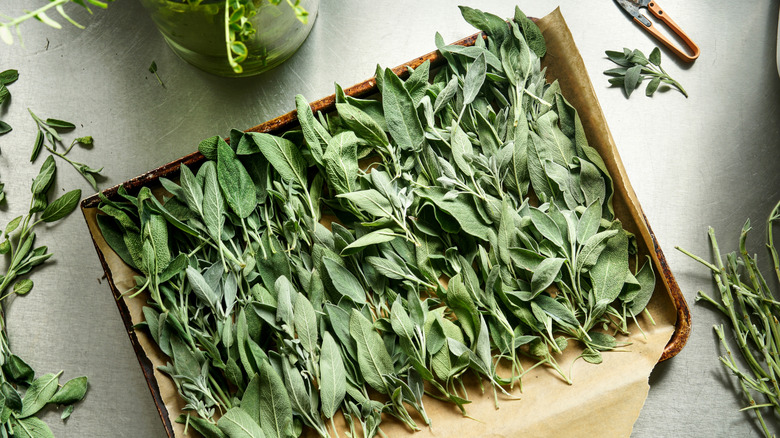
One of the top advantages of using herbs is their capacity to be preserved for future use. Mature, healthy herbs can yield a large amount of leaves—more than a family can consume—so understanding how to store them is an excellent method to enjoy them all year round. Freshherbs can be harvested and kept storedin a container of water, similar to fresh-cut flowers. To extend the lifespan of your herbs, you can employ one of two techniques: drying or freezing.
To dehydrate your herbs, group them into small bundles and secure the stems with a string. After that, keep them in a place that is warm, dry, and has good air circulation. If you’re looking for a quicker method, you can use a microwave by laying the leaves on a paper towel and heating them in 20-second bursts, monitoring closely until they are completely dry. Herbs are prepared for storage once they are dry and fragile — at this stage, they should be placed in sealed containers and can last up to a year.
You should briefly cook your herbs before storing them in the freezer. Additionally, you can place them in freezer-safe bags, chop them up, make herb ice cubes, or try something more creative by incorporating them into butter.
Experiment with Unique Ways to Showcase Your Plants
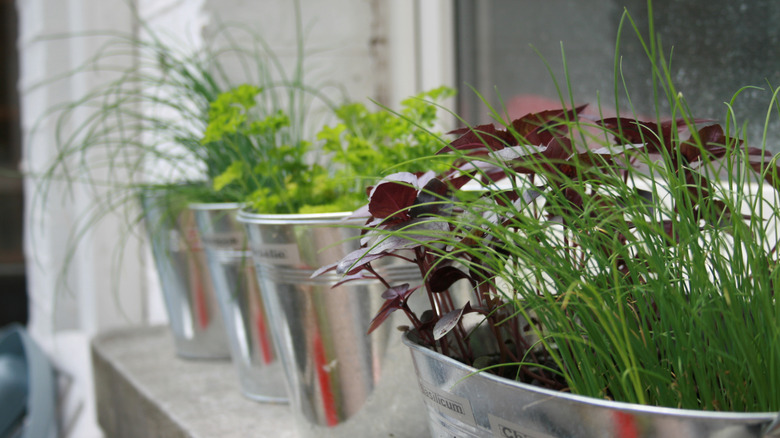
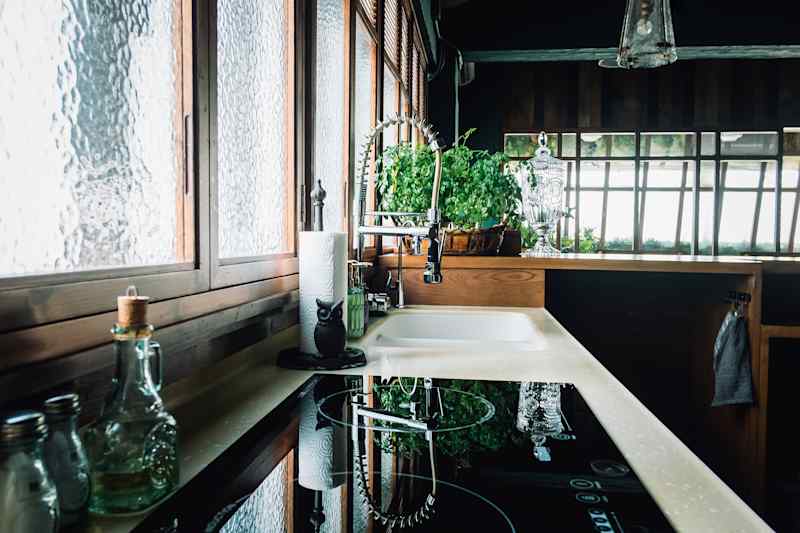
Herbs are delightful to consume and can enhance any dish with their flavor and rich scent, but one of the advantages of cultivating them at home is their visual appeal. A simple jar of basil on a windowsill can bring a touch of outdoor happiness indoors, but you can elevate the experience by being creative with how you arrange your herb garden.
Consider designing multiple layers within the space. You might utilize stepped platforms, shelves, suspended planters, or wall-mounted structures to enhance the visual appeal of the area. Be imaginative with your containers, such as old mugs, teapots, bowls, vases, and jars. These can all be reused to bring vibrancy and charm to indoor green spaces. You might also opt for a vertical garden system, which will offer an impressive arrangement of herbs inside your home, enhance the atmosphere by placing fairy lights among the pots, or establish a sense of calm by placing candles near your plants.
Create a Theme-Based Herb Garden
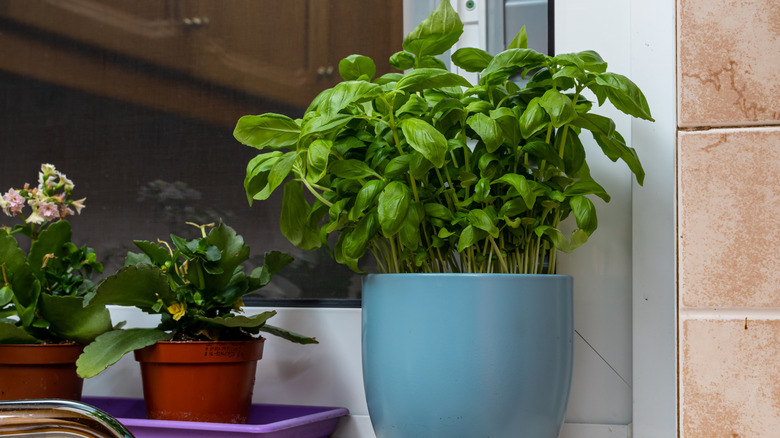
Go a step further by developing a theme for your herb garden. You can connect it with other features in your kitchen or surroundings. If you reside near the ocean, consider choosing a Mediterranean theme ––think GreeceWith its blue and white color scheme and classic urns, or Spain featuring a line of terracotta pots and a lemon tree? You can expand your theme by choosing plants that are commonly grown in the southern Mediterranean, like rosemary, oregano, dill, and mint.
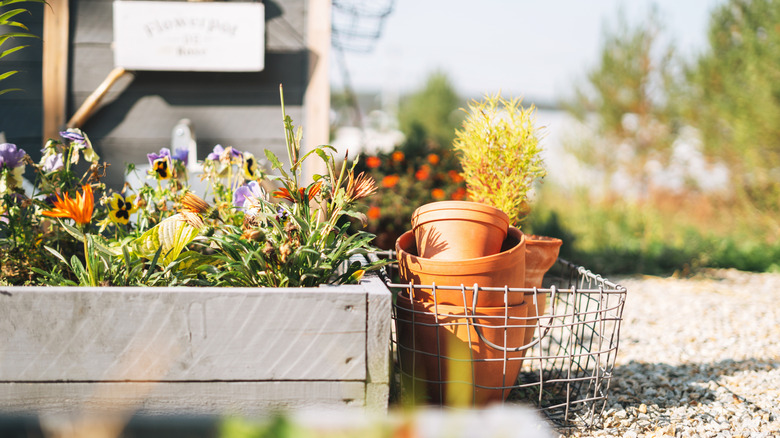
If you own a warm cabin, choose a rustic style with wooden bins, or arrange plants on used crates. Utilize items you already possess, like varying sized logs or a tree branch adorned with fairy lights. If you reside in the city, think about a simple or industrial look using metal or copper pots, sticking to a black and white color scheme, and choosing containers that are all the same size.
Read the original article on Tasting Table.