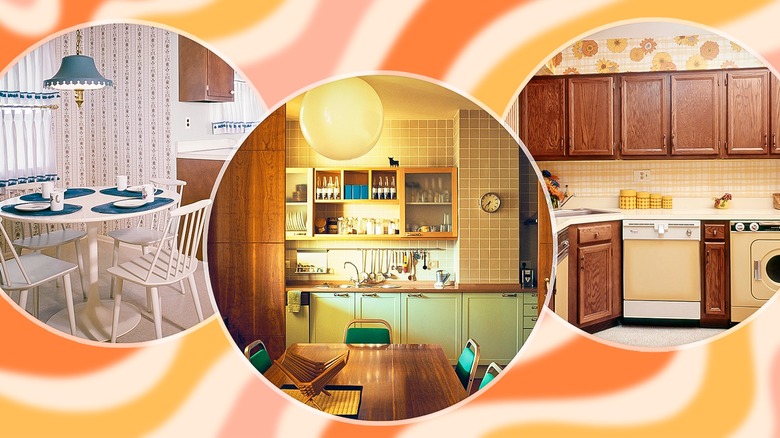
The 1970s gave us disco, the end of the Beatles, and Watergate. The decade also gave us a home decor style that one might describe as warm, bold, earthy, and even kitschy. While it certainly isn’t everyone’s cup of Fresca, the aesthetic has experienced a major comeback in recent years, especially in kitchens. If you’d like to add a little grooviness to your modern-day kitchen, there are a number of ways to do just that without gutting the whole space. Maybe you’d like to add some eye-catching patterned tile or flooring to the room. Or maybe you prefer to seek out vintage products to bring in a whimsical touch. Or maybe you want all of the above.
You’re likely to find some very ’70s pieces at thrift stores or even online. If you’re lucky, you or a family member might already own some of these things. Some are bold and funky, while others are more nuanced and not so in-your-face, allowing you to find items that suit your preferences. Can you dig it?
Read more: 7 Vintage Candy Bars No One Remembers Anymore
Don’t Forget The Bold Patterns
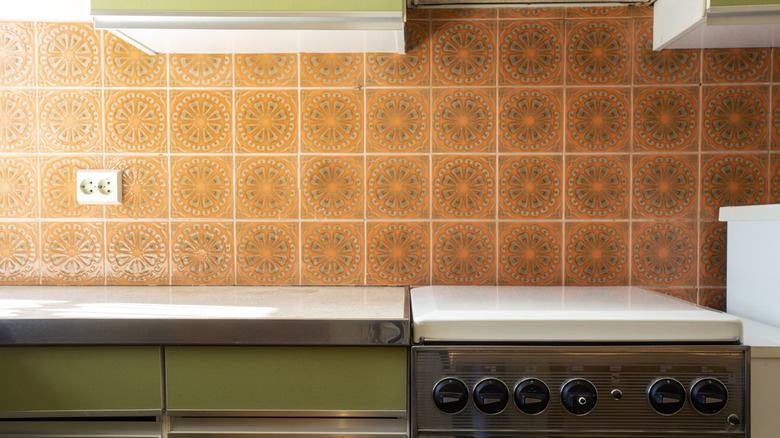
Let’s begin with one of the more obvious elements: the daring designs and patterns associated with the ’70s. Luckily, there are plenty of items to pick from, so you can find an option no matter what part of the kitchen you’re focusing on. If you are ready to not only make a big statement but take on a bigger project, then opt for putting in geometric wallpaper or tiles.
The boldness of a geometric floor tile can really shine if you combine it with more subtle elements like wooden chairs or a solid colored table — just so everything works together, rather than clashing. You could pick out a couple of colors from the design to keep the kitchen cohesive. Try matching the green and orange notes from the tiling to use as place mats or napkins, for example.
If you prefer a more floral look for your wallpaper, curtains, paintings, or backsplash, then go for it. Match the bright hues of the pattern throughout your kitchen, like pairing the orange and yellow in the floral design with similarly colored mixing bowls and tableware to tie it together.
Decorate With Macrame
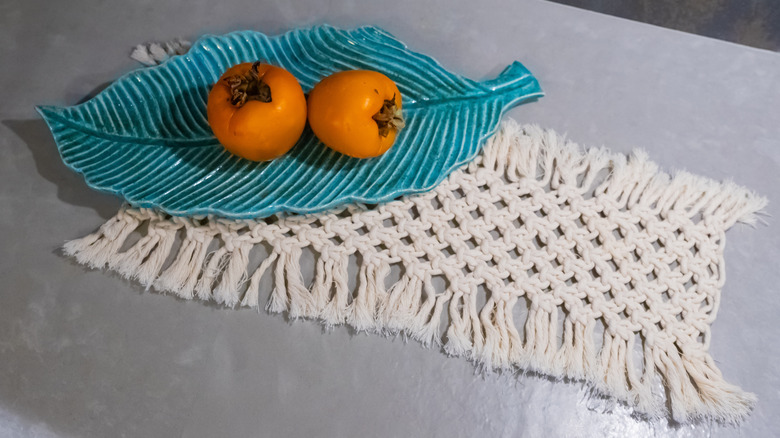
Get crafty and incorporate macrame throughout your kitchen to give it a ’70s look. There are a lot of ways to style it, so it’s a wonderful decor option when you want something that’s more understated than, say, a loud and colorful tapestry. It can be as simple as using a macrame plant hanger to show off your beloved plants, which is something you can easily find at retail stores. While this is still popular today, never forget that it was a very 1970s decor element.
There are a lot of ways to add macrame to your kitchen. You can procure a macrame spice rack, utensil holder, or even curtains. Go for a macrame wall hanging when you want something that doubles as a decoration, rather than something purely functional. If you feel up to it, you can totally DIY it and make it yourself. This allows you to create something you might not otherwise be able to buy; plus, you could incorporate more colors rather than the standard neutral palette.
Bring Back Ceramic Cookie Jars
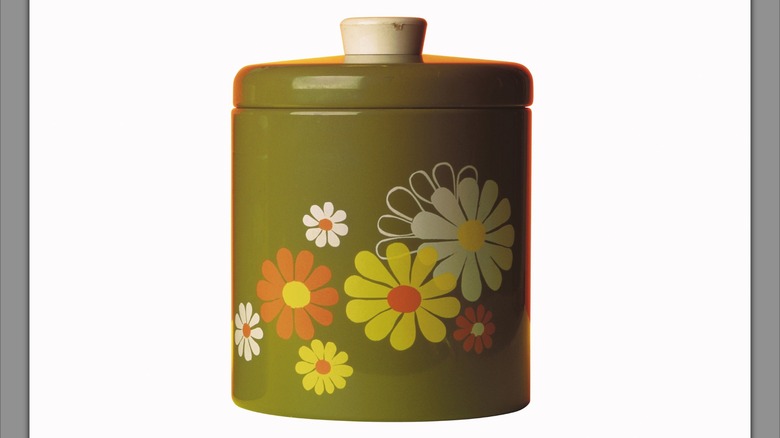
If you want a very 1970s accessory for your kitchen that does not take up too much space but still can make a splash, look for a vintage ceramic cookie jar. As far as we’re concerned, you cannot go wrong with a vibrant and quintessentially ’70s cookie jar. It can’t hurt to add a dash of whimsy to your kitchen. That said, if you prefer a cookie jar that’s more on the understated side, follow your truth. Wouldn’t you know it, there’s a wide range of options to choose from.
Try a fiery burnt orange cookie jar set or a cute frog one to put on display. Or if you still prefer something a little more subtle, opt for white or neutral jars with smaller pops of color. You may be able to find some delightful pieces at the thrift store, and there are a lot online, too.
Pick Earth Tone Accessories
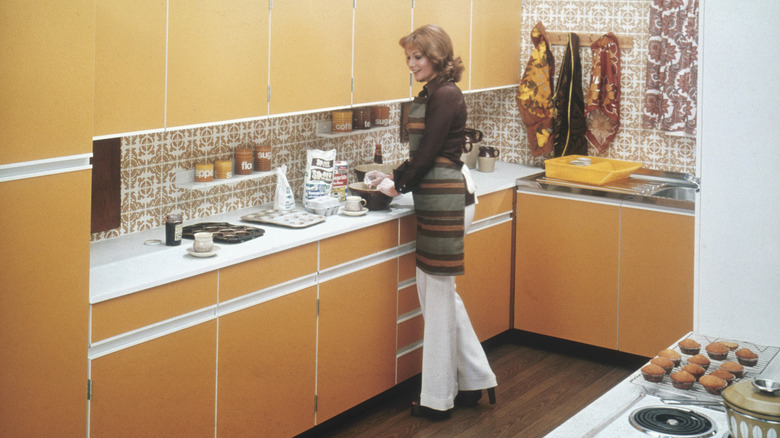
Pull inspiration from the ’70s by using earth tones throughout your kitchen. Earth tones are, as the name implies, colors that you can find in nature. It’s not just green plants and blue skies, although these are beautiful colors that you’ll see in many ’70s kitchens. It can also be shades of red, orange, brown, yellow, cream, and more. We’ve mentioned some earth tones earlier, such as a yellow cookie jar, deep blue kitchen tiles, or the light brown macrame wall hanging.
But there are so many options and ways you can add these to your kitchen. You can fixate on one specific color or bring a vibrant array to the room. For a one-color option, try an avocado green wall and cabinets — it’ll certainly draw attention from any visitor. For multi-colors, you could opt for a fun wallpaper, say a yellow and avocado green floral one. Find earth-toned table cloths, dishes, ceramic pieces, or tiles to add to your kitchen. Blend these with shades of brown or wood accents to get into the ’70s spirit.
Seek Out Wicker Or Rattan Decor
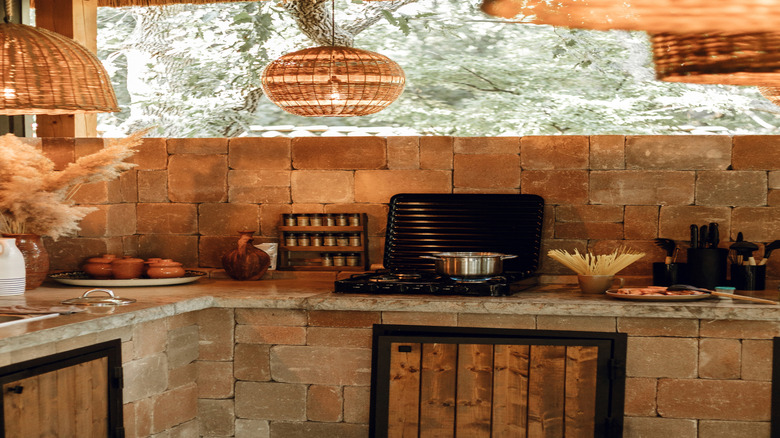
If you want to really dig into the earthy look of the 1970s, then wicker and rattan are a top option. This is also a radical decor element when you don’t want something ultra colorful or patterned. This can work seamlessly in a more modern or minimalistic kitchen, but you can certainly incorporate it with daring, bright items if you wish. You can easily find these at modern stores as well as thrift shops or estate sales. You can use anything from a rattan bar cart to barstools to a fruit basket to bring life to your kitchen.
Wicker or rattan baskets are great for storing and hiding larger items in the kitchen and dining area. You can even use it as a planter as long as you have the plant in a plastic container that doesn’t drain onto the rattan. Try using wicker storage containers for your canned or jarred goods, or brighten the area by using rattan pendant light fixtures. This is one of the more adaptable ways to integrate ’70s style into your kitchen, whether you want to go big or keep it minimal.
Incorporate Wood Elements
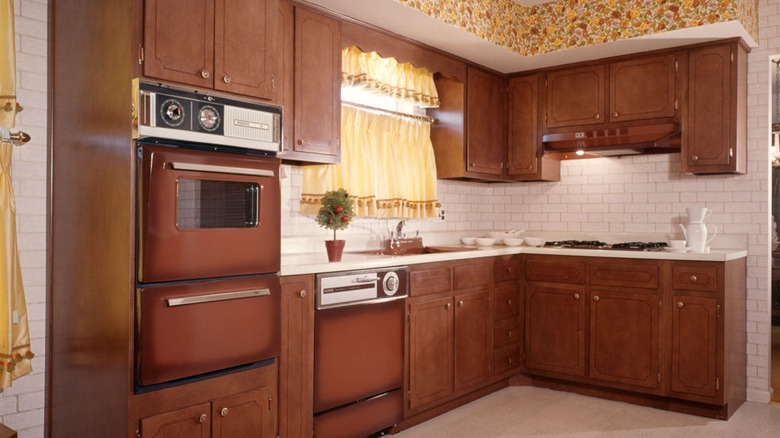
Wood is yet another one of the easiest ways to create a ’70s vibe in your kitchen. Both new and used items are widely available for purchase, and it’s not too tricky to find ways to include it in your dining area. You could go for a full-on wood cabinet and countertop, something you’ll see in a lot of 1970s homes (particularly darker wood stains).
If an all-wood remodel is out of the budget, then there are a number of other ways to bring the natural look into the kitchen. For starters, you can find wooden kitchen decor items at Target, like acacia trays to set your favorite vintage dishes or mugs on. You could include wood serving bowls, wooden salt and pepper shakers, a wood and rattan hybrid dining chair, and more. Find a spirited and colorful ’70s print and then thrift a wooden frame to place it in to create a beautiful decor piece, or even highlight the wood accents you already have in your home. There are a lot of outdated decor elements to avoid in your kitchen, but wood is a must for a ’70s-inspired room.
When In Doubt, Add Mushroom
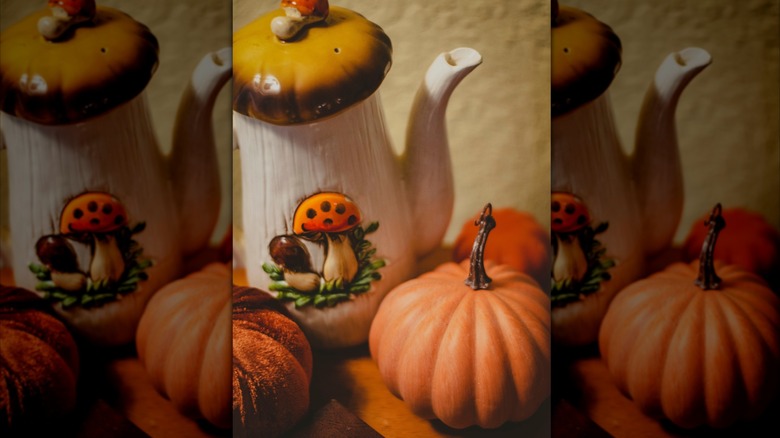
If there’s one thing that screams “1970s kitchen,” it is the ever-delightful mushroom motif. It plays on the woodsy aesthetic, often using those earth tone colors that we previously mentioned — think dark orange, mustard yellow, browns, greens, and reds. Whether you choose a piece that features a realistic-looking mushroom print or a more cutesy illustration, it’s sure to add a splash of vintage charm to your space. A mushroom cookie jar or ceramic canister is always a hit, and ceramic or glass mushroom figurines can be a great way to bring a little fun to a shelf, spice rack, or counter.
You should also be able to find mugs, plates, placemats, botanical prints, and more with mushrooms on them fairly easily. If you do some digging online or even at the thrift store, you’ll be surprised at how many mushroom items you can find. If you’re lucky, you might even find a full set of groovy mushroom canisters or kitchenware.
Display A Rotary Phone
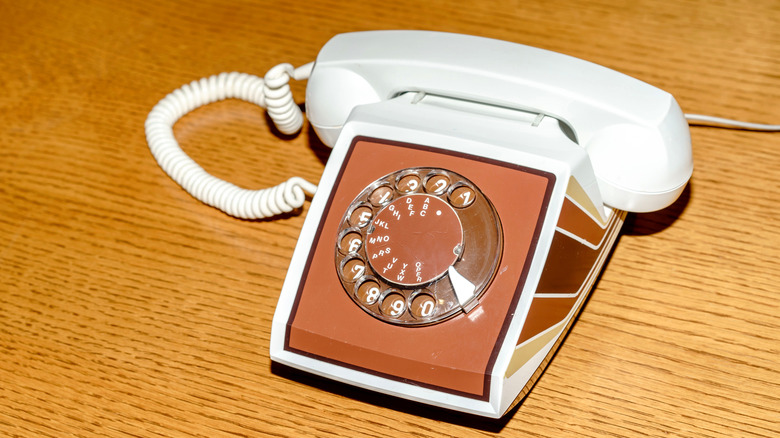
Okay, we realize home landlines have been all but phased out, but hear us out with this one. If you want to draw on the retro styling of a ’70s home, then you can’t forget about the rotary phone. These should be pretty easy to source at thrift stores and secondhand shops. However, if you want to go a step up, you can opt for a wall-mounted rotary phone, although this may be slightly more difficult to locate. It adds that retro charm, often in those earthy colors that we know and love.
The landline home phone harkens back to a simpler time without the chaos of the internet and social media — just two people chatting on a phone about work, school, weekend plans, and so on. You don’t necessarily have to use it (if you want to, you’d need a landline or would have to do some finessing); it can simply be a decorative vintage item to display on a kitchen shelf or countertop, right next to your everyday blend or coffee maker.
Add some greenery to liven up the room.
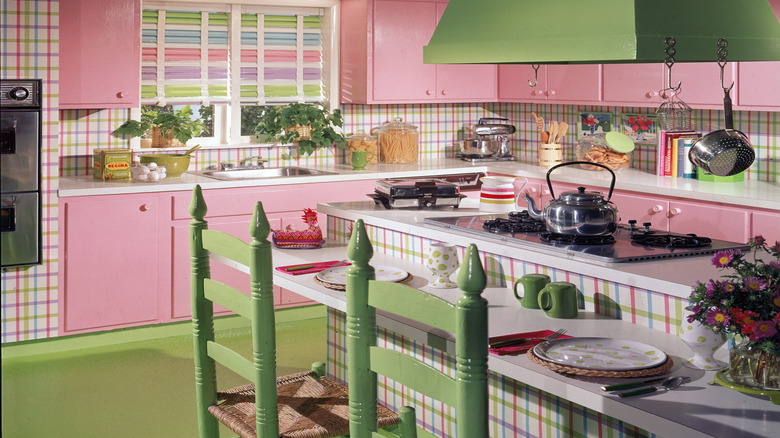
Obviously, plants are not an exclusively ’70s thing by any stretch of the imagination. That said, your leafy houseplants can certainly be arranged in a very groovy way. Consider materials like wicker when selecting a basket to host your larger plants or opt for a chic macrame plant holder for smaller potted greens. There are a variety of houseplants that are best to add to your kitchen, like a snake plant, because it’s easy to take care of.
To capture the aesthetic, a handful of plants will do, but to fully embrace the 1970s kitchen vibe, don’t hold back. Fill your windowsill with plants. Place several more on the countertop and any exposed shelves. For a varied yet equally impressive touch, consider adding potted flowers. We’ve observed retro kitchens featuring plants suspended from pot racks; however, it’s best to use smaller, lighter plants for this purpose (around the weight of a pot). Ferns, notably, were a common choice during that era.
Use Amber Glassware
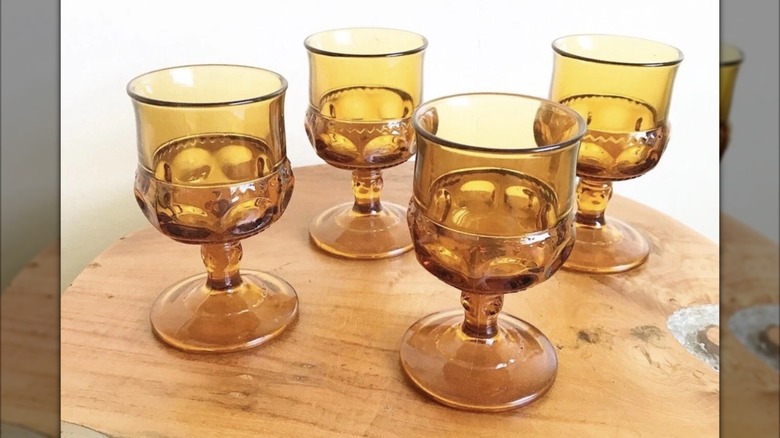
Amber glassware is a tell-tale sign of the 1970s, but it was popular long before that, too. And it’s still something you can track down relatively easily, whether you buy it new from a retail shop or at a second-hand store. If you actually want to use the glassware for food and drinks, then you may want to opt for new products; vintage glassware is known to often contain lead.
If you’re wondering about the safety of an older item, test it for lead before using it for food. If lead is present, use it for decoration only, such as displaying it on a floating shelf with other 70s-era items like mushroom figurines and vintage rotary phones. If you discover some lead-free pieces, they can be fun for serving meals or enjoying cocktails. Not only are they stylish, but they also look great against the earth tones, wood, or wicker and rattan elements you might have in your space.
Put away your mugs and cherished possessions.
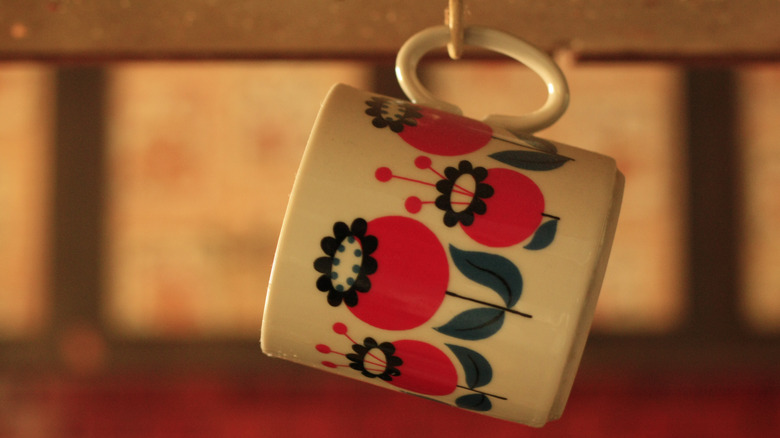
When designing a kitchen with a ’70s vibe, think about the way you showcase your greenery, knick-knacks, and fancy tableware. Back then, it was common to see mugs, wicker bowls, rattan baskets, and plants hanging out in the open. These items were frequently grouped together to flaunt a collection, suspended from hooks or racks, or mounted on a wall. Forget hiding your cookware in a difficult-to-access cabinet. Instead, put them on display with pride.
Many contemporary spaces emphasizecreating a minimalist kitchen, though that might not appeal to everyone. If you’re keener on designing a maximalist kitchen, then you’ll probably love the design trends of the 1970s. Maximalist design often includes a mix of different colors, materials, and decorations, all of which were common in that decade’s style. So, display your favorite mugs by hanging them from hooks under a shelf. This frees up space in your cabinet for your amber-colored glasses or vintage Pyrex dishes.
Incorporate vintage kitchen gadgets.
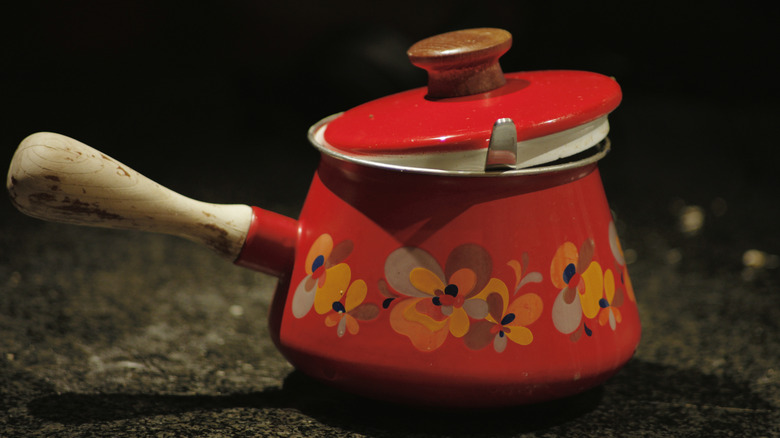
If you’re going for a kitchen-focused design, consider incorporating real kitchen gadgets from the 1970s. A vintage rotary phone might not be your style, but how about a period-correct Crock-Pot? Perhaps one adorned with charming garden-themed fruit designs, or featuring those beloved brown, orange, and blue earth tones? You can often find these at thrift shops and online without breaking the bank.
Alternatively, look for an old-fashioned fondue pot or a bright, retro toaster to showcase on your table. Be on the lookout for eye-catching Fiesta Ware at secondhand stores; a small plate or bowl would be perfect to put under a plant to catch excess water. Before you think about using any vintage items for cooking, keep in mind that they might have lead in them. But don’t worry, even if they’re not safe to use for food, they can still be beautiful decorative items.
Incorporate a ’70s-era wall clock into the design.
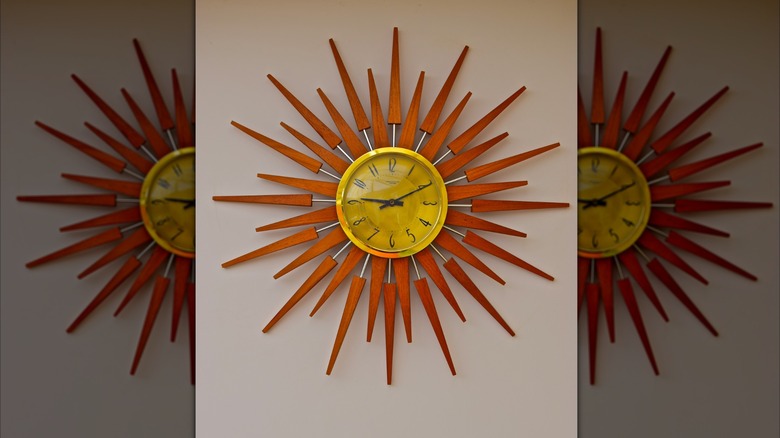
In the 1970s, smartphones weren’t around for quick access to the time, weather, and email. Instead, people relied on wall clocks, often beautiful ones. Although modern appliances like ovens and microwaves often have digital clocks, nothing compares to an analog clock that also serves as a decorative item.
Choosing kitchen additions presents numerous possibilities, ranging from wooden and floral designs to the highly sought-after sunburst style. Alternatively, a minimalist Roman numeral clock can make a statement. Many of these clocks are still functional, serving as both decoration and timekeepers. On your next visit to a local vintage or thrift store, explore their clock selection – you might discover a treasure.
Show off the vintage cookbooks you love.
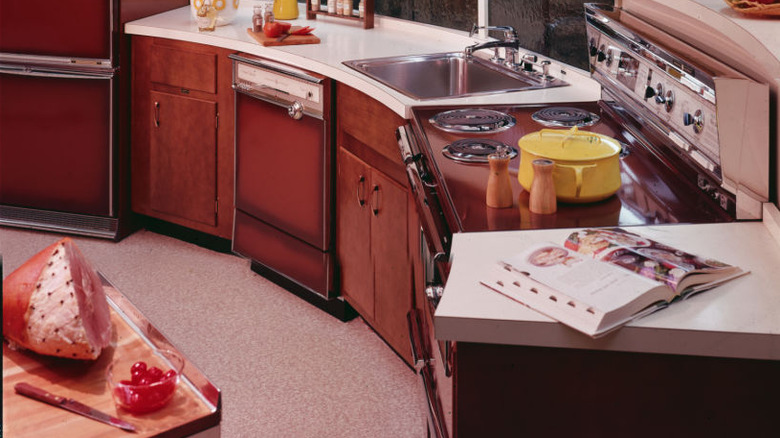
1. Hunting through thrift shops for old cookbooks is a unique pleasure, especially when they’re truly vintage. 2. It’s often touching to discover well-loved recipes from bygone eras, dishes that families have cherished for years. 3. You’re likely to encounter some wonderfully quirky and dated dishes that were all the rage back in the ’70s, like quiche Lorraine or Salisbury steak. 4. Secondhand stores and estate sales are great places to search for cookbooks from the 1970s.
While we love carefully studying vintage recipes, it’s often the images – with their inviting warmth, vibrant colors, and gentle fading – that truly captivate us. If you’re lucky, you might discover a cherished cookbook, its pages marked with turned-down corners that highlight beloved recipes, key steps emphasized with underlines, or even a handwritten note suggesting a substitute ingredient. You might unexpectedly come across avintage cookbook that’s worth a fortune, such as “Les Dîners de Gala” from 1973, illustrated by Salvador Dali.
Obtain a spice rack that can be mounted on the wall.
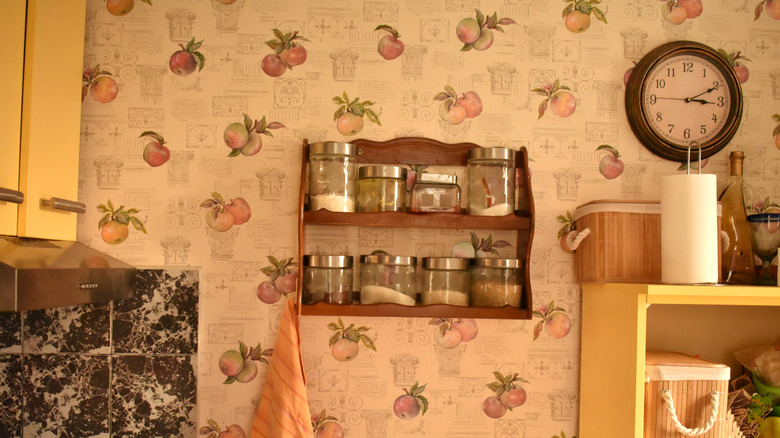
Wall mounting kitchen accessories was all the rage in the 1970s, especially when it came to spice racks. Although their look certainly has evolved over the decades, spice racks have never gone out of style. (Hey, our spice jars have to go somewhere, right?) There are plenty of options on the market today, but the ’70s-style spice racks are usually made of wood and a bit bulkier than some of the sleeker current designs.
If you do get your hands on a vintage (or vintage-looking) wall-mounted spice rack, you can, of course, use it to store your spices. If the spice rack is on the smaller side, you could keep your most-used spices on the shelves and the rest neatly organized in a drawer, or vice versa — whatever works best for you and your cooking needs. If you don’t want to put spices on it, that’s totally fine, too. You can always display items that fit on the shelves, like small amber glasses or your favorite 1970s knickknacks.
Try To Thrift Or Buy Vintage Pyrex Pieces
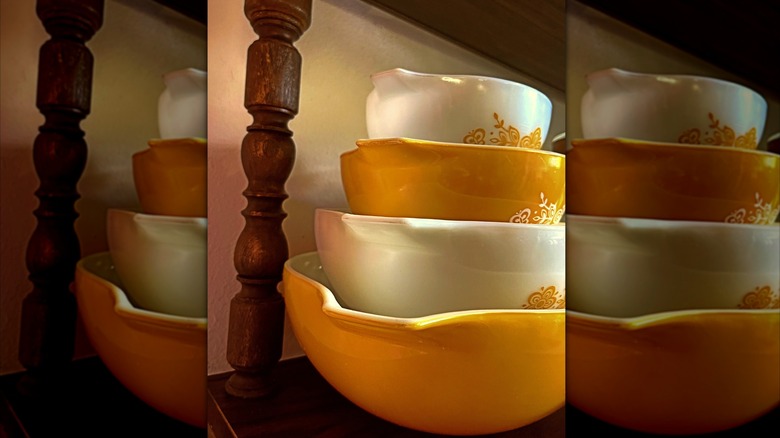
A 1970s kitchen isn’t complete without at least one vintage Pyrex piece. The lucky few might find them on the cheap at a thrift store, particularly if they don’t know what they have under their nose. Online might be a good option if you are looking for larger sets (like a casserole dish, Corningware, or a teapot). The thrift store may have them on occasion, but you’re more likely to find a standalone piece there. (Sorry to be a broken record, but once again, you’ll want to check any vintage dishes for lead before using.)
Some designs include veggies or florals with colors like green or yellow. Pyrex goes beyond casserole dishes, though; you can spot white coffee mugs with a chic floral design or brown woodland mixing bowls. Sets and pricing will vary, so you should be able to locate something that suits your taste and budget. There are a lot more options out there than you may think, especially if you’re not seeking out particularly valuable Pyrex picks.
Read the original article on Tasting Table.