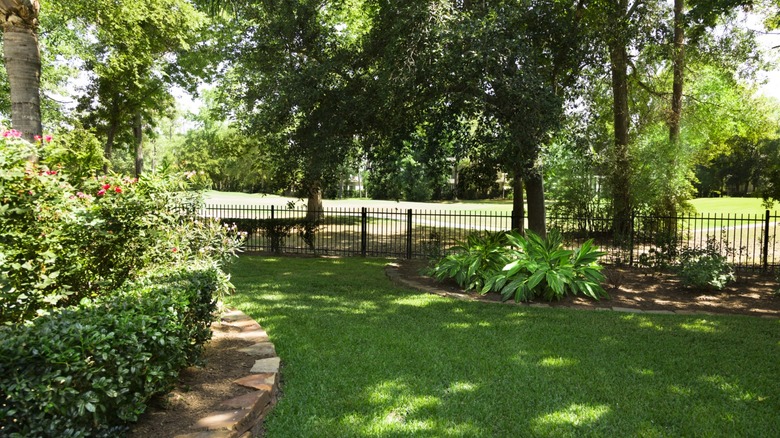
Even if you’re planting in a shaded area, it doesn’t mean you have to settle for dull or lifeless ground cover. Although it can present a special challenge, cultivating plants in shaded spots can bring beauty and vitality to every part of your garden. There are numerous attractive ground cover plants that thrive in the shade and can add color to the dark corners of your yard. Whether it’s delicate pink clusters of astilbe flowers or vibrant green hosta foliage, there’s a ground cover choice that suits the style of your garden.
Plants that thrive in sunnier areas of your yard may not be suitable for shaded regions. The majority of common turfgrass varieties have difficulty growing in even moderate shade, resulting in exposed soil or thin, unattractive coverage. In addition to being visually unappealing, areas with sparse plant growth can become a significant issue. When there’s no vegetation, your landscape becomes vulnerable to erosion and more likely to be taken over by weeds. Focus on selecting ground covers that do well in the shade to prevent these long-term problems and add some distinctive style to your shaded areas.
Read more: 15 Top Purple-Flowered Plants for Your Garden
Make a Mat of Vibrant Green and Golden Leaves
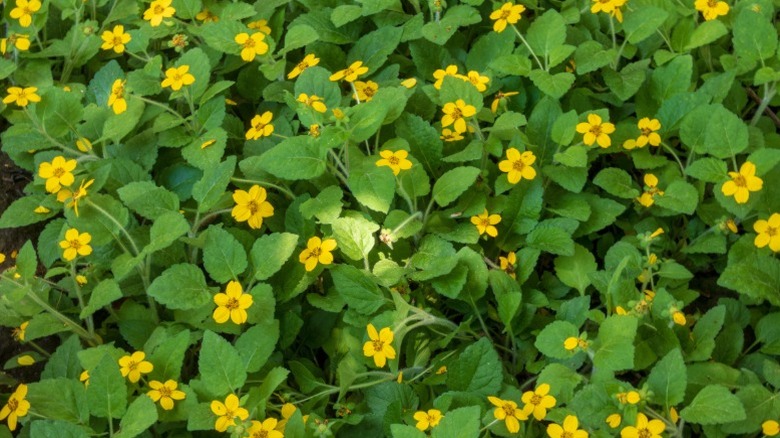
A lively ground cover that resembles its common name, green and gold (Chrysogonum virginianum), spreads low across the landscape, creating a dense layer of leaves. Originating from the eastern region of the United States, this plant is also referred to as golden star because of its yellow, star-shaped blossoms. In its natural environment, this plant flourishes in shaded woodlands, making it ideal for shaded areas in your yard. Green and gold is resilient in zones 5 to 9. To achieve the best coverage, choose southern or central varieties that spread through runners.
Enhance Your Yard With The Red Berries Of American Wintergreen
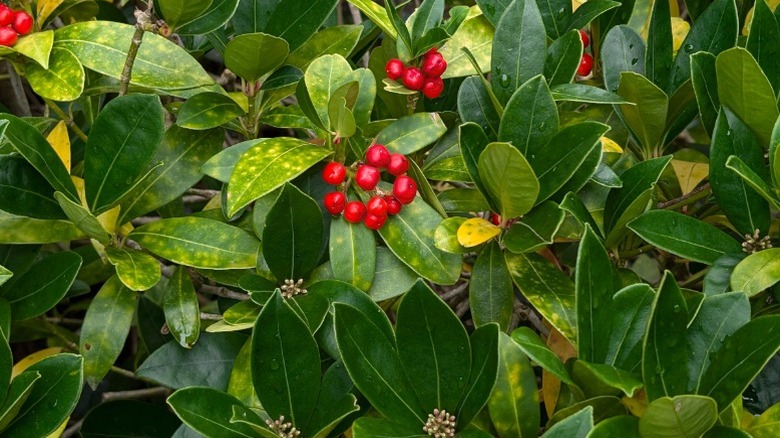
Enhance the beauty of shaded areas throughout the year with American wintergreen (Gaultheria procumbens), also referred to as checkerberry and teaberry. This creeping perennial, part of the blueberry family, is native to hardwood forests and thrives even in heavy shade. As an evergreen, it has fragrant berries and leaves, and produces white flowers during late summer. It serves as an excellent ground cover because it spreads low across the ground. Regardless of the season, it remains attractive, offering evergreen leaves all year, blooms in the summer, and berries in the winter. It is suitable for growing in hardiness zones 3 to 7.
Create a Patch of Canadian Wild Ginger for Soil Erosion Prevention
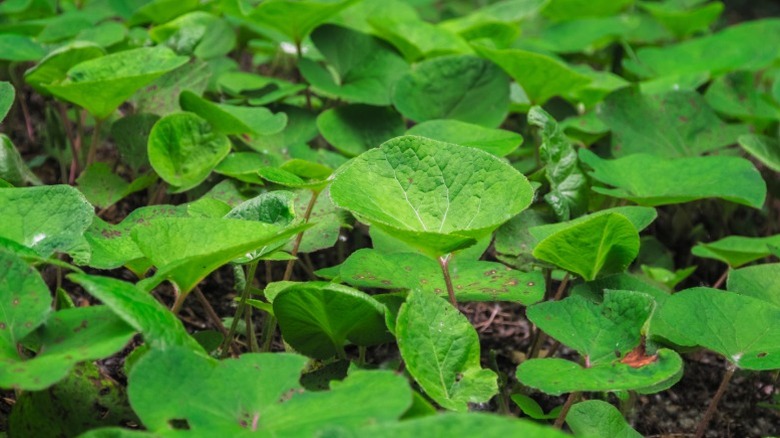
Indigenous to both Canada and the United States, Canadian wild ginger (Asarum canadense) thrives exceptionally well in deep shade. It is very resilient to erosion and can grow in wet soils, making it suitable for planting in moist, shaded parts of your garden. Along with being aRain-resistant ground cover that can assist in absorbing excess rainfall, wild ginger will attract pollinators to your yard. It produces attractive flowers in the spring, featuring small red-brown blossoms that emerge from its heart-shaped leaves. Suitable for zones 4 through 6, wild ginger is a gradually growing, yet reliable, ground cover.
Give Your Lawn a Texture With Spiky Halberd-Leaf Violet
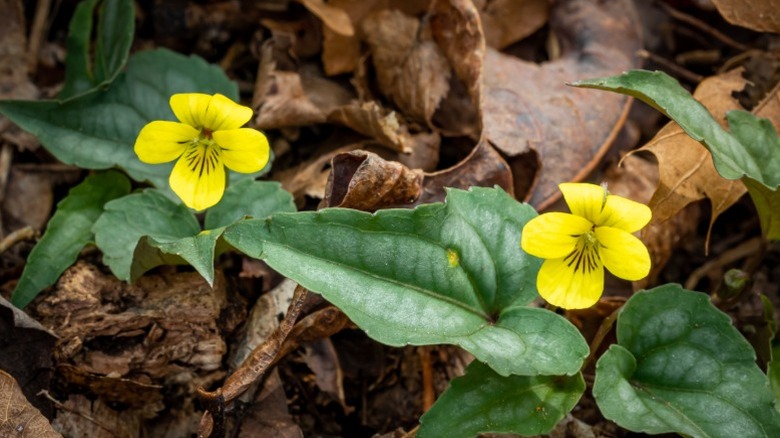
A native wildflower that can thrive in full sun or deep shade, the halberd-leaf violet (Viola hastata), also known as spearleaf violet, reaches a maximum height of 1 foot. The halberd-leaf violet favors moist, acidic soil. Although it can handle dry conditions, it is not suited for hot environments. It features green leaves that narrow to a sharp point, resembling small swords, and produces small yellow flowers in the spring that attract butterflies and bees. Its ability to spread easily and its vibrant colors make it a favored choice for ground cover. Additionally, it is not typically eaten by deer. This type of violet is suitable for growing in USDA hardiness zones 5 through 8.
Highlight Pink Flowers in Your Shaded Garden
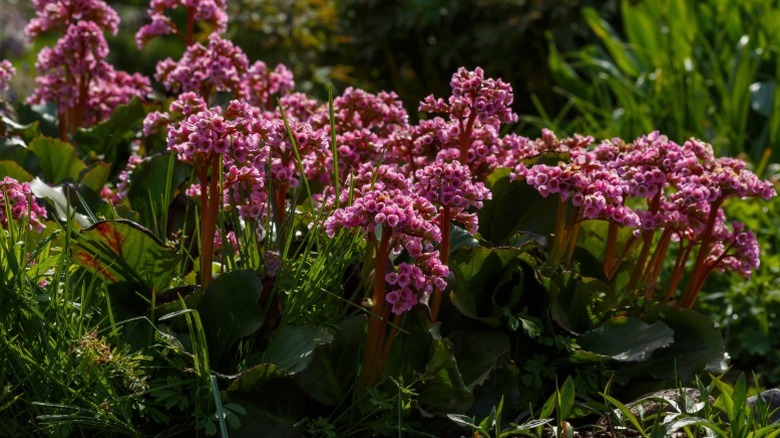
A playful ground cover option, bergenia (Bergenia crassifolia) reaches a height of under 2 feet and needs minimal care. One of its other popular names is pigsqueak, derived from the noise made when its leaves are rubbed together. As a slowly spreading plant, it’s ideal for shade gardens where you don’t have to worry about it becoming too invasive. This evergreen thrives in partial to full shade and produces abundant blooms in early spring on tall stems that stand above the leaves. Bergenia is suitable for zones 3 to 8, originating from forest and alpine areas in China and Siberia, although it may suffer from harsh winter conditions.
Stock Your Garden With Welcoming, Scented Plants
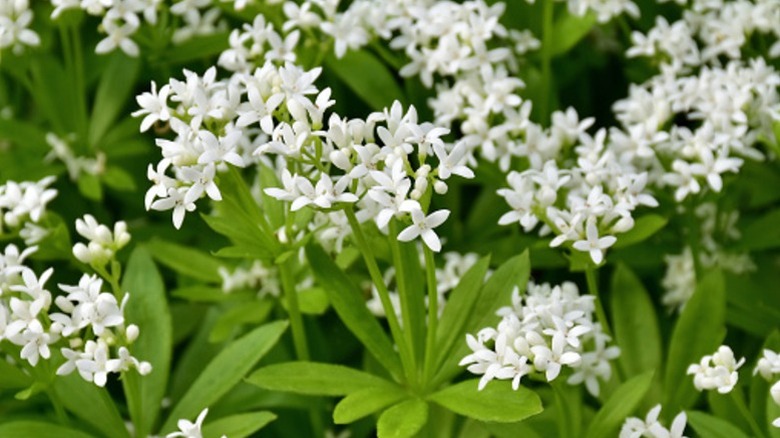
Even though it is not originally from the United States, the aromatic sweet woodruff (Galium odoratum) makes a great ground cover for shaded outdoor areas..This long-lasting plant, also known as bedstraw, spreads due to its rhizomes, which enable it to form a nice layer of evergreen leaves with white, star-shaped blooms in early spring. Sweet woodruff emits a delightful fragrance that combines notes of grass and vanilla. It thrives in zones 4 to 8 and reaches a height of one foot. Prevent it from becoming too invasive by propagating it in cooler, shaded spots with clay soil, which can help control its growth.
Plant A Vibrant Native For Its Attractive Flower Arrangement
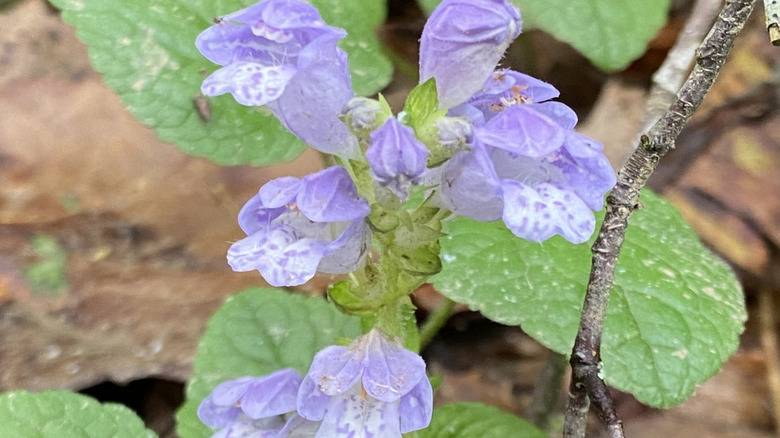
Cultivating Meehan’s mint (Meehania cordata) is perfect if you’re looking for a blue-blooming ground cover for your shaded garden. This indigenous plant produces lavender-blue flowers in late spring that rise above the green foliage of this low-growing (3 to 6 inches tall) variety. It is also referred to as heartleaf meehania and exhibits strong shade tolerance, even thriving in heavy shade without issues. Plant this spreading perennial in USDA hardiness zones 4 to 8. Provide it with moist, well-draining soil and it will gradually fill your space without being invasive.
Use This Simple Spreader for Areas with Shade for Ground Cover
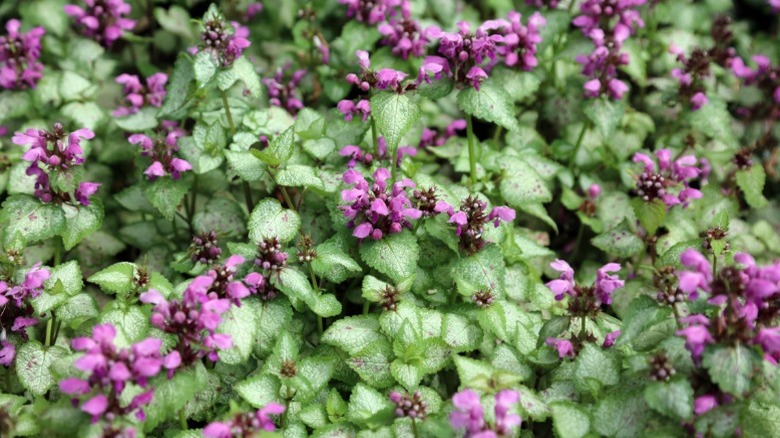
A low-lying and spreading plant, spotted deadnettle (Lamium maculatum) develops rapidly. It gets its name from the nettle, but it is a “dead” variety since it does not have the stinging quality of real nettle. In addition to doing well in shady areas, this herbaceous perennial brings color to your garden with attractive and vibrant blooms that appear from late spring until autumn. This plant is ideal for growing in zones 3 to 8, but check to ensure it isn’t invasive in your region before planting.
A Beautiful and Non-Invasive Native Euphorbia for Ground Cover
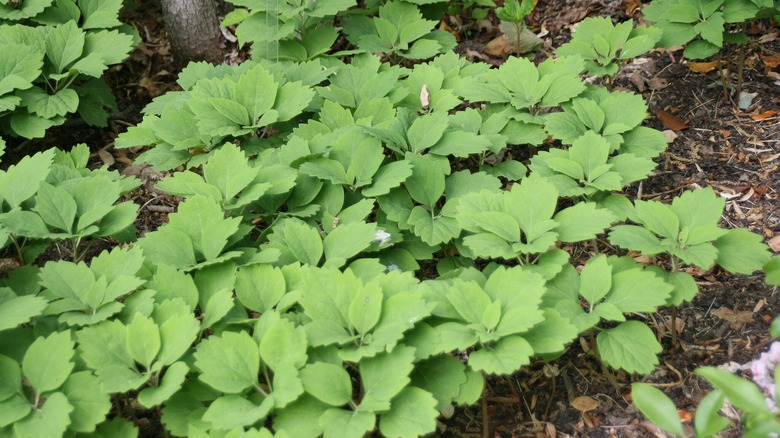
Many pachysandra species have a negative reputation in the U.S. due to problems caused by non-native varieties. However, Allegheny spurge (Pachysandra procumbens), also known as mountain pachysandra, is a native plant from the eastern region that offers striking coloration. Unlike invasive pachysandra, Allegheny spurge forms a thick ground cover without taking over your garden. It thrives in areas with filtered sunlight, partial shade, or full shade, and benefits from regular watering. In early spring, it rewards you with tall stems bearing purple and white blossoms. It is resilient in areas south of zone 6 and stays evergreen or partially evergreen in zones 7 and 8.
Foamflower With a Leisurely Growth Rate Adds Grace to Shady Gardens
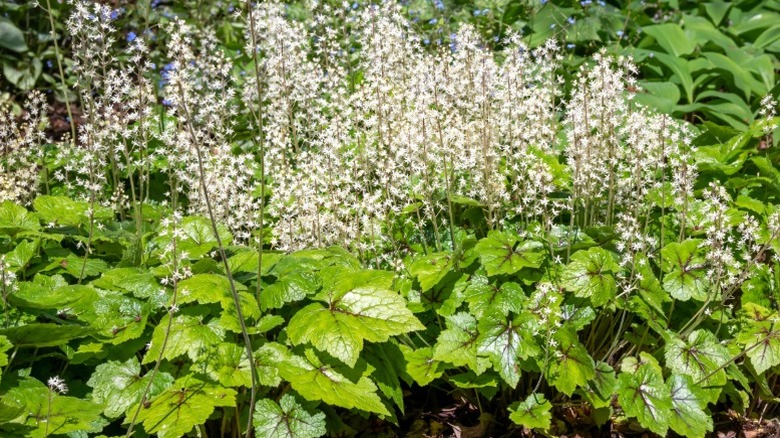
A native wildflower of the United States, foamflower (Tiarella cordifolia) grows naturally in woodland areas. It can be used as a ground cover to benefit from its spreading growth through underground runners. This plant thrives in shaded areas, making it ideal for parts of your garden that get limited sunlight. It is suitable for planting in USDA hardiness zones 4 through 9 and requires moist, nutrient-rich soil. The striking flowers, which give foamflower its name, appear during spring. These fluffy clusters of pink and white bloom above the deeply lobed foliage.
Express Affection for Your Shade Garden Using Heart-Shaped Barrenwort
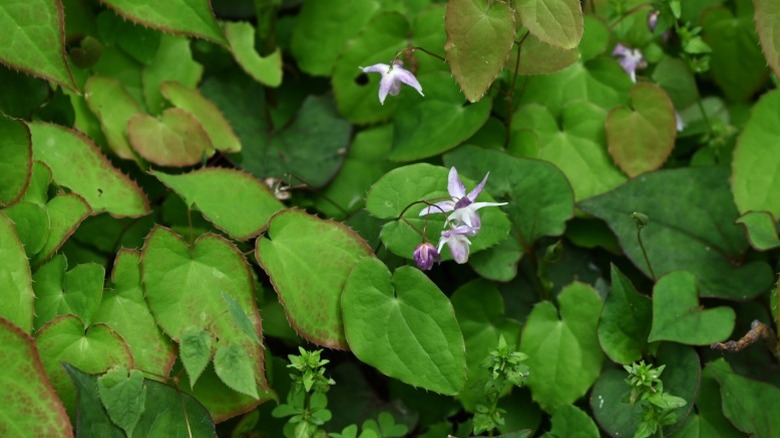
A low-growing, clump-forming plant, barrenwort (Epimedium spp.) serves as an attractive ground cover for shaded locations. There are numerous cultivars available, each offering a wide array of appealing leaf and flower colors. Often referred to as fairy wings, most plants in this genus have distinctive four-petaled flowers that have an arched appearance. Barrenwort is generally resilient in USDA hardiness zones 5 to 8 and is not native, originating from China and the Mediterranean. It can be used in shaded areas to benefit from its resistance to diseases and deer. During periods when it is not in bloom (which typically happens between May and June), barrenwort showcases delightful heart-shaped leaves.
Incorporate Some Vibrancy Into Your Shady Spots Using Creeping Phlox
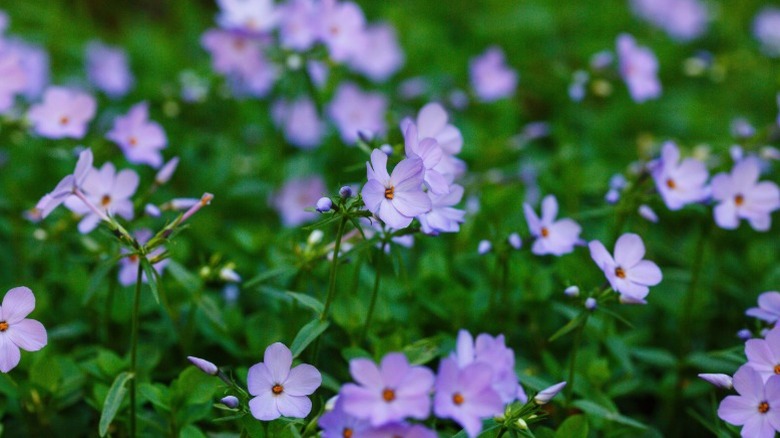
A native plant that forms loose mats with attractive spoon-shaped leaves, creeping phlox (Phlox stolonifera) is found in the Appalachian mountains. When used as a ground cover, it offers both aesthetic appeal and practical benefits. It thrives in shaded areas and is perfect for a plant that can handle light walking traffic. In addition to being easy to cultivate in shade,Hummingbirds and butterflies will be attracted to your yard by this vibrant ground cover plant.In April and May, creeping phlox produces flowers in a range of colors, such as blue-violet or rosy-lavender. It thrives in planting zones 5 to 8.
A Native from the South with Flowers that Attract Butterflies
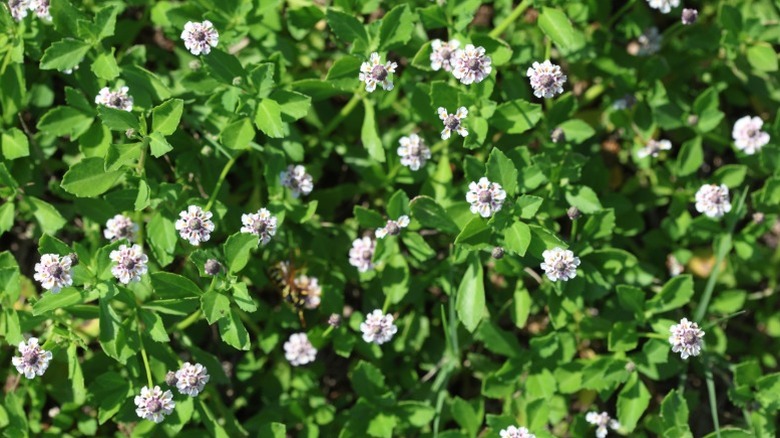
Frog fruit (Phyla nodiflora) may have an unusual name, but it’s a great option for a lively lawn substitute. Originating from the southern part of the U.S., it is occasionally seen as a weed because it spreads into under-watered lawns. Nevertheless, frog fruit (also known as turkey tangle fogfruit) can serve as a vibrant ground cover for various areas. It thrives in partial shade and can handle dry conditions, wind, and most soil types. Its tiny purple, similar to verbena, blossoms draw attention when grouped together, and their nectar draws butterflies. It is resilient in zones 6 to 11.
Magic-Color-Changing Lungwort Is a Striking Hue Plant
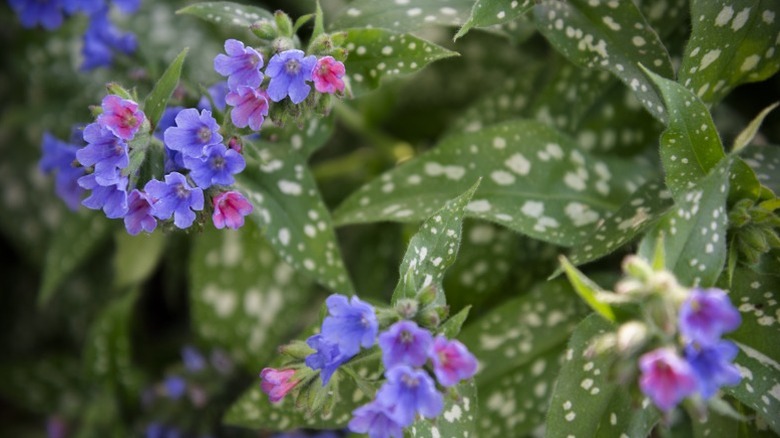
A long-lasting ground cover, lungwort (Pulmonaria officinalis) is typically short, growing to approximately 10 inches in height. This plant originates from Europe and belongs to the borage family, spreading gradually so it doesn’t pose a risk to local vegetation. Lungwort creates spreading clusters that effectively fill empty areas. Enhance your shaded garden with the funnel-shaped blossoms of lungwort, which alter their color as they develop. Moreover, the leaves themselves are attractive, with certain varieties displaying silver or white markings. Lungwort is best planted in USDA hardiness zones 5 through 9, though some types might tolerate colder conditions.
American Alumroot Provides Vibrant Ground Cover Throughout the Year
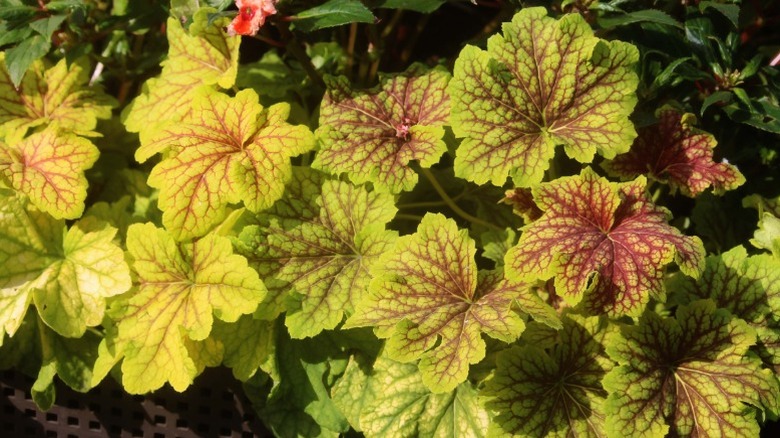
With distinctive flower stems that emerge from the greenery beneath, American alumroot (Heuchera americana) serves as an attractive ground cover. At the top of these wildflower stems, small greenish-purple blossoms hang down. These bell-shaped flowers draw various pollinators, and the plant thrives in shaded locations. In the fall, once the flowering has finished, the leaves provide an appealing display by turning yellow, purple, and red. American alumroot can bring a splash of color to your shaded garden and can withstand dry periods. It is suitable for growing in zones 4 to 9.
A vibrant and intense ground cover featuring striking green hues
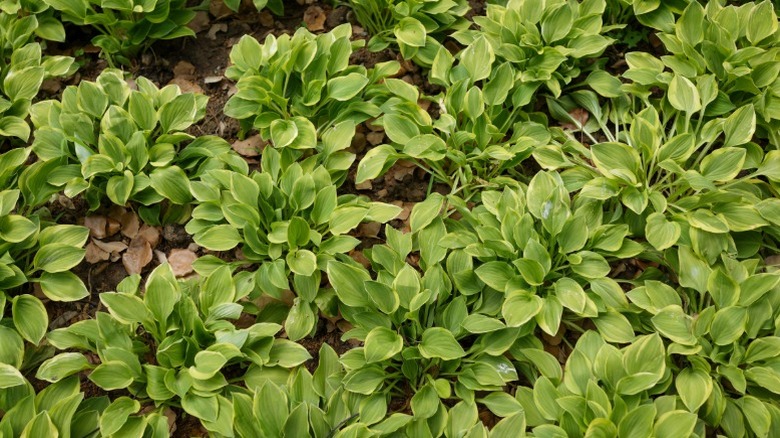
For a thick, easy-to-care-for plant that grows well in shaded areas, hostas spread quickly. With more than 2000 varieties, hostas are an excellent choice for mass planting, particularly when considering the species that propagate through underground stems. You can plant a few hostas and they will naturally fill an area. Choose cultivars with blue-green foliage, which perform exceptionally well in shaded areas. Pay attention to varieties labeled as ground cover, such as ‘Gold Drop,’ which has attractive green-yellow leaves and does not grow taller than 1 foot. Hostas are generally resilient in zones 3 through 9.
Replace This Plant With Hostas As Ground Cover
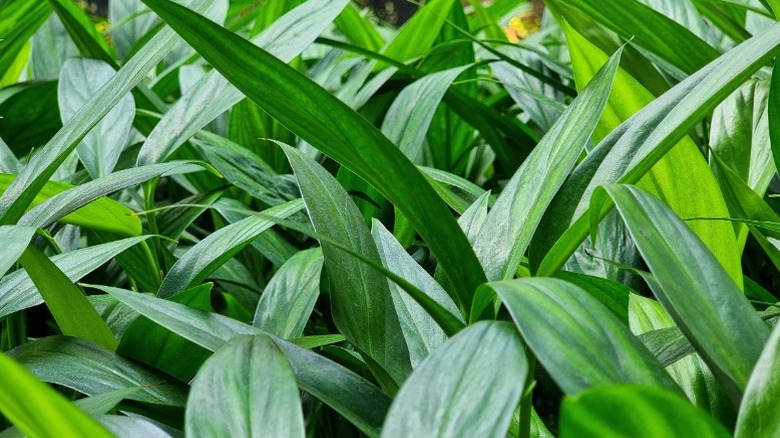
This long-lasting plant not only grows well in shaded areas, but it is best placed away from direct sunlight. The cast iron plant (Aspidistra elatior) is commonly kept as a indoor plant, yet it creates an eye-catching ground cover with its long, tough leaves. Known also as the bar room plant, it readily spreads in favorable conditions through rhizomes to create large and appealing clusters of foliage reaching up to 3 feet in height. The cast iron plant is suitable for zones 7 to 11 and originates from Asia, but it does not become invasive. Consider growing the ‘Asahi’ variety for its light green leaves that have white tips.
Create a Flowering Lawn That Resembles Cotton Candy
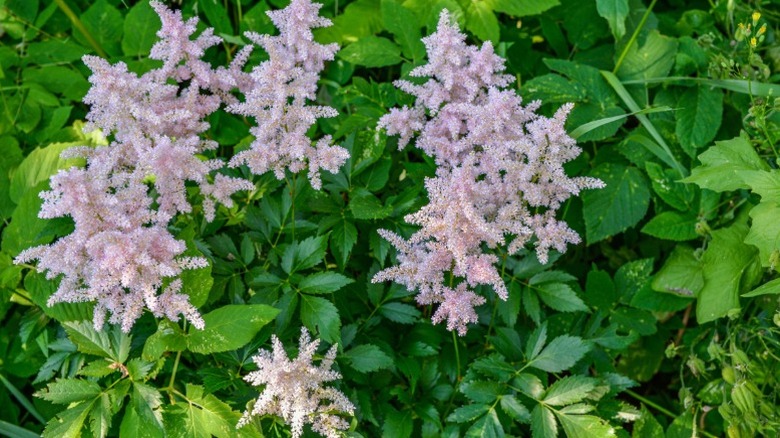
Requiring partial to full shade, astilbe are distinctive flowering plants that offer great potential as a ground cover for shaded areas. These typically small perennials usually grow under 2 feet in height and have a clumping growth pattern. The ovular leaves of astilbe come in shades of bronze, green, or red, but it is the flowers that truly stand out, featuring feathery stalks that rise directly from the foliage. Flower colors vary from white to lavender to red. Combining different species can enhance the beauty of your ground cover throughout the entire growing season. Astilbe thrives in hardiness zones 3 through 9 and prefers moist, nutrient-rich soil.
Liked this article? Subscribe to receive professional home advice, step-by-step DIY tutorials, and creative design ideas.House Digest newsletter!
Read the original article on House Digest.