The Evolution of the 911 Turbo S: A New Era of Performance
Porsche has once again pushed the boundaries of what a sports car can be with the introduction of the new 911 Turbo S. This latest model represents a significant leap forward in both power and technology, marking a new chapter in the storied history of the 911 lineup. With its mid-cycle facelift, now known as the 992.2, the 911 Turbo S is not just an evolution—it’s a revolution.
Twin Turbos, Unmatched Power
The heart of the 911 Turbo S lies in its advanced T-Hybrid system, which was first introduced on the 911 GTS. However, unlike the GTS, the Turbo S features two turbochargers, making it the most powerful production 911 ever built. This powertrain delivers an impressive 701 horsepower, surpassing even the GT2 RS.
The 3.6-liter flat-six engine, enhanced by the electric turbos, produces 590 lb-ft of torque. This torque is available across a wide range of RPMs, from 2,300 to 6,000, while peak power is achieved between 6,500 and 7,000 RPM. The power is transmitted through an eight-speed transmission that also includes an integrated electric motor. This setup allows for seamless acceleration and control, ensuring that every drop of power is utilized effectively.
Performance Metrics That Speak Volumes
The performance figures of the 911 Turbo S are nothing short of astonishing. It can accelerate from 0 to 60 mph in just 2.4 seconds, which is 0.2 seconds faster than the previous model. The 0 to 124 mph time has improved to 8.4 seconds, a 0.5-second improvement over the pre-facelift version. The top speed reaches an impressive 200 mph, and the Nürburgring lap time has been reduced to 7:03.92, a remarkable 14 seconds quicker than the previous model.
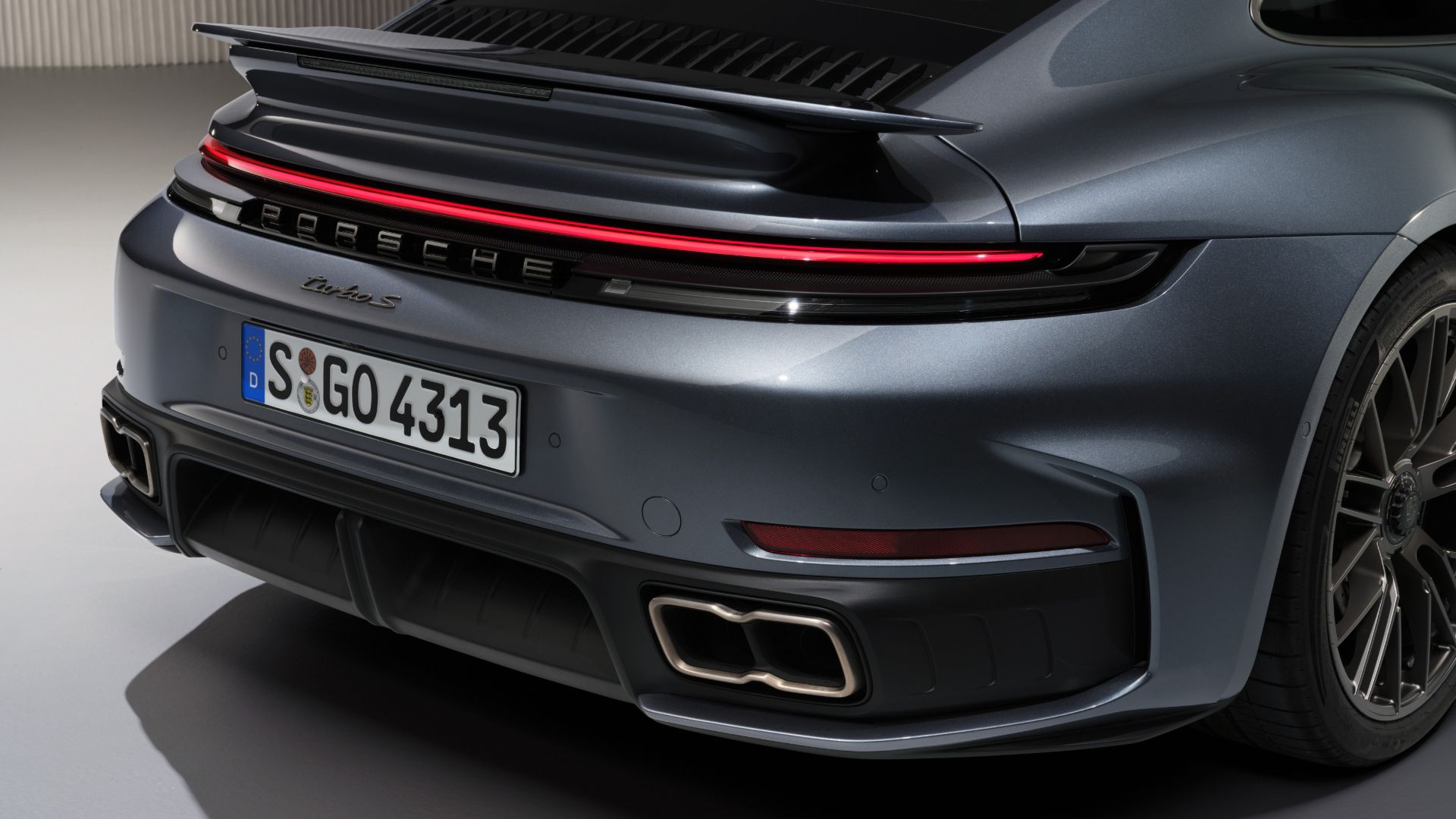
To match this performance, Porsche has equipped the Turbo S with a Sport Exhaust System featuring lightweight titanium exhaust tips. This system enhances the sound of the engine, which has been tuned with asymmetrical timing to produce a sharp, throaty sound that complements its performance.
Enhanced Chassis for Superior Control
With such immense power comes the need for superior control. Porsche has upgraded the chassis of the 911 Turbo S to ensure it can handle the increased performance. The rear tires have been widened to 325/30 ZR21, providing extra traction, while the front tires remain at 255/35 ZR20.
At each corner, Porsche Ceramic Composite Brakes (PCCB) are standard. These brakes feature a new pad compound developed from Porsche’s motorsport activities, offering exceptional stopping power. The front rotors measure 420 mm, while the rear rotors have been increased to 410 mm, making them the largest ceramic composite brakes ever fitted to a two-door Porsche.
The electro-hydraulically controlled dynamic chassis control system plays a crucial role in managing the car’s behavior. It leverages the 400-volt electrical system to minimize body control, pitch, and roll during acceleration, cornering, and braking. This system also eliminates the need for traditional roll bars and improves comfort during normal driving conditions. Additionally, it enables a rapid nose-lift system, enhancing the car’s agility.
Design Cues and Interior Features
Visually, the 2026 Porsche 911 Turbo S stands out with several design elements. The body is wider than previous models, and the rear quarter panels feature air intakes. The rear end has been redesigned with new ventilation openings and square exhausts, although oval pipes are available as an option.
The Turbonite finish is applied to various parts of the car, including the badging, wheel center locks, and ‘Turbo S’ lettering. This treatment extends to the interior accents, such as the instrument cluster and Sport Chrono stopwatch, creating a distinctive look for those who know what to look for.
Inside, the 911 Turbo S is equipped with only two seats, which helps offset the weight gain from the hybrid system. Buyers can opt to add rear seats at no charge if needed. The standard seats are Porsche’s 18-way Sport Seats Plus with memory function and Turbo S embossing, ensuring comfort and style.
A Supercar Price Tag
The 2026 Porsche 911 Turbo S is not cheap, with a starting price of $270,300 for the coupe and $284,300 for the Cabriolet. This represents a significant increase from the current MSRP of $238,700 for the 2025 model. While a non-S 911 Turbo is expected to arrive in the future, it’s unlikely that any Turbo-badged 911 will be priced lower than the Corvette ZR1X.
Prices exclude destination and handling fees of $2,350. Porsche offers an extensive options list, including everything from an exposed carbon fiber roof to various wheel designs and interior upholstery options.
The new 911 Turbo S is expected to arrive at US dealers by Spring 2026, marking the beginning of a new era for one of the most iconic sports cars in the world.