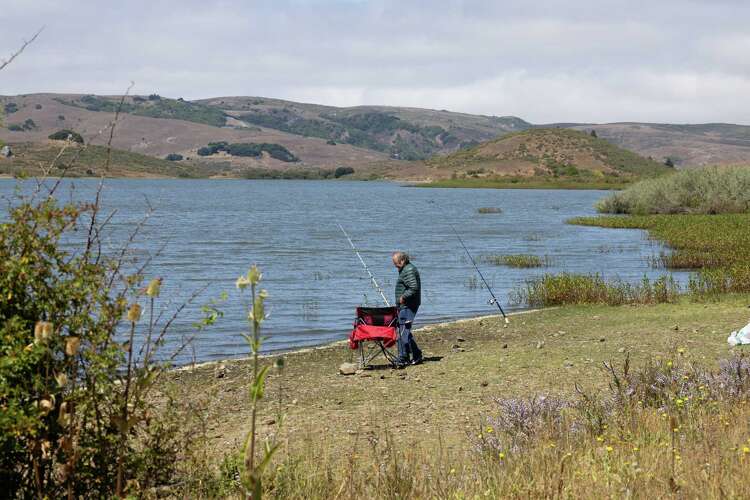
The residents of Nicasio, a serene ranching community in Marin County, are facing a growing concern regarding a proposed expansion of the Nicasio Reservoir. For years, homeowners near the reservoir have battled seasonal flooding, and they fear that the water district’s plan to enlarge the reservoir could exacerbate the problem, potentially impacting their homes, wells, and even the local school.
A History of Flooding
The issue is particularly acute for residents like Monica and Michael Seybold, who purchased their home near the reservoir in 2001. They have witnessed firsthand the increasing severity of winter flooding from a creek that runs through their property. “It got so bad in one winter storm that we had goats and they got themselves trapped, and Mike had to go out and swim each goat back up to land,” Monica Seybold recounted. The accumulation of sediment in the creek bed has contributed to the rising water levels, further threatening their property.
The Reservoir Expansion Plan
The Marin Municipal Water District (MMWD), which serves over 191,000 people in central and southern Marin, is considering expanding the Nicasio Reservoir to increase its water storage capacity. During the drought of 2020-2021, the district’s water supply dwindled to just a few months’ worth, prompting the search for new water sources.
The expansion proposal involves installing a 280-foot-long, 4.4-foot-high inflatable rubber gate across the spillway crest of Seeger Dam, which created the Nicasio Reservoir in 1960. This would increase the reservoir’s capacity by approximately 3,700 acre-feet, or 16.5%. The estimated cost of the project is $15-$20 million, which would be funded through water rates.
According to MMWD President Matthew Samson, expanding the Nicasio Reservoir proved to be a viable option after assessing costs. “When we got engineer estimates for installing the technology – not counting regulation, studies or permits – the cost was surprisingly low for the water we’d gain,” Samson said.
Community Concerns
However, the expansion plan has raised significant concerns among Nicasio residents, particularly those living near the creeks that feed into the reservoir. They fear that the increased water levels could lead to more severe flooding during the rainy season, impacting their properties and infrastructure.
Maps of the initial proposal show the expanded reservoir potentially spreading into the town’s two creeks, which are typically dry outside of the rainy season. Residents worry that the additional water could compound the effects of seasonal flooding, impacting their yards and roads.
Impact on the Local School
The town’s only school, which serves about 45 children in grades TK-8th, is also a concern. Principal Barbara Snekkevik noted that a culvert on campus, designed to channel water into the creeks, often backs up during the rainy season, creating a pool. The water district’s expansion blueprints indicate that parts of the culvert could be submerged.
“That’s concerning if it’s giving us standing water, and you have dynamic weather events on top of it,” Snekkevik said. “Clearly, that’s not okay for an elementary school campus and is a concern for student safety.” The school playground, located near the intersection of Halleck and Nicasio creeks, has also experienced bank erosion due to flooding.
Concerns about Wells and Septic Systems
Many residents rely on wells for their water supply, and they are concerned about the potential impact of higher water levels on the safety of their wells and septic systems. The Seybolds and other creekside residents fear that flooding could contaminate their water sources and damage their septic systems.
Environmental Review and Public Input
The Nicasio Reservoir currently has a storage capacity of 22,340 acre-feet, making it the second-largest in the water district after Kent Lake, which holds 32,895 acre-feet. In 2024, the water district began preparing an environmental impact report as required by the California Environmental Quality Act. Community members have attended public meetings to voice their concerns.
Kasey Briare, who lives near the Seybolds along Nicasio Creek, expressed frustration with the water district’s previous inaction regarding sediment buildup and erosion. “We were telling them the sediment’s building, the banks are eroding, the trees are falling and they wouldn’t do anything,” Briare said. “We got afraid that when they announced this proposal, that was going to ruin our house.”
The water district has extended the public comment period to allow more time for agencies and the public to provide feedback on the scope of the environmental review. “We’re looking to truly understand the maximum height of inundation from a new reservoir raise,” Samson said. “We do not want to negatively impact a community, meaning have people’s homes be flooded, potentially have to replace or remove them.”
A Recurring Proposal
This is not the first time the water district has considered raising the Nicasio Reservoir. A similar plan was proposed around 1980 but was abandoned due to flooding concerns and the potential need to purchase four homes.
Alternative Water Supply Options
The water district has explored other options for expanding its water supply, but each has its own challenges. Expanding the Soulajule Reservoir in West Marin has been deprioritized due to the potential loss of land and homes. Raising Kent Lake would be the most expensive and time-consuming option. The water district is also exploring a pipeline to draw more water from the Russian River, which currently supplies 25% of its water.
Economic Feasibility and Future Uncertainties
Questions have also arisen regarding the financial cost of the Nicasio project. “We haven’t even considered condemnation,” Samson said, referring to the loss of homes. “We don’t have enough information to understand this project is still feasible from an economic perspective, even without that component to it.”
As the environmental impact report progresses, Nicasio residents near the creek remain concerned about the future of their homes. “It would be impossible to sell my house, I can’t sell it even if I wanted to,” Michael Seybold said.