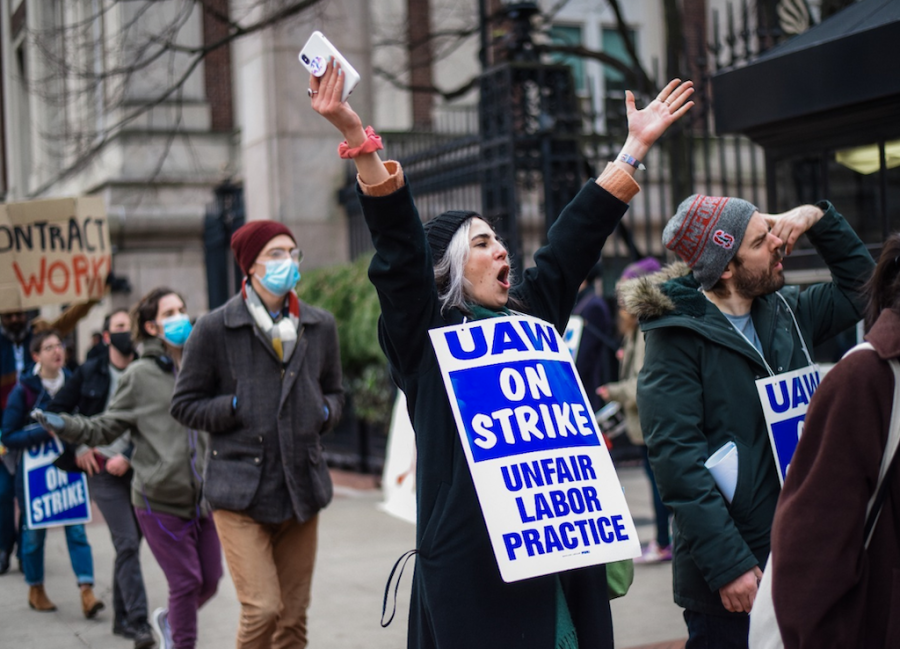
One week prior to the start of classes, Columbia University notified approximately 140 union-affiliated graduate student employees that they had been taken off their teaching roles. The institution is now employing non-union part-time instructors to carry out the responsibilities.
Picture receiving a letter from your supervisor a week before you’re scheduled to start teaching, stating that you’ll no longer be responsible for classroom instruction but will still receive your salary. This unusual situation has affected approximately 137 graduate students at Columbia University in New York City who lead core curriculum, language, and writing courses. These individuals are part of the Student Workers of Columbia (SWC), affiliated with United Auto Workers (UAW) Local 2710.
Getting paid to notTeaching may seem appealing, but in reality, the university is employing adjuncts without a union contract to perform the duties of unionized staff. “I spent the entire summer unsure if I would be teaching or not, and eventually they said, ‘No, your class has been canceled,'” shared a core curriculum instructor who requested anonymity. Although there were rumors, the university did not communicate directly with its employees.
And the letters continue to arrive. “The objective is to scare everyone,” stated Grant Miner, president of the local.
The reduction in graduate instructor positions appears to be a deliberate effort by Columbia to weaken its labor unions. The prestigious university has proposed a meager 2 percent increase to three unions involved in ongoing talks, including SWC-UAW. This offer is so minimal that when considering inflation, it effectively results in a decrease in wages.
On Tuesday, employees in food service, healthcare, and library roles, part of 1199 SEIU United Healthcare Workers East, demonstrated at the university’s entrance on Broadway in Manhattan, joined by support staff and administrative workers affiliated with UAW Local 2110.
“Columbia is employing many of the same tactics to undermine unions, so we are combining our efforts today,” said Olga Brudastova, president of Local 2110. Her local also received the 2 percent proposal.
Not a Living Wage
Three rounds of negotiations were needed before they finally presented us with their offer of 2 percent, which isn’t a livable wage for anyone,” said Ray Wilson, vice president of 1199. “This is Columbia University, not a small local business.
Several restaurant employees lose their jobs during the summer and need to take on extra work since the summer allowance they get is not enough, he said.
One 1199 member sounded a yellow whistle and walked with a sign reading, “Sorry we couldn’t all be here today… some of us were occupied working two jobs to get by!” Another’s sign stated, “The second-largest landowner in NYC doesn’t pay us enough to cover our rent.”
SWC shared a flyer highlighting the annual salary of Columbia’s executive vice president of arts and sciences, Amy Hungerford: $894,126, which is eighteen times the average wage of dining workers and twenty-four times the pay of student workers in the Department of English and Comparative Literature, where she holds a faculty position.
Canceled Bargaining Sessions
SWC participated in the demonstration to tackle not only the offensive wage offer and the job cuts but also the university’s recent submission of an unfair labor practice (ULP) complaint against the union.
Columbia alleges the union ofnot negotiating in good faithby insisting that discussions take place through Zoom, that Miner be permitted to join, and that the university engage in talks about what they view as optional topics, such as campus safety procedures.
Both Columbia and SWC have set up eight negotiation meetings,” said union member Johannah King-Slutzky. “Columbia has either canceled or left six of those eight sessions, yet they claim we are not flexible and not engaging in proper negotiations.
The university emailed the entire campus regarding the ULP, she mentioned. “They’re all receiving messages about [the union] negatively affecting the community because it goes directly to their inbox.”
“We had members extremely concerned. They believed that [Columbia] was taking legal action against us,” said King-Slutzky.
In March, on the first day of negotiations, members found out that Columbiahad expelled Miner, the president of their local, for involvement in demonstrations supporting Palestine. Columbia is still restricting access to campus in an effort to prevent additional protests.
On X, the union suggestedthat the approach was developed by consultants who oppose unions: “Management is employing every method possible to overwhelm our members — reducing staff and spreading false information. [Columbia] is hiring union-avoidance attorneys at thousands of dollars per hour to engage in these tactics,” they stated on August 9.
Hiring Scabs
Last autumn, Hungerford began discussing plans to reduce graduate labor, according to King-Slutzky. Then, in May, faculty found out that the university had halted the hiring of graduate instructors. However, the employees were not informed.
The university began seeking replacements for union members in the core curriculum and writing classes. “They’re just sending out random emails to various universities, saying, ‘Please send someone to us,'” said Miner. “But we’re being told that this is one of the most demanding application processes that I and my program will go through, rather than just being assigned to anyone.”
As part of the initiative, current part-time instructors are being required to teach a larger number of students. Miner estimated that part-time writing faculty have seen a 15 percent rise in their student workload.
Adjunct faculty have been organizingworking with the UAW but have not yet received union status. This indicates that the student instructor cuts are removing union positions and substituting them with non-union roles.
SWC is urging academic staff to avoid participating in the university’s recruitment initiative, and hundreds of academics have responded.signed a letterto Columbia’s administration stating they will not promote the jobs and urging “all workers in higher education to boycott Columbia’s hiring of strikebreakers.” They aresoliciting additional signatures.
“It’s quite evident that the plan is to spend as much money as possible on replacing employees,” said Miner. “Currently, they’re essentially paying two individuals to perform a single role.” Although this has led to additional costs, Columbia has suggested that the replacements are a result of funding reductions from the Trump administration.
Empty Positions
A miner stated that it was improbable Columbia could fill as many roles as desired through hiring adjuncts. “They’re reaching out to recent graduates, they’re contacting random individuals, basically just picking people off the street,” he mentioned. “However, we’re also uncertain about how they’ll accommodate all the students. It doesn’t appear that they’ve significantly increased the adjunct pool for something like university writing.”
For employees who have been let go, the impact may be long-term since teaching experience plays a crucial role in securing future employment.
I’m still unsure about my role in the spring,” said the unemployed core curriculum instructor, who had anticipated teaching for two semesters. “There’s no schedule to follow. This fall I received financial support, but by spring it’s unclear.
It appears there is a genuine coordinated approach among all the departments where 2 percent is considered the key figure,” said Miner, “and they are prepared to completely undermine graduate education in order to offer low wages and avoid any disturbances on campus.