On a warm June evening at New York’s Village Vanguard jazz club, bassist Linda May Han Oh moved from the lower tones of her instrument to its bright overtones, crafting a subtly driving rhythm from a basic repeating pattern. Drummer Tyshawn Sorey introduced moments of tension—gentle cymbal crashes here, a few rim shots there. Trumpeter Ambrose Akinmusire embraced a melody that felt like a piece of a folk tune, sharing it almost as if it were a secret. Soon, he played a repeated interval, a perfect fifth, as though it were a fanfare, and the trio subtly changed course.
The group performed “Portal,” the first song from Ms. Oh’s “Strange Heavens” (Biophilia, set for release on August 22), whose title feels fitting. Her pieces blend simple melodies that drift in and out, each one charming enough to feel like a memory, with the adventurous spirit—the core oddity—of contemporary improvised music. These aspects come together to form an unusual yet captivating sense of happiness.
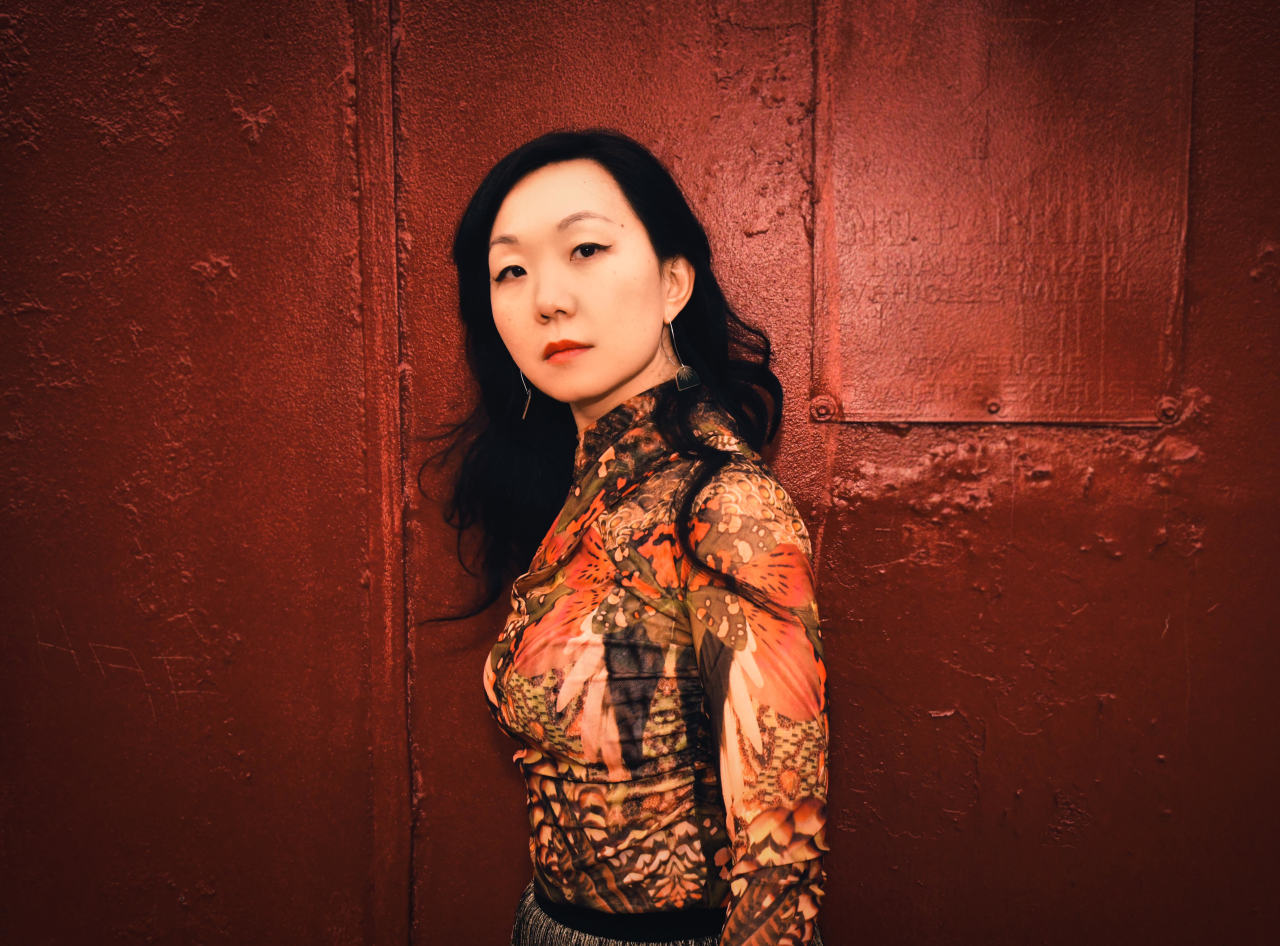
This latest release is a confident expression of identity from Ms. Oh, who, at 40, has consistently received praise as both a highly regarded musician and an ambitious bandleader-composer. Her recent albums have expanded her vision by incorporating string quartets, vocalists, and larger ensembles, but here she reverts to the bass-drums-trumpet trio setup from her independently released 2009 debut, “Entry,” which also included Mr. Akinmusire. Her precise and well-honed collaboration with Mr. Sorey stems from their years of working together in a renowned trio led by pianist Vijay Iyer.
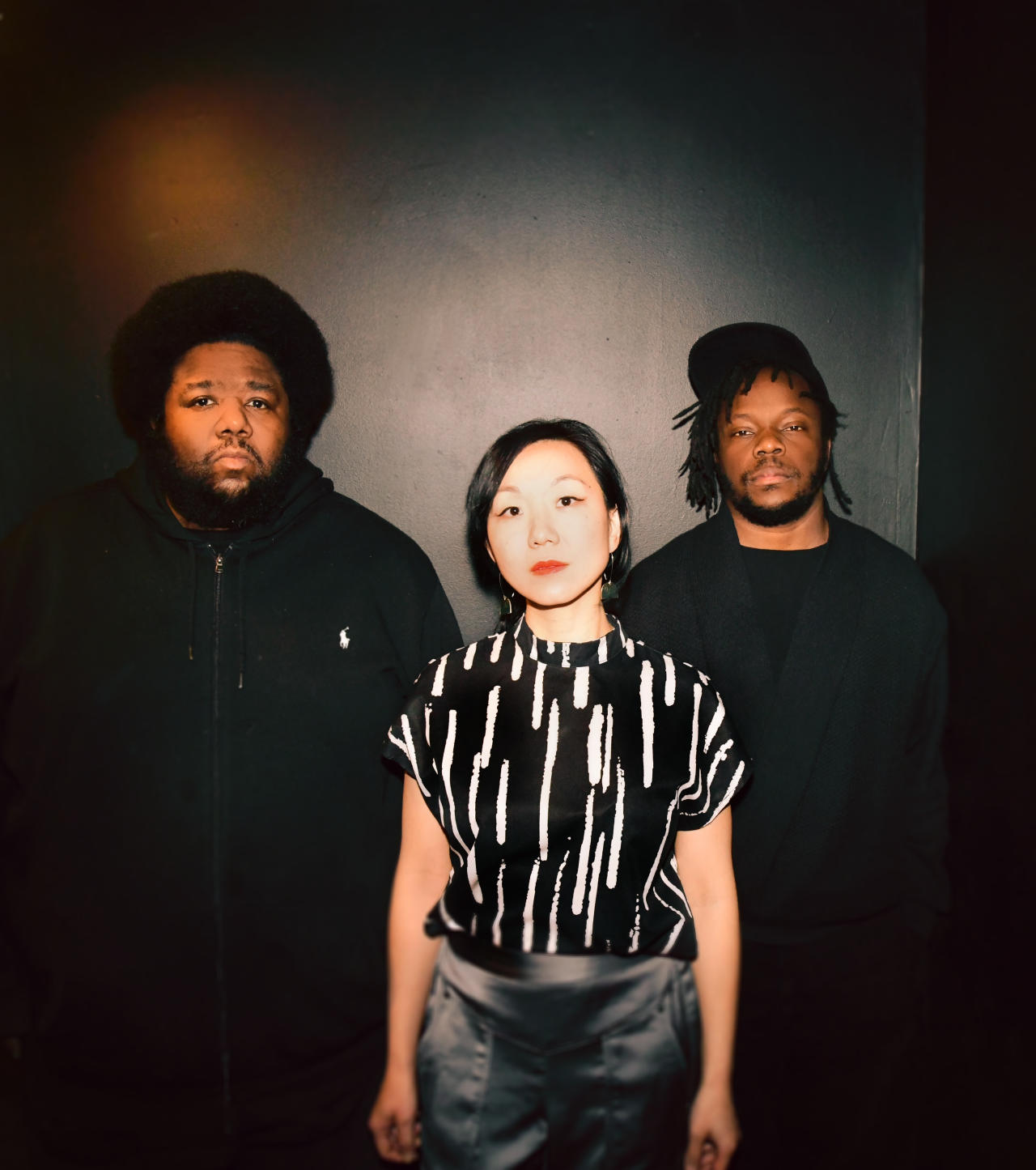
It would be challenging for Ms. Oh to locate two more imaginative and accomplished bandmates. Mr. Sorey’s increasing recognition as a composer with an ever-expanding musical vision (he received the 2024 Pulitzer Prize for Music) occasionally overshadows his exceptional skills as a drummer. On “Living Proof,” the pulsating rhythm Ms. Oh creates from a single repeating note is enhanced by his rhythms, which flow with the graceful yet unpredictable power of a stream rushing over a rocky terrain. (This trio echoes the warmth and unity achieved by bassist Charlie Haden, drummer Billy Higgins, and trumpeter Don Cherry within saxophonist Ornette Coleman’s group on the 1960 album “Change of the Century.”)
Jazz enthusiasts have long become familiar with the breadth and intensity of Mr. Akinmusire’s artistry: elegant yet bold jumps in intervals; phrases that stretch out like flags in the breeze; abrupt tones that twist like cigarette smoke. On Ms. Oh’s “Home,” he performs sharp, rapid passages that then melt into smeared sounds, yet each phrase maintains its form. He presents the melody of the title track initially as a gesture of openness and, later, as a strong statement.
Ms. Oh possesses a unique ability to stabilize rhythms while developing melodic concepts. She extends themes throughout the entire range of her instrument, experiments with harmonics through strummed chords, or conveys her message with a single, smooth note. Altogether, these three musicians seem to respond not only to each other but also to their own ideas, frequently producing an auditory illusion of more than three separate parts.
A long time ago, Ms. Oh shared with me that her compositions aim for a narrative arc. In this case, the story spans the twelve tracks, incorporating both musical and personal allusions. On the energetic track “Noise Machinery,” that perfect fifth—previously featured in “Portal”—reappears, now serving as a structural component. Ms. Oh, who was born in Malaysia to Chinese parents, grew up in Perth, Australia, and relocated to the U.S. in 2006, created four pieces that make up a suite on “The Arrival,” a wordless graphic novel by Shaun Tan that portrays a tale of migration and success in an unfamiliar place, which is a favorite of her young son. Here, one lively section, “Paperbirds,” conveys a sense of chaos and uncertainty. Her use of bowing on “Folk Song,” which breaks into a spectrum of harmonics, reflects the mix of confusion and longing that only an immigrant can truly understand.
Ms. Oh concludes her album with two pieces composed by others—”Just Waiting,” written by trombonist Melba Liston, who is most recognized as a pioneering arranger, and “Skin,” composed by pianist Geri Allen, who passed away in 2017, and whose impact as a bold innovator and a powerful force in modern jazz keeps expanding. “Skin” moved forward with intricacy and brevity on Allen’s 1989 album, “Twylight.” In this version, it retains that energetic and focused quality, with the piano part now shared among three overlapping instruments.
To conclude a profoundly personal album that also showcases the aesthetic embraced by these three accomplished musicians, Ms. Oh, a member of the faculty at the Institute of Jazz and Gender Justice at Berklee College of Music, pays tribute to an influential predecessor who shaped her own career, and whose innovative style in jazz made such music, from artists of any gender, increasingly achievable.
Mr. Blumenfeld contributes articles on jazz and Afro-Latin music to the Journal and serves as the editorial director for Chamber Music America.