
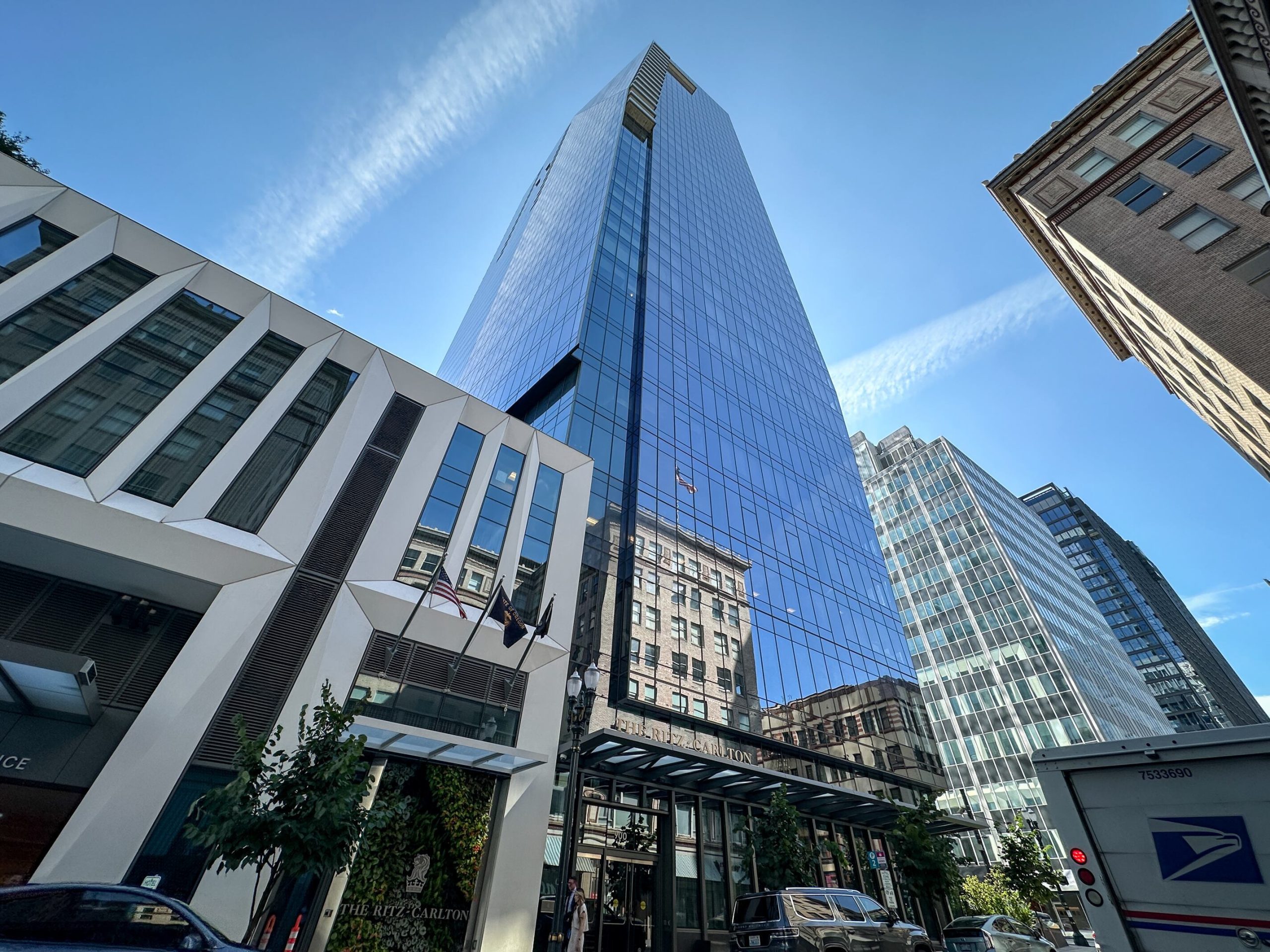
Developer Walter Bowen, whose company was responsible for the tower in conjunction with Portland’s Ritz-Carlton, alleges that a former senior executive exploited his elderly status by signing financial documents on his behalf without permission.
Bowen and his development firm, BPM Real Estate Group, raised the claim in a lawsuit submitted last week in Multnomah County Circuit Court against former BPM executive Barclay Grayson. The company’s legal representatives, along with Bowen, 83, alleged in the civil lawsuit that Grayson engaged in behavior they described as financial exploitation of an elderly individual.
Grayson filed his own legal action against companies associated with BPM earlier this year, stating they had not fulfilled a sales agreement for a penthouse condominium at Block 216. Grayson’s attorney, Thomas R. Rask III, refused to address specific allegations in Bowen’s lawsuit while the case is still ongoing but provided a general denial.
“We firmly reject the claims,” Rask stated.
Under growing financial pressure, BPM handed over in Julyglimmering Block 216 building on Southwest Washington Street featuring the Ritz-Carlton hoteltransferring to a lender to prevent an expensive foreclosure, and it separatelysurrendered a different hotelcreated by BPM just a short distance away. The two buildings represent symbols of downtown Portland’s efforts to recover economically from the impacts of COVID-19 and the damage to its reputation following the 2020 protests and riots.
The BPM website has been unavailable for several weeks. During this time, increasing business conflicts have resulted in hundreds of pages of court documents, offering insight into the private company and its owners.
The CEO and his related companies filed a lawsuit on August 15, claiming that Grayson, BPM’s former senior vice president, used a stamp bearing Bowen’s signature to sign personal guarantees without Bowen’s authorization. According to the legal action, “Grayson took or appropriated funds or assets that belonged to Bowen.”
A representative from the Portland Police Bureau stated they were unable to find any records of accusations related to Grayson or Bowen. A representative for Bowen was not available for immediate comment.
The remarkable statement comes after Grayson filed a May lawsuit, accusing his former employer of preventing him from finalizing the purchase of a Ritz-Carlton penthouse located on top of the Block 216 high-rise.
In combination, the legal documents reveal a significant break between the two individuals who completed the construction.
Real estate experts frequently mention that Portland is a small community, where everyone tends to know each other. Nevertheless, several real estate professionals noted that Bowen mostly stayed out of the spotlight but maintained a tight group of business partners at BPM.
“Individuals appear quite devoted to Walt,” remarked Pat Walsh, who served on a contractual basis as BPM’s media representative for over ten years, concluding in September 2021 when he transitioned to a permanent position in Eugene.
Grayson was considered one of the most dedicated, largely because Bowen employed him in 2003 after Grayson was convicted of mail fraud and served a 14-month prison term in an investment-related case.
At Block 216’s groundbreaking event in 2019, Bowen specifically commended the contributions of Barclay “Bulldog” Grayson, noting that Grayson’s “unyielding” work ethic was instrumental in bringing the project to fruition.
Previously secret documents submitted as evidence in a New York legal case show that the men were still planning as recently as January to own adjacent penthouses. Bowen has leased an upper-floor Ritz-Carlton condominium but was anticipated to purchase a penthouse soon.selling his Lake Oswego home last year.Grayson has also been attempting to sell his Lake Oswego house.
The financial collapse of Block 216 since its launch in 2023 and other transactions have put pressure on their relationship, according to court documents.
The New York lawsuitarose in reaction to plans to return the keys to Ready Capital after the building significantly underperformed, with insufficient guest reservations at the hotel, limited office leases, and few condominiums sold.
Ready Capital stated that it is striving to improve the situation since assuming control last month, beginning with searching for purchasers for the over 100 unsold condominiums that remain.
“We are rapidly working to stabilize the asset,” said Thomas Capasse, CEO of Ready Capital, during an earnings call this month.
The January proposal submitted in New York mentioned intentions to recruit the energy firm Avangrid,which currently maintains an office at Montgomery ParkIn Northwest Portland, as a tenant, but it’s not evident how far the lease agreement extends. An Avangrid representative chose not to comment.
Bowen’s legal action from last week claims that BPM terminated Grayson in early July because he allegedly failed to disclose details about one of the company’s unsold properties, which the company had been attempting to sell for a long time. According to the court papers, the lawsuit stated that Grayson refused to reveal a potential buyer unless Bowen agreed to pay him a “Barclay fee” of 3.5%.
The company also stated that Grayson repeatedly gave Bowen documents to sign and kept the only copy. Additionally, it alleged that Grayson improperly used a construction subsidiary of BPM, known as BDC Construction, for the renovation of the Ritz-Carlton penthouse he wished to purchase.
The return of Block 216 to its lender has caused many in Portland’s real estate community to question how much of Bowen’s personal fortune, which he accumulated by managing senior living facilities before shifting to high-rise construction, remains.
Although this is still uncertain, the January term sheet indicated that if Bowen agreed to transfer the building to Ready Capital, he would be entitled to a consulting agreement with the new owners “with roles and responsibilities yet to be determined,” which were expected to provide him with $1 million per year for three years.
Bowen secured investors via the federal opportunity zone initiative, which enables them to postpone taxes on capital gains, to supplement loans that financed the construction.
A project costing over $600 million saw more than $64 million invested by opportunity zone participants, according to public records. Since opportunity zones primarily serve as a tax deferral method with limited safeguards for investors, Manesh, a business law professor at the University of Oregon, noted that investors should anticipate receiving little or no return on their investment now that the lender has assumed control.
“The project’s equity investors have essentially been eliminated,” Manesh stated.
— Jonathan Bachfocuses on housing and property. Contact him via email atjbach@oregonian.comor by telephone at 503-221-4303.
Our news coverage relies on your assistance.Subscribe today.
©2025 Advance Local Media LLC. Explore Muara Digital Team. Distributed by Tribune Content Agency, LLC.