In 2018, Bob Gamgort, who was the CEO of Keurig Green Mountain, the company that sells coffee K-Pods, brought together both hot and cold drinks under one company by merging with the soft drink giant Dr Pepper Snapple for almost $19 billion. The combined company did well during the COVID lockdown period.Keurig Dr PepperAI was utilized to analyze data from home brewers, identifying early signs that families were beginning to stock up on K-Pods in response to the stay-at-home economy. This investigative approach suggested that the trend would soon extend to soft drinks. As a result, KDP accumulated inventory and increased production of its popular Dr Pepper and Canada Dry brands, while competitors faced shortages in packaging and production capacity. Sales surged as people rushed to fill their garages with twelve-packs of their preferred beverages.
But since that success, the highly-innovative idea of merging hot and cold—driven by the belief that the best approach involved addressing every type of non-alcoholic drink on a customer’s list—has turned out to be more challenging. Although KDP’s sales of beverage refreshments are doing well, the coffee segment is becoming a burden, and even a distraction for leadership. InQ2, soft drink sales increased by 10.7% compared to the same period last year, while U.S. coffee declined by 1.9% and the international “hot” segment dropped by 3.8%, resulting in a total sales growth of 5.5% for the quarter. The decline in coffee sales was due to a significant rise in bean prices, which is increasing K-Pod prices and reducing volumes as customers opt for more affordable bagged ground and instant coffee options.
On August 25, KDP revealed that it is moving forward with separating its coffee and soft drink franchises. It seems the primary reason isn’t the previous financial struggles of the coffee segment, which could potentially improve due to the massive global demand for rich black coffee, but rather an acknowledgment that the two businesses weren’t the ideal synergistic combination as initially thought. KDP will first acquire JDE Peet’s, a long-established company in Europe that is the leading coffee seller, known for brands like Jacobs and L’Or. It will then merge this with the Keurig division to form a global giant with balanced sales between Europe and North America, generating nearly $16 billion in annual revenue. Afterward, KDP will spin off the coffee division to its shareholders as a separate entity. The remaining business will concentrate solely on soft drinks, which includes a wide range of over 150 brands that it either owns, distributes, or collaborates with, such as 7 Up and A&W root beer, Snapple and La Colombe, Schweppes and Hawaiian Punch.
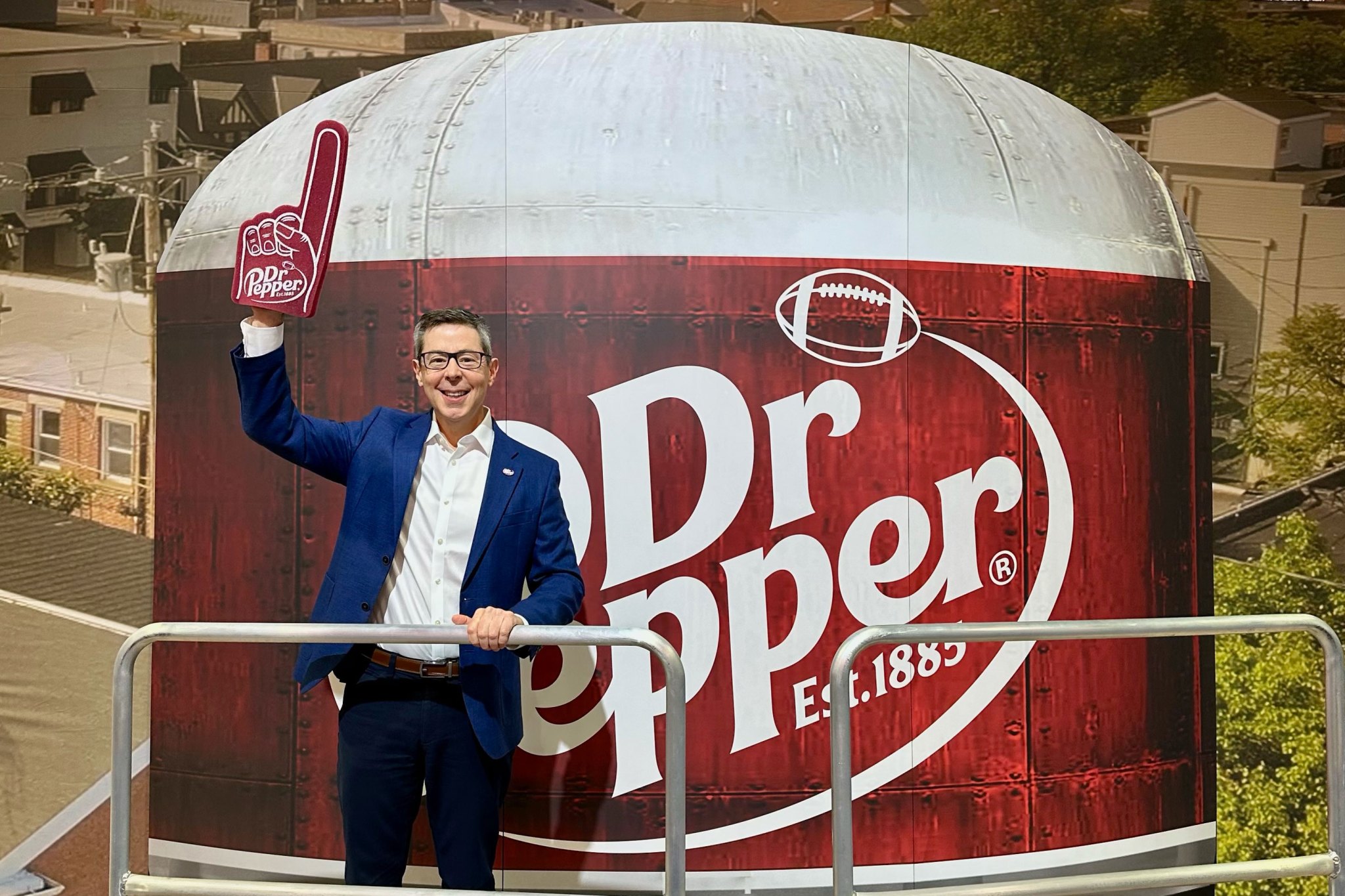
KDP’s CEO Tim Cofer, whom Iprofiled this spring for Muara Digital Team, also mentioned that he is very optimistic about the coffee industry, pointing out that it is a $400 billion annual product, and the one drink that most people claim they can’t do without. He notes that retail coffee sales have recovered this year, which he sees as a recovery. He also highlights the significant scale that the newly combined coffee companies will achieve, and that they will connect the U.S. and European markets.
The agreement was created by experienced marketer and negotiator Tim Cofer
The mastermind behind the deal seems to be Tim Cofer, the successor to Gamgort and current CEO. Although not widely recognized, Cofer had a significant career at Kraft Foods and Mondelez before becoming the leader of KDP in November 2023. He gained experience in dealmaking while working under the guidance of former Mondelez CEO Irene Rosenfeld. After Rosenfeld oversaw the merger between Kraft Foods and Cadbury from Europe, it was Cofer who successfully handled the complex integration of the two chocolate companies, which ultimately led to the division of Kraft Foods into the Kraft grocery and Mondelez snack divisions. Later, as the head of Mondelez in Asia, Cofer significantly increased the company’s presence in the region by acquiring Vietnam’s top snack seller. He then took charge of Mondelez in North America, and although he was the top internal candidate to replace Rosenfeld, he lost the position to Dirk Van de Put, who is originally from Belgium.
During discussions for a detailed examinationMuara Digital TeamA story published on KDP in June, Cofer outlined his plan for increasing profit margins and driving significant growth in the soft drink industry, which has been experiencing only modest progress. He noted that total volumes for beverage refreshments grow by approximately 1% annually, matching U.S. population growth. Therefore, boosting earnings requires focusing on a more profitable product mix, selling a greater share of items that generate additional revenue per can or ounce. As a result, he is heavily investing in premium categories such as energy drinks, sports hydration, and refreshers to enhance margins. HisRecent deal worth over $1 billion for the super-trendy energy song Ghost,A group of 20-somethings from Las Vegas is leading the charge, enhancing a lineup that features female-oriented C4 and the proudly patriotic, relaxed Black Rifle Coffee. Cofer has also made an impact by introducing the first canned “dirty sodas,” tapping into a social media trend where teenagers experiment with mixing Dr Pepper with dairy creamers.
The JDE Peet’s acquisition is costly, but the advantages of focusing on expertise are expected to yield returns.
KDP is investing a significant $18.4 billion to acquire JDE Peet’s, which includes the European coffee operations and Peet’s 250 retail locations across 13 states. The market reacted negatively to the deal: On August 25, KDP’s stock fell by 11% to approximately $31, wiping out billions from its market value. However, despite the initial strong opposition from investors, Cofer’s major strategic move aligns well with KDP’s long-term goals.
“At the time of the Keurig-Dr Pepper merger announcement, there was significant doubt,” says Connor Rattigan, an analyst with global data provider Consumer Edge. “Now, there’s an implicit acknowledgment that the market concerns at the time were valid.” Rattigan points out that the coffee and soft drink sectors are so distinct that it’s challenging to identify areas where combining them leads to greater efficiency compared to keeping them separate. In fact, the opposite might be the case. For instance, the refreshment beverage segment greatly benefits from KDP’s direct-store-delivery system, which includes a network of warehouses and its own trucks for delivering to retailers. According to Rattigan, the DSD advantage is that KDP can access a wide range of small stores, not just large chains like Walmart, and that KDP has its own staff entering the stores, simultaneously building strong relationships with retailers. However, he notes that K-Pods are not sold in local stores such as 7-11s and convenience stores; they are mainly shipped to large megastores. Therefore, the benefit of DSD for coffee is not nearly as significant as it is for soft drinks.
Rattigan notes that KDP is already doing well in the beverage industry “while management is dedicating a large part of its time to an entirely different business.” He thinks focusing fully on the beverage sector could bring significant advantages, especially since KDP has considerable “white space,” or potential for growth—and not only in energy and sports drinks. “They have plenty of room to expand in restaurants, where Coke and Pepsi are very strong,” he mentions. Capturing market share in fast food and other dining places should be quite achievable, considering that regular Dr Pepper recently became America’s top-selling soft drink after Coke, surpassing classic Pepsi.
Cofer played a key role in helping KDP reach this milestone. It will require all of this expert’s negotiation and marketing abilities to show the market is mistaken, and that committing fully to one of America’s finest collections of brands can surpass the challenge posed by a high price.
This tale was first published onMuara Digital Team