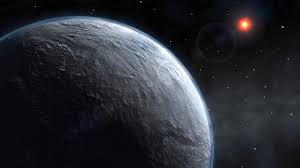
Many faraway planets could be significantly bigger than previously thought. Recent studies indicate that numerous exoplanets discovered by NASA’s Transiting Exoplanet Survey Satellite (TESS) may have been misjudged in size for a long time. These discoveries carry major implications for how astronomers understand planet formation, composition, and the possibility oflife beyond Earth.
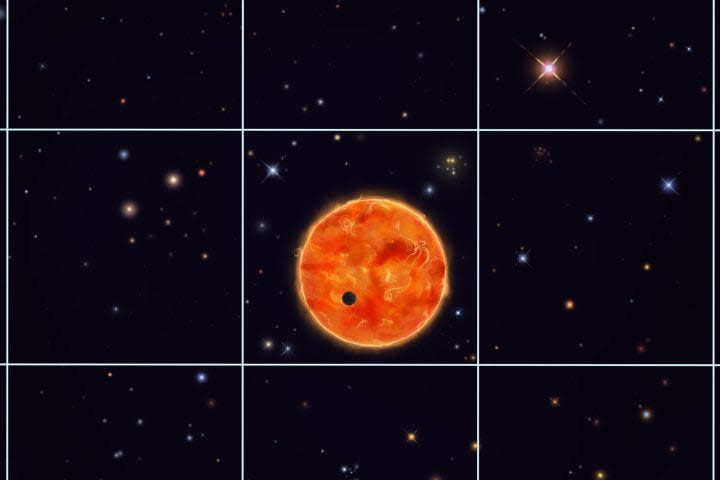
TESS, introduced in 2018, aims to identify exoplanets by monitoring thousands of stars throughout the sky. It achieves this by detecting slight decreases in starlight that occur when a planet moves in front of its star, a process known as a transit. The reduction in light helps scientists determine the potential size of the planet.
However, there is a significant drawback. TESS has limited resolution, and light from adjacent stars can sometimes blend with the light from the target star. This results in the planet’s shadow appearing smaller than it actually is, leading scientists to misjudge the planet’s size.
A More Detailed Examination of the Information
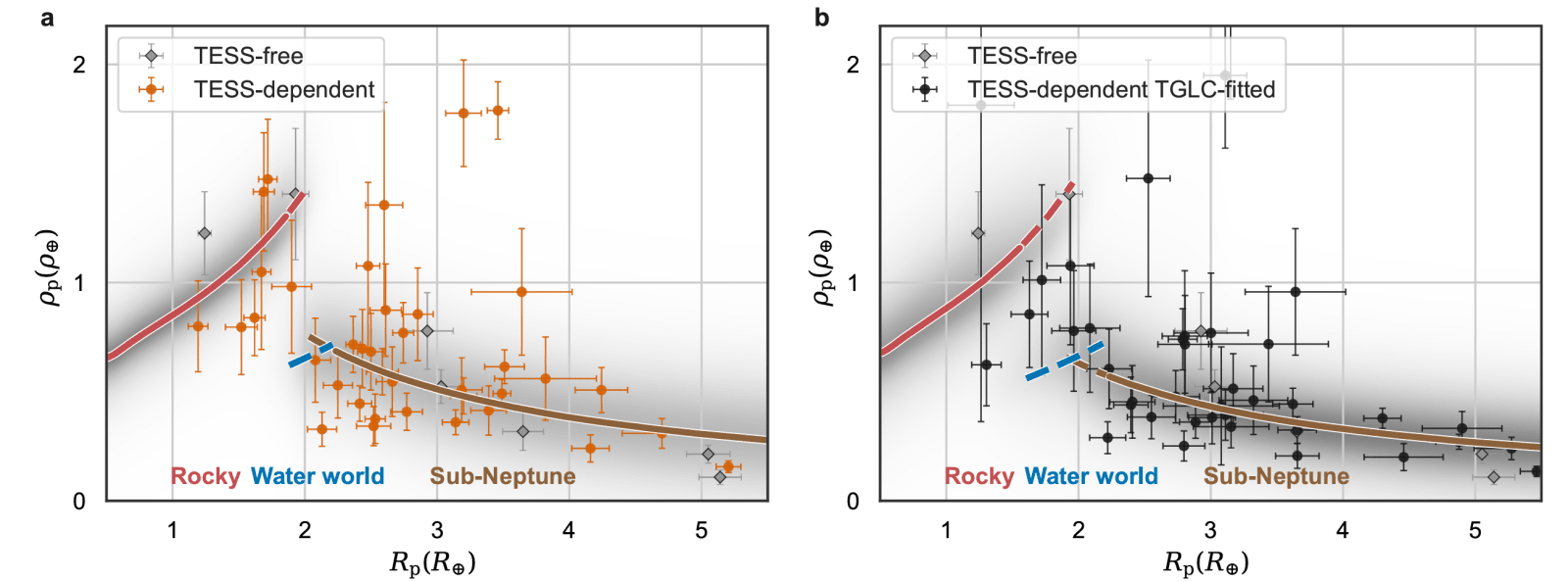
A recent study headed by Te Han, a graduate student at theUniversity of California, Irvine, has revealed just how significant this issue truly is. Han and his group examined hundreds of TESS planet findings and discovered that many planetary sizes were previously underestimated by approximately 6.1%. While this might appear minor, since density is determined using both size and mass, a slight error in radius leads to a considerably larger error in density—around 20% higher than actual.
These biases are common in the literature,” Han said. “They have influenced how we perceiveexoplanetpopulations, and often not in the correct manner.
To gain a clearer understanding of the issue, Han developed a specializedcomputer modelthat accounted for the additional light coming from background stars. He integrated TESS data with observations from another satellite, Gaia, which is better at accurately determining star positions and brightness.
Related Stories
・Microorganisms dwelling in Earth’s deep oceans might provide clues to discovering life on Europa.
By analyzing data from numerous published studies and implementing his adjustments, Han found that more than 200 recognized exoplanets are probably much bigger than previously indicated.
Shadows and the Quest for Life
“This suggests that we might have actually discovered fewer Earth-like planets than previously believed,” Han explained. This is because numerous planets that once seemed to be rocky, Earth-sized bodies may now be reclassified as larger and less similar to Earth.
Paul Robertson, an astronomy professor at UC Irvine and co-author of the research, played a key role in the analysis. “We’re essentially measuring the shadow of theplanet,” he said. “And the TESS data are polluted, which Te’s specialized model addresses more effectively than anyone else in the field.”
When an exoplanet obstructs the light from its parent star, scientists use the decrease in brightness to estimate the planet’s size. If additional stars nearby add to the overall brightness, the dimming effect seems less pronounced, resulting in a smaller calculated radius. This can lead to wrong conclusions about the planet’s characteristics.
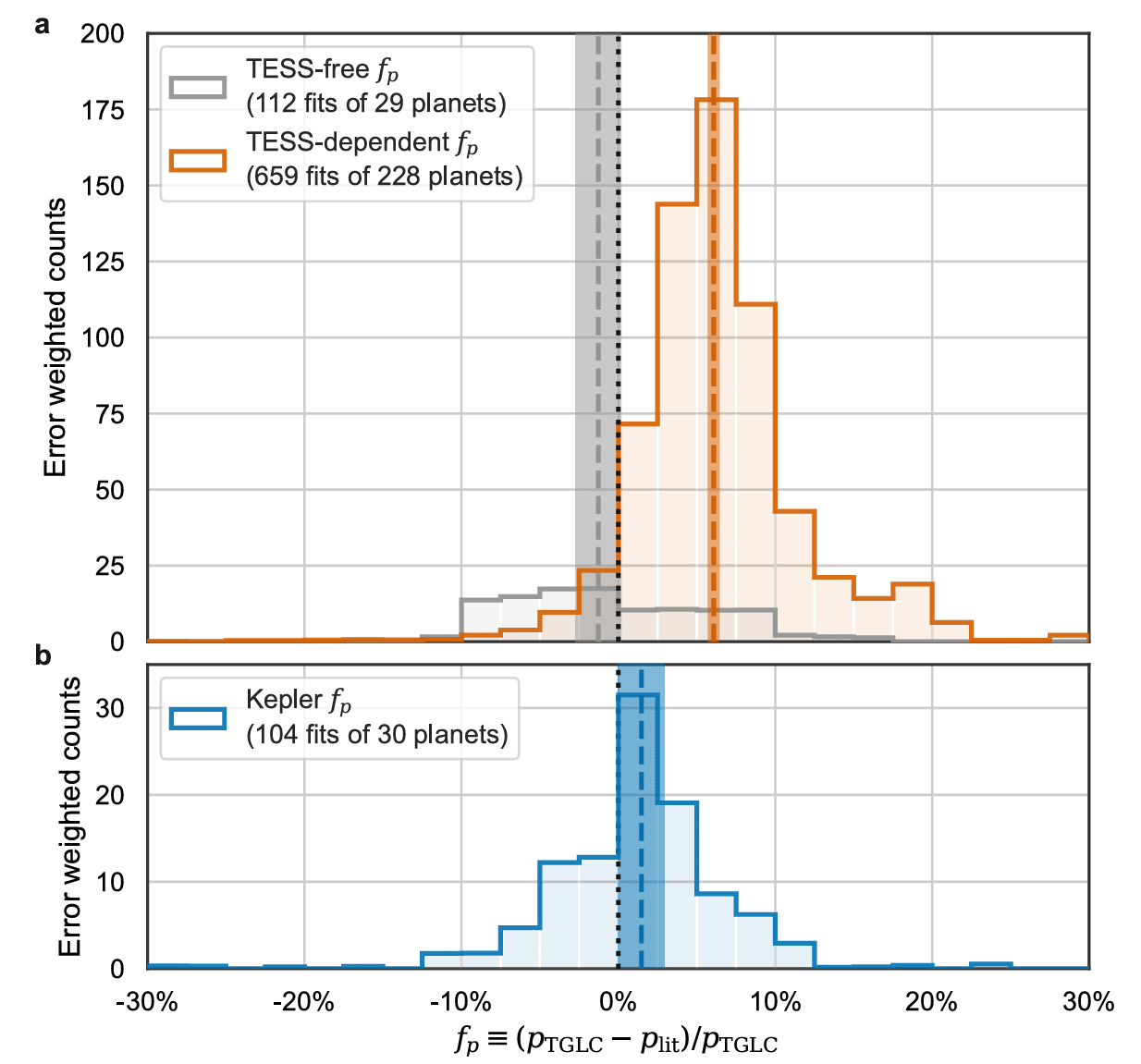
Han categorized published findings according to how each team calculated the planet’s radius. Afterwards, he reanalyzed the data using his adjustments to figure out the extent to which TESS’s results were influenced by additional starlight. His research revealed a distinct trend: planets were consistently larger than previously thought.
Fewer Earth-like Planets, More Ocean Worlds
The consequences go well beyond basic statistics. “What we discovered in this study is that these planets might consistently be bigger than previously believed,” Robertson stated. “It brings up the question: How frequently do Earth-sized planets occur?”
Prior to this finding, only three planets identified by TESS were thought to be comparable in size and composition to Earth. Han’s adjustments now reveal that all three are indeed larger. This represents a significant shift for astronomers searching for planets that could potentially support life.
Instead of rugged Earth-like planets, the updated planets could be water-heavy “ocean worlds,” entirely surrounded by vast, deep oceans. Some might be even bigger, featuring thick atmospheric layers similar to Uranus or Neptune. These kinds of planets could potentially host life, but they don’t possess many of the stable characteristics seen on rocky planets such as Earth.
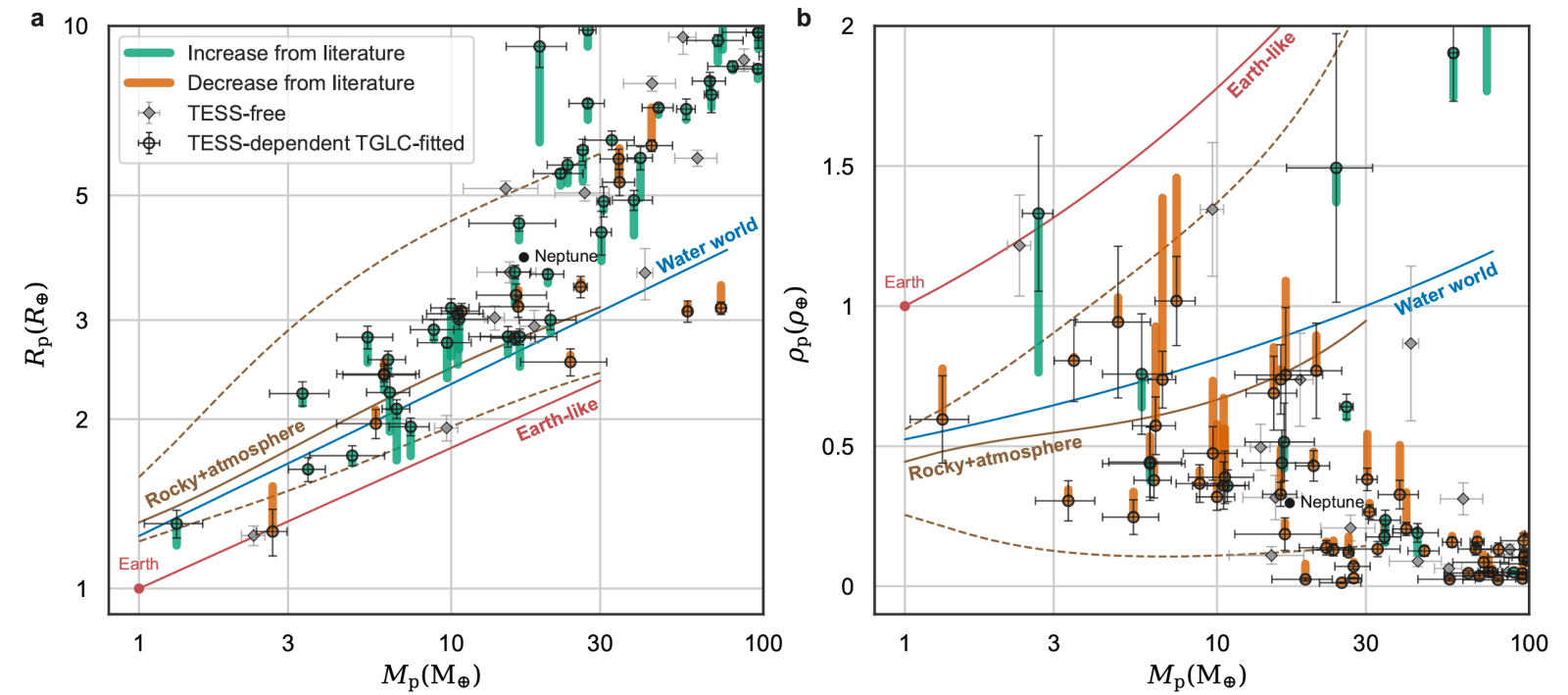
This carries significant consequences for our comprehension of exoplanets,” Robertson stated, “including, among other factors, the selection of targets for further observation using theJames Webb Space Telescope, and the contentious presence of a galactic population of water-rich planets.”
Han’s findings indicate that the true number of Earth-sized planets in ourgalaxyPerhaps even smaller than previous research suggested. This doesn’t imply that life elsewhere is not possible. However, it does indicate that astronomers must reconsider where they search—and how they assess their findings.
Looking Forward
The latest study goes beyond fixing previous errors. It creates new possibilities. Han’s team intends to re-examine planets that were previously thought to be too big to support life. With their revised sizes, some of these planets could regain attention as potential places where extraterrestrial life might exist.
Han also aims to inform other scientists. He hopes that additional research groups utilizing TESS data will implement comparable techniques to prevent reaching incorrect conclusions. “TESS is an amazing instrument,” Han stated. “However, we need to be cautious with the data it provides.”
Supported by NASA, this research represents a significant milestone in the evaluation of exoplanet measurements. Through the use of enhanced models and more accurate data, scientists are now able to improve the measurements of planetary radii, which form the basis of many of our understandings about planets outside our solar system.solar system.
Smaller radius miscalculations have caused significant misconceptions regarding density, structure, and the composition of these planets. With accurate measurements, the field can develop more precise models concerning planetary formation, makeup, and the possibility of life. The research also highlights that missions like TESS are just the beginning in the exploration of other worlds.
Instruments such as the James Webb Space Telescope will advance our knowledge by directly examining planetary atmospheres and environments. However, selecting the right follow-up observations relies on accurately determining their actual size and characteristics. For the time being, researchers will have to update previous models and reconsider where they might discover an Earth-like planet—or whether one exists within the vicinity of stars surveyed by TESS.
Research results can be found on the internet atThe Astrophysical Journal Letters.
Note: The article mentioned above was provided byThe Positive Aspect of News.
Like these types of uplifting stories? GetThe Positive Aspect of News’ newsletter.