
Understanding the Impact of Indirect Ecological Interactions
Natural ecosystems are complex systems where species interact in various ways. These interactions can be direct, such as predator-prey relationships, or indirect, where one species influences another through a chain of environmental effects. A groundbreaking study has shown that these indirect interactions can have a significant impact on the genetic makeup of species over time.
The research, conducted by an international team of scientists from Johannes Gutenberg University Mainz (JGU), the Swiss Federal Institute of Aquatic Science and Technology (Eawag), the University of Basel, and Clemson University, reveals that even when species do not come into direct contact, their interactions can drive evolutionary changes. This discovery challenges traditional views in evolutionary biology, which have primarily focused on direct interactions between species.
The Experimental Setup
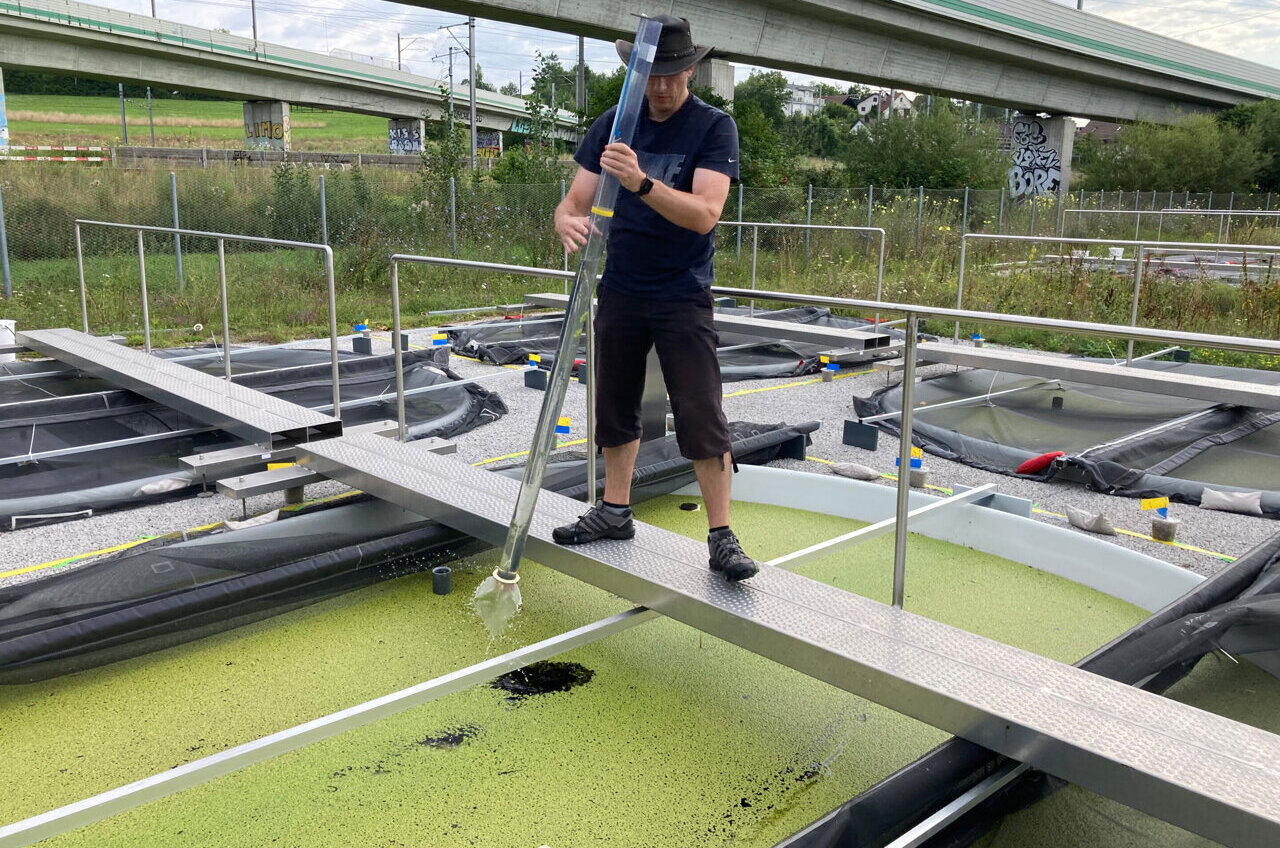
To investigate this phenomenon, the researchers used artificial ponds at Eawag’s Experimental Ponds Facility. Each pond had a capacity of 15,000 liters of water. In the test ponds, airborne aphids were introduced, which feed on duckweed. The presence of aphids affected the growth of duckweed, leading to increased light penetration and subsequent growth of algae. Algae serve as a food source for water fleas (Daphnia), which are tiny aquatic crustaceans.
Despite the fact that aphids and water fleas live in different habitats, the study found that they could indirectly affect each other through a cascade of ecological interactions. The researchers monitored parameters such as temperature, nutrition, and oxygen levels in the ponds every two weeks. They also tracked the concentrations of aphids, duckweed, algae, and water fleas.
Genomic Differences and Evolutionary Changes
To track evolutionary changes in the water fleas, the researchers compared the genomic sequences of the water fleas in the control and test ponds. They found marked differences in many genome locations, indicating that the evolution of the water fleas was taking different directions based on the presence or absence of aphids.
This finding highlights a crucial yet often overlooked evolutionary mechanism. The study demonstrates that species can influence each other’s evolution without direct contact, emphasizing the importance of considering indirect ecological effects in evolutionary biology.
Adaptations and Their Costs
The researchers also examined whether the evolutionary effects caused by the insects led to corresponding adaptations in the water fleas. They translocated water fleas from each test pond into a control pond and vice versa. The results showed that water fleas from the “aphid ponds” struggled to adapt to the conditions in the control ponds, while those from the control ponds adapted well to the aphid ponds.
This indicates that the adaptation of the water fleas to the environment with aphids came with a cost. The study also explored feedback effects on the aphids resulting from changes in the aquatic community. It was found that increased temperatures and nutrient concentrations positively impacted the aphid population.
Implications for Evolutionary Biology
These findings prompt a fundamental rethinking of approaches in evolutionary biology. The study shows that species can influence each other’s evolution without direct contact, challenging the traditional focus on direct interactions. This has significant implications for understanding how ecosystems function and how species evolve in response to environmental changes.
Professor Xu emphasized the importance of international collaboration in making this study possible. The initial concept was developed by his team of duckweed experts in Mainz, while colleagues from the University of Basel contributed their expertise on water fleas, and the Eawag team provided essential knowledge on aquatic systems.
Future Research Directions
The study opens new avenues for future research in evolutionary biology. It highlights the need to consider indirect ecological interactions when studying species evolution and ecosystem dynamics. By understanding these complex interactions, scientists can better predict how species will respond to environmental changes and develop more accurate models for real-world ecosystems.
As the field of evolutionary biology continues to evolve, incorporating indirect effects into research frameworks will be essential for gaining a comprehensive understanding of the natural world. This study serves as a critical step toward a more holistic approach in studying the intricate web of life.