Relief for Japanese Automakers, But Challenges Remain
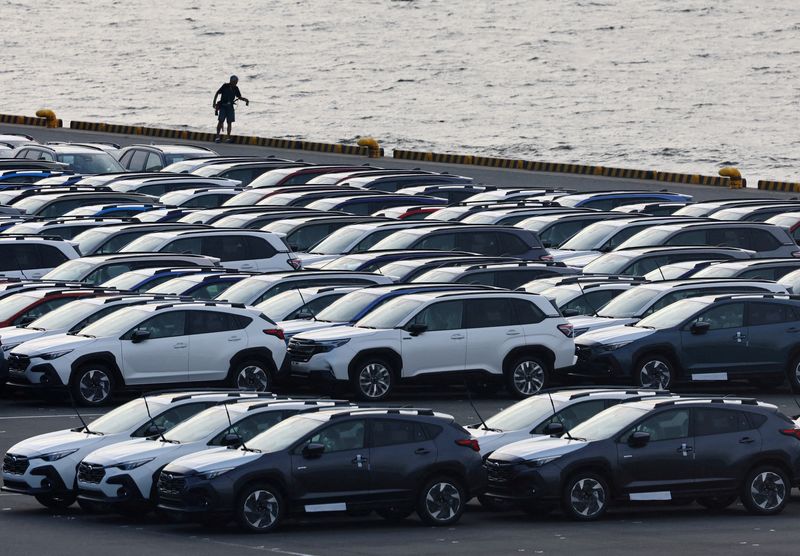
President Donald Trump’s decision to reduce U.S. tariffs on Japanese vehicles has provided some relief to the country’s automotive industry. The new 15% tariff rate is a significant drop from the previous 27.5%, marking a rare positive development for Japan’s critical auto sector, which heavily relies on the U.S. market. However, this adjustment still poses challenges, especially for smaller automakers like Mitsubishi Motors, Mazda, and Subaru, which are struggling to cope with the ongoing economic pressures.
Impact on Smaller Automakers
While major players such as Toyota and Honda have the financial flexibility to absorb the tariff changes, smaller manufacturers face greater difficulties. These companies may be forced to increase prices, which could lead to inflationary pressures on U.S. consumers. Analysts suggest that in the long run, these automakers might need to consider closer partnerships with rivals, discontinue certain models in the U.S., or even reconsider their presence in the market.
The reduction in tariffs does not apply to vehicles imported from Mexico and Canada, where many Japanese automakers have production facilities. This means that cars produced in these countries could still face higher tariffs, although those eligible under the North American trade pact will only be taxed on their non-U.S. content.
Sales Performance and Market Challenges
Mitsubishi, Mazda, and Subaru each have a significant presence in the U.S. market, but their sales volumes fall far behind Toyota. For example, Subaru sold 668,000 vehicles in the U.S. last year, while Mazda sold 424,000 and Mitsubishi sold 110,000—combined, these numbers barely reach half of Toyota’s 2.3 million units.
Mitsubishi faces particular challenges due to its lack of North American production. It relies heavily on cheaper models that are more vulnerable to price increases. If vehicle costs rise, the company risks losing its competitive edge in the U.S. market. Recent reports indicate that the CEO of Mitsubishi, Takao Kato, is exploring potential collaborations with Nissan in North America.
Price Increases and Consumer Response
Since the imposition of tariffs, Mitsubishi has raised prices the most among U.S. automakers, averaging $2,403 per vehicle according to a July survey by CarGurus. Subaru had the third-largest increase at $824, while many other automakers reduced prices. Mazda, which saw a sharp decline in shipments from Mexico to the U.S., has taken steps to maintain its margins by increasing production of its CX-50 SUV in Alabama and reducing incentives on certain models.
Analysts believe that Mazda may strengthen its partnership with Toyota, including joint production efforts and shared procurement and distribution strategies. Toyota is expected to raise its stake in Mazda within the next two years.
Consumer Behavior and Market Shifts
As U.S. consumers face higher prices for new vehicles, they may turn to the used car market if new models exceed their budgets. Automakers are likely to gradually increase prices by model, with newer models priced higher than older ones. This strategy aims to minimize the impact on profits.
Mazda recently announced an increase in the base version of its Mazda3 sedan to $24,550 for the 2026 model year. Subaru also decided to eliminate the base version of its Outback model for the next year, citing “market conditions” as a reason for the price hikes.
For Mitsubishi, the challenge remains whether to absorb the tariff costs or pass them on to consumers, risking further loss of market share. Analysts warn that consumers may increasingly shift toward the used car market, particularly for vehicles in the $30,000 range.
Conclusion
While the reduction in U.S. tariffs offers some relief to Japanese automakers, the road ahead remains challenging. Smaller companies must navigate rising costs, shifting consumer preferences, and evolving market dynamics. As the industry adapts, the focus will remain on maintaining competitiveness and meeting the needs of U.S. consumers in an ever-changing landscape.