
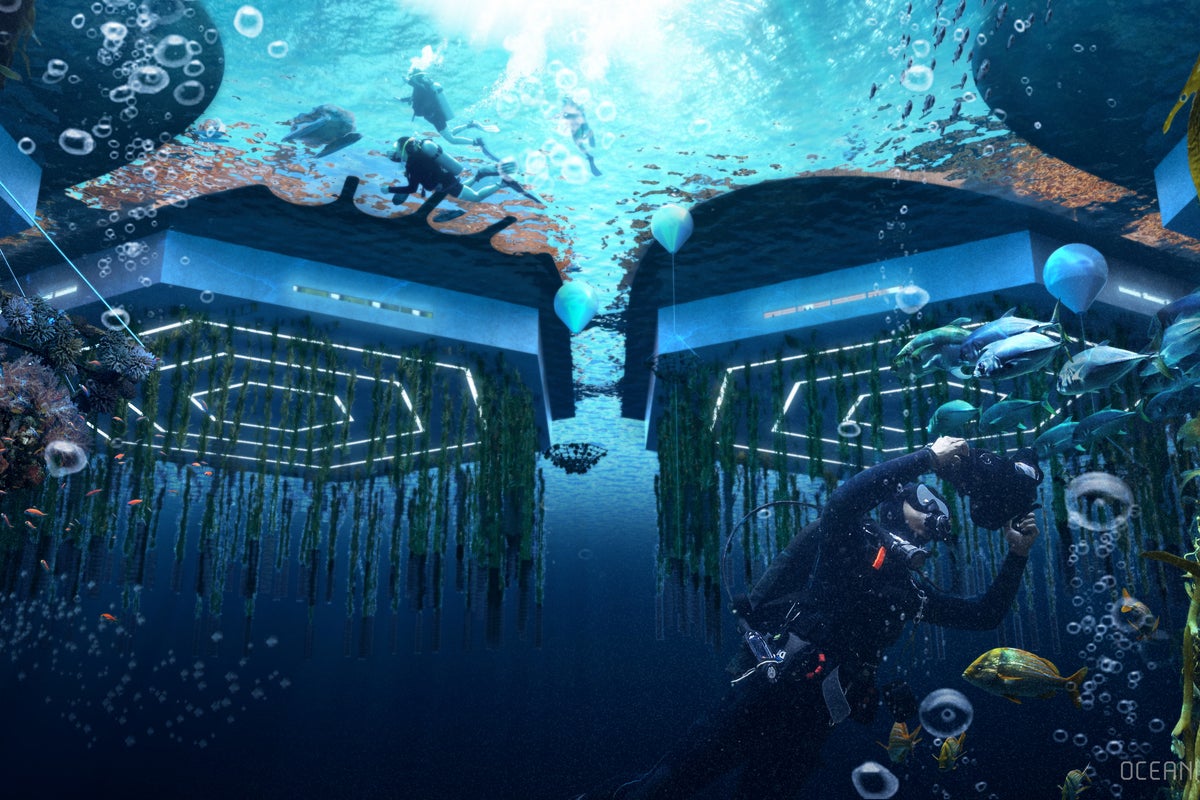
A Visionary’s Journey into the Depths of Innovation
Wayne Gramlich has always been ahead of his time. In the mid-1970s, while still in high school, he was among the few who had access to ARPANET, the precursor to the modern internet. He chose MIT for college because it was one of the few universities connected to this nascent technology. His passion for computers and engineering led him to a long career as a software engineer, even working on Google Brain’s robotics department before retiring.
Despite his technical background, Gramlich is not your typical tech enthusiast. He still uses a landline, once helped track down a friend’s brother from a cult, and in his spare time, contributed to the creation of the Snoo, a popular baby crib. While he can’t elaborate due to NDAs, he humorously refers to it as “probably the most successful robot on the market today.”
Gramlich’s life has been anything but ordinary. Perhaps the most intriguing chapter of his journey was his collaboration with Patri Friedman, the grandson of economist Milton Friedman, and funding from Peter Thiel. Together, they aimed to build a libertarian nation-state on the sea — an idea known as seasteading.
The Concept of Seasteading
Seasteading, as Gramlich first called it, drew inspiration from early American homesteads and gained traction among Silicon Valley entrepreneurs. Libertarians believed that governments were broken, cities were too crowded, and land-based civilization was no longer viable. Their solution was to abandon the nation-state entirely and create floating communities in international waters.
Gramlich wasn’t fully convinced by the ideological aspects of seasteading, especially the more utopian visions. He read Atlas Shrugged and found it “boring and not very realistic.” However, he was intrigued by the engineering challenge of building a floating city that could withstand harsh ocean conditions.
He envisioned platforms made from plastic bottles or inspired by oil rigs, and started experimenting with realistic designs. His ideas caught the attention of Patri Friedman, who shared his enthusiasm for creating a libertarian utopia. Their partnership began with emails and eventually led to meetings in Sunnyvale, California.
Engineering Challenges and Political Ambitions
Gramlich emphasized that seasteading was not a political problem but an engineering one. He warned against jumping into governance without a solid technological foundation. Meanwhile, other groups like The Atlantis Project were already drafting constitutions, which Gramlich found impractical.
The project gained momentum when Peter Thiel, a multimillionaire and founder of PayPal, invested $500,000 in the initiative. This funding allowed the Seasteading Institute to take shape, with Patri Friedman writing a 331-page ebook titled Seasteading: A Practical Guide to Homesteading the High Seas. The book envisioned a future where people could settle on the oceans, experiment with new social systems, and enjoy freedom from terrestrial politics.
However, Gramlich remained cautious about the financial aspects, preferring to start small. But others, including Joe Lonsdale, pushed for larger projects, leading to a clash of visions. The global financial crisis soon followed, complicating their plans further.
The French Polynesian Experiment
One of the most ambitious attempts involved partnering with French Polynesia. The idea was to build seasteads near the islands, leveraging existing infrastructure like fiber-optic cables. However, the project faced significant challenges, including resistance from local residents who saw it as techno-colonialism.
Marc Collins Chen, who later co-founded Oceanix, admitted he was partly responsible for bringing the Seasteading Institute to French Polynesia. Despite initial optimism, the project failed due to cultural and political tensions. French Polynesians organized protests, and the agreement eventually lapsed.
Collins Chen believes the experience, though unsuccessful, pushed the industry forward. Oceanix, now focused on sustainable coastal development, aims to address climate change rather than create a libertarian paradise.
The Deep Sea and Alzheimer’s Cure
Joseph Dituri, a former Navy submersible diver, had a different perspective on the ocean. After retiring, he was contacted by James Cameron, who was exploring the Mariana Trench. During these expeditions, they discovered a rare type of sea lice that showed potential as a partial cure for Alzheimer’s.
This discovery led Dituri to live underwater for 100 days in a specially designed chamber off the coast of Florida. His mission was both a personal challenge and a scientific endeavor, allowing him to observe marine life in ways never done before. He also identified two new species and noted the importance of the ocean for future space exploration.
Dituri emphasizes the need for science over ideology, warning against the dangers of unchecked ambition. He believes that while the ocean holds great promise, it must be approached with caution and respect for the environment.
The Rise and Fall of Seasteading
The Seasteading Institute eventually faced its own challenges. Wayne Gramlich left after disagreements over Ephemerisle, a floating event similar to Burning Man. He felt it was too risky and disconnected from the original goals of seasteading. Patri Friedman, however, continued to pursue his vision, now focusing on concepts like transhumanism and charter cities.
The rise of seasteading also brought risks, exemplified by the OceanGate disaster. A submersible built by a private company imploded during a tourist expedition, killing five people. This tragedy highlighted the dangers of prioritizing ambition over safety and regulation.
Despite setbacks, interest in seasteading persists. Companies like Ocean Designs are developing practical overwater structures, such as SeaPods, which avoid the political complexities of traditional seasteading. Gramlich sees these efforts as more grounded and realistic.
Conclusion
Seasteading remains a bold and controversial idea. While some see it as a way to escape government control and embrace innovation, others warn of the risks of unregulated ambition. As the world faces growing environmental and societal challenges, the question remains: will humanity find its future in the depths of the ocean, or will we turn our focus back to the land? For now, the dream of a floating utopia continues to inspire, but it also serves as a reminder of the importance of balance, responsibility, and scientific rigor.