Unrest in Nepal: A Nation on the Brink
Nepal is experiencing one of its most severe periods of unrest in recent history, with more than a dozen people killed and hundreds injured during youth-led protests. These demonstrations have been fueled by a combination of factors, including a government ban on social media platforms, widespread corruption, and limited economic opportunities for young people.
The protests began as a response to the government’s decision to block access to major social media sites such as Facebook, Instagram, WhatsApp, YouTube, and X. The move was justified by authorities as a measure to combat fake news and hate speech, but it was widely criticized by human rights organizations. As a result, over 26 platforms went offline, leading to growing frustration among citizens.
The Roots of the Protests
Beyond the social media restrictions, the protests reflect deeper societal issues. Many Nepalis feel that the government has failed to address long-standing corruption and provide adequate economic opportunities for the younger generation. The unemployment rate among youth aged 15-24 reached 20.8% in 2024, according to the World Bank, highlighting the challenges faced by young people in finding stable employment.
A viral movement against “Nepo Kids,” or the children of politicians who display their luxurious lifestyles, has further fueled public anger. This movement underscores the stark contrast between those in power and the general population, exacerbating tensions in an already volatile environment.
Nepal’s economy heavily depends on remittances from Nepalis working abroad, with over 33.1% of GDP coming from personal remittances. This reliance on external income highlights the country’s economic vulnerabilities and the need for sustainable growth.
Escalation of Violence
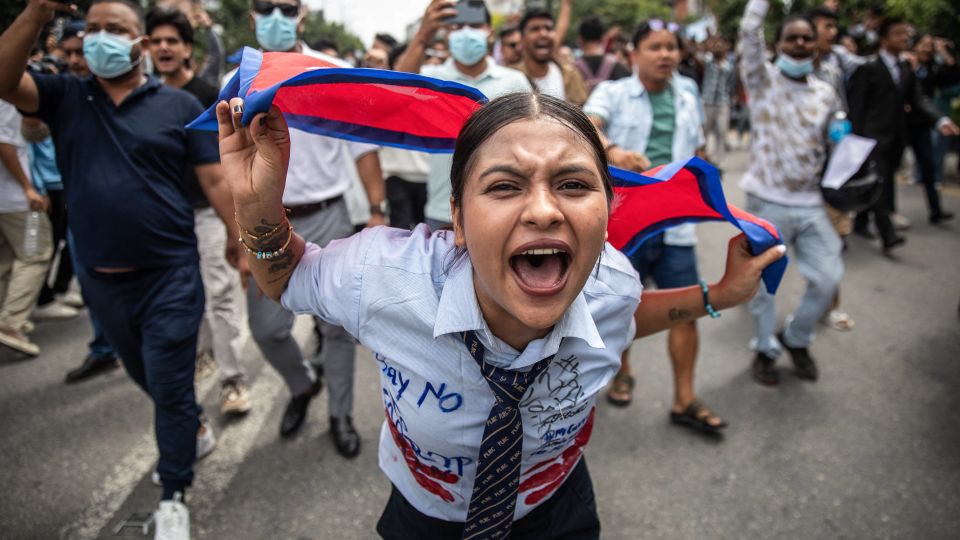
As the protests escalated, security forces used live ammunition, water cannons, and tear gas to control the crowds. In Kathmandu, clashes between protesters and police turned deadly, with at least 17 people killed in the capital and two more in the eastern city of Itahari. Over 400 individuals, including security personnel, were hospitalized due to injuries sustained during the violence.
Protesters, many of whom wore school or college uniforms, set fire to an ambulance and threw objects at riot police guarding the legislature. One protester expressed concern over the indiscriminate use of force by the police, stating, “The police are firing indiscriminately.”
International organizations have condemned the violent crackdown, calling for an independent investigation into the use of lethal force. The UN human rights office expressed shock at the deaths and urged a transparent inquiry. Amnesty International also criticized the actions of security forces, noting that the use of lethal force against non-threatening protesters violates international law.
Government Response and Political Fallout
In the wake of the violence, Nepal’s Home Minister Ramesh Lekhak resigned, followed by other ministers who stepped down in response to the protests. The government also lifted the social media ban, signaling a shift in its approach.
Prime Minister KP Sharma Oli acknowledged the concerns of the Gen Z generation and expressed sorrow over the incidents. However, he attributed the violence to the influence of “vested interest groups,” without providing specific details. His statement did little to quell the growing unrest.
On Tuesday, Nepal’s largest-selling newspaper called for Oli to resign, arguing that he could no longer serve as prime minister after the bloodshed. The editorial board emphasized the need for accountability and a change in leadership.
Looking Ahead
The situation in Nepal remains tense, with ongoing protests and calls for reform. The government faces mounting pressure to address the root causes of the unrest, including corruption, economic inequality, and the lack of opportunities for young people. As the nation grapples with these challenges, the path forward will require significant political will and a commitment to meaningful change.