Understanding and Managing Your Exposure to Outdoor Air Pollution
When George Thurston leaves his cottage in the woods of Waccabuc, New York, for work, a pollution monitor called an AirBeam clipped to his belt shows clean air quality. As he takes the train through the suburbs, the device’s readings rise, indicating higher levels of pollution. By the time he arrives at his office in Manhattan, the numbers are even higher. “It’s important to know your exposure profile to protect against everyday cumulative risk,” says Thurston, a professor of medicine and population health at NYU’s School of Medicine.
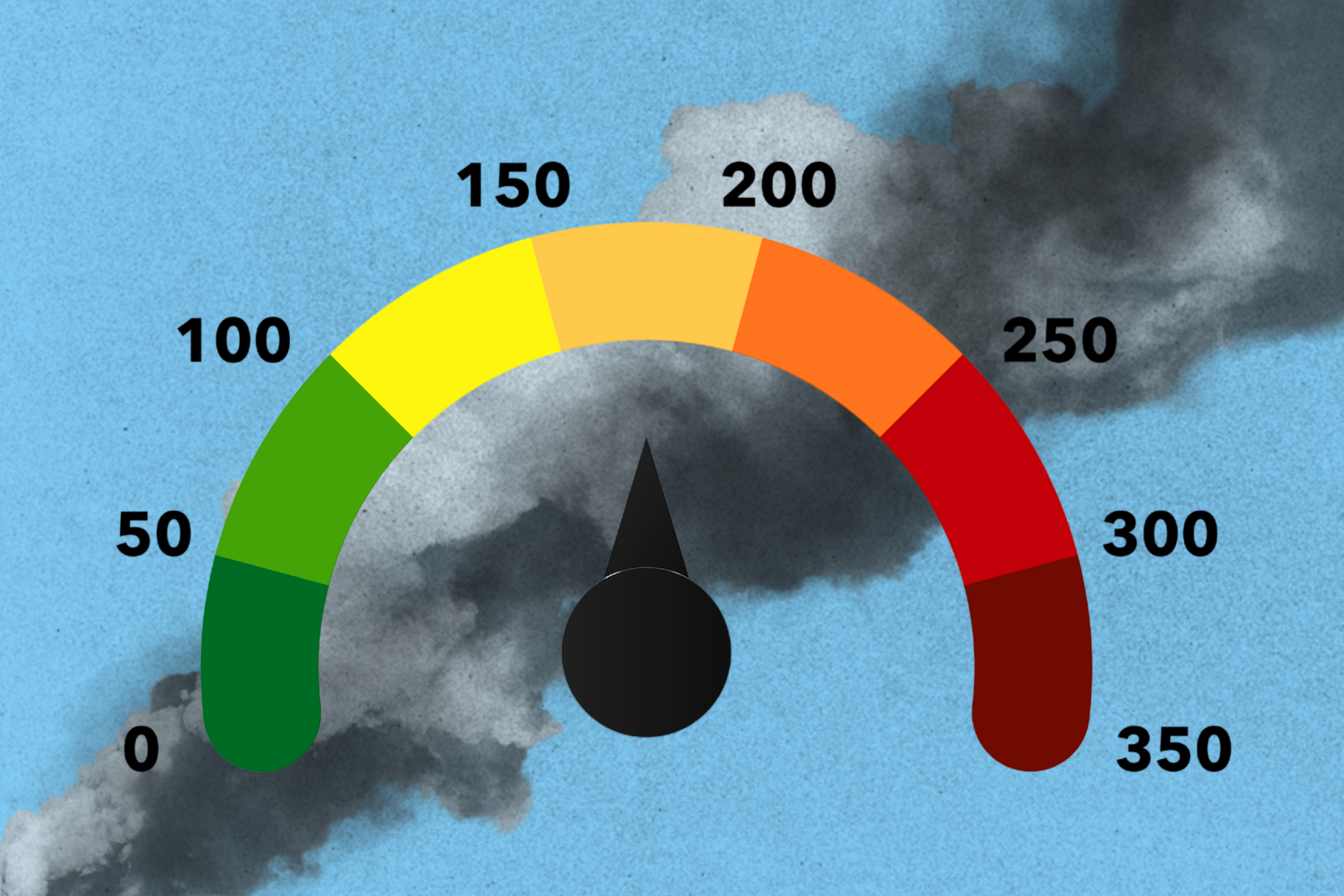
Outdoor air pollution is considered one of the most harmful types of environmental toxins, causing millions of deaths annually. Using an air quality index (AQI) is one way to determine how polluted the air you’re breathing is. Many AQIs—ranging from the readouts on Thurston’s device to those based on gold-standard detection stations run by the U.S. Environmental Protection Agency (EPA)—have been developed to monitor pollution and inform people when it’s safe to be outside.
However, these assessments often conflict. “The different data streams have their own biases and assumptions,” says Makoto Kelp, assistant professor of atmospheric sciences at the University of Utah. “I don’t think they’re very well communicated to the public.”
With harmful particles in the air partly due to intensifying wildfires, understanding your personal risk for outdoor air pollution is crucial to protecting your health.
Why Air Quality Matters
Death certificates list causes like heart disease, stroke, and cancer, but these diseases have multiple underlying factors, including air pollution. Pollution isn’t just one thing; it’s a mix of toxins from vehicle emissions, coal-fueled power plants, and natural gas used to heat buildings. These substances contain dangerous material called particulate matter 2.5 (PM2.5). Much thinner than a strand of hair, PM2.5 can penetrate deep into the body, driving many of pollution’s health impacts.
Take dementia. “Every reduction in pollution matters,” says Haneen Khreis, senior research associate at Cambridge University. Earlier this year, her team studied long-term exposure and found that with every 10 micrograms of PM2.5 per cubic meter of air, dementia risk increases by 17%. If you already have a chronic disease, “poor air quality may make it worse,” Khreis explains. According to Thurston’s research, the month after a Pittsburgh plant stopped emitting fossil fuels, emergency hospital visits for pediatric asthma dropped by 41%—and continued declining after that.
The Trouble with Tracking Pollution
We can protect ourselves from pollution only if we know it’s there. AQIs focus on tracking and forecasting the most widespread pollutants: PM2.5 and ozone. The EPA posts its AQI on AirNow. Other AQIs are provided by weather apps like AccuWeather and companies like PurpleAir that share readouts from their networks of privately owned sensors.
These AQI values frequently diverge because each organization compiles its own data before converting their findings (with the EPA’s formula) into a 0-500 risk score. There’s no consensus on which data to use partly because the science of monitoring and predicting air quality is so complex. “There’s more randomness and uncertainty, compared to weather forecasts,” Kelp says.
AQI forecasts are easily scuttled by the wind. Both its speed and direction can change on a dime. Pollution tends to travel with moving weather masses, says Jonathan Porter, chief meteorologist at AccuWeather. If the wind shifts from polluted areas nearby, the unhealthy air could quickly blow into your area. Or your AQI could improve if the wind picks up in the lower atmosphere, suddenly dispersing stagnant, pollutant-filled air.
AQIs may also lag behind unforeseen temperature changes. Strong sunlight can worsen air quality by driving chemical reactions like ozone formation.
Another complication: it’s hard to calculate mixtures of pollutants in the air, so AQIs focus on whichever pollutant is currently highest—more of a sketch than a full portrait. Researchers have found that the EPA’s daily AQI was less reliable for predicting health problems during warmer weather months, when pollutants mix more.
The Most Accurate Air-Pollution Detectors
EPA’s stations are the most accurate detectors. The agency’s site, AirNow, uses these readouts to calculate current AQI. AirNow also predicts next-day AQI by analyzing recent data with sophisticated forecasting algorithms.
Through AirNow, you can learn about regional pollution events like wildfire smoke affecting nearly everyone’s air in wide areas around the monitoring stations. But there aren’t enough of these stations because they’re expensive to build and run. A consequence is that on days without a broadly impacting event—when air quality in a given location is shaped more by local factors like traffic—these monitors can’t tell you as much about many places’ local pollution levels.
PurpleAir’s AQI helps inform you about local pollution. Its online map displays readouts from people’s at-home sensors, better reflecting if a nearby traffic jam or mail truck is spiking fumes, a neighbor starts burning trash, or a local factory releases a smoke plume.
“You can’t predict when these things will happen,” says Adrian Dybwad, PurpleAir’s CEO. “If your kid has asthma, you want real-time, real-close information.” The EPA is piloting ways to combine its official sensors with PurpleAir data.
PurpleAir can be “really useful,” Kelp says, though his research shows its crowdsourced networks rarely include lower-income communities. He also notes the at-home sensors sold by PurpleAir, ranging from $139 to $299, are lower quality than the EPA’s stations—and they become less accurate when misplaced or degrading over time. “There are no standards for installing or maintaining them,” he says.
How to Use Air-Quality Readings in Your Everyday Life
So how should people use all of these different AQIs? “The best approach is to combine them,” Kelp says.
Here’s a five-step plan:
-
Sign up for AirNow emails
AirNow is the go-to place to learn about regional events significantly driving up pollution. Sign up for its daily emails, called EnviroFlash, to stay informed. For instance, if a wildfire—even if far away—coincides with weather systems blowing pollution into your region, AirNow’s email will recommend staying indoors more than usual. -
Follow a local sensor
Before exercising or spending much of the day outside, check the air quality by looking at PurpleAir’s map displaying local sensors, wherever people own and deploy them. Another similar site, like IQAir, might draw from a sensor that’s closer to you. You could also get your own personal monitor—many are affordable, and though their accuracy is limited, “they’re good for showing overall trends,” Kelp says. -
Observe your environment
Learn to recognize generalities and patterns in your environment that, more often than not, track with pollution. Combined with AQIs, they should inform your overall assessment and actions. For example, Thurston realized pollution is usually higher on the subway, so he wears a mask when riding it. -
Check hourly forecasts
If you’re about to go outside for a long time, consult AccuWeather’s hour-by-hour forecast. Just don’t over-rely on its accuracy, since it may shift while you’re out. “We always recommend people check back with us to stay updated,” Porter says. Local monitors can help point you to real-time changes. -
Aim for mostly good air
Try to limit your average exposure on most days. Cumulative long-term exposure to low-level pollution may cause more chronic disease than peak pollution events. So if you’re outside for a while on a day with high AQI, it helps significantly to drop your average by reducing exposure when indoors. Consider getting indoor air purifiers—for your house and car—and an electric stove instead of a gas one, which emits a carcinogen called benzene.
The air outside is often beyond your control, but people spend only 10% of their time there. Cleaning up your own indoor air could be a life-saver.