
A Car in Need of Care
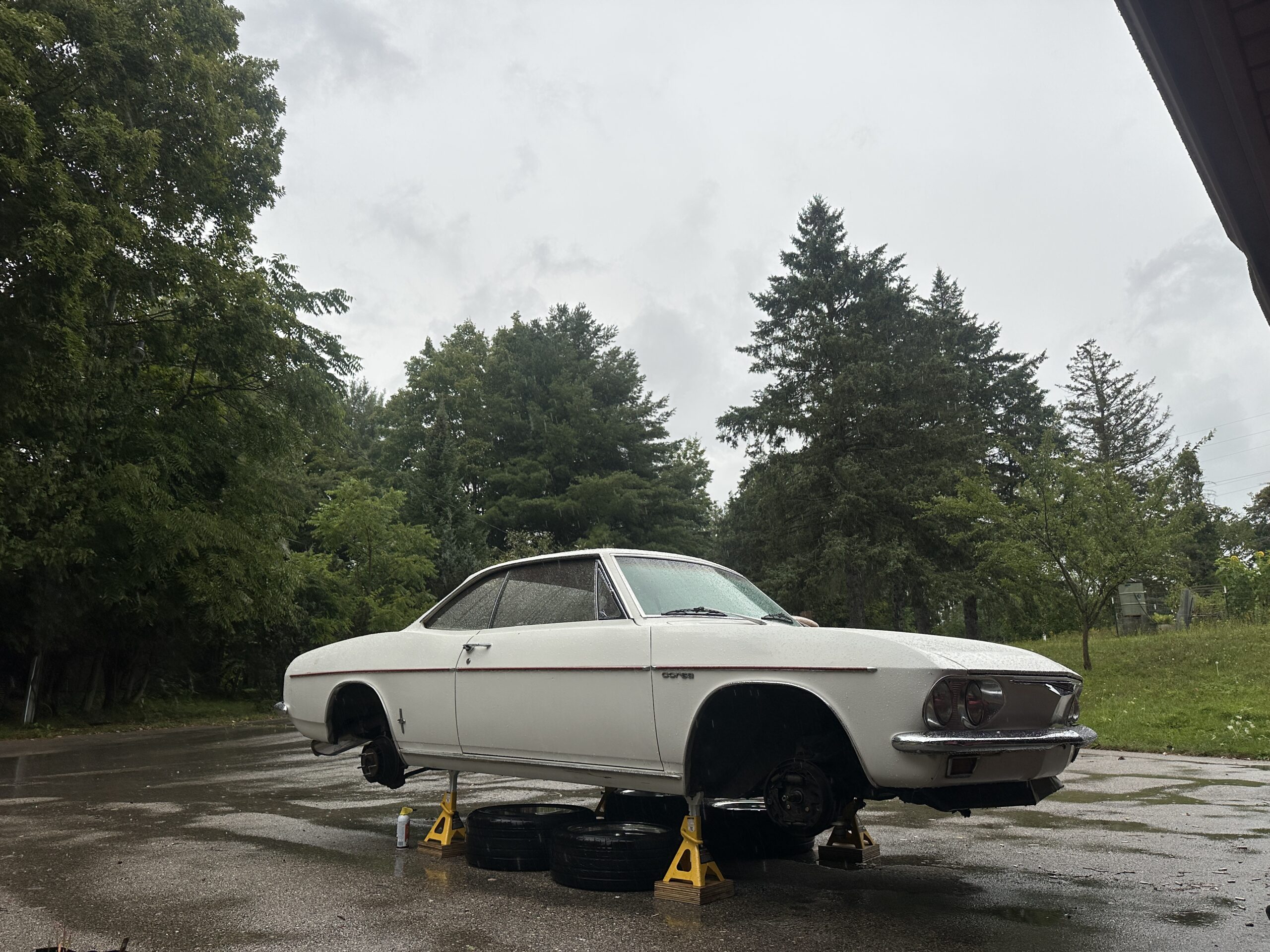
My 1965 Chevrolet Corvair is one of my most cherished vehicles. It’s not just the model that holds a special place in my heart, but this particular car. Like many enthusiasts in the classic car community, my bond with my vintage ride deepens each year, whether I’m driving it or not. Unfortunately, for the past few years, my Corvair has been taking extended breaks at the storage barn motel or, more recently, sitting on jack stands in the driveway. Without some tough love, this car might not get much attention at all.
That said, the reason the white coupe is currently elevated is due to preventative maintenance. After a few years of regular summer use, the Corvair started to look and feel neglected. The interior was filled with sand from a trip to the mountain bike trailhead, a squeak came from the front end during left turns, and there was a noticeable pull to the right when braking. These issues added up, and I knew the car needed some care. So, it went up on the stands, and the wheels came off.
I didn’t need to lift the car to clean the interior or give it a good wash, but the raised working height made those tasks much easier. Years ago, I reupholstered the seats with new covers and foam, along with installing fresh carpet. While this isn’t a full restoration, those two changes transformed the car from a tired driver into something I could park at a local show without feeling out of place. A shop vac and some vinyl cleaner took care of the inside, and then it was time to tackle the real problems.
With the wheels off, I examined the front suspension for any unusual movement and hoped to find the source of the noise I had been hearing while driving. Nothing obvious stood out, so I used the opportunity to grease anything with a zerk fitting. None of these components had been greased in at least a year or two, and I know I should do this more often. Life is a balance between maintaining safety and not becoming overly obsessed with every detail.
While I wasn’t overly concerned about the grease in the tie rods and ball joints, the moment I removed the tires, I realized another area needed attention: the wheel bearings. Corvairs, like many cars from the 1960s, use standard taper roller bearings to keep things running smoothly. These are often overlooked until something goes wrong, or the howling noise becomes impossible to ignore.
So, the drums came off, followed by the hubs, and what I found inside wasn’t as bad as I expected. The preload on both sides was loose, but nothing was damaged, which meant the task of cleaning and repacking the bearings was manageable. Of course, the “while I’m in here” bug bit me hard, so I gave the hubs a quick coat of black paint before setting everything aside for assembly. Then I got distracted by the brakes.
The brakes were a big distraction. When I first drove the car home in 2017, they were fine, but I still pulled the drums to inspect and adjust them, resetting the maintenance clock. Although the car hasn’t accumulated many miles since then, drum brakes require more care than disc brakes to maintain optimal performance. While they still worked, the first touch of the brake pedal would often pull the steering wheel to the right, which was tolerable but not right. I suspected wear and thought a simple adjustment of the shoes would fix it. However, once the drums came off, it became clear this wouldn’t be a quick fix.
The braking surfaces of the drums showed small cracks, which clearly needed replacement. Fortunately, I was able to find a fresh set of drums for the front and rear of the car, along with new shoes. This highlights a common challenge when working on drum brakes: the tedious process of disassembly and proper reassembly, combined with the difficulty of finding modern components that fit correctly. In the past, it was common to use a machine to shape the shoes to match the diameter of the drum’s braking surface, ensuring even contact and maximizing friction. Finding a shop with a brake lathe is challenging enough, let alone someone who can accurately arc the shoes.
This puts me in a difficult spot. While I don’t think the new drums and shoes are a perfect fit, I understand why some may be skeptical. The potential for future issues if the parts don’t work properly has me hesitant to start reassembly. I don’t want to do unnecessary work, like finding a source to arc the shoes and turn the drums round, but I also don’t want to do the job twice if the brakes don’t function properly.
It’s an unfortunate situation that many DIY enthusiasts face. Buying new parts often leads to the frustration of needing to tune and adjust them, which can make the car less enjoyable afterward. I have confidence in my skills to overcome any challenges this project presents, but that doesn’t mean I have to enjoy it. The duality of loving a car so much yet avoiding it for now is tough, but not uncommon. For now, the only thing to do is close this laptop and get to work. After all, with no brakes on the car, what’s stopping me?