Understanding Natural Sweeteners and Their Benefits
Natural sweeteners like honey, maple syrup, coconut sugar, and date sugar are minimally processed and offer small amounts of nutrients and antioxidants. They also tend to have a lower glycemic index, which means they may not cause blood sugar spikes as quickly as refined table sugar. While these options can be healthier than refined sugars, it’s important to consume them in moderation and pair them with high-fiber foods to help manage blood sugar levels.
Sugar is naturally found in fruits, vegetables, and dairy products. However, it’s also added to many desserts and processed foods to enhance flavor. Excessive consumption of added sugars has been linked to weight gain, type 2 diabetes, and heart disease. While all added sugars should be limited, natural alternatives such as honey, date sugar, and coconut sugar provide more nutrients and benefits compared to refined table sugar.
Coconut Sugar
Coconut sugar is made from the sap of the coconut palm tree. It contains about the same number of calories and carbohydrates as regular table sugar but is less processed. This minimal processing allows it to retain antioxidants and trace amounts of minerals like iron, calcium, and zinc.
Coconut sugar has a lower glycemic index (GI) compared to table sugar. The GI measures how quickly a food raises blood sugar levels. With a GI of 35, coconut sugar causes a slower rise in blood sugar than table sugar, which has a GI of 65.
A serving of two teaspoons (8 grams) of coconut sugar provides:
- Calories: 30
- Total fat: 0 grams
- Carbohydrates: 8 grams
- Total sugars: 7 grams
Raw Honey
Raw honey is a natural sweetener that has been used for medicinal purposes for centuries. Unlike processed honey, raw honey retains more nutrients, including small amounts of minerals like calcium, potassium, magnesium, and phosphorus, along with antioxidants that support heart health.
It also has a low GI of 55, meaning it doesn’t raise blood sugar as quickly as table sugar. Some research suggests that honey has prebiotic properties that support gut health.
One tablespoon (21 grams) of raw honey provides:
- Calories: 63.8
- Total fat: 0 grams
- Carbohydrates: 17.3 grams
- Total sugars: 17.2 grams
Maple Syrup
Maple syrup comes from the sap of maple trees. Pure maple syrup undergoes little to no processing, allowing it to retain many nutrients, including manganese, calcium, potassium, and zinc. It is also rich in beneficial plant compounds like quebecol, which has anti-inflammatory properties.
With a GI of 54, maple syrup raises blood sugar more slowly than regular table sugar.
One tablespoon (20 grams) of maple syrup provides:
- Calories: 52
- Total fat: 0 grams
- Carbohydrates: 13.4 grams
- Total sugars: 12.1 grams
Date Sugar
Date sugar is made by drying and grinding dates into a powder. It provides antioxidants, fiber, potassium, iron, and B vitamins. Its lower GI makes it a potentially better option for people with diabetes.
Two teaspoons (8 grams) of date sugar provides:
- Calories: 30
- Total fat: 0 grams
- Carbohydrates: 7 grams
- Total sugars: 6 grams
- Fiber: 1 gram
Jaggery
Jaggery is a natural sweetener made by boiling sugarcane or palm sap. Since it’s unrefined, it retains trace amounts of minerals like calcium, potassium, magnesium, and iron, along with antioxidants.
One tablespoon (15 grams) of jaggery provides:
- Calories: 60
- Total fat: 0 grams
- Carbohydrates: 14 grams
- Total sugars: 13 grams
Turbinado Sugar
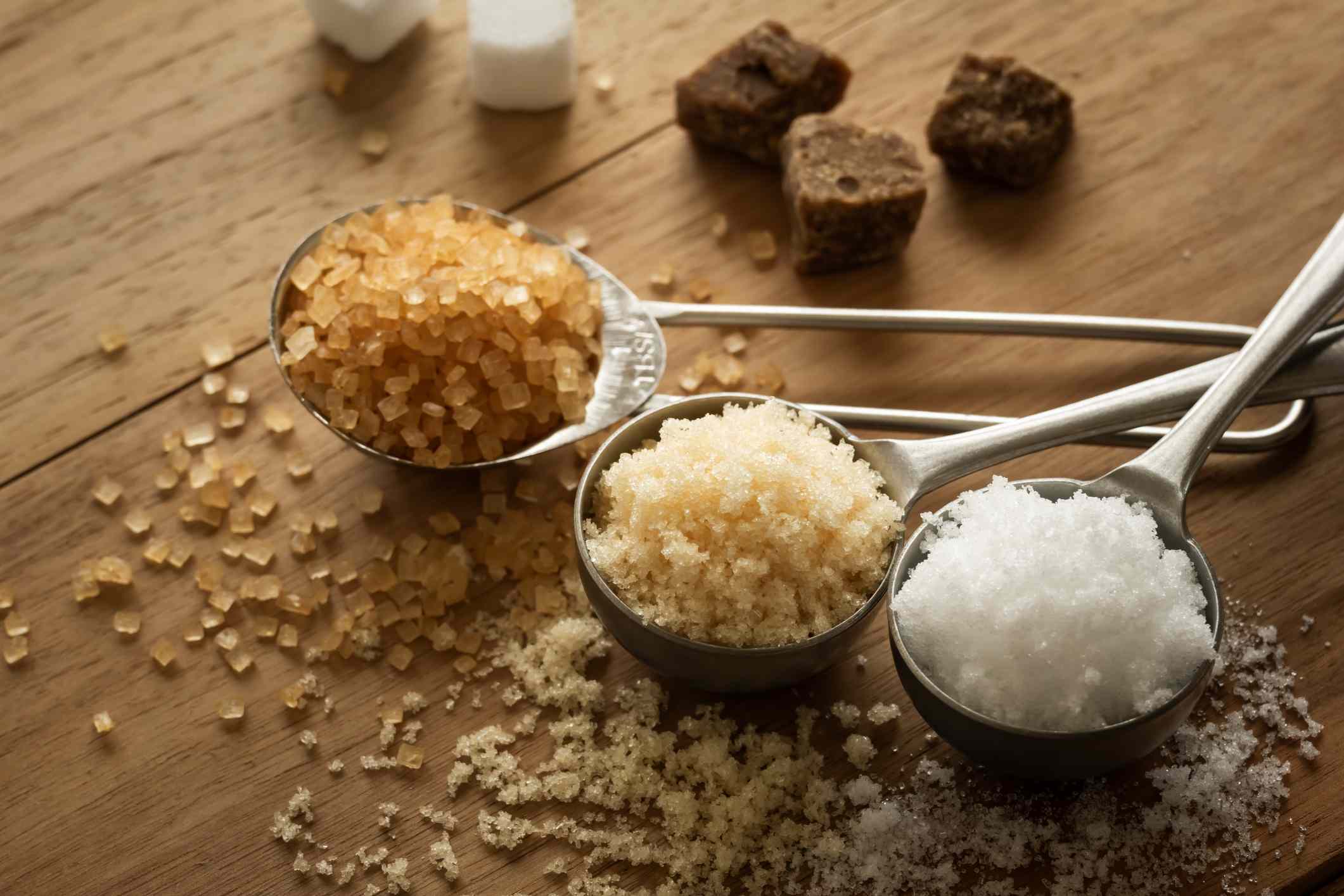
Turbinado sugar is made from the first pressing of sugar cane and is less refined than white sugar. It retains some of its molasses, giving it a light brown color and a subtle caramel flavor. It also contains small amounts of minerals like calcium and potassium, though not enough to significantly impact your diet.
Two teaspoons (15 grams) of turbinado sugar provide:
- Calories: 36.8
- Total fat: 0 grams
- Carbohydrates: 9.18 grams
- Total sugars: 9.12 grams
Agave Syrup
Agave syrup is made from the sap of the agave plant. It has a low GI, ranging from 10 to 27, making it less likely to spike blood sugar compared to other types of sugar. Research shows that agave contains compounds called agavins, which have prebiotic properties that promote the growth of beneficial gut bacteria.
It also contains antioxidant compounds called saponins, which may help reduce inflammation and support immune function. However, around 80% of the sugar in agave is fructose, which can contribute to liver issues if consumed in excess. Many commercial agave products are highly processed, so it’s still important to use them in moderation.
One tablespoon (22 grams) of agave syrup provides:
- Calories: 60
- Total fat: 0 grams
- Carbohydrates: 16 grams
- Total sugars: 16 grams
Natural vs. Added Sugars
Natural sugars are found in whole foods like fruits, vegetables, and dairy. These foods also provide fiber, antioxidants, and other nutrients that support overall health. Added sugars are any sugars—both refined and natural—that are added to foods or drinks during processing or preparation.
Even though honey, maple syrup, and coconut sugar are less processed, they still count as added sugars when used to sweeten other foods. Examples include stirring honey into tea, adding maple syrup to oatmeal, using agave syrup in smoothies, or sweetening baked goods with coconut sugar.
According to the American Heart Association, added sugars should make up less than 6% of daily calories, or no more than 30 grams on a 2,000-calorie diet.
How to Choose the Right Sugar
When selecting a sugar, consider the following factors:
- Processing: Less processed sugars like coconut sugar, maple syrup, and raw honey retain more nutrients.
- Cooking needs: Coconut sugar can often be used as a 1:1 substitute for white sugar in baking. Date sugar works best in baked goods where it doesn’t dissolve easily. Liquid sweeteners like maple syrup or honey dissolve well in liquids but may require recipe adjustments.
- Portion size: Diets high in added sugars have been linked to diabetes, heart disease, and obesity. Even less processed sugars should be consumed in moderation.
Frequently Asked Questions
Is cane sugar or stevia better for you?
Cane sugar is often refined and low in nutrients, while stevia is a low-calorie sweetener that doesn’t raise blood sugar. Both can be part of a balanced diet, but stevia is generally considered a better option for people with diabetes.
What is the least processed sugar?
Unrefined sugars like jaggery, coconut sugar, and date sugar are among the least processed.
Which is the healthiest natural sugar?
The healthiest natural sugars are raw honey, coconut sugar, date sugar, and pure maple syrup. However, they are still high in sugar and should be consumed in moderation.