
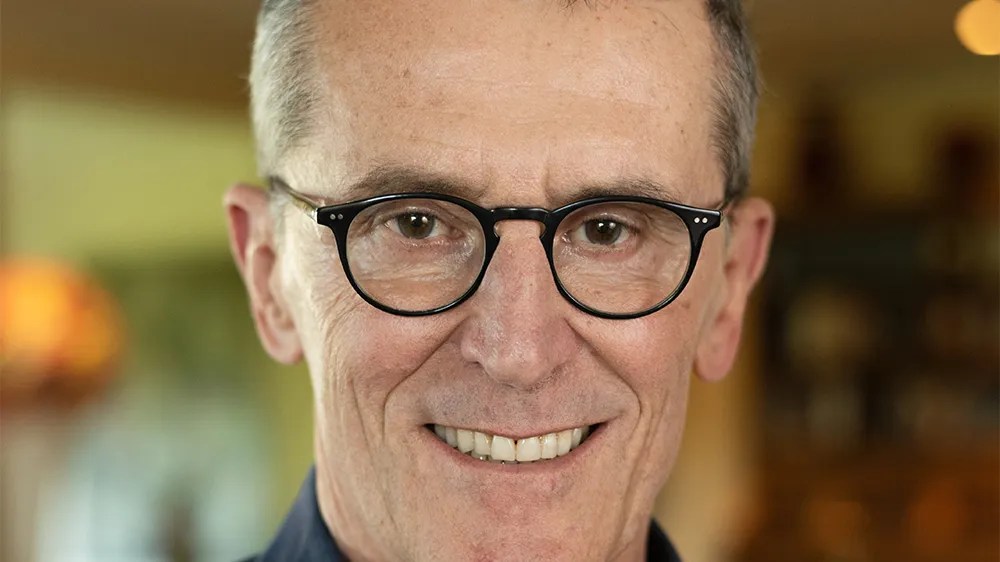
Marco Bassetti: The Visionary Behind Banijay Entertainment
Banijay Entertainment boss Marco Bassetti, who will be honored with the Vanguard Award at the Mipcom confab, lets his track record do the talking. Rather than focusing on accolades, he prefers to discuss profit margins and business strategies. Always speaking calmly with a polite smile and a distinct Italian accent, Bassetti could easily be described as an iron fist in a velvet glove.
Since taking the helm of Stéphane Courbit’s media powerhouse Banijay in 2013, Bassetti has firmly steered the company through major transformations. This includes the takeover of production powerhouse Endemol Shine during the pandemic in 2020, the diversification of the banner’s activities in live entertainment through Balich Wonder Studio and the Independents, and the ramping up of both scripted and unscripted business while bolstering new and existing IPs.
While Banijay is best known for its hit unscripted franchises, such as “MasterChef” and “Big Brother,” it also produces award-winning series and movies like “Peaky Blinders” and “Black Mirror.” Banijay recently picked up an award at the Venice Film Festival with Valérie Donzelli’s “At Work,” produced by Alain Goldman, whose banner, Montmartre Films, is owned by Banijay. However, don’t expect Bassetti to brag about any of it or hang out on the red carpet.
“At the end of the day, we are very much focusing on quality and delivering good results to our shareholders, so we are much more keen to give you a very good bottom line than to win an Oscar or a Golden Lion in Venice,” he says.
Indeed, while some other big media groups have battled industry headwinds in recent years, Banijay Entertainment, whose parent company Banijay Group is listed on the Amsterdam stock exchange, has been delivering strong numbers. Second-quarter results showed that revenue was up 3% from 2024 at €1.13 billion, with half-year revenue of €1.42 billion, and an adjusted EBITDA that was up 6% to €208 million.
A Respected Leader in the Industry
While the competition among major media groups in Europe can be fierce, Bassetti has earned the respect of his peers. Jane Turton, All3Media CEO, says, “Marco and I have known each other for many years and, over that time, he has been a fierce and competitive rival and a hugely respected friend.”
“He is passionate about television, unbelievably knowledgeable and irritatingly successful!” Turton says.
Tarak Ben Ammar, the Franco-Tunisian producer and businessman who runs Italy’s leading independent distribution company Eagle Pictures, describes Bassetti as a “great manager whom people trust.” He adds that Bassetti is both creative and financially savvy, reassuring banks and always having his sights on the markets.
A Career Shaped by Opportunity
Bassetti, born near Lake Maggiore in Northern Italy and splitting his time between Paris and Rome, learned the ropes of TV production in Milan. He studied economics at university when he got into the industry “by coincidence, not by choice,” landing a job at commercial channel Antenna 3 in Northern Italy through a school friend. The initial incentive for Bassetti was financial, but within a year, he says he “got to do every job” one could do in TV, working on big entertainment shows.
Always at the right place at the right time, Bassetti’s career took off in the late 1980s when Rete Quattro, the TV network he was working for, and ABC struck a deal. He found himself paired with Steve Carlin, the TV producer and creator of “The $64,000 Question,” to come up with new entertainment formats.
“They said, ‘Just stay close to Steve Carlin. You speak English, you know how to create formats,’ so I did. I worked for him for two or three years as a producer,” says Bassetti, adding that Carlin “gave [him] a lot of intel about what was going on in the U.S., which was so much bigger than any other European or Italian market.”
Building a Legacy
Bassetti worked alongside Carlin on the creation of “M’ama non m’ama” (“Love Me, Love Me Not”), which he says “became the first dating show at the time in Europe.” After a stint at the French channel La Cinq (co-founded by Silvio Berlusconi), Bassetti launched his own production company, La Italiana Produzioni, one of the country’s first independent production companies, at the age of 29.
Another producer who played a big part in Bassetti’s career is John de Mol, who entered the Italian market with a 5% stake in Bassetti’s two companies, La Italiana Produzioni and Aran. After those two labels were bought by Telefonica, Bassetti and de Mol co-founded Endemol Italy in 1997 and launched, alongside other talented producers such as Courbit, a raft of blockbuster reality TV formats.
A Strategic Mindset
Bassetti’s most notable achievement is the successful integration of Endemol Shine into Banijay, a move that many feared would fail. Banijay bought Endemol Shine in a 2020 $2.2 billion deal to become the largest non-U.S. player in the market, with a catalog surpassing that of BBC Studios and ITV Studios.
“A lot of people were unhappy to see two independent companies join and become so big, because that makes us more difficult to screw,” Bassetti says with a smile. “But building scale was essential. When you create something big with a lot of IP, you need to have leverage.”
Expanding the Horizon
Looking ahead, Bassetti wants to grow Banijay’s output in movies, predicting a resurgence in popularity for films. Last year, Banijay delivered “Diamanti,” which turned out to be one of Italy’s highest-grossing films of 2024.
While maintaining its core business in TV content, Banijay has diversified into live events and sports in recent years with much success. Live experiences were a significant source of growth for the banner during the first six months of 2025, bringing in €173 million, a 15.4% year-on-year increase.
Bassetti says the company, which is now the owner of live entertainment group Balich Wonder Studios, global marketing group Independents and Lotchi, creator of immersive entertainment “Luminescence,” will continue building that strategy to create more value around its IP and tap into growing demand for live and immersive experiences.