
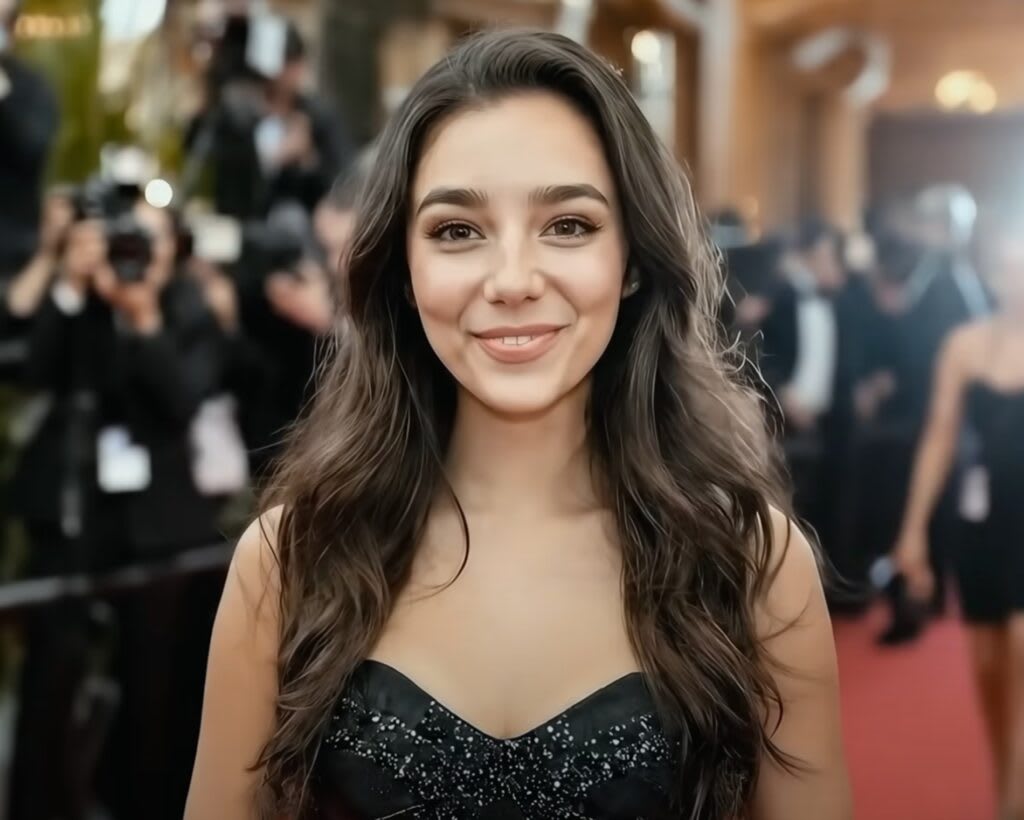
The Rise of an AI Star
She has the warm, freckled complexion of a girl next door and the doe-eyed gaze of an ingénue. Her Instagram feed is a curated dream of iced coffees and London strolls. But Tilly Norwood is not a rising star. She is the product of algorithms, a synthetic actress generated by artificial intelligence, and her proposed arrival on the silver screen has ignited a firestorm of fear and loathing in Hollywood.
Last week, at the Zurich Film Festival, the AI production company Particle6 announced the formation of a new AI talent studio called Xicoia. Its mission is to create “hyperreal digital stars.” Its first model is the fictitious Tilly Norwood.
Eline Van der Velden, the CEO of Particle6 and a former actor, is Tilly’s creator. She claims a bright future for her digital progeny. “When we first launched Tilly, people were like, ‘What’s that?’ and now we’re going to be announcing which agency is going to be representing her in the next few months,” Van der Velden said at the summit, according to Yahoo News. She has grandly described Tilly as “the next Scarlett Johansson.”
The Backlash
Actor Mara Wilson questioned the very origin of Tilly’s face. “And what about the hundreds of living young women whose faces were composited together to make her?” she asked on Instagram. “You couldn’t hire any of them?” She called the creators “identity thieves.”
Director Reed Morano addressed Van der Velden directly online. “I guess if you can’t make it as an actor yourself… and you’re incredibly lazy, you can cheat your way in!” she wrote. “Let me remind you @ElineHQ acting is the craft that celebrates humanity and all aspects of what that means. An AI actor has no life experience and no amount of clever prompts can replicate the effect of true humanity and soul.”
The actors’ union SAG-AFTRA, which recently concluded a prolonged strike that centered on AI protections, released a statement. The union said it “believes creativity is, and should remain, human-centered” and is “opposed to the replacement of human performers by synthetics.”
Van der Velden has defended her creation. In a statement posted on Tilly Norwood’s Instagram account, she framed the avatar as art, not a replacement for human actors. “To those who have expressed anger over the creation of our AI character, Tilly Norwood: she is not a replacement for a human being, but a creative work – a piece of art,” she wrote. “I see AI not as a replacement for people, but as a new tool—a new paintbrush.”
This argument has done little to calm the industry. Actor Abigail Breslin made a direct appeal to her colleagues: “I beg every actor I know to plz boycott this,” she said. “If your agency is trying to sign an AI actor, you should leave them. It’s such a f— you to the entire craft.”
Is the Panic Justified?
Amid the alarming headlines and frantic reactions, a crucial question remains: is Hollywood actually afraid of this specific, and some say underwhelming, AI actress?
Tilly’s acting portfolio is currently limited. She has “starred” in a single AI-generated comedy sketch called AI Commissioner. The Guardian described it as “pointless and creepy and – most damningly of all – relentlessly unfunny to watch.” In two months, it has garnered only about 200,000 views on YouTube.
Open the Youtube video
Furthermore, major talent agencies have publicly shied away. WME chair Richard Weitz stated that their agency “represents humans.” Gersh president Leslie Siebert told Variety they were “not going to be that agency” to sign Norwood.
The industry backlash surrounding Tilly may be about something broader. The entertainment industry is still grappling with the aftershocks of the strikes, where a key concern was the practice of “body scanning”—creating digital replicas of background actors. The new SAG-AFTRA contract allows this with consent and compensation, but the anxiety persists.
For producers, the appeal of a synthetic star is clear. As Van der Velden told Forbes, “People are realizing that their creativity doesn’t need to be boxed in by a budget.” An AI actor requires no salary, has no ego, and never ages.
Yet, for now, Tilly Norwood seems less like a viable threat and more like a provocative stunt. She represents a technological possibility that clashes with the deeply human craft of theater and cinema. The fierce backlash she has provoked is a clear signal that while the technology may be ready, the audience and the artists who serve them may not be.
The Future of Tilly’s Career
The future of Tilly’s career (and her human handlers) will ultimately be decided by a simple question: will anyone actually want to watch?