Quick Links
-
What is the ‘Rashomon’ Method?
-
The Narrative Structure of ‘Weapons’ Shows Different Angles of the Same Scenes
-
Zach Cregger Keeps the Acting Consistent Throughout With Rigorous Discipline
It’s impossible to see or talk about Zach Cregger‘s surprise smash hit Weapons without discussing its careful narrative structure. Purporting to be in the vein of former anthology classics like Magnoliaand Pulp Fiction, Cregger elevates a potentially generic horror film premise by restructuring the story through the unique lens of each character.. Less of an interwoven quilt and more of a sweat-inducing relay race, watching the plot unfold is like gradually stepping backwards to see the full scale of a massive painting. What I found most impressive about how this was done is the restraint that Cregger exhibited in not trying to mess around too much with the “subjective” angle that was needed for his story. To put it plainly, he didn’t go the easiest route of using the Rashomon method to differentiate between the plotlines and make us seem more “in the heads” of his characters.
What is the ‘Rashomon’ Method?
The “Rashomon” method originated from Akira Kurosawa’s Rashomon, which jumped between multiple characters’ perspectives to fully flesh out what happened involving the rape of a bride and the murder of her samurai husband. Rather than a strict accounting of “fact,” each character reshapes the facts and alters each other’s personalities to fit how they choose to remember things, becoming a metaphor for how life itself has no inherent value except for what we make of it. Being not just one of Kurosawa’s best movies, but one of the most influential films of the 20th century, this method of storytelling has taken on a life of its own and been referenced or parodied in countless projects.
Be it films like Go, The Usual Suspects, and Hero, or television shows like The Affair and Smallville, creators are still finding new ways to have fun messing around with how unreliable our own memories and unconscious biases can be. While it’s no doubt catnip for actors to stretch their range and for directors/writers to show off their talent, it can easily become a distraction that upstages what the story is really supposed to be about, with needless bells and whistles. With Weapons, Cregger almost entirely sidesteps this trick in favor of focusing on how limited any one person’s comprehension of things can be, leading to a remarkable consistency between scenes.
The Narrative Structure of ‘Weapons’ Shows Different Angles of the Same Scenes
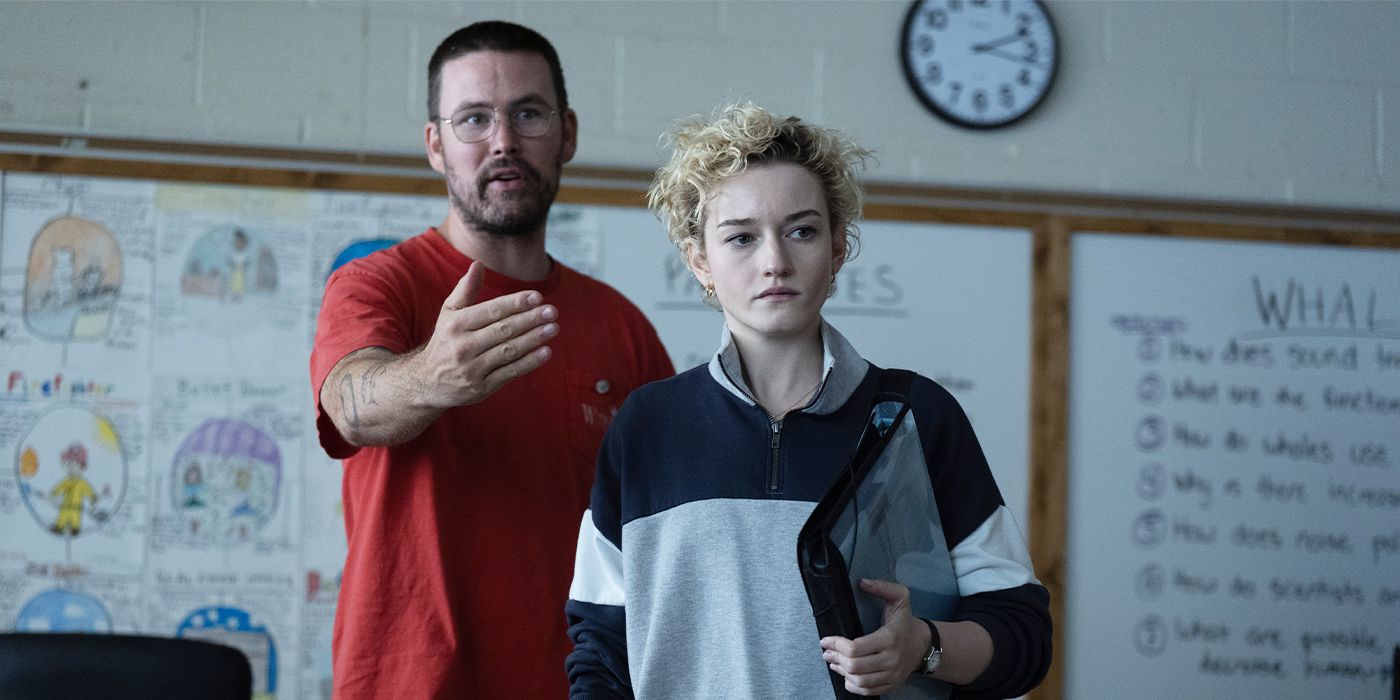
Weapons separates its story into chapters built around the core characters and what they think the current state of affairs is. By going from Justine’s (Julia Garner) frantic self-destruction to Archer’s (Josh Brolin) desperate rage to Paul’s (Alden Ehrenreich) hapless antics and so on, it allows Cregger to switch up genres and maintain consistent surprise. But rather than flex too hard and try to have these characters seem drastically different according to who’s telling the story, Cregger typically ensures that we’re essentially seeing the exact same moment play out again, just from an alternate angle, literally.
For instance, when Justine and Paul hook up, Justine’s story focuses on after they’ve had sex, while Paul focuses on when they are having sex. Or when Marcus (Benedict Wong) is possessed and assaults Justine at a gas station during Archer’s storyline, it cuts off about as soon as it begins, until we see Marcus’ full journey to her later during his own storyline. Some may accuse this of being too simplistic a formula, but I’d argue that this technique adds a propulsive element to the narrative that gradually brings more depth to each of the characters. The writing and editing not only fill in the gaps in information, but also reflect where the interests and values of each character lie, what they notice and fixate on.
Zach Cregger Keeps the Acting Consistent Throughout With Rigorous Discipline
Nowhere is this approach more apparent or impressive than in how Cregger directs his actors to maintain the same performance across multiple storylines. Be it through shooting multiple camera angles at the same time, precise ADR, or some insanely disciplined acting, it really feels like we’re able to witness the precise moment something happens without the continuity ever being broken. This is most evident in the school assembly scene, when Archer stands up and angrily accuses Justine of being responsible for the kids’ disappearance. In Justine’s storyline, the camera focuses on her face while Archer is far behind her, entirely out of focus even as he’s talking. But when we get to Archer’s storyline, and it’s a low-angle shot of him standing and talking, it sounds like the exact same dialogue reading that we heard in Justine’s version of events, even down to the level of anger in his voice and the spacing of his words.
Such attention to detail can be found all throughout Weapons, and is at once more effective at immersing us in the current moment, and ensures that Zach Cregger’s gamble isn’t an empty parlor trick. As much as he wanted to capture the subjective experience of his characters, he didn’t let his ambitions get ahead of the needs of the story, and seamlessly bridged the gaps between sections to create a flowing experience for the audience. Knowing that he’s helming a Resident Evil reboot next, which is a franchise inherently built around alternate perspectives, I’m eager to see if he will continue to maintain such a tight grip on the nuances of his multilayered approach.
Weapons is in theaters now.