
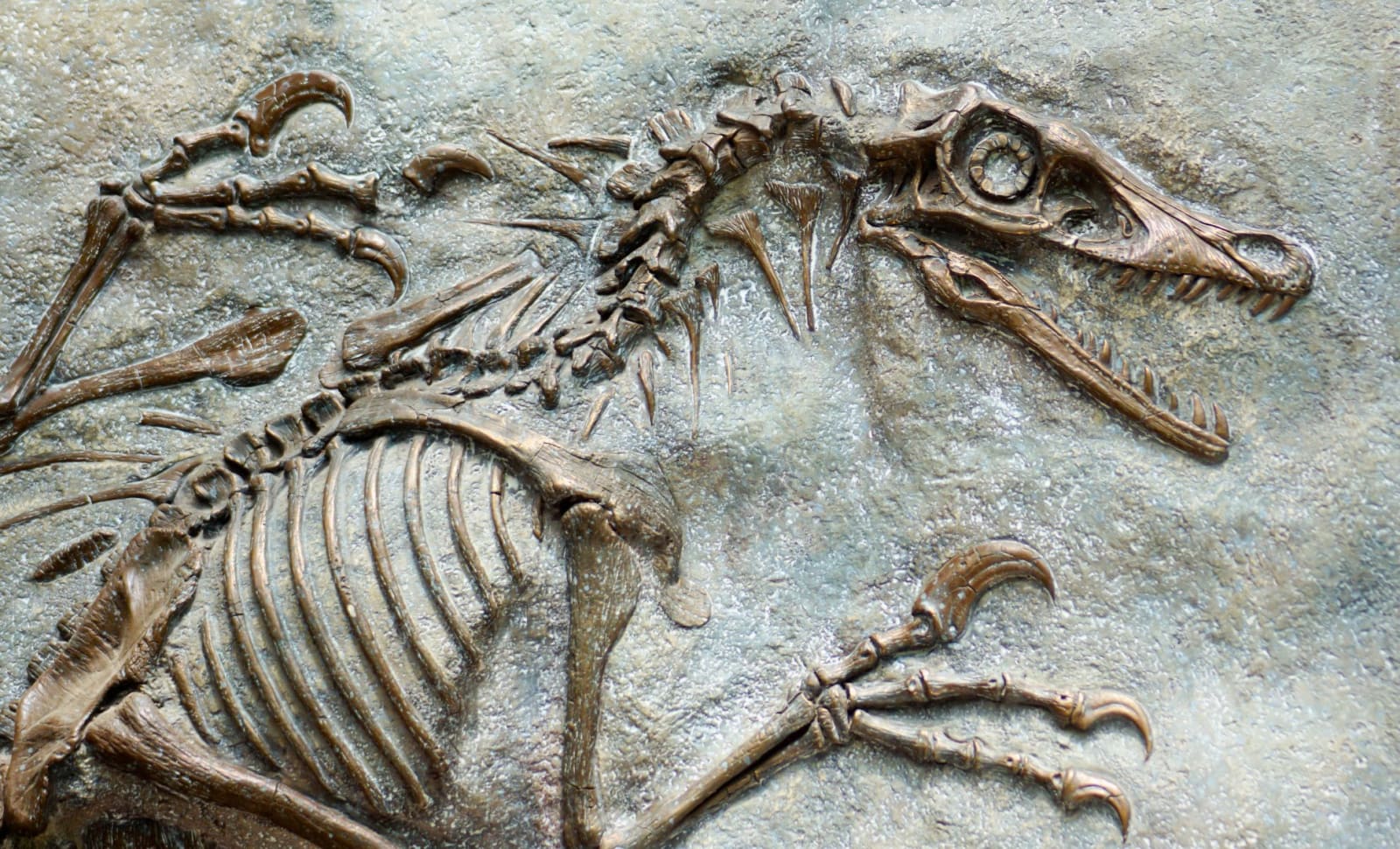
For countless millennia, dinosaur bones have remained hidden, awaiting discovery. A new finding on the Isle of Wight has revealed one such species,Istiorachis, into the spotlight. Recognized for its remarkable sail-like formation that spans its back and tail, this herbivorous dinosaur provides an intriguing look at ancient life. The research, published inPapers in Palaeontology, explores the evolutionary significance of this unique characteristic.
A Daring Glimpse from History
Living around125 million years ago, Istiorachisdistinguished itself not only due to its large size but also because of its sail-shaped structure. Unlike other creatures with sails, this one was not designed for swimming or flying. Rather, it appears to have served as a visual display — a style choice rather than a survival tool.
For years, the bones of Istiorachis sat quietly at the Dinosaur Isle Museum, misclassified as belonging to a different known species. However, a more detailed examination by Jeremy Lockwood, a retired physician, uncovered something surprising. Lockwood was reviewing fossils from the museum when he observed something unusual about one of the skeletons. He stated, “While the”skeleton wasn’t as completeas with some of the other ones that have been discovered, no one had really examined these bones closely before.”
What Lockwood uncovered was that the dinosaur possessed exceptionally long neural spines, a rare characteristic. As additional research was conducted, it became evident that these spines were considerably taller than those seen in most iguanodontian dinosaurs, indicating a notable distinction —Istiorachis was unique.
The Goal of Sailing
The following question was clear: What was the function of this tall sail? Was it for cooling the body, storing fat, or another practical reason? According to Lockwood, the answer might be quite straightforward: “Evolution often appears to prefer the extravagant over the practical.” Although the actual purpose of these features remains a topic of discussion, scientists think the most probable explanation is that the sail served as a way of visual communication — possibly as part of a mating display.
Comparing with modern reptiles, Lockwood observed that sail-like structures are typically more pronounced in males, indicating these traits may have developed to attract partners or deter competitors. It appearsIstiorachismay have utilized its sail in a very similar manner.
Testing the Concept Using Contemporary Methods
To verify this hypothesis, the research group did not solely depend on their observations of the fossils. They gathered avast collection of dinosaur vertebrae bones, including photographs, diagrams, and precise measurements. Subsequently, they created a family tree of iguanodontians to monitor variations in spine size throughout history. This enabled them to move past simple description and actively examine theories regarding the sail’s function.
Lockwood stated, “These approaches allow us to go beyond just describing the fossil and instead test theories about its function.” Their findings demonstrated thatIstiorachis’sspines were not only tall — they were “more extreme than typical in Iguanodon-like dinosaurs, which is precisely the kind of feature you would anticipate evolving via sexual selection.”
The group also assigned a name to the new dinosaur:Istiorachis macarthurae. “Istiorachis” translates to “sail spine,” and the species name “macarthurae” pays tribute to Dame Ellen MacArthur, a famous solo sailor from the Isle of Wight.
A Thriving Dinosaur Hotspot
The Isle of Wight is gaining recognition for its dinosaur discoveries, as many species have been found in its fossil-laden strata. Notable finds such asBrighstoneus, Comptonatus, and aggressive hunters such asRiparovenator and Ceratosuchopsinform the scientists that the island was previously a lively and active location, inhabited by a diverse range of dinosaurs.
The researchers believe Istiorachisadds a significant dimension to this lively scene. It provides additional understanding of the development of dinosaurs during theEarly Cretaceous periodand emphasizes a major evolutionary development. The lengthening of neural spines — referred to as neural spine elongation — started during the Late Jurassic. Nevertheless, this degree of spine extension, termed hyper-elongation (in which the spine is four times higher than the vertebra), remained relatively uncommon back then.
Lockwood stated, “Istiorachis is a historical example of the same evolutionary forces we observe influencing display features in today’s animals.”
Unearthed from Museum Shelves
What makes this finding even more impressive is that it was not discovered in the field. Instead, it came from acareful re-examination of fossilsthat had been stored in the museum’s collection for many years. “Jeremy’s detailed examination of fossils that have been part of museum collections for several years has revived the”iguandontian dinosaurs “of the Isle of Wight,” said paleontologist Susannah Maidment.
In the last five years, Lockwood has independently increased the recognized variety of smaller iguanodontians on the Isle of Wight. These remains originated from the Wessex Formation, one of the most abundant sources of ancient terrestrial animals from the Early Cretaceous era.
Enjoyed this article? Sign up for our complimentary newsletterfor compelling narratives, unique material, and up-to-the-minute updates.
For additional news similar to this, visitMuara Digital Team.