
Expansion Plans and Market Competition
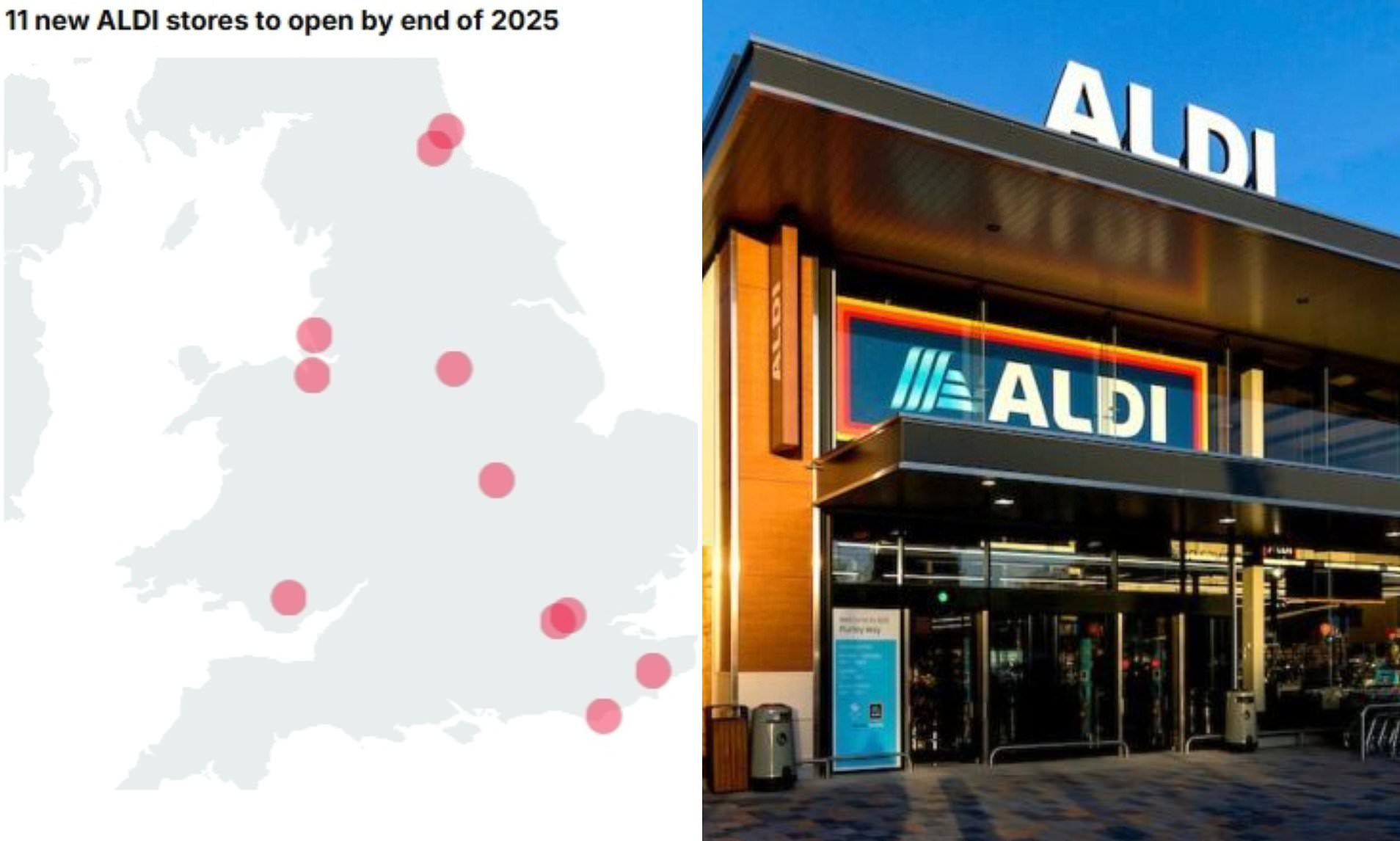
Aldi, one of the UK’s leading supermarkets, has announced its intention to open 11 new stores across the country before the end of 2025. This expansion comes on the same day that the company was dethroned from the title of the cheapest supermarket of the month. Despite this setback, Aldi remains committed to its growth strategy, planning to open an average of one new store per week throughout the remainder of the year.
The supermarket chain is investing £650 million in the UK this year, which includes not only the opening of new stores but also the refurbishment of 35 existing locations. This significant investment underscores Aldi’s long-term vision to expand its presence in the UK market. Currently, the company operates over 1,050 stores, with a goal of reaching 1,500 by the future. To support this ambitious plan, Aldi is actively recruiting for 1,000 store roles.
New Store Locations
The upcoming 11 new stores will be located in various regions across the UK. These include:
- Airfields, Welsh Road, Deeside
- Rockingham Road, Market Harborough, Leicestershire
- Fulham Broadway, London
- Pacific Drive, Eastbourne, East Sussex
- Mafon Road, Nelson, Caerphilly
- Ashford, Waterbrook, Kent
- Commercial Street, Shoreditch, London
- Philadelphia Lane, Houghton le Spring, Tyne and Wear
- Mill Road, Meadowfield, Durham
- Pendle Drive, Litherland, Liverpool
- Ringwood Road, Brimington, Chesterfield
Jonathan Neale, Managing Director of National Real Estate at Aldi UK, emphasized the importance of these new openings. He stated that ensuring access to affordable, high-quality food is a key priority for the company. The expansion reflects Aldi’s commitment to reaching millions of new customers and strengthening its position in the UK market.
Competitive Pricing Landscape
Despite its expansion plans, Aldi recently lost the title of the cheapest supermarket of the month to its German rival, Lidl. According to a study by Which?, comparing a list of 76 items—including both branded and own-brand products—Lidl emerged as the cheaper option, with an average shopping bill of £128.40. In contrast, the same basket of goods cost 85p more at Aldi.
The analysis included special offer prices and loyalty prices where applicable, but not multibuys. Meanwhile, Asda remained the cheapest among the larger supermarkets, with a cost of £474.12, slightly cheaper than Tesco with a Clubcard at £481.59. However, the study did not include Aldi or Lidl due to their limited stock of certain items on the consumer group’s larger shopping list.
Waitrose was identified as the most expensive supermarket, with an average cost of £538.33 for a larger shopping list, compared to Asda’s £474.12. For smaller lists, Waitrose was also the priciest, with an average cost of £170.91, significantly higher than Lidl’s £128.40.
Grocery Inflation and Consumer Behavior
Amid rising grocery prices, families are increasingly turning to simpler meals using own-brand products and fewer ingredients. Food inflation reached a peak of 5.2% for the four weeks ending July 13, the highest since January 2024. Prices for items such as fresh meat, chocolate, butter, and spreads are rising the fastest, while costs for dog food, sweets, and laundry products are decreasing.
Supermarkets have benefited from this trend, with take-home sales growing by 5.4% in the four-week period. Lidl saw a record market share of 8.3%, gaining 0.5 percentage points and attracting over 500,000 new customers. Tesco also performed well, boosting its market share to 28.3% with a 7.1% sales increase—the fastest rate since December 2023.
Sainsbury’s saw a 5.3% sales growth, bringing its market share to 15.1%, while M&S experienced a 6.5% rise in grocery sales. Aldi’s sales increased by 6.3%, pushing its market share to 10.9%. Ocado continued to grow at a faster pace than the overall online market, with a 11.7% sales increase.
Online sales accounted for 12% of all grocery sales over the past 12 weeks, with 23% of households making at least one virtual shopping trip. However, Asda and Co-op saw their market shares decline slightly during this period.