A Legacy Beyond the Field
Alex Morgan’s impact on soccer and women’s sports extends far beyond her achievements on the pitch. While she is widely recognized for her role in fighting for equal pay and growing the National Women’s Soccer League (NWSL), her contributions as a mother and advocate for female athletes have also left a lasting imprint on the sport. Her journey, marked by resilience and determination, has helped shape the future of women’s athletics in ways that are often overlooked.
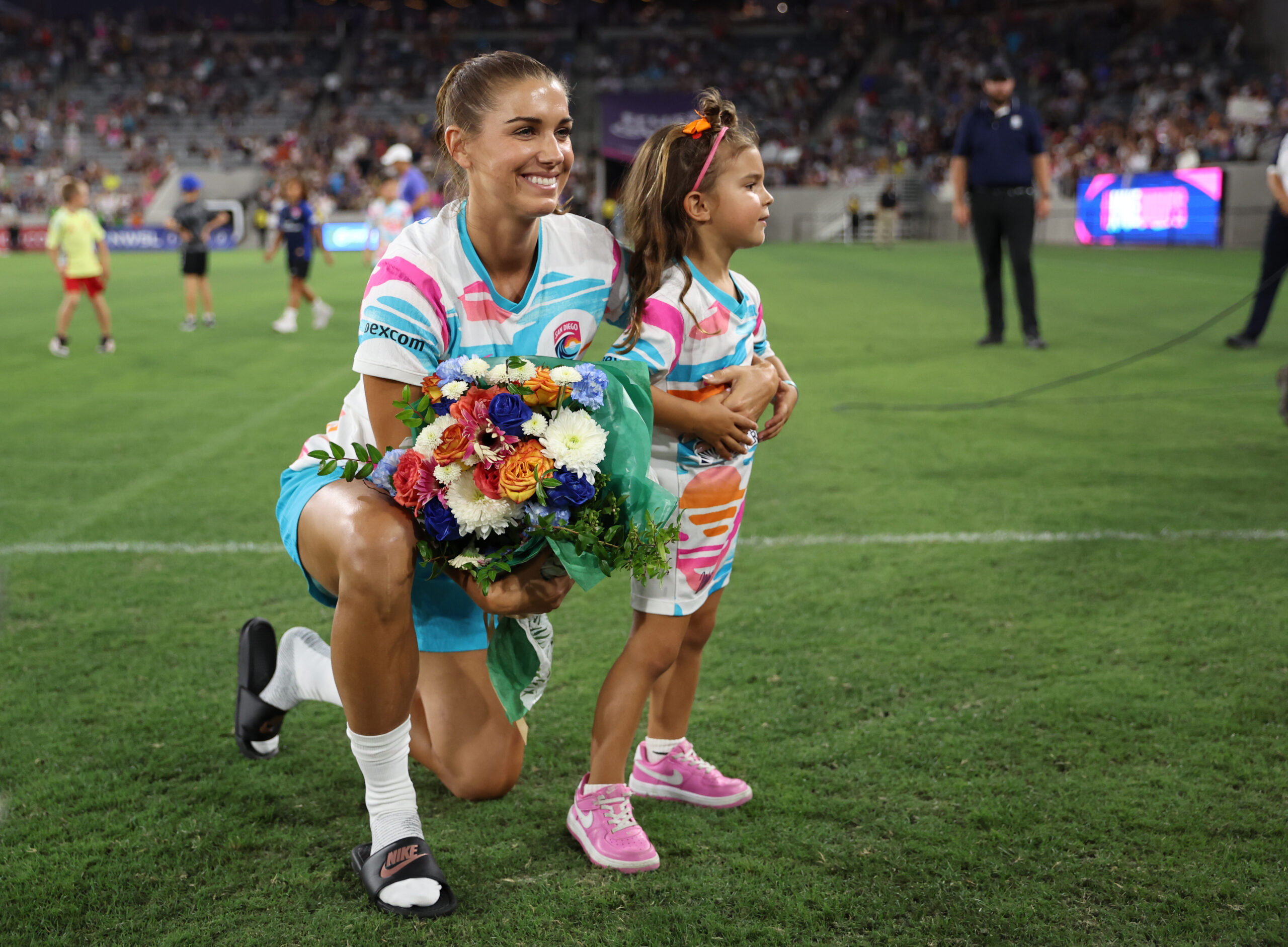
One of the most significant aspects of Morgan’s legacy is her fight to return to professional play after giving birth to her first child, Charlie, in 2020. Although earlier generations of U.S. women’s national team players paved the way for mothers in the sport, Morgan took it a step further by pushing for stronger protections and better standards for athletes who choose to become parents.
During her retirement press conference, Morgan reflected on a moment that stood out: when five mothers were on the U.S. team at the same time. This included herself, Casey Krueger, Julie Ertz, Crystal Dunn, and Adrienne Goodson-Franch. “That was a really special moment,” she said, emphasizing how far the sport had come in supporting mothers while still maintaining high levels of competition.
Despite the progress made, the road to acceptance wasn’t easy. When Morgan first became a mother, there were no clear rules or guidelines for players returning to the sport after childbirth. She had to draft an agreement with the Orlando Pride to ensure her daughter could travel with her and that a childcare provider could accompany them. Even basic accommodations, like allowing her baby into team meals or the locker room, were met with resistance.
Morgan’s advocacy didn’t stop there. She faced challenges with the San Diego Wave when they initially refused to buy an extra plane ticket for her young daughter. “I said, ‘I cannot go on this trip if you don’t get a seat for my daughter. This is not happening,’” she recalled. Eventually, the team relented, but the experience highlighted the need for systemic change.
Her efforts helped set new standards across the league, ensuring that future generations of mothers would have access to proper accommodations. Today, children over the age of one are guaranteed their own seats on flights, a small but meaningful victory that came from Morgan’s persistence.
Beyond her personal experiences, Morgan has been a vocal supporter of other players facing similar challenges. She backed her Portland Thorns teammates Mana Shim and Sinead Farrelly when they came forward with allegations of abuse against former manager Paul Riley in 2021. This act of solidarity reinforced her commitment to creating a safer and more equitable environment for all athletes.
Morgan also played a key role in shaping the NWSL’s Collective Bargaining Agreement (CBA), which includes provisions such as six months of fully paid maternity leave and mandatory invitations for players to return to pre-season camps. These changes have allowed other players, such as Sophia Wilson and Mallory Swanson, to pursue motherhood while continuing their careers at the highest level.
Her journey as a mother and athlete also challenged perceptions about what it means to be a top-tier player. Many questioned her decision to get pregnant at 29, but Morgan remained focused on her goals. “Once I got pregnant, I was in go mode. I was like, ‘No, I’m going to get back to playing,’” she said.
Morgan’s influence extends to younger players who now enter the NWSL with more confidence and a clearer understanding of their rights. She hopes that her efforts will allow future generations—like her own daughter, Charlie—to grow up in a world where equality and opportunity are the norm.
“I look at these young players coming into the NWSL and I’m like, yeah, you have that confidence,” she said. “You walk in there proudly and you ask for what you deserve because in a lot of ways, that’s what we fought for.”