
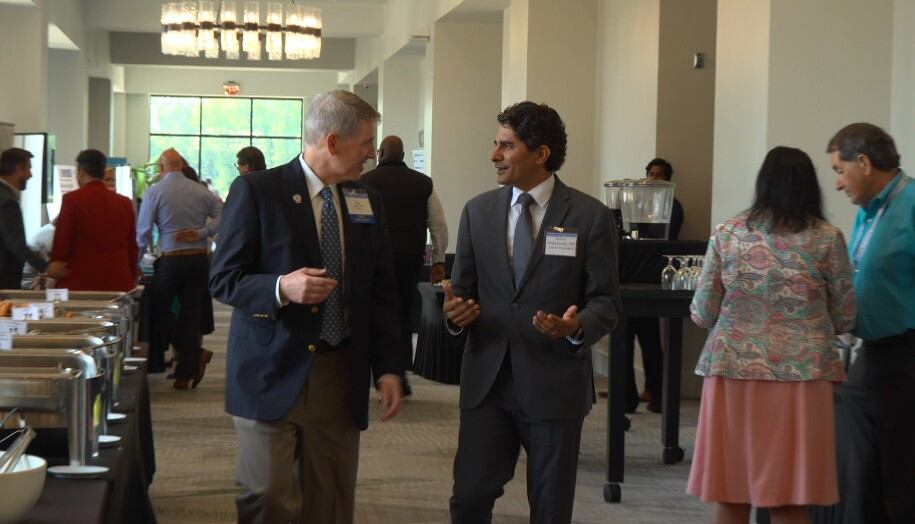
JACKSON, Miss. (WLBT) – The President of the American Medical Association made a stop in Mississippi.
Dr. Bobby Mukkamala was in Mississippi to speak with healthcare professionals around the state about medical needs here and around the nation. In a 3 On Your Side exclusive, he talked with us about the critical issues this state faces in healthcare.
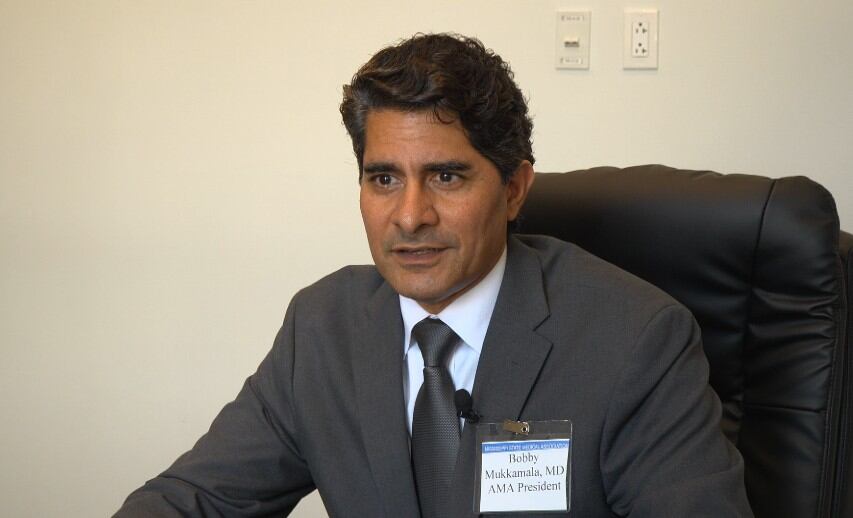
The Mississippi State Medical Association held its annual meeting, bringing healthcare professionals and physicians from around the state to discuss major issues, including the possible closures of struggling rural hospitals. Dr. Bobby Mukkamala is President of the American Medical Association. He talked with us about medical deserts across this state and the nation and how keeping rural hospitals open is critical.
Dr. Mukkamala commented that healthcare accessibility is a growing concern across the nation, affecting both urban and rural populations, but the situation is particularly dire in rural communities. She emphasized that these areas are at the forefront of these difficulties, highlighting the specific problem of finding local OB-GYN care for childbirth as a significant hurdle.
Dr. Mukkamala also talked with us about the need for Medicaid expansion and how the AMA is supporting doctors in this state to provide healthcare for the underserved.
“We think it’s a big mistake with what just happened with Medicaid, where all of a sudden, now you know, as this rolls out over the course of the next decade, we’re gonna end up with almost 12 million people that lose their health insurance, right, their safety net health insurance of Medicaid. And that’s something that you know when we went through the Affordable Care Act, and we sort of tried to get more insured, we went in the right direction, right? The number of uninsured in this country went down by half, and now it’s going in the wrong direction,” said Dr. Mukkamala.
With Mississippi’s high numbers for diabetes, Cardiovascular disease, and high blood pressure, Dr. Mukkamala says prevention and taking steps to keep patients healthy is less expensive than treatment after a heart attack, stroke, or cancer diagnosis.
Dr. Mukkamala stated that he believes a shift is needed in our nation’s guiding principles. He pointed out the stark contrast between the resources allocated to treating individuals post-illness – after a stroke, heart attack, or diabetes-related amputation – and the comparatively smaller investments made in preventative care, calling the disparity “fantastic.”
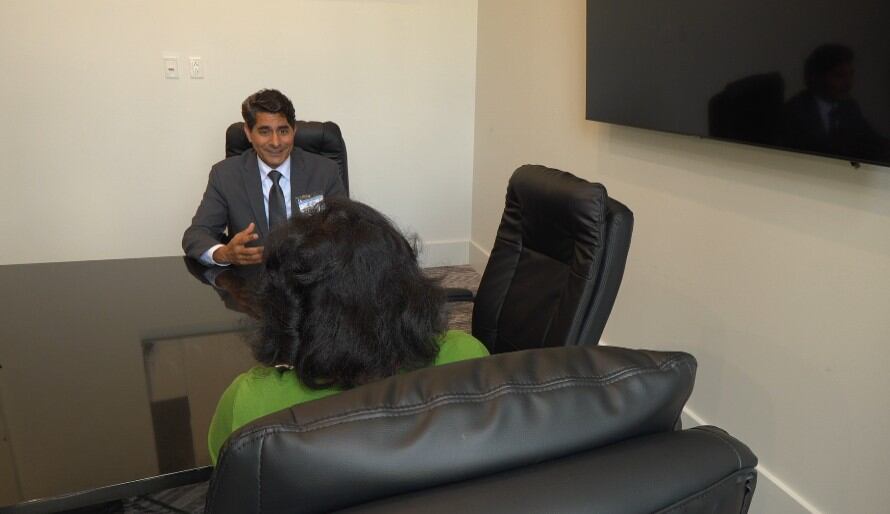
Dr. Mukkamala says while there are deep concerns about healthcare issues, the AMA is standing with Mississippi healthcare providers to make sure no patient falls through the cracks or suffers alone.
The president of the American Medical Association knows firsthand what it’s like to face a devastating diagnosis. He was in Mississippi to offer his support to state healthcare providers and to share his battle with cancer.
“This is now my eighth month after being diagnosed with brain cancer,” said Dr. Mukkamala.
Dr. Mukkamala is a head and neck surgeon. He first noticed symptoms while giving a speech as President of the American Medical Association.
Dr. Mukkamala said, “All of a sudden, my words didn’t make any sense and everyone thought I had a stroke.”
The tumor was found on the left side of his brain. 90 percent was removed. One pill he takes for treatment is 250 thousand dollars a year. The head and neck surgeon shares his concern for those who need help fighting threats to their health.
“Compensation to hospitals when something gets really bad and there’s a stroke or heart attack goes up every year, but when you look at it, where does prevention happen. It happens in the doctor’s office. And when you look at that, compensation is stagnant. It doesn’t even keep up with inflation. In fact, it’s like 30 percent short. And so we need to have that culture change to say look yes, we’re gonna invest and take care of people when something bad happens, but we’re also going to invest in prevention,” Dr. Mukkamala said.
We asked Dr. Mukkamala about high infant and maternal death rates in Mississippi. Although this state has one of the highest rates in the country, he says it is a nationwide issue.
Dr. Mukkamala said, “The American Medical Association sends me to represent this country at the World Medical Association. And when you look at what we invest in healthcare in this country, we invest more than any country on the planet. We spend more than any country on the planet. But when you look at something like maternal mortality, where we rank relative to the other 13 most developed countries, is number 13. Alright, so we invest this much in healthcare and yet we have a statistic that’s this bad.”
The AMA President also shared what he believes are some of the most prevalent issues for medical professionals, including a shortage of doctors and nurses.
“So we’re gonna be 80 some thousand physicians short within the next decade. The solution for that should be to train people better to take care of this population, not substitute physician care with non-physician care. We get 10 thousand hours of training. In many states, people with 600 hours of training are given the ability to take care of patients, hoping that that’s going to improve the health of our country. That’s not at all what happens”, Dr. Mukkamala said.
The AMA is stressing issues such as ways to keep more doctors on the job and reducing the debt to become medical professionals.
Dr. Mukkamala said, “When that math doesn’t keep up with the cost of doing that and the debt that students have, then all of a sudden our healthcare goes down. And so those are all factors that are high priorities of the American Medical Association.”
AMA’s president also tells us that many doctors are suffering from burnout due to all the red tape in caring for their patients. Many of them are giving up their practices.
Want more WLBT news in your inbox? Click here to subscribe to our newsletter.
See a spelling or grammar error in our story? Please click here to report it and include the headline of the story in your email.