Understanding the Sun’s Seasons and Their Impact on Earth
Most places on Earth experience seasons due to the planet’s tilt as it orbits the sun. However, our star also has its own version of seasonal changes—known as solar cycles—that influence life on Earth. Recent astronomical research is shedding light on these solar “seasons” and their effects, helping scientists better predict and manage their impact.
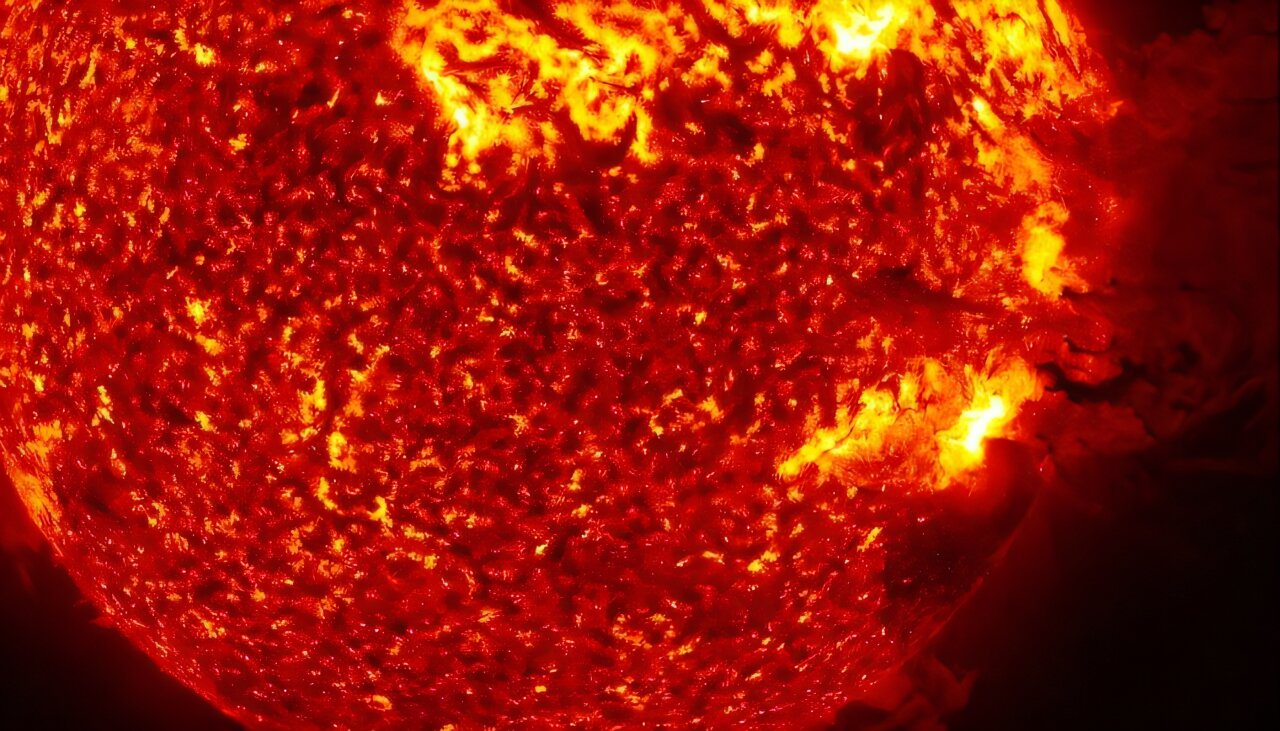
The sun undergoes an 11-year cycle of magnetic activity, often referred to as its own seasons. During the peak of this cycle, known as “solar maximum,” there are more sunspots and solar flares. These flares release charged particles that travel through the solar system, interacting with Earth’s atmosphere to create beautiful auroras in regions near the Arctic and Antarctic. In contrast, the “solar winter” marks a calmer phase of reduced activity.
Currently, we are approaching the peak of Solar Cycle 25, which began in 2019. According to recent assessments, this cycle may have reached its maximum in 2024. Dr. Deepak Chahal from Macquarie University led a study published in the Monthly Notices of the Royal Astronomical Society in June, highlighting how the increased solar activity has resulted in spectacular aurora displays over the past year.
Chahal’s research focused on fast-rotating stars similar to our sun to understand how stellar magnetic fields evolve over time. By studying younger, faster-rotating stars, he and his team were able to gain insights into what our sun might have looked like in its early years and how its magnetic behavior has changed over billions of years.
The Effects of Solar Weather on Earth
Unlike Earth’s seasons, which are caused by the planet’s axial tilt, the sun’s seasons are driven by its magnetic field. Every 11 years, the sun’s magnetic field flips, causing a dramatic increase in magnetic activity. This process can have significant consequences for life on Earth.
Solar flares can disrupt radio communications, while massive eruptions called coronal mass ejections can damage satellites and cause power outages. Solar radiation storms pose risks to astronauts and even airline passengers flying over polar routes. For example, in 1989, a severe solar storm during solar maximum caused a major blackout in Quebec, Canada, affecting millions of people. The Carrington Event of 1859, the largest known solar storm, disrupted telegraph systems worldwide and produced auroras visible as far south as the Caribbean.
If a similar event were to occur today, it could cause extensive damage to modern technology. Associate Professor Devika Kamath, co-author of the study, warned that our current digital infrastructure is far more vulnerable than the simple telegraph networks of the past. A solar storm of that magnitude could disrupt GPS navigation, mobile phone networks, banking systems, and air traffic control, leading to trillions of dollars in potential damage.
Predicting Space Weather and Preparing for the Future
Scientists previously believed that the sun’s magnetic behavior was unique compared to other stars. However, new international research led by Macquarie University, including contributions from the University of NSW and the Chinese Academy of Sciences, has shown that the sun is not as unusual as once thought.
By analyzing data from 138 sun-like stars using space telescopes over more than a decade, researchers found clues about what our sun was like when it was younger and more active. They discovered that some young sun-like stars have shorter magnetic cycles, which may evolve into cycles similar to our sun’s current 11-year cycle as they age.
This research serves as a preview of the sun’s future behavior, helping scientists prepare for space weather events that affect everything from GPS systems to airline routes. Co-author Professor Richard de Grijs emphasized the importance of understanding stellar activity cycles for society as a whole.
“Understanding the patterns of stellar activity cycles helps us predict dangerous space weather events around our sun and potentially other stars with planetary systems,” he said. “As our dependence on satellite technology and interconnected digital systems grows, research like this is crucial for preparing for the inevitable challenges posed by an active star.”
Conclusion
The sun’s magnetic cycles, or “seasons,” play a critical role in shaping space weather and influencing life on Earth. As scientists continue to study these cycles, they gain valuable insights into the sun’s past, present, and future behavior. This knowledge is essential for safeguarding modern technology and ensuring the safety of those who rely on it. Through ongoing research, we can better anticipate and mitigate the impacts of solar activity, ultimately protecting both our planet and the technologies that support our daily lives.