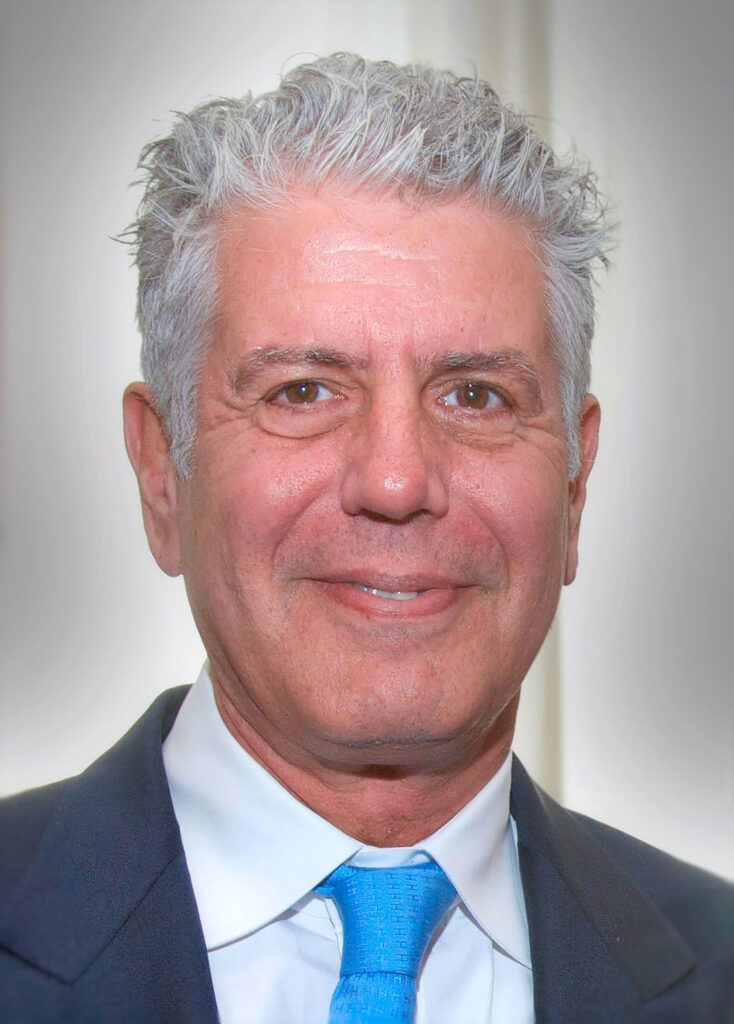

Anthony Bourdain was more than a chef preparing breakfast or seasoning meat; he was a storyteller who used cuisine as his tool to create vivid, lively depictions of different cultures and communities. With a 28-year journey in the restaurant industry, starting from a dishwasher and rising to executive chef, he gained a tough, realistic viewpoint that made his insights so powerful. Whether he was eating hot noodles in a Hanoi street or enjoying a sandwich in Seattle, Bourdain viewed every meal as a narrative, an opportunity to connect with the individuals and locations involved. His inquiries were limitless, his truthfulness unfiltered, and his passion for food reflected his deep appreciation for life.
What set Bourdain apart was his ability to discover enchantment in everyday experiences. He expressed equal enthusiasm for a Michelin-starred tasting menu and a messy diner burger, transforming both into revered ceremonies in his eyes. He traveled to the most remote corners of the world, yet always maintained that sense of childlike amazement, whether he was exploring a bustling market or a quiet deli. His authenticity drew people in, encouraging us to view food as more than just nourishment, but as a universal language capable of bridging cultures and uncovering deeper truths.
Bourdain’s impact is a call to embrace the world with open hearts and clear plates. His television programs, writings, and conversations weren’t just about food—they focused on the individuals who cooked it, the customs they carried, and the narratives they shared. He encouraged us to go beyond the dish, to recognize the hands that made it and the history behind it. Whether it was a street cart in Asia or a respected sandwich shop in the Pacific Northwest, Bourdain revealed that the most compelling stories can be found in the simplest meals.
- Relatable Voice:His candid truthfulness, without any restraint, made him a companion who shared tales with us during dinner.
- World Traveler:He united different cultures through cuisine, spanning from Tokyo to Timbuktu.
- Authenticity First:He focused on passion and skill rather than pretense, valuing both luxury and modest meals.

Salumi: The Sacred Sandwich Temple in Seattle by Anthony Bourdain
Anthony Bourdain spoke about Salumi, a modest sandwich stand located in Pioneer Square in Seattle, with deep respect, as though he were talking about a sacred place. He wasn’t joking when he referred to it as a “UNESCO site” or when he noted that waiting an hour and a half for one of their sandwiches was completely worthwhile. To Bourdain, Salumi was more than just a deli; it was a sanctuary dedicated to the craft of cured meats, where traditional Italian methods produced flavors that felt like a divine experience. His fondness for thisplaceran so deeply that it became the basis of his culinary journeys.
Founded by Armandino and Marilyn Batali, parents of chef Mario Batali, Salumi won over Bourdain during his 2007 visit for No Reservations. He didn’t just eat there; he immersed himself in the craft, studying the meticulous techniques of meat curing directly from the experts. When Marilyn gifted him a hand-cured prosciutto on one of his subsequent visits, it was more than a simple gesture—it symbolized the deep connection he felt to this place and its community. This was what Bourdain cherished most: food created with passion, tradition, and authenticity.
Even after Clara Veniard and Martinique Grigg became the new owners in 2017, the charm of Salumi remains unchanged. They have upheld the Batali legacy, consistently offering what their website describes as “the best sandwiches in Seattle,” backed by a 4.5-star review on Yelp. The slow-cooked porchetta sandwich, featuring tender pork, Calabrian chili chimichurri, roasted onions, and pickled peppers, is one that explains Bourdain’s obsession. It’s more than just a sandwich — it’s a narrative in each bite, a reflection of why this spot held such a unique place in his heart.
- Signature Dish:The slow-cooked porchetta sandwich, packed with flavorful pork, seasoning, and a zesty kick.
- Artisanal Craft: Cured meats prepared using traditional Italian methods.
- Enduring Legacy:New proprietors maintain the Batali legacy, preserving the essence of Salumi.

A Way of Thinking Developed in Kitchens and Spread Globally
Bourdain’s passion for Salumi represented the peak of his overall approach to food: pursue authenticity, respect craftsmanship, and share the story behind each dish. His journey from a brash chef to an international star started with a basic wish to have his name mentioned in print, as he shared with Laurie Woolover in Bourdain: The Definitive Oral Biography. His 1995 book, Bone in the Throat, was an initial step, but it was his 1999 piece in The New Yorker, “Don’t Eat Before Reading This,” that made him famous. This honest, unfiltered view of restaurant life earned him the nickname “culinary Hemingway.”
His first major book, Kitchen Confidential: Adventures in the Culinary Underbelly, revealed the chaos and camaraderie of life behind the scenes in a kitchen. Following this, Bourdain continued as the executive chef at Brasserie Les Halles, managing grueling hours alongside his sudden recognition as an author. The book’s success offered him a sense of liberation, allowing him to transition from wearing a chef’s uniform to that of a traveler. Programs like No Reservations, where he visited places like Salumi, and Parts Unknown provided him with a platform to combine food, travel, and storytelling into a fresh format.
- Real Voice:His honest narrative brought the culinary world within reach.
- World Stage: His performances transformed foodinto a gateway to different cultures.
- Live to the Fullest:His “amusement park” approach emphasized extravagance and exploration.

From Upscale Restaurants to Street Food Vans: Bourdain’s Diverse Taste buds
Bourdain’s taste was as diverse as his interests, equally delighted by the refined.dining of a Michelin-starredinstitution as in the vibrant chaos of a street vendor. He could be amazed by the culinary art at Le Bernardin, Eric Ripert’s four-star seafood gem in Manhattan, and then enthusiastically praise a Chicago hot dog with the same passion. It was this quality that made him so endearing—he wasn’t a food snob, but rather someone searching for authenticity in every bite. His connection with Ripert, developed through travels and shared meals, showed his admiration for excellence in cooking, yet he was equally content in a casual bar, enjoying a great sandwich.
He labeled Thomas Keller’s The French Laundry as “the best restaurant in the world, period,” and commended its New York City counterpart, Per Se, for its “once-in-a-lifetime” tasting menu. Nonetheless, Bourdain also found his favorite places in spots like Waffle House, where he appreciated the “irony-free zone” of hash browns and burgers. His trip to Budacki’s Drive-In in Chicago, where he proclaimed the Chicago Red Hot “the finest hot dog on the planet,” highlighted his appreciation for regional classics and the narratives they held. For Bourdain, however, it was never about the price—it was always about the passion reflected on the plate.
- High and Low:Loved both Michelin-starred dishes and greasy diner treats.
- Regional Gems:Supported local specialties such as Chicago-style hot dogs and Jersey cheesesteaks.
- Story Seeker:Realized each meal as a story of skill and tradition.

Global Flavors and Forbidden Delights: Bourdain’s Never-Ending Journey
Bourdain’s food explorations extended beyond American delis and fine dining; he traveled the world, from New Orleans to Okinawa. In New Orleans, he discovered his paradise at Willie Mae’s Scotch House, where the fried chicken was so exceptional that he visited multiple times, hailing it as the “best in the world.” In Las Vegas, he uncovered Lotus of Siam, a standout Northern Thai restaurant that shone brightly in a city full of glitz, encouraging guests to skip the Pad Thai and go for the khao soi instead. In Miami’s Little Haiti, he enjoyed snapper and soup at Chef Creole 54, connecting with the chef’s lively spirit and the community that supported the cuisine.
Even fast foodheld a special place in his heart. He loved In-N-Out Burger’s Double-Double, animal-style, at the LAX location, commending its straightforwardness and quality. In Portland, Voodoo Doughnut’s unconventional offerings, such as the Bacon Maple Bar, made him feel both embarrassed and excited, something that only a real food lover could grasp. These weren’t about being ironic; they were about true admiration for well-prepared food, regardless of the setting. His stops brought significant attention to these places, with “Bourdanians” eager to experience the magic he spoke of.
Perhaps the most unexpected thing was his fondness for the convenience store egg in Japan.salad sandwiches, or Tomago Sando, which he referred to as “pillows of love.” At Lawson in Okinawa, he praised the soft milk bread and Kewpie mayo, a basic delight that highlighted Japan’s talent for making the everyday exceptional.
- Global Reach:Incorporated a wide range of food cultures from New Orleans to Japan.
- Love of Fast Food:In-N-Out and Voodoo Doughnut were equally cherished as fine dining establishments with white tablecloths.
- Plain Joys:The Tomago Sando demonstrated that outstanding quality can be found in simplicity.

The Craft of Bonding: Bourdain’s Talent for Unveiling Humanity Through Cuisine
Bourdain’s talent wasn’t primarily about his palate; it was about his skill in viewing food as a means to foster human bonds. Each meal represented an opportunity to sit with someone, listen to their narrative, and experience a shared moment. Whether dining with a street food seller in Thailand or perfecting the craft of preserving meats at Salumi, he engaged every interaction with sincere curiosity and admiration. His programs weren’t focused on cuisine; they were about listening, gaining knowledge, and honoring those who created the meals.
This connection made his visits memorable for his meetups. With Salumi, his cooking demonstration on curing meat was not only a TV segment but also an opportunity to bond with Armandino and Marilyn Batali, whom he later presented with prosciutto as a token of their shared passion. Wherever he went, such as Chef Creole 54 in Miami, his enthusiasm attracted new fans, creating “Bourdain’s” who sought the genuine experiences he championed. He didn’teat foodonly the lives and ambitions invested in it.
- Shared Meals: Used food that brings people together from other cultures.
- Long-Term Impact:He frequented local shops, creating loyal customers.
- Human Perspective:Viewed each meal as a narrative about the individuals involved.

Connecting with a Generation: Bourdain’s Enduring Impact on Culinary Culture
Bourdain didn’t merely explore cuisine; he transformed our perspective on it. His programs, articles, and conversations turned dining into a story, with millions of food enthusiasts emulating his path in search of authenticity. Whether it was “No Reservations” or “Parts Unknown,” he demonstrated that food could serve as a gateway to the world, whether it was a sandwich from Salumi or a bowl of pho in Vietnam. His influence continues in the way we travel, dine, and connect, urging us to step beyond our comfort zones and explore.
His influence extended beyond just the audience; it affected the businesses he visited. Locations such as Salumi, Willie Mae’s Scotch House, and Voodoo Doughnut experienced a rise in popularity following his suggestions, demonstrating his ability to identify excellence. He wasn’t a critic—he was a supporter of underdogs, emphasizing small, genuine spots that might otherwise remain overlooked.
Nowadays, Bourdain’s spirit motivates chefs, authors, and adventurers to explore cuisine with openness and compassion. His advice to “enjoy the journey” reminds us to embrace the chaotic, vibrant chaos of life, whether dining at a luxurious restaurant or a simple roadside food cart.
- Cultural Shift:Transformed cuisine into a medium for sharing narratives with countless people.
- Small Business Boost:Helped transform local treasures into legendary status.
- Exploration Inspiring:Motivated us to seek out genuine, significant cuisine.

The Thrill of the Unforeseen: Bourdain’s Affection for Spontaneous Cuisine
Bourdain’s journeys were driven by his passion for the unconventional, the secret spots that thrilled and amazed him. His fondness for Salumi was a case in point — a small deli in Seattle that was considered a treasure due to its perfect execution. However, this wasn’t one of those moments; Bourdain found beauty in places others overlooked, whether it was a Japanese convenience store or a New Jersey cheesesteak restaurant.
Witness his affection for the Tomago Sando, the egg salad sandwich known as the “pillow of love.” At a Lawson convenience store in Okinawa, he discovered excellence through Kewpie mayo and soft milk bread, demonstrating that greatness doesn’t always require an upscale location. Likewise, his admiration for Donkey’s Place in Camden, where he declared the cheesesteak a “national landmark,” highlighted his ability to recognize brilliance in unexpected places.
It was this passion for the unexpected that made Bourdain’s journeys so motivating. He showed us that the best cuisine is often discovered when you’re not looking, in a casual bar, a food truck, or a local grocery store.
- Secret Finds:Found happiness in modest spots like Salumi and Lawson.
- Surprise Element:Honored the surprising excellence of simple dishes.
- Open Mind:Asked us to seek the magic in each meal.