
Imaging scientists are aware that racial bias is not a novel issue in the field of photography.
Despite advancements in camera technology, many instances still fail to accurately capture a range of skin tones,” stated Meg Borek, an imaging scientist. “This issue traces back to the early days of film photography, when film was consistently designed for lighter complexions, and this bias has continued into the realm of digital photography.
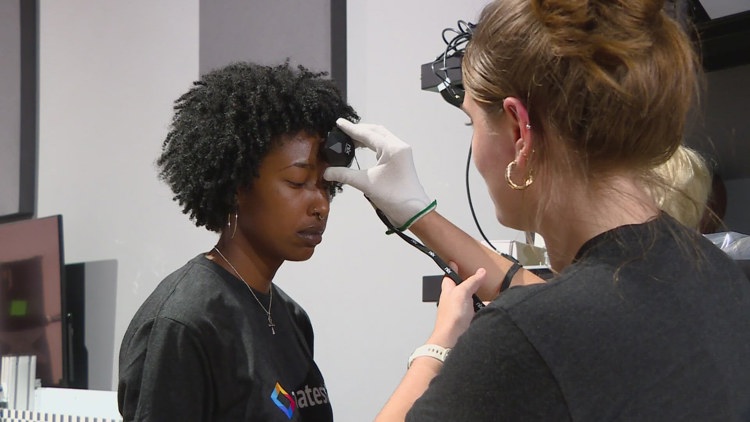
Borek is currently engaged in a skin tone research project atImatest, an image quality laboratory in Boulder. The research examinesvarious skin tones under varying light conditions with different cameras.
One of our responsibilities here is to develop test targets for camera manufacturers and those who design cameras and the associated workflows,” Borek stated. “Having a standardized test target enables them to evaluate their cameras and properties across a broad spectrum of skin tones, which ideally will help in creating better cameras, whether they are in smartphones, webcams, or any other devices, to accurately represent various skin tones.
Borek stated that the research is founded on theMonk Skin Tone Scale, created by Dr. Ellis Monk from Harvard.
“It’s primarily intended to offer a more accurate depiction of real skin tones,” Borek stated.
Before the Monk Scale, the Fitzpatrick Scalewas more frequently applied in research on skin color. It later faced criticism for not including a wide range of representations and favoring lighter skin tones.
One aspect I observed as a professor and researcher was that some of the most widely used methods for measuring skin tone had significant shortcomings,” said Dr. Monk. “Either the tones on the scale didn’t accurately reflect what I believed to be true representations of the various skin tones we see in real life, or there were other problems, such as the limited number of options available on the scale for people to select their skin tone when conducting these studies.
He mentioned the historical background of “Shirley” cards that Kodak utilized, which also failed to establish a benchmark for equitable representation in films.
One of the key issues in skin tone imaging was the use of a calibration card known as the Shirley card by Kodak, which was a picture of a white woman named Shirley,” Monk explained. “The concept was that if it looked good for Shirley, then it would look good for everyone. Of course, in 2025 and even before that, people realized this wasn’t entirely true. This meant that color photography was calibrated using a white woman, while other skin tones weren’t really considered in the process.
Monk mentioned that he started developing his scale around 2019. He explained that his research focuses on skin tones and disparities in health and technology.
There’s a connection between skin color and various forms of inequality, including health, wealth, and the criminal justice system,” Monk stated. “However, to clearly present this argument, it’s essential to have a strong measurement of skin tone that effectively captures the differences in skin tone we observe in society. If the measurement isn’t accurate, we might fail to detect these inequalities.
Monk stated that he was ultimatelyapproached by Google, which aimed to incorporate his scale into its Pixel camera phone and AI technology development.
The Pixel camera phone has significantly outperformed many other competitors in terms of its ability to measure and handle skin tones,” Monk stated. “One of the reasons for this is the implementation of my scale, which broadened the range of skin tones that the technology had to be capable of managing for the Pixel camera phone.
This adoption is what Imatest wishes to witness more frequently from the clients they assist.
Otherwise, I hope we can encourage the companies working on these cameras and pipelines to thoroughly test across a wide spectrum of skin tones,” Borek said. “Cameras are part of our daily lives. This impacts items like cell phones and webcams, but it becomes even more critical in areas such as security and healthcare, where accurately representing skin tones is essential.
Monk expressed his desire to further develop his scale’s application to incorporate medical equipment, such as oximeters. He mentioned that he is currently discussing with the International Standards Organization and the U.S. Food and Drug Administration to establish new regulatory guidelines for employing his scale when skin tone plays a role in specific technology.
One of the challenges with pulse oximetry is that these devices don’t perform consistently across all skin tones,” Monk explained. “Especially for individuals with darker skin, studies have found that they can give higher readings than the actual blood oxygen level. In practical terms, this could mean the device shows 97, but the true value might be 93 or 94, which is significant in a clinical setting because medical professionals, such as nurses and doctors, rely on these readings to make important decisions.
Monk mentioned that this portion of his research is funded by a $2.5 million grant from the National Institute of Health. He added, in reply to inquiries about preserving federal funding, that ongoing financial backing remains uncertain.
“If we fail to consider skin tone from a measurement perspective, it implies we won’t grasp the inequalities associated with it. Furthermore, technologies that rely on skin tone will not function equally well across various skin tones, as this suggests those technologies are not accurately recognizing skin tone,” Monk stated.
The progress of Borek’s research also relies on financial support. She mentioned that if feasible, she would like to bring back the models photographed during the initial data collection phase. She expressed her intention to evaluate them using the new test charts developed from the current set of photographs.
We’re essentially aiming to apply our findings to real photographic test charts that reflect these same skin tones,” Borek stated. “Our goal is to develop standardized test charts that can be utilized in a fixed or automated laboratory environment by numerous camera companies, ensuring they accurately represent skin tones under various conditions.
Borek mentioned that she aims to complete this phase of data gathering by the end of August.