California’s Gubernatorial Race and the Controversial Redistricting Plan
California’s upcoming 2026 gubernatorial race has brought attention to a significant issue: the state’s plan to redraw its congressional maps mid-decade. This move, outlined in Proposition 50, is one of the most pressing topics discussed by candidates as they prepare for the election.
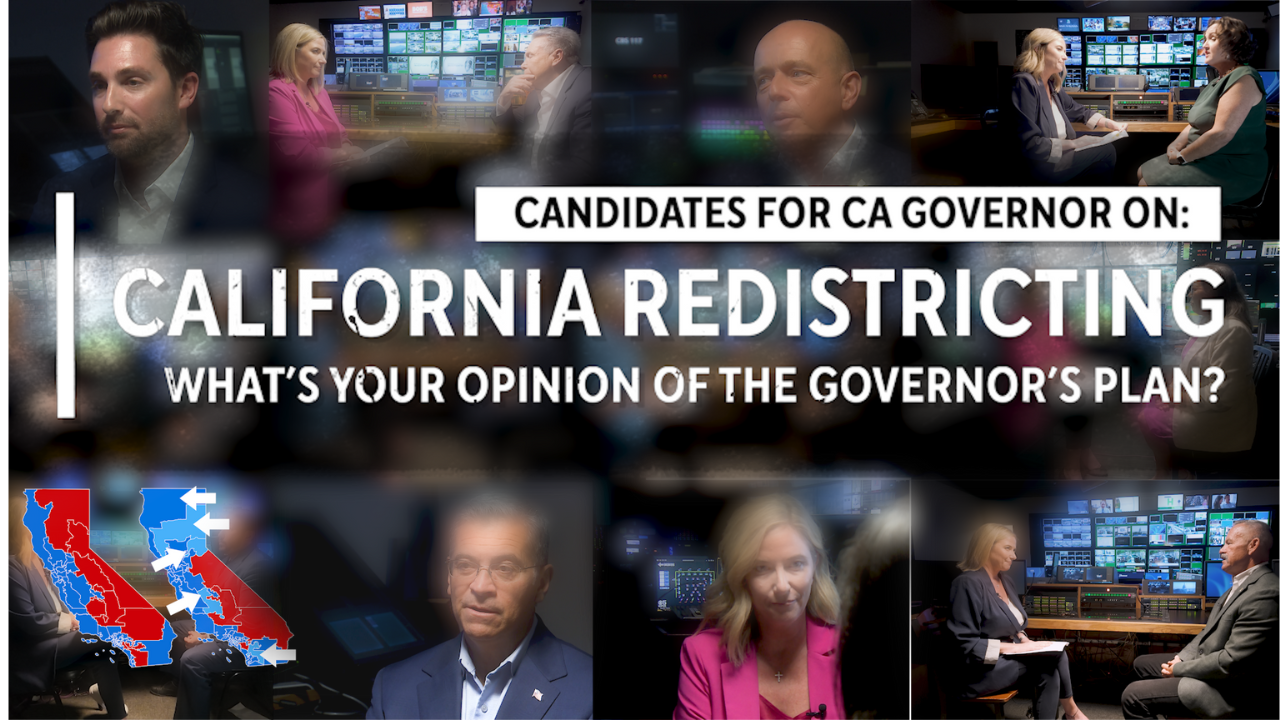
Proposition 50, proposed by the state legislature, aims to allow California lawmakers to redraw the state’s congressional districts before the 2030 Census. The redistricting effort, supported by Democratic Governor Gavin Newsom, seeks to shift five of the state’s U.S. House seats to be more favorable to Democrats in the next midterm elections. California Democrats argue that this is a necessary countermeasure to Texas’ recent redistricting, which favors Republicans in the midterms.
Unlike in Texas, California voters took the power to draw these maps away from lawmakers in 2020, establishing an independent redistricting commission. However, Proposition 50 would give that power back to lawmakers for the next five years.
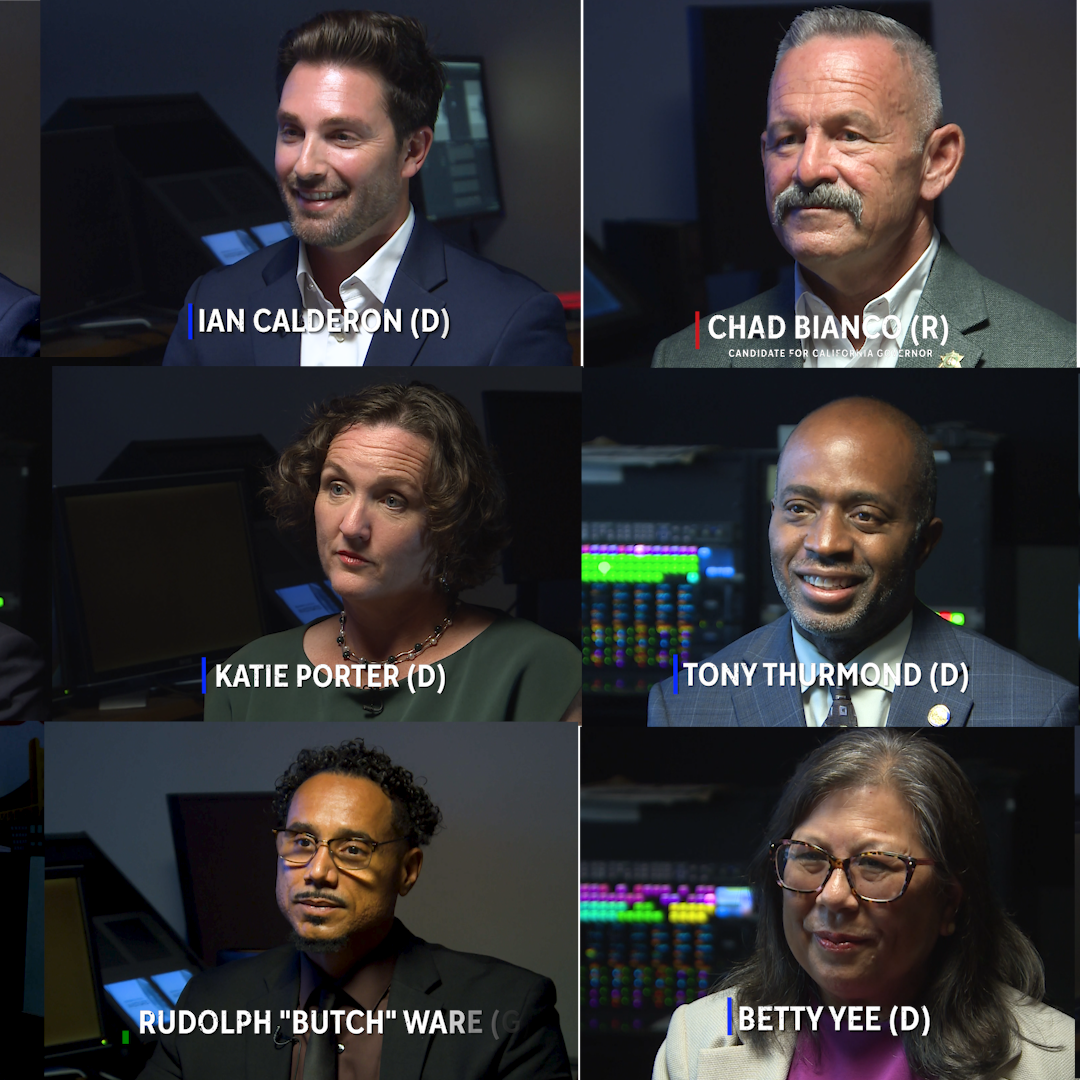
Over several weeks in September, CBS News California Investigates sat down with each candidate to ask questions on a variety of issues that matter to voters, including Proposition 50. While Democratic candidates generally backed Proposition 50 along party lines, some admitted unease when pressed on the details. Republican and Green Party opponents defended their opposition as they responded to arguments in favor of the measure.
Candidate Perspectives on Proposition 50
Candidates shared their views with CBS California Investigates on Governor Newsom’s Prop 50 redistricting proposal. At the time of the interviews, Democratic leaders framed it as a plan to “Stop Trump’s Power Grab.”
Former Attorney General Xavier Becerra, a Democrat who served as Health and Human Services Secretary in the Biden administration, defended the plan as necessary to protect California’s voice in Washington, saying it would “make sure that Donald Trump doesn’t put his thumb on the scale on the votes in Congress.”
Republican candidate Steve Hilton condemned the plan, saying outright that it is “totally corrupt and it’s unconstitutional and it is illegal.” He argued, “Politicians shouldn’t draw their own maps. I mean, that’s obviously wrong and corrupt. Common sense tells you that.”
Former state Assemblymember Ian Calderon, also a Democrat, said he supports the plan and emphasized California’s position as a donor state. “At the end of the day, if we’re going to have hope of any type of leverage throughout the next couple of years during Donald Trump’s presidency, it would be really helpful if Democrats controlled Congress, so that we could fight back and secure the money that is coming to California,” Calderon said.
Republican candidate Leo Zacky called the proposal “unconstitutional,” criticizing the avenue the state has taken to redraw its districts. “The way that it’s set up is that we, the people, are supposed to figure out how the districts are supposed to be drawn,” he said. “[Newsom is] violating the Constitution. He’s spending a ton of money doing it. It’s trash. It’s a waste.”
Green Party candidate Butch Ware accused Democrats of consolidating power under the guise of fighting Republican overreach. “In the state of California, are y’all feeling that this has been a state that has been well-run and for your best interest? So you’re going to essentially hand them the keys to make sure that they own every district in the state? You imagine thinking that you can fight fascism with fascism,” Ware said.
While Democratic former State Controller Betty Yee called the redistricting effort “essential” to prevent the manipulation of elections, “as the president has asked the state of Texas to do.” “We have a process for this. It’s after every decennial census… And just the idea that there is manipulation that is being directed from the top, that’s going to affect California’s representation, our proportionate representation,” Yee said. “We have to fight that.”
Addressing Concerns from Trump Voters
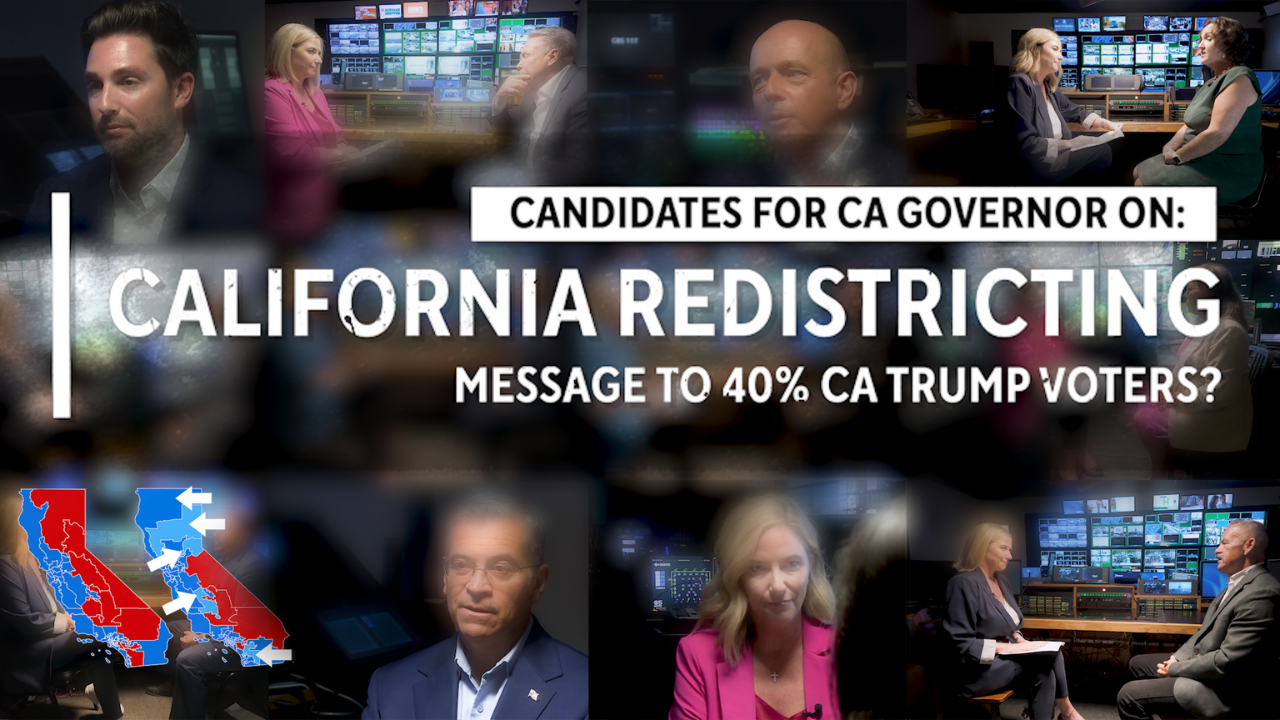
Democratic candidates also explained their message to the roughly 40% of California voters who supported Donald Trump in 2020, voters whose political representation could be diminished under the new district maps. The Republican and Green Party Proposition 50 opponents also defended their opposition to pro-redistricting arguments.
Becerra said he would talk to them “straight out” and emphasized his intention to win every vote. Becerra also emphasized that now is the time to stand up for the rule of law and Democracy. “No one should do power grabs. No one is a king. No one has a right to deny you your vote,” he said.
Like Becerra, Calderon said his campaign would focus on listening to all voters, not just talking at them. “There are a lot of Republicans in the state who don’t necessarily love everything Trump is doing,” Calderon said. “They just want to be heard.”
Thurmond echoed similar arguments, saying that many of Mr. Trump’s voters may not support all of the president’s policies. “Most Americans do not support attacks on the immigrant communities or education cuts,” he said. “Just because they voted for Trump doesn’t mean they agree with everything.”
Yee acknowledged that some voters, particularly in rural Republican districts, may feel disenfranchised. “What I will say to them also is, look, these are areas of the state that actually want to become vital economies. These are areas that actually have probably disproportionate rates of people on Medicaid. These are parts of the states where people are relying on food assistance more than probably other parts,” Yee said. “I would just say, who’s going to best represent those interests when those cuts are upon you?”
Ethical Dilemmas and Voter Impact
As several of her opponents noted, in California’s top-two open primary system, Republican voters could help put a Democratic candidate over the top. Porter then threatened to call off the interview, taking issue with too many follow-up questions. She ultimately stayed and continued answering questions.
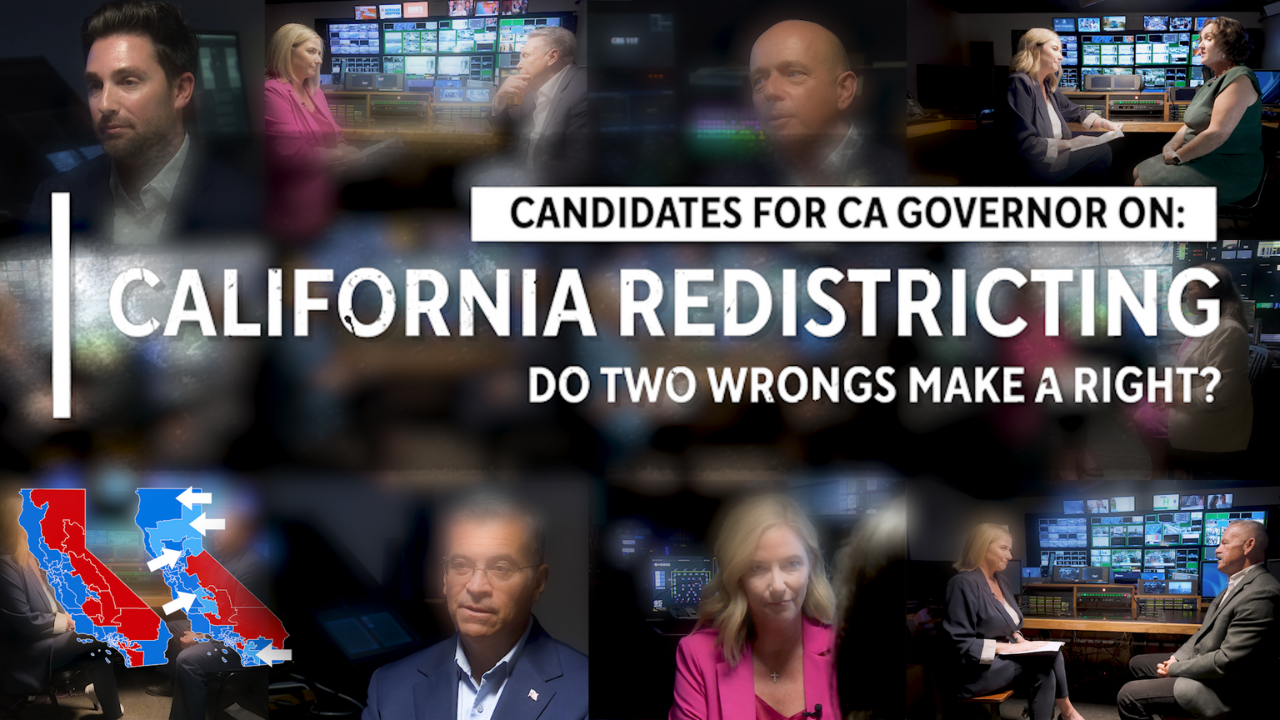
The candidates also confronted the ethical dilemma that even some Prop 50 supporters acknowledge: Does fighting one partisan maneuver with another set the wrong precedent? In other words, do two wrongs make right?
“It’s let me tell you how broken something is by telling you I’m going to break it more,” Bianco said.
Becerra defended the plan as necessary to protect California’s voice in Washington. “Donald Trump is afraid he’s going to lose his slim majority of Republicans come 2026,” Becerra said. “So he’s trying to rig the process to give himself more Republicans. That is not a Democratic process. We’re going to fight as we need to make sure our votes count.”
Calderon offered a conflicted view, calling it “kind of a sh—- choice” but emphasizing the political stakes. “If we’re going to have hope of any type of leverage during Donald Trump’s presidency, it would be really helpful if Democrats controlled Congress.”
Ware warned voters not to fall for partisan manipulation. “This doesn’t serve the voters of California. It serves the DNC. It does not help us. It helps them,” Ware said. “They are using Californians essentially as a prop in their battle between Democrats and Republicans.”
Porter said it’s not two wrongs, highlighting the nature in which Texas approached its redistricting. “What Texas is doing is acting out of the course of the census, not following new census data… They’re doing it because Donald Trump instructed them to do it,” she said.
Villaraigosa said he’s for letting the people decide on the matter to challenge corruption. “I think people have a right to challenge what’s going on, this rigged election that they’re trying to do,” he said.
Thurmond called the special election on Proposition 50 “an important moment for voters to decide.” Yee reaffirmed her stance on California’s move to counter Texas’ redistricting effort. “Just the idea that there’s manipulation that is being directed from the top that’s going to affect California’s proportionate representation, we have to fight back,” she said.
Cloobeck also highlighted California’s position as a donor state. “Donald Trump’s actions have been such that he wants to just attack California. He has not shown us any gratitude for all the billions of dollars of tax dollars the federal government gets from California,” he said.
Hilton described the difficulty California faces in properly redrawing its congressional districts mid-decade rather than after the federal census every 10 years. “By drawing these maps in the middle, they don’t know who lives where,” he said. “Millions of people have left California. In Los Angeles, whole communities have burned down. Who knows who lives there? There’s no way that they can honor that constitutional requirement.”
Hilton stressed that even before Newsom’s redistricting effort, California already had “a massively distorted political map.” Acknowledging that Republicans make up about 40% of the vote in California but have just 17% of the congressional seats, Hilton said, “With this new plan that they’ve got, it would be down to 6%.”
Hilton argued that those voters are being pushed out of representation altogether, saying that the plan would unfairly increase the weight of Democratic votes by as much as eight times compared to Republican ones. “We’re completely violating the principle of equal protection, the whole idea,” Hilton said.
While candidates differ sharply on Proposition 50, voters will have the final say. The redistricting plan will go before voters in a special election on November 4. If approved, the new congressional maps would remain intact through the 2030 election.