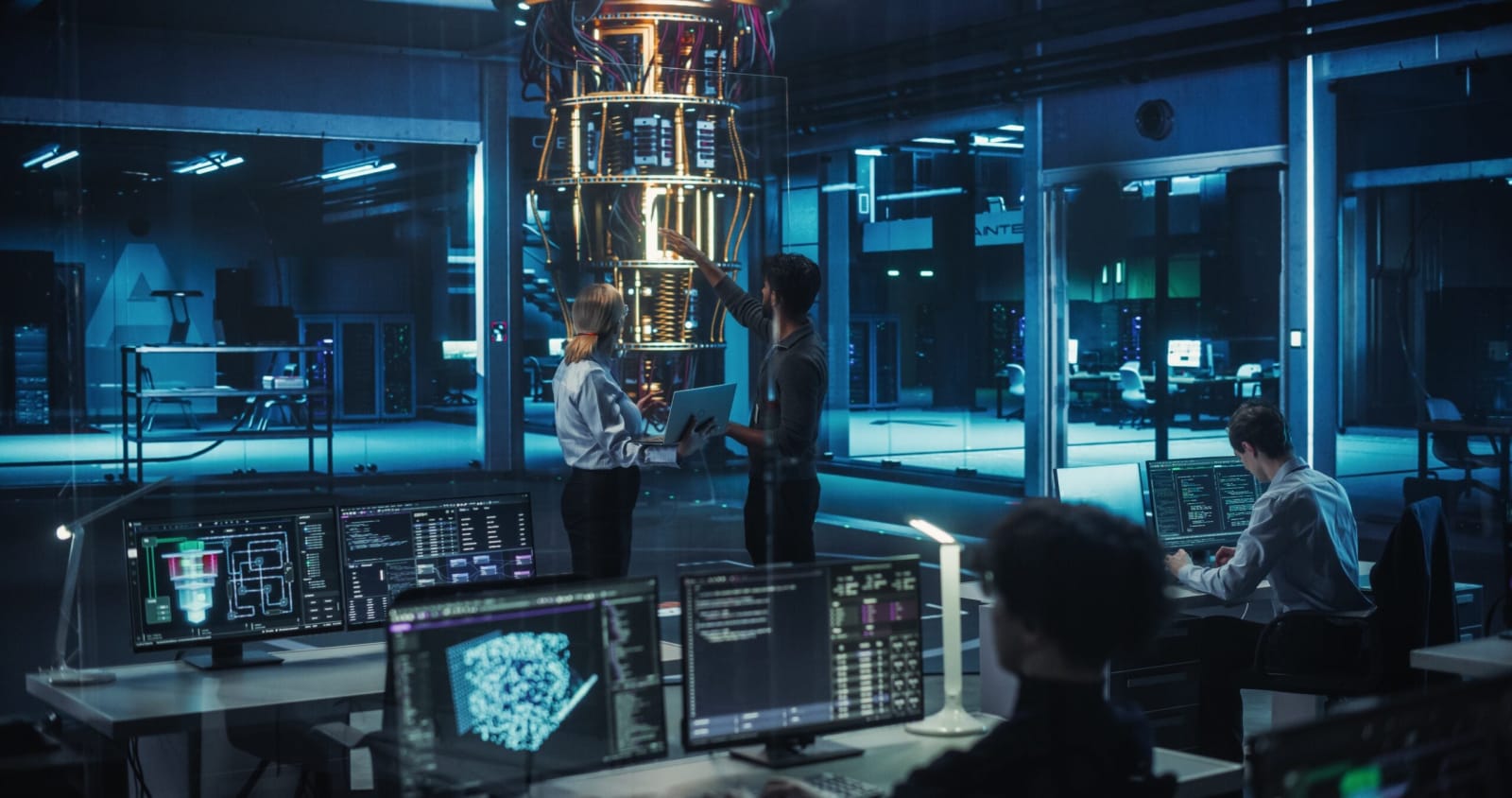
In the rapidly changing field of quantum computing, one of the major challenges isn’t the speed of calculations—it’s the duration for which fragile quantum information can be maintained. Although superconducting qubits, which are central to many quantum systems, can handle information very quickly, their capacity to retain it is not satisfactory. This is where a new method fromCaltech researcherssteps taken, utilizing sound to extend the lifespan of quantum data significantly.
Superconducting qubits perform exceptionally well in the microwave range, carrying out computational tasks through electrons that move without resistance at extremely low temperatures. These small but powerful components utilize a unique concept known as superposition, allowing a qubit to be both a 0 and a 1 simultaneously, which enables quantum computers to solve complex problems that would challenge even the most advanced conventional systems.
But when it comes to maintaining that information reliably for later use, thesequbitschallenge. This is why researchers have been investigating the concept of “quantum memories” capable of preserving delicate quantum states for extended durations.
From Electrical Impulses to Physical Movement
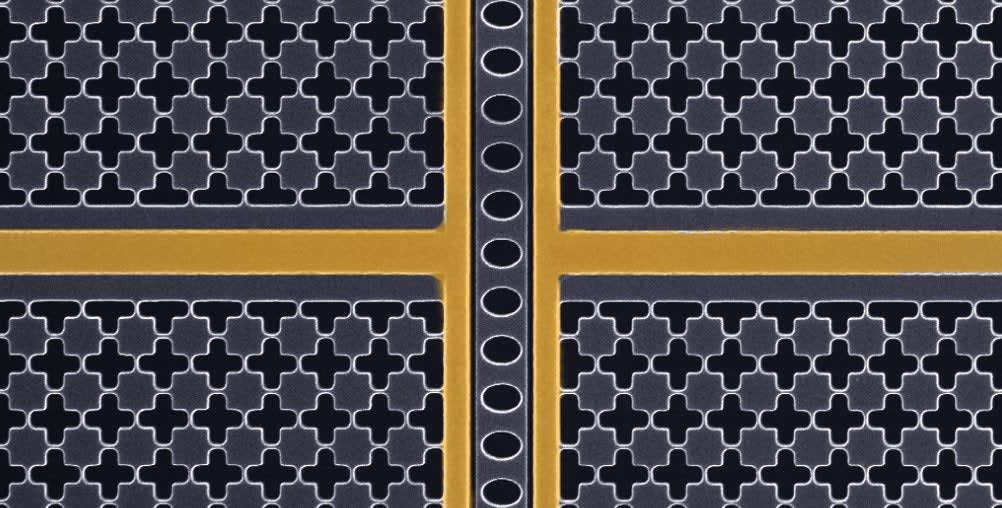
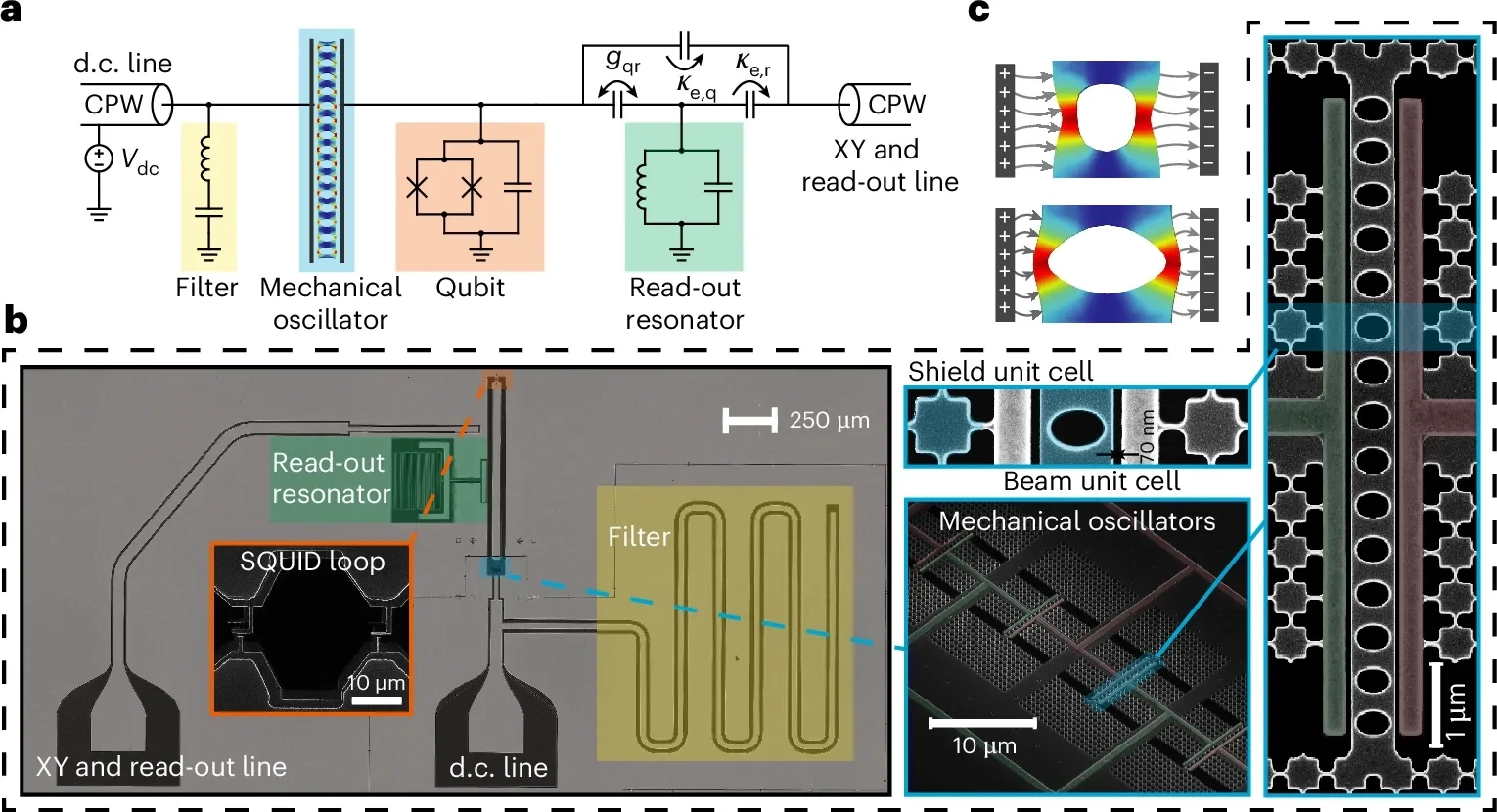
A team from Caltech, guided by graduate students Alkim Bozkurt and Omid Golami with oversight from Mohammad Mirhosseini, an assistant professor in electrical engineering and applied physics, has discovered a method to store quantum information by converting it into mechanical oscillations. Their research, which was recently published inNature Physics, features a combined system that converts electrical data from a superconducting qubit into acoustic waves—specifically, into quantized vibrations known as phonons.
Scientists created a superconducting qubit right on a chip and linked it to a mechanical oscillator, which operates somewhat like a tiny tuning fork. This system includes flexible plates that oscillate at gigahertz speeds—much quicker than any sound humans can detect. When energized, these plates can transfer quantum data with the qubit, holding it as vibrations and releasing it when needed.
Related Stories
・Researchers harness the complete potential of quantum computing using overlooked particles
・New discovery in quantum physics allows researchers to reverse the direction of time
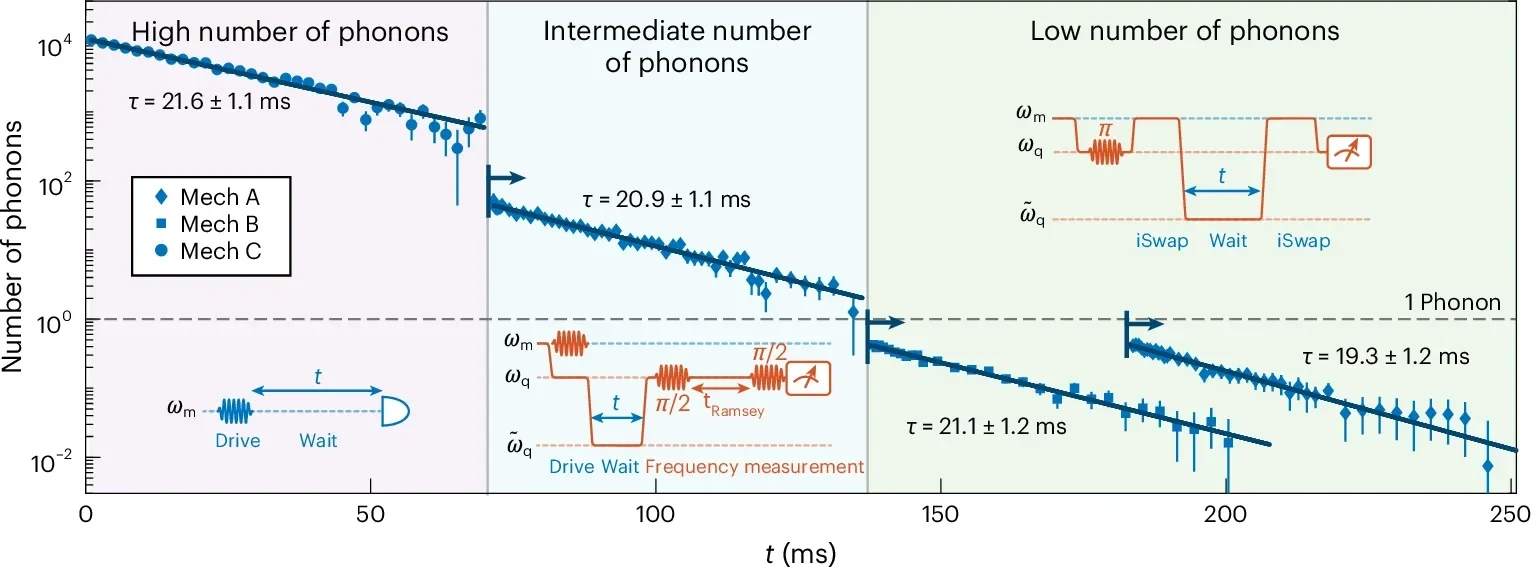
What makes this method so encouraging is the impressive duration for which the stored data remains intact. “It turns out that these oscillators have a lifespan approximately 30 times longer than the current best”superconducting qubits”out there,” Mirhosseini explains. The system demonstrated an energy decay time of approximately 25 milliseconds—a significant advancement over the brief lifespans of qubits by themselves.
Why Audio Outperforms Velocity in This Scenario
Although electromagnetic signals move at an extremely high speed, they also engage with their environment in a manner that causes quantum states to collapse rapidly.Acoustic waves, on the other hand, move at a much slower pace and do not spread out into open space. This helps contain the energy within the device and reduces unwanted interference from adjacent parts. It also suggests that several oscillators could potentially be placed on one chip, opening the door to scalable quantum memory systems.
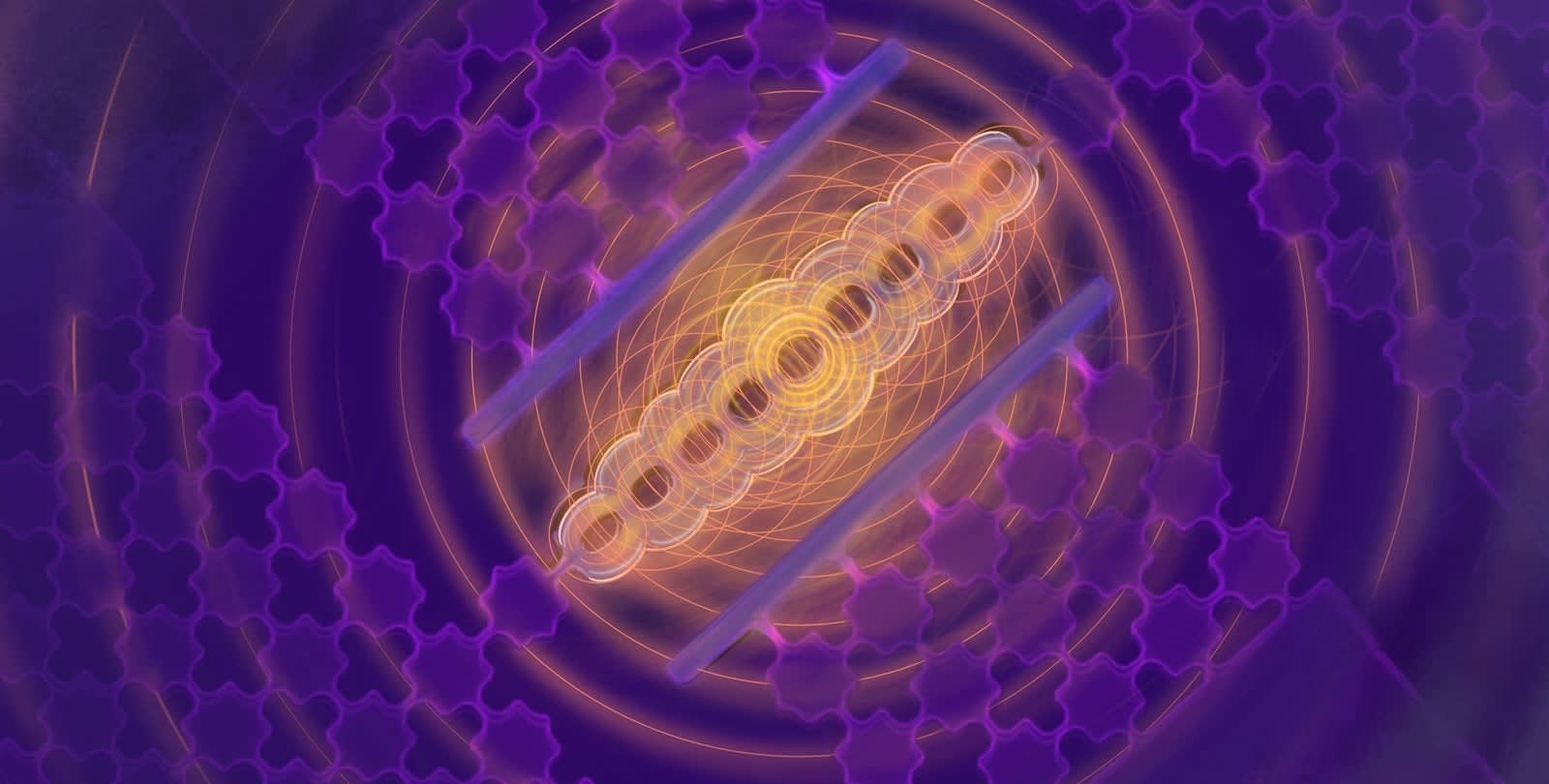
The Caltech team went beyond simply showing long storage durations. They also addressed the issue of mechanical decoherence—the slow loss of stored data—through quantum control methods. Using a two-pulse dynamical decoupling sequence, they managed to increase the oscillator’s coherence time from 64 microseconds to 1 millisecond, enhancing its reliability and practicality.memory element.
The Path to Quicker Availability
Although the outcomes are remarkable, Mirhosseini notes that there is still progress needed before the technology can be completely incorporated into extensive quantum computers. Currently, the process of writing and retrieving data from the mechanical oscillator is not as fast as desired. “For this system to be genuinely beneficial for quantum computing, you must be able to input and retrieve quantum data much more quickly,” he explains. Reaching this goal will involve increasing the interaction rate between the qubit and the oscillator by a minimum of three to ten times—a task the team feels is achievable.
This contribution also aligns with a broader movement toward hybrid approachesquantum systems, which leverage the advantages of various physical platforms. Microwave photons in superconducting circuits are effective for executing operations, whereas phonons in mechanical systems are good at retaining information. Combining them could lead to new opportunities not only for computing, but also for extremely sensitive measurements and innovative quantum communication technologies.
Past Studies and Findings
Earlier workResearchers from Mirhosseini’s group showed that phonons—particles representing vibrations—could serve as efficient carriers for quantum information. These previous experiments, conducted in classical environments, verified that such devices could function at gigahertz frequencies comparable to superconducting qubits and perform effectively at extremely low temperatures.
Within the larger research community, alternative methods have been exploredpiezoelectricmechanical oscillators linked to superconducting qubits, which are part of a research area called circuit quantum acoustodynamics. These setups enable the transfer of microwave photons and sound waves, although incorporating piezoelectric materials has been difficult, and the duration for which information can be stored has typically been less than in the most advanced electrical systems.
Some scholars have investigated the application of radiation pressure forces to connect mechanical systems withelectromagneticones, but this interaction is inherently weak and needs thoughtful improvement. Despite these challenges, hybrid systems continue to be a promising objective as they integrate the beneficial aspects of various quantum technologies.
Real-World Applications of the Study
If further developed, this technology might serve as a fundamental component for next-generation quantum computers, providing them with the long-term storage they are currently missing. This would enable quantum processors to retain temporary data while tackling different sections of an intricate problem, or to halt and restart computations without losing any progress.
In addition to computing, mechanical quantum memories may have applications inquantum sensing, where the capability to maintain a signal for long durations could enhance measurement accuracy. They could also be involved in quantum communication networks, where information must be temporarily stored while waiting to be transmitted or received. In all these scenarios, the ability to incorporate numerous oscillators on one chip makes this method particularly attractive for expanding to practical, real-world systems.
Note: The article mentioned above was provided byThe Positive Aspect of News.
Like these types of uplifting stories? GetThe Positive Aspect of News’ newsletter.