President Donald Trump is focusing on eliminating cash bail through two executive orders released on Monday.
One of the ordersis focused on stopping the use of cash bail across the country. It requires Attorney General Pam Bondi to create a list of states and local areas that she determines have “significantly removed cash bail as a possible requirement for pretrial release for crimes that clearly endanger public safety and order, such as violent, sexual, or indecent offenses, or burglary, looting, or vandalism.” According to the order, federal funding and contracts might then be denied or canceled in those areas.
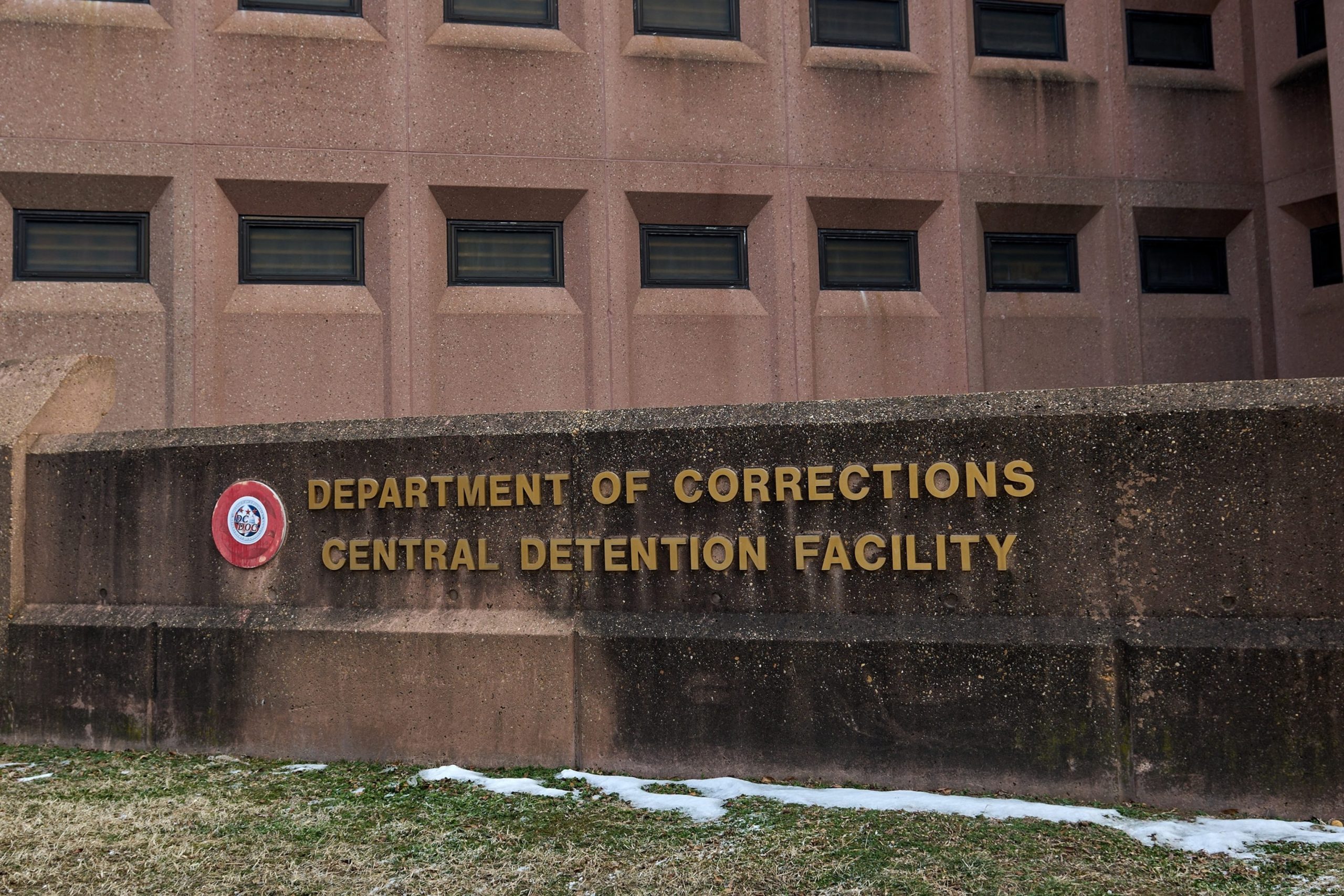
Trump also signed an orderRegarding cashless bail in Washington, D.C., where the president has announced a “crime emergency,” the goal is to keep numerous criminal defendants in federal detention. The directive aims to detain those arrested in federal custody “to the maximum extent allowed by law” and to pursue federal charges and pretrial detention “as much as possible, in line with legal guidelines, to ensure that criminals who represent a danger to the public are not released before their trial.”
The president has often criticized cashless bail as part of his efforts to address crime. Below is an overview of the policy.
What is the process of cash bail?
Cash bail usually refers to a fixed sum determined after an arrest, intended to ensure that a defendant appears in court for their hearings or trial. A judge has the option to increase or decrease the standard bail, waive it and release the defendant without requiring payment, or completely deny bail, depending on the nature of the offense and considerations like the defendant’s likelihood of fleeing and whether they present a threat to the community.
If an individual cannot afford their set bail, they might utilize a private bail bond agency to post the bond on their behalf, typically in exchange for a fee or premium, or alternatively remain in jail until their trial or hearings.
What is the process of cashless bail?
Cashless bail is a form of criminal justice reform that supporters claim helps reduce unfairness in the legal system by preventing individuals from being detained solely because they cannot pay their bail.
Supporters who advocate for the removal of cash bail assert that the current system unfairly impacts individuals from low-income backgrounds and minority communities. On the other hand, those who oppose changes to the bail system believe it may endanger public safety and could lead to higher rates of crime and reoffending.
In a cashless bail system, the application of monetary bail for specific minor, non-violent criminal offenses and felonies might be removed, typically with a judge determining if pretrial detention is necessary. The particular crimes and regulations can differ depending on the area.
MORE: Trump administration live updates: Trump issues directives aimed at eliminating cash bail, flag desecration
Where is no-cash bail implemented?
Illinois was the first state to fullyeliminate cash bailafter the state Supreme Court confirmed the provision’s constitutionality in 2023. According to the policy, a judge determines whether a defendant qualifies for pretrial release, considering elements like the likelihood of fleeing and community safety.
Other states, such as New York, New Jersey, and New Mexico, have largely done away with cash bail or restricted its application.
D.C., which is specifically targeted by Trump’s latest executive orders, was among the first to implement a cashless bail system. In 1992, the district replaced its money bail system with a process where judges use risk assessment tools to decide if an individual poses a danger to public safety or is likely to flee.
Bail reform policies can also differ across counties; for example, in Harris County, Texas, a 2019 court ruling removed cash bail for most misdemeanor offenses.
Does criminal activity rise when using cashless bail?
Trump has claimed that eliminating cash bail results in increased criminal activity and recurring offenses.
Cashless bail is a catastrophe,” he stated in comments made at the Oval Office on Monday. “It has been a terrible development for crime, particularly violent crime.
In a fact sheeton the new initiative designed to eliminate cash bail across the country, the White House highlighted multiple instances of violent criminals and murder suspects being released. It also mentioned a2023 studyAccording to the Yolo County District Attorney’s Office in California, the state’s “zero bail” policy during the COVID-19 pandemic led to a 163% increase in crime and a 200% rise in violent crime when compared to individuals who paid bail in Yolo County.
The state’s emergency measure, designed to limit the spread of COVID-19 in California prisons, established a bail of zero dollars for most misdemeanor charges and non-violent felony offenses. Although the district attorney’sstudymentions that people on emergency no-bail were “let go with no requirements and no form of risk evaluation was carried out.”
MORE: A novel approach to bail reform through scientific methodology
The Public Policy Institute of California’sanalysisThe state’s zero bail policy revealed “some temporary challenges in applying a universal approach to pretrial detention,” and suggested that pretrial risk evaluations “might offer a beneficial solution, as gaining insight into the variety of offenses individuals have committed in the past and the seriousness of those offenses could aid in deciding whether they should remain in jail or be allowed to return to the community before their trial.”
A 2024 studyAccording to the Brennan Center for Justice, an impartial legal and policy organization, a comparison of crime statistics in 22 cities that implemented some type of bail reform with 11 cities that did not revealed “no statistically significant connection between bail reform and crime levels.”
One year after Illinois implemented its Pretrial Fairness Act, which partially removed cash bail, a study from Loyola University of Chicago’s Center for Criminal Justicenotedalthough it was too soon for any conclusive results, crime in Illinois did not increase after the law was put into effect.