The Resignation of French Prime Minister Sebastien Lecornu
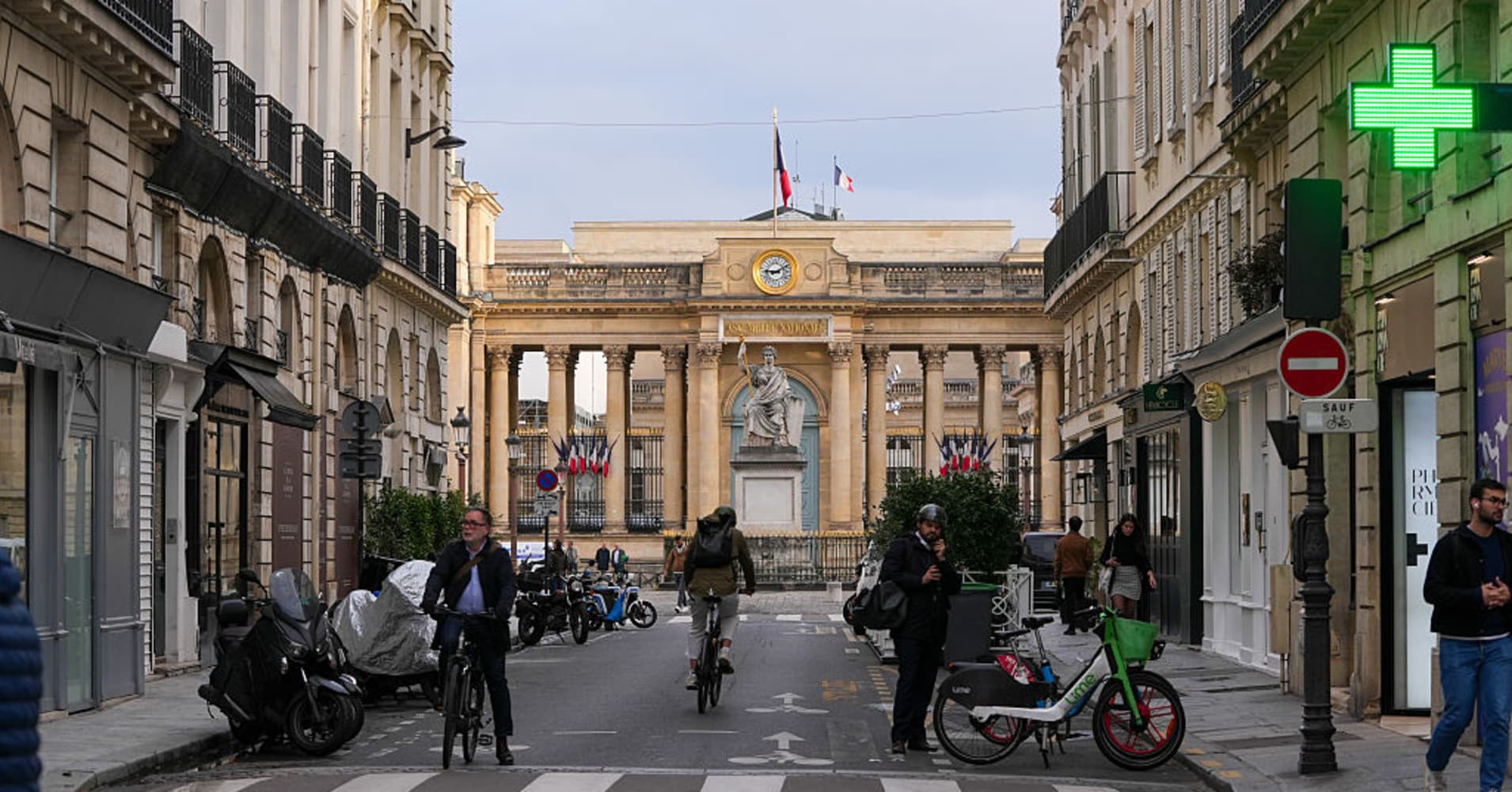
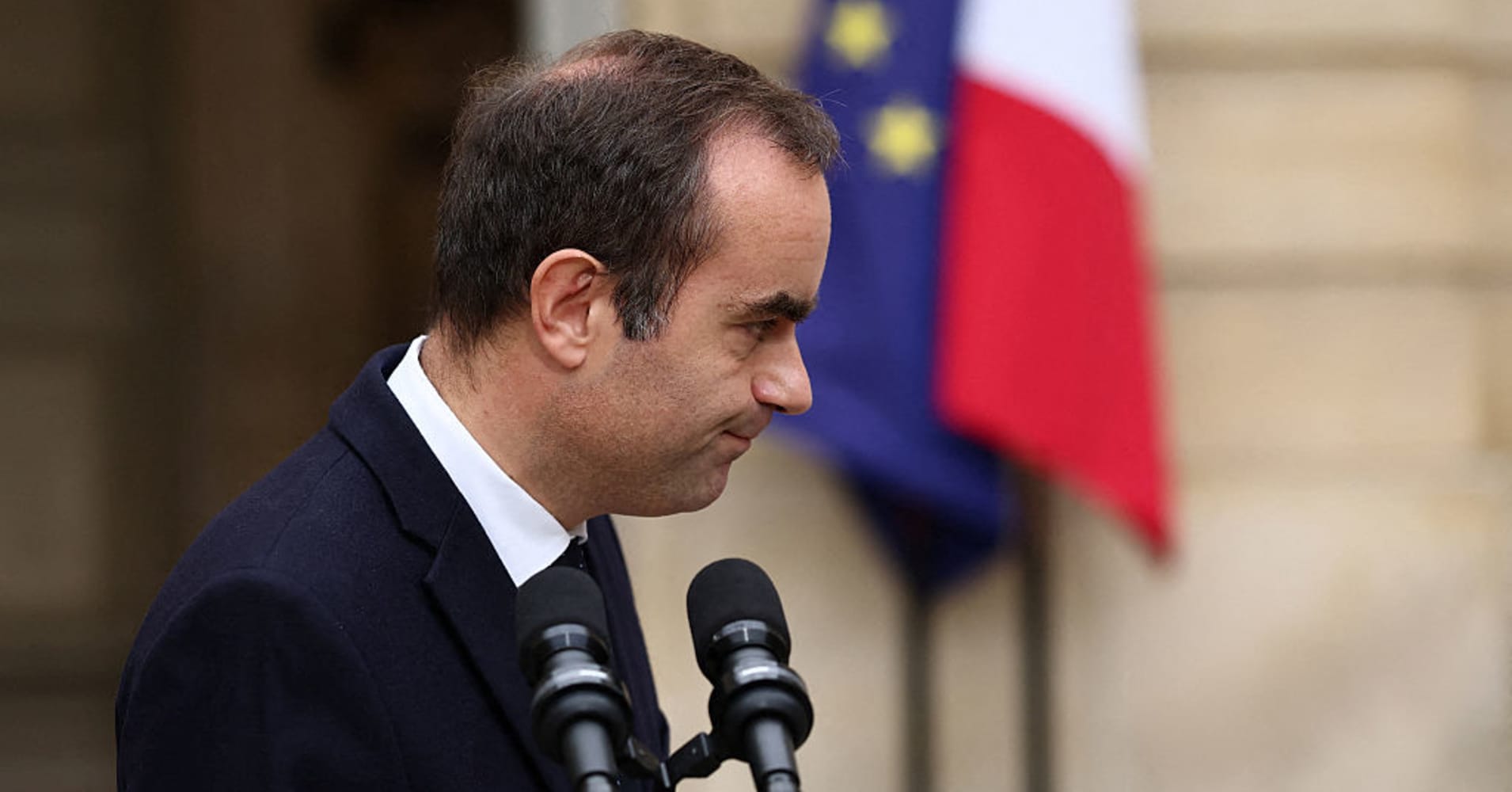
The resignation of French Prime Minister Sebastien Lecornu sent shockwaves through the political landscape, as journalists rushed to determine who would be in charge of the government. Lecornu’s resignation came just hours after he had announced a new cabinet, marking an unprecedented moment in French politics.
As news of Lecornu’s resignation broke on Monday morning, journalists scrambled to get in touch with government spokespeople to clarify which ministers were actually in charge: the ones Lecornu had nominated only the night before, or the ones that were previously in office before the reshuffle? This situation highlighted the unique and unpredictable nature of the current French political climate. The answer, however, was clear: the ministers nominated on Sunday night would serve as caretakers until a new prime minister and government are appointed.
Lecornu handed over his resignation to President Emmanuel Macron thirteen hours after announcing his new government’s cabinet, just 27 days into his tenure. This abrupt departure was the result of political fragmentation following the July 2024 snap election, where opposing political blocs emerged without achieving an absolute majority.
This fragmentation led Macron to install minority governments that relied on precarious pacts and dealmaking, ultimately failing due to instability. On one hand, there is a sense of déjà vu in France now, as the next prime minister will be Macron’s sixth in less than two years. On the other hand, the current crisis is distinct: unlike previous governments led by Michel Barnier or Francois Bayrou, the Lecornu government was not toppled by the opposition but by its own allies.
An Ally Turns Against
In his address on Monday morning, Lecornu blamed political parties’ intransigence for the impasse in France. He stated, “I was ready to compromise, but each political party wanted the other political party to adopt its entire program.” He added that “the composition of the government woke up some partisan appetites that are not unrelated to the future presidential election.”
This was a thinly veiled criticism of Bruno Retailleau, the newly reappointed interior minister and leader of the center-right group, Les Republicains (LR). Shortly after the nominations on Sunday night, Retailleau criticized the government’s composition, claiming it did not reflect the promised break by Lecornu. He indicated that his party’s executive would meet the next day to decide whether it would continue to support the government.
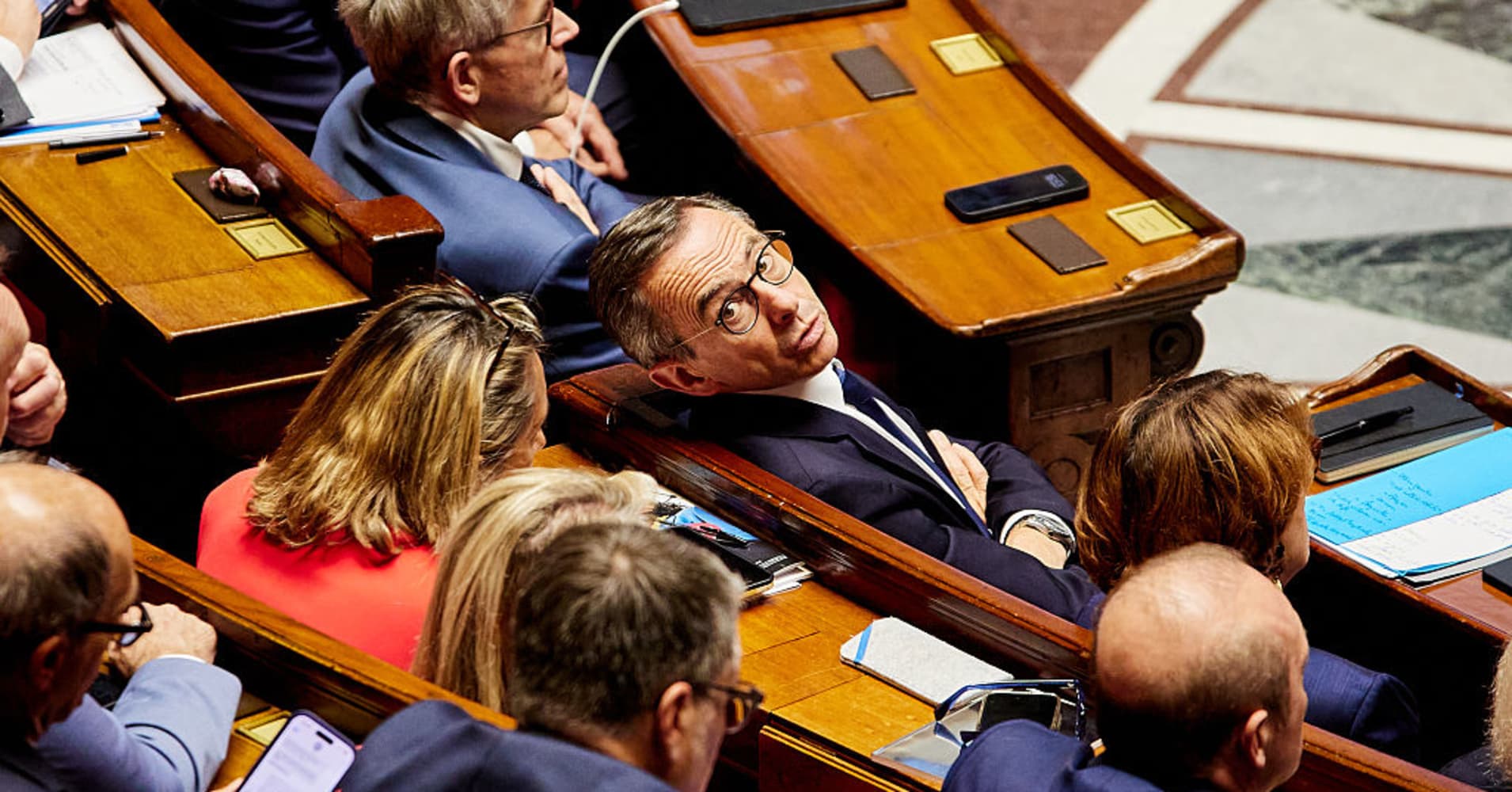
The LR, with its 49 lawmakers, had been part of the “socle commun” (common base) working with Macron’s centrist alliance, Ensemble, since the snap election. Even before that, they had supported key reforms. Many held important roles, including Bruno Le Maire, the former economy and finance minister, whose return to government as defense minister caused ripples within the LR party.
It is ironic that a party known for presenting itself as the party of responsibility, especially regarding public finances, triggered the latest political crisis. However, LR’s distancing from the government left Lecornu with no room for maneuver.
Political Re-alignment Ahead
The breakup of the “socle commun” is not entirely surprising. As the 2027 presidential election approaches, parties and key political figures are beginning to think about their future. Macron cannot run again after winning the presidency twice, and with his unpopularity, even allies are starting to distance themselves. The latest move by LR could signal a broader political realignment ahead of the election.
What Now?
With the current crisis, all eyes are once again on the Elysee. In a surprise twist on Monday evening, Macron gave Lecornu another 48 hours for “final discussions” with rival parties to try to break the impasse. Lecornu tweeted on social media platform X that he would report to the president on Wednesday evening on any potential breakthrough “so that he can draw all the necessary conclusions.”
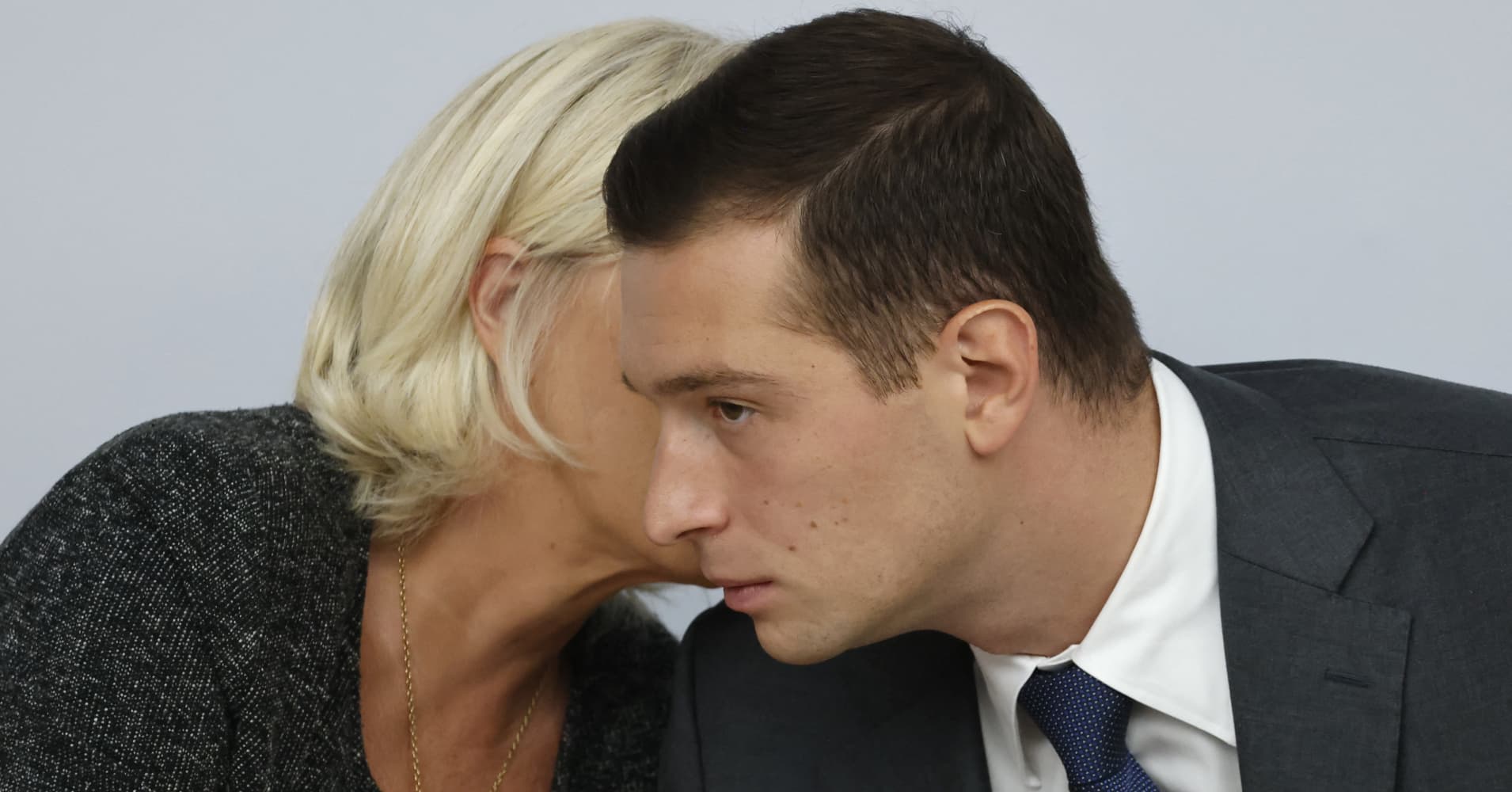
It is difficult to see what Lecornu can achieve in 48 hours, beyond what he has already done since his nomination almost a month ago. Will the next step be another snap election? The far-right, led by Jordan Bardella and Marine Le Pen, is calling for this, as polls show them leading with 30 to 35% of the vote.
This was also the case last year, but eventually, a coalition of the left, known as the “cordon sanitaire,” came top. That coalition between the far-left, communists, greens, and socialists has since imploded.
A dissolution of the National Assembly would be the logical democratic choice in the current situation, but there is no guarantee that it would deliver a clearer majority.
Lecornu concluded his resignation statement on Monday morning by saying, “one must always prefer one’s country to one’s party.” Last year’s snap election was a test: would French lawmakers learn to work in broad coalitions like so many of their European counterparts? After 15 months, the answer is a resounding ‘no.’