Disney’s Legal Action Against Character.AI
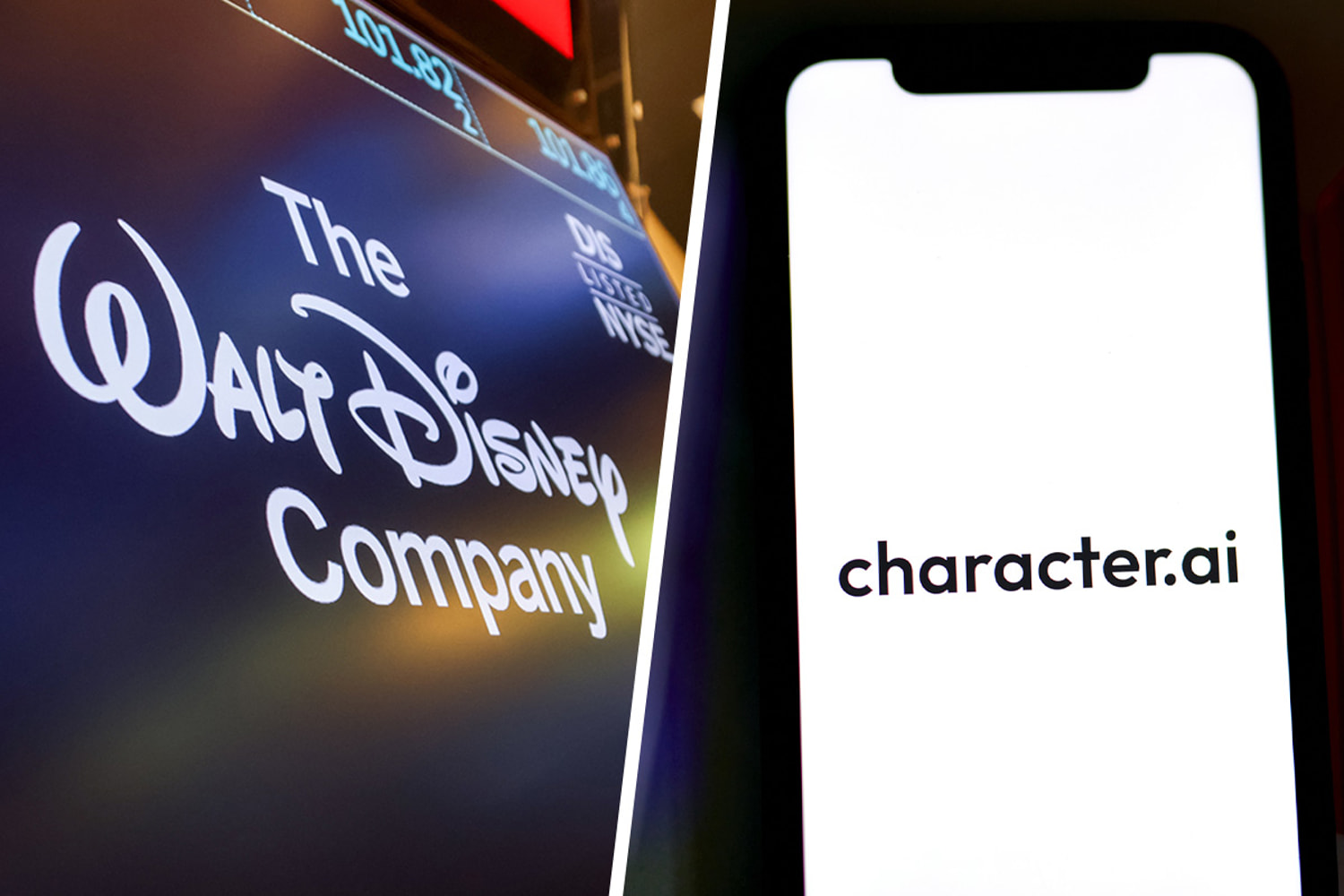
Character.AI, a chatbot platform based in California, has taken down several Disney characters from its service following a legal request from the entertainment giant. The move came after Disney sent a cease-and-desist letter to the startup, as reported by Axios and CNBC. The letter claimed that Character.AI had been using Disney’s copyrighted characters without proper authorization, which is seen as a violation of intellectual property rights.
The letter stated, “In sum, Character.ai chose to systematically reproduce, monetize, and exploit Disney’s characters, that are protected by copyrights and trademarks, without any authorization, in a way that is anathema to the very essence of the Disney brand and legacy.” Although NBC News has not reviewed the letter directly, a spokesperson for Disney did not immediately respond to a request for comment.
In response, a spokesperson for Character.AI said that they act swiftly when content is reported by rightsholders. “The takedown … was in response to such a request. These characters have been removed,” they stated.
Founded in 2021, Character.AI offers personalized AI experiences, allowing users to interact with pre-made or user-created AI characters. These characters can be customized, enabling users to create unique interactions. Some of the characters included Princess Elsa from “Frozen,” Moana, Peter Parker from “Spider-Man,” and Darth Vader from “Star Wars.”
According to the company, some of these characters are original creations, while others are inspired by existing characters. “It’s like fan fiction, but in an interactive form,” a spokesperson explained.
As of Tuesday evening, many of the bots that resembled Disney’s characters were no longer available on the platform. Some users encountered error messages indicating that something had gone wrong, leading to the unavailability of those characters.
Character.AI emphasized their commitment to partnering with industry stakeholders to empower them to bring their characters to the platform. “Our goal is to give IP owners the tools to create controlled, engaging and revenue-generating experiences from deep fandom for their characters and stories, expanding their reach using our new, interactive format,” the spokesperson added.
AI and Hollywood: A Growing Concern
Artificial intelligence continues to be a contentious issue in Hollywood. While the technology is becoming more mainstream in film and TV production, it has also raised concerns among creatives. In 2023, during the writers and actors strikes against studios, there were calls for assurances that AI would not replace human work.
Copyright owners, including authors, news outlets, and music labels, have sued tech companies like OpenAI, Microsoft, and Anthropic over unauthorized use of their content in AI training. Studios are now taking stronger stances on copyright infringement and AI models.
Disney, Universal, and Warner Bros. Discovery recently sued China’s MiniMax for copyright infringement, claiming that Hailuo AI used stolen intellectual property. Warner Bros. Discovery also filed a lawsuit against Midjourney, accusing the AI company of building its business around the mass theft of content.
Safety Concerns and Legal Challenges
Several AI companies, including Character.AI, have faced scrutiny over their impact on younger users. At a recent Senate Judiciary Committee hearing, parents and online safety advocates urged Congress to implement more safeguards around chatbots, arguing that tech companies designed their products to “hook” children.
Last year, a Florida mother named Megan Garcia sued Character.AI, alleging that its chatbots initiated “abusive and sexual interactions.” In May, a U.S. District Judge rejected arguments that AI chatbots have free speech rights, allowing the wrongful death lawsuit to proceed.
Three additional product-liability claim lawsuits were filed against Character.AI this year, with families claiming the company knowingly designed and marketed predatory chatbot technology aimed at children. One suit alleges that a Character.AI chatbot contributed to a 13-year-old girl’s suicide in 2023.
According to Axios, Disney cited a report titled “Sexual Exploitation, Manipulation, and Violence on CharacterAI Kids’ Accounts” in its letter. The report highlighted concerns about the potential harm these chatbots could cause to children.
After the congressional hearing, Character.AI stated that it has invested heavily in Trust and Safety measures, including a different model for minors, a “Parental Insights” feature, and prominent in-chat disclaimers to remind users that its bots are not real people.