Each day, it appears that something new and “unprecedented” is happening, making today’s news feel more bizarre than a work of fiction. Along with weapons—and the destruction they bring—there’s no surprise when war and violence are mentioned. Whether it’s conflicts within nations, the creation or breakdown of new alliances, or reports of violence and instability, information is spreading quicker than ever before.
Although war and disputes are not new, the concept of another world war is also not new; it’s a subject that has been depicted on the big screen for many years. From authors forecasting the future of conflict, to filmmakers showcasing it on screen, this story has been told repeatedly. Indeed, references to it can be traced back to the early 1900s, with World War III being specifically mentioned.as early as the 1930s.
However, nearly all have agreed that the third world installment will be nuclear.
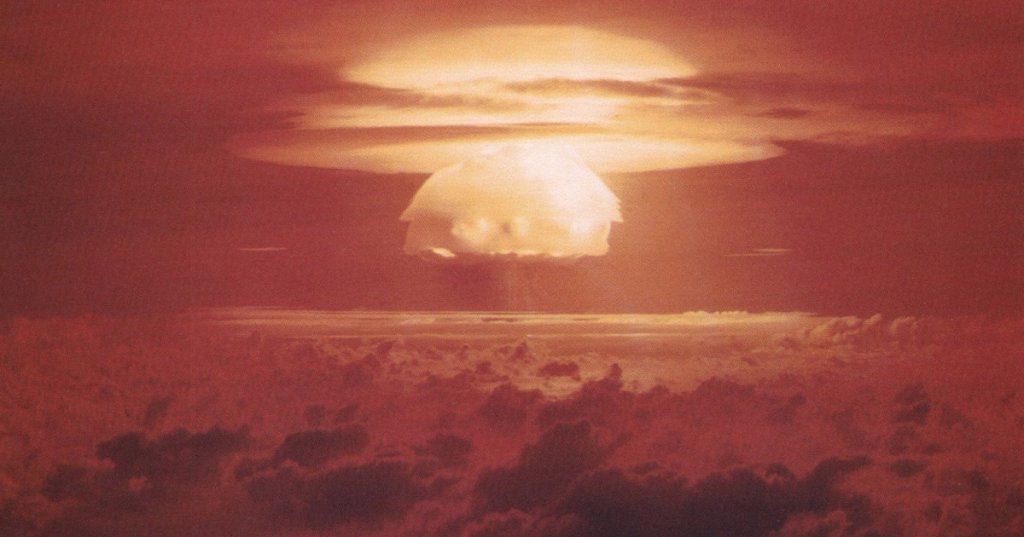
What’s intriguing is that imaginative thinkers anticipated a third world war before the second one had even occurred. This may stem from an emphasis on future events, the development of new technologies, and an interest in destructive bombs, which were relatively primitive back then.
Check out past attempts in pop culture to forecast a Third World War and see how they unfolded.
1907In a book called “The War in the Air,”author H.G. Wells outlinedA large-scale global conflict that led to an unprecedented loss of life. In the book, those who survived the violence were forced to reconstruct their lives amidst the ruins.
Seven years after his previous work, Wells released another book titled “The World Set Free.” In this story, nuclear weapons destroy significant parts of Europe. The narrative is set in 1956 and it’s believed that the powerful, destructive weapons were developed based on Wells’ study of scientific information, which included knowledge of radioactive decay and its enduring consequences.
Although studies regarding nuclear materials were conducted during that period, it was not utilized as a weapon until 1945, in the midst of World War II.
1930sIn 1939, a comic strip depicted the narrative of several global conflicts. Artist James Thurber’s “The Last Flower” expanded upon Wells’ concept of survivors inhabiting a devastated world. According to Thurber’s timeline, WWXII was the conflict that led to the collapse of civilization. The comic served as an anti-war message and is regarded as an early example of the graphic novel format.
1940s: Enter actualnuclear arms. Speculation regarding potential future global conflicts emerged in popular culture. Referred to as the “atomic era,” creators worldwide started integrating large-scale devastation into their work, whether as a political message or an artistic expression. This influence extended to music, as demonstrated in tracks such as “When They Found the Atomic Power” by Hawkshaw Hawkins and “Atomic Cocktail” by Slim Gaillard. Nevertheless, references to another global conflict were rare, if present at all, during this period.
1950sSometimes referred to as “The Age of Anxiety,” this era marks the time when the concept of World War III emerges. The United States was deeply concerned about another global conflict, driven by fears of communism and the Soviet Union’s development of its own atomic bomb. In 1951, a edition of Collier’s Magazine presented a thorough description of WWIII in an article titled, “Preview of the War We Do Not Want.”
In their depiction, the third world war started when the Soviets invaded Yugoslavia, prompting the U.S. to respond with three months of aerial bombardment. In turn, the Soviets escalated by targeting major American cities such as New York, Washington D.C., Philadelphia, and Detroit. This wasn’t just a concept found in written material; films also adopted a similar storyline. As science fiction gained popularity, central themes revolved around technology, weaponry, rebellion, and urban devastation, often showcasing extensive, multi-nation conflicts.
In the 1951 film “The Day the Earth Stood Still,” humanity faced a threat from extraterrestrials, who demanded peace or risk annihilation. The 1953 movie “The War of the Worlds” presents a comparable theme, but here, humans decide to resist the alien invasion. In the 1955 film “This Island Earth” and the 1956 movie “Forbidden Planet,” alien worlds experience destruction, suggesting that Earth might be next. The 1957 novel “Niourk” describes New York City following the conclusion of World War III.
Two years later, “Alas, Babylon” achieved a similar feat, though set in Florida. The novel was later brought to television in 1950. In 1959, “The World, the Flesh, and the Devil” depicted characters living after a nuclear conflict, with much of Earth and its people wiped out. That same year, “On the Beach” presented a story about individuals awaiting nuclear fallout following an exchange of bombs.
Even though it came out in 1949, George Orwell’s “1984” became well-known only in the 1950s. It depicted a world following an atomic war, where the globe was split into three major political superpowers.
1960sIn the early 1960s, three distinct films examined the idea of unintended nuclear conflict and the risks that followed. These films were “Dr. Strangelove,” “Fail-Safe,” and “Seven Days in May.”
Strongly opposed to war, musician Bob Dylan referenced a third world war three times in his album, “The Freewheelin’ Bob Dylan.” A 1968 book (and subsequent film) takes place on a version of Earth that has been devastated by nuclear conflict caused by “World War Terminus.”
In “Star Trek: The Original Series,” Spock refers to World War III on Earth while calculating that 36 million people perished in the episode “Bread and Circuses.” This figure would have represented approximately 10.6% of the U.S. population.
1970sThe 1970s kicked off with a significant impact following the release of the film “Colossus.” It delved into the possible application of artificial intelligence in averting World War III amidst the Cold War. Subsequently, in 1972, “Dr. Who and the Daleks” showcased time travelers talking about a nuclear conflict among global superpowers. The concept of World War III resurfaced in 1977, as “Twilight’s Last Gleaming” centered around a missile silo and classified government papers.
1980sThe following decade didn’t require fictional depictions of world wars, as the general population believed a nuclear conflict was imminent. In 1982, 250,000 individuals gathered in West Germany to demonstrate against nuclear weapons.
A bigger event took place later that year in New York, advocating for a nuclear freeze. Naturally, real-world events also influenced the entertainment of that era, including films, movies, books, and television, reviving themes that were common in the 1950s. Tracks such as “99 Luftballoons” by Nena address an accidental nuclear catastrophe, while bands The Varukers and Discharge both addressed nuclear war and the destruction of Earth as we know it.
Meanwhile, as film and TV technology advanced, so did the extent to which a potential Third World War could be portrayed. “Red Dawn,” released in 1984, showed a communist invasion triggered by a bad wheat harvest. A 1983 film from the James Bond series has the titular character stopping World War III.
“Spies Like Us” is a film that also features the Soviet Union, with World War III beginning due to an accidental missile launch. In contrast, “The Day After,” “Testament,” and “Threads” were all television movies that explored the theme of World War III, each targeting the Soviet Union. “The Day After” was broadcast in over 40 countries and established viewership records that remained unbroken for more than six decades. By 1982, NBC produced a miniseries called “World War III,” in which the conflict erupts when the Soviets try to disrupt the Alaska oil pipeline.
In numerous instances, bombs are depicted in vivid colors and with essential details, providing viewers with a clearer understanding of the devastation they can inflict. These movies then led to a significant anti-war and anti-nuclear movement.
Crime novelist Tom Clancy introduced elements of a potential third world war in his 1984 book “The Hunt for Red October.” In “Red Storm Rising,” the conflict erupts as Soviet forces threaten Middle Eastern oil supplies and Islamist extremist attacks escalate.
Comics, which had become very popular by that time, also frequently reported onWorld War III. Examples include X-Men’s “Uncanny,” “Batman: The Dark Knight Returns,” “V for Vendetta,” “Strontium Dog: Portrait of a Mutant,” and “Batman: The Killing Joke.” In the meantime, “The Simpsons” has referenced WWIII several times throughout its long-running series.
“Star Trek” once more referenced WWIII at this stage, increasing the death toll to 600 million, in a conflict that occurred between 2026 and 2053. Eventually, the decade concludes with the film “Rock & Rule,” where a new species comes into existence following a third world war.
1990sIn 1992, the Canadian film “Buried on Sunday” references a third world war. This occurred during a period when the Cold War had concluded and public anxiety regarding a possible nuclear conflict had decreased. American movies continued to examine global devastation, even without the involvement of nuclear weapons, in films such as “Armageddon” from 1998 and “Deep Impact,” followed by “Blast from the Past” in 1999.
“Star Trek: First Contact” adheres to its World War III narrative in 1996, once more citing the 600 million fatalities. This time, it highlights significant cities and central governments that were obliterated. “Green Mars” also references WWIII, describing how major corporations seized control of the world forty years after the conflict; this version portrays a 2061 war resulting in 100 million deaths.
The video game “Fallout” is set in a post-apocalyptic world following World War III, highlighting the consequences of global conflict.
2000sFollowing the September 11, 2001 attacks, global tensions reached unprecedented levels. This period, however, saw the concept of conflict centered around terrorism instead of communism. The idea of World War III emerged as a key theme in video games such as “Tom Clancy’s EndWar,” “Battlefield: Bad Company,” “Frontlines: Fuel of War,” “Star Ocean: The Last Hope,” and “Call of Duty: Modern Warfare 1-4.” Nonetheless, certain titles among these still portray Russia and/or communism as the primary adversary.
“World in Conflict” and “Turning Point: Fall of Liberty” take us back to a different time and an alternate reality, where world wars were fought within the country, and the U.S. suffered a defeat instead of leading to World War III.
“Fail Safe” was remade in 2000 but kept its 1960s setting. Two years later, the book “Metro 2033” presents characters in the aftermath of anuclear war.
In the later part of the 2000s, video games set during WWIII remained popular, including “APOX,” “Homefront,” additional “Metro” titles, and “Ace Combat: Assault Horizon.” In 2011, the film “X-Men First Class” portrayed WWIII. Other works such as “Red Dawn” (a different adaptation), “The Show Must Go On,” and the TV series “Salvation” also explore the concept of World War III, along with the novel “Sing Goddess The Wrath of the Fonz.”
By 2020, the methods through which people engaged with pop culture had experienced major transformations. This shift meant that when a U.S. airstrike resulted in the death of an Iranian Quds Force leader, there was no need to wait for a book or film; the event immediately spread across the internet. Memes started circulating online regarding World War III and a possible conscription. The possibility of a nuclear conflict became a popular subject on Twitter at the time, even as the movie “Tenet” explored themes of preventing a new global war.
“Star Trek” once again references its WWIII, this time in the series “Strange New Worlds.” Finally,a 2022 study conducted by the American Psychological AssociationIt was disclosed that 70% of Americans thought the United States was moving toward a third world war.
Although World War III has not occurred yet, it’s undeniable that pop culture has repeatedly depicted such events. From nuclear conflicts to numerous global wars, this theme appears frequently in science fiction and other forms of media. It remains to be seen whether any of these portrayals will come true.
Mighty MilSpouse

Your marital bond is solid if you’ve endured these messages

From fermented cabbage to pork cutlet, a guide to German cuisine for those who aren’t food enthusiasts

10 Things You Only Understand if You’ve Given Birth Through Tricare

From distant to sisterly: How I ultimately accepted my position as the wife of a senior officer