
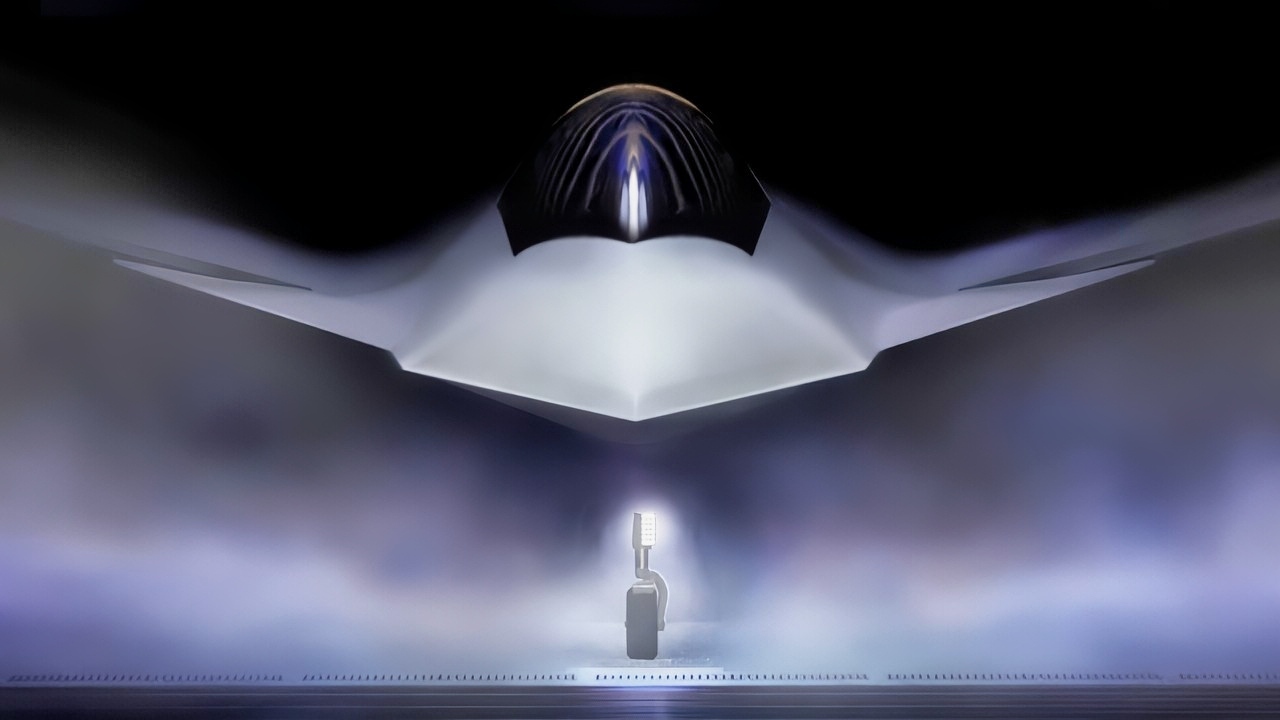
Boeing Machinists Face Contract Vote, Strike Looms Over F-47 Fighter Program
Over 3,200 Boeing machinists in St. Louis are preparing to vote on a revised contract offer this Sunday, a decision that could determine whether a strike will occur. These skilled workers are integral to the production of key defense products, including components for the highly anticipated F-47 Next Generation Air Dominance (NGAD) fighter. While a potential work stoppage raises concerns, some aerospace analysts believe it may not significantly disrupt the F-47’s development timeline, given the program’s early stage.
The F-47: Boeing’s Leap into the Future
The United States Air Force’s decision to award Boeing the contract to build the F-47 NGAD fighter in March was a landmark moment for the company. The NGAD represents Boeing’s ambitious entry into the realm of 6th-generation fighter technology. This project offers Boeing a chance to regain ground against Lockheed Martin, who won the race to field a 5th-generation stealth fighter with the F-35 Lightning II. Boeing’s X-32 lost out in that competition.
The F-47 also holds the distinction of being Boeing’s first entirely original production-phase fighter plane since the P-26 Peashooter of 1932. Furthermore, with the F-47 slated for assembly at Boeing’s St. Louis facilities, the program is poised to inject significant economic benefits into the region.
Labor Dispute Threatens Smooth Development
However, a potential labor dispute has emerged just months after the initial contract announcement. The primary concern is a potential strike by the International Association of Machinists and Aerospace Workers District 837. Members overwhelmingly rejected the previous contract proposal, citing its failure to adequately address their priorities and sacrifices.
One of the major sticking points was the proposed alternative workweek schedule. This schedule would have allowed Boeing to schedule employees for four 10-hour shifts from Monday to Friday, or three 12-hour shifts from Friday to Monday.
The St. Louis-based machinists are responsible for producing defense products at Boeing facilities located in St. Louis County, St. Charles, Missouri, and Mascoutah, Illinois. Their current work includes the MQ-25 refueling drone, the T-7A trainer, and legacy fighter jets like the F-15 Eagle and F/A-18 Super Hornet. The latter two are a legacy of Boeing’s 1997 merger with McDonnell Douglas.
The Contract Vote: A Critical Juncture
The upcoming vote on the modified contract proposal is a critical moment for both Boeing and its machinists. The revised proposal eliminates the alternative workweek schedule, preserving the existing work hours and overtime structure. It includes a $0.50 per hour pay increase, along with a bonus for good attendance, for employees at the top of the pay scale. The pension multiplier has also been adjusted to $10 for the first year, instead of $5 for the second and third years.
In addition, the proposal offers a 20 percent pay increase for all other employees over four years, increased vacation and sick time, and a “world-class” 401(k) program.
Boeing St. Louis’ vice president of air dominance emphasized the significance of the offer, calling it their “last, best and final offer” and a “very compelling offer.” He also acknowledged that “nobody wins in a strike,” and that while the company doesn’t desire that outcome, they have prepared for it.
Limited Impact Expected on F-47 Program
In the event of a strike, Boeing has a contingency plan in place. Non-union employees at the St. Louis facilities would continue working. Aerospace analysts believe that a strike at this point in the F-47 program is unlikely to cause significant delays.
Because the contract is so new and Boeing is only beginning to expand operations to accommodate production, a work stoppage is not expected to substantially impact the timeline. In addition, the analysts believe the strike is unlikely to impact the KC-46 tanker built in Everett, Washington, or the P-8 Poseidon built in Renton, Washington.
The Future of the F-47
The hope is that a strike can be avoided, ensuring the continued progress of the F-47 program. The development of this next-generation fighter is of strategic importance, particularly as other nations, like China, are actively developing their own 6th-generation fighter technologies.