Unions state that they have gathered a million demonstrators in the streets with the chants “Social Justice!” and “Tax the Wealthy!”
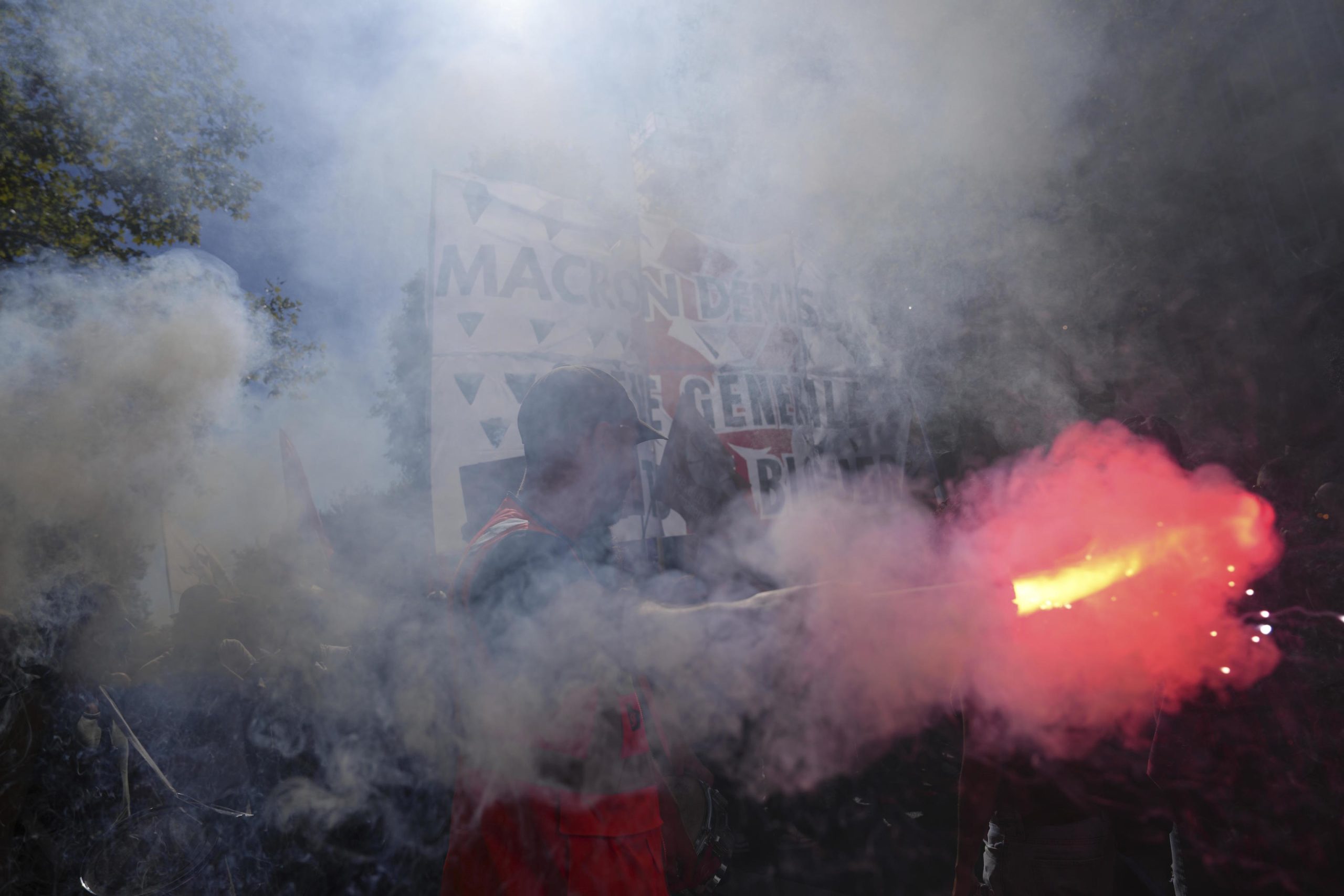
The general strikedemanded on September 18 by eight large unions has not succeeded in disruptingFrance, although it brought more than half a million demonstrators onto the streets, as reported by officials (one million, according to organizers). Banners and slogans of“Social Justice!”, “Tax the Rich!”, and “Macron, explosion!”have resonated in large cities following the austerity budget that resulted in the Prime Minister’s resignationFrançois Bayrou.
The newly appointed Prime Minister, a centristSébastien Lecornu, confronts his initial challenge on the streets, as he has yet to establish a new coalition government amid public frustration againstEmmanuel Macron, who is currently the least popular president of the Fifth Republic.
More than 80,000 law enforcement personnel have been sent across the country by the departing Interior MinisterBruno Retailleau, who confirmed at midday that the effect of the nationwide strike – organized in sectors including transportation, energy, education, and healthcare – had a“lesser impact than feared”.
The protests, such as the one that gatheredover 100,000 peopleFrom Bastille to Republic Square in Paris – official reports indicated 55,000 participants – remained largely peaceful. By mid-afternoon yesterday,over 300 arrestshad occurred during conflicts with law enforcement, with Paris, Marseille, Lyon, and Nantes being key areas.
In Paris, there were reports of incidents on Voltaire Boulevard, where multiple demonstrators damaged bank branches. Tear gas was also used early during a blockade at the Ministry of Economy in Bercy, which was eventually broken up by the police. In Lyon, a police officer and a television journalist sustained minor injuries.
Bruno Retailleau attributed the violent behavior to “ultra-leftist groups that have infiltrated the demonstrators.”Using such a police presence is akin to pouring gasoline on a fire, stated Sophie Binet, general secretary of the CGT. “The majority of demonstrators are peaceful, and the violence is specifically a result of the strategy to ensure public order.”
Binet participated in the Paris march, which became a river of orange and red vests from the unions, evoking theyellow veststhat left the country in turmoil in 2018 due to demonstrations opposing increases in fuel costs. Dressed in her white vest from the Sud Santé union, a nurseBlanche Leroyjoined the street protest at an early stage:At my hospital, half the staff went on strike, while the other half stayed away due to fear.Here is how politicians protect themselves, by frightening and pressuring individuals who are already vulnerable.
I’m uncertain whether this could result in a significant new social movement, butPeople are extremely tired of the current circumstances.and there is a powerful yearning for social and economic fairness,” stated activist Jean-Baptiste Redde at the beginning of the Paris protest, carrying one of his well-known demonstration signs:Politicians exceed what we can afford.
Hundreds of protest lines were established in the early hours at school entrances. The widespread strike was backed by17 percent of public school educators, according to the ministry. In the healthcare field, there were symbolic protests by pharmacists. In the transportation industry, involvement differed: the Paris metro remained operational, although there were delays and small issues at train stations and airports.
EDF stated that the strike impacted power production at two thermal facilities (Blénod and Martigues) and three nuclear stations (Saint-Alban, Flamanville, and Sint-Laurent), although the effect on residential electricity supply was slight.
The mobilization was strongly backed by progressive groups, particularly by Jean-Luc Mélenchon’s La France Insoumise. Meanwhile, Socialist Party leader Olivier Faure met with the new Prime Minister, Sébastien Lecornu, on Wednesday and cautioned as he departed: “On the eve of a significant social mobilization,”the message we communicated is that the French desire to witness a transformation in their lives.”
The Socialists have introduced the so-calledZucman tax(promoted by economist Gabriel Zucman) its social priority, seeking to implement aA 2% tax on wealth exceeding 100 million euros, a policy backed by the majority of French people in surveys and previously discussed in the Senate.
Meanwhile, labor unions have criticized the budget unveiled in July by François Bayrou as“brutal for workers”and are not pleased with Lecornu’s declaration to stop removing two public holidays. The budget, which includes social cuts estimated at 43.8 billion euros, features a one-year hold on pensions and social benefits, the termination of thousands of civil servants, and a decrease in healthcare funding.
Social activism takes place in opposition to abackground of significant economic instability, precisely because of the political instability within the country. France’s risk premium, having the third-highest public debt in the eurozone (114.1% of GDP), exceeded Italy’s last week. The rating agency Fitch then reduced France’s debt rating from AA- to A+. The Bank of France slightly increased its GDP growth forecast for the year to 0.7% but decreased expectations for 2026 and 2027, as presidential elections are approaching.
“The union’s demands are central to the discussions I’m engaged in to establish a government,” said Prime Minister Sébastien Lecornu at the conclusion of a hectic day.
Don’t overlook all our updates atwww.mundoamerica.com.