
Hurricane Imelda Continues to Move Away, But Coastal Threats Remain
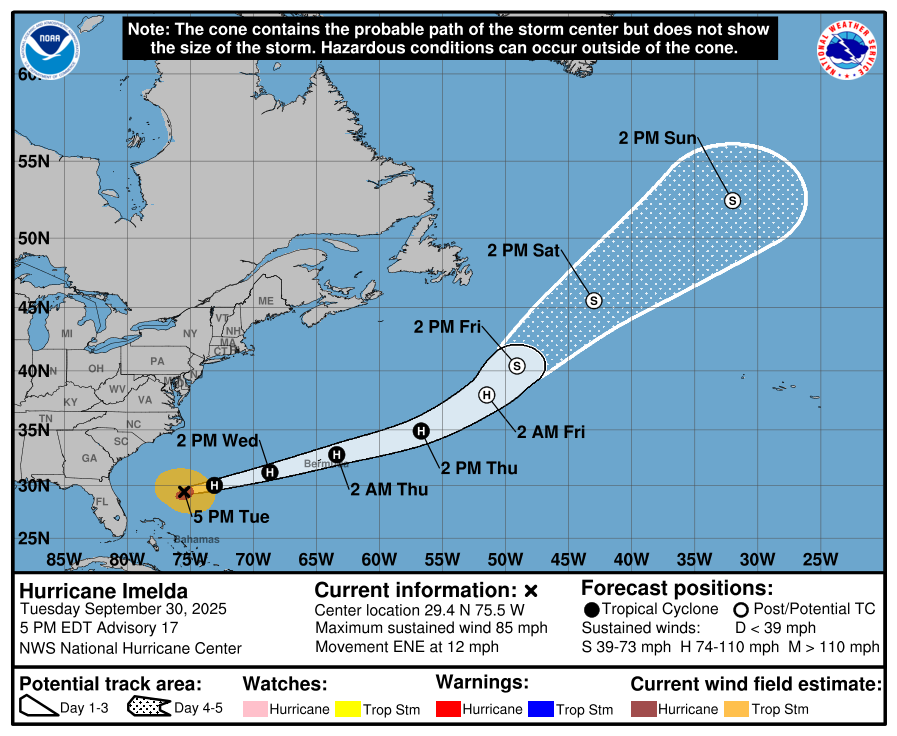
Hurricane Imelda has continued its journey away from the southeastern United States. However, dangerous surf and rip current conditions are still present in several coastal areas. As of 5 p.m. on Tuesday, the storm was located approximately 665 miles west-southwest of Bermuda. Maximum sustained winds had reached 85 mph, and the storm was moving east-northeast at a speed of 12 mph.
Imelda is expected to maintain its east-northeast trajectory over the next few days, with an increase in speed anticipated. Some additional strengthening is also expected within the next 24 hours.
Storm Tracker and Weather Conditions
Residents along the coast should remain alert as the National Weather Service in Wilmington warns of hazardous maritime conditions due to the combined effects of waves from Humberto and Imelda. The main threat for the Wilmington area includes rough surf and strong rip currents. A high surf advisory is in effect through Thursday evening, with breaking waves expected to range between 5 to 8 feet in the surf zone. A rip current warning remains active until 8 p.m. on Tuesday evening.
There is also a possibility of a few waterspouts forming on Tuesday, and some areas may still face potential flooding in low-lying or flood-prone regions through the end of the day. The region experienced heavy rain bands overnight on Monday, and more rainfall is expected on Tuesday. However, drier air is anticipated to move into the area later that day.
Tropical storm force wind gusts are not expected across land areas, with the strongest winds remaining offshore.
Weather Forecast for the Next Few Days
Tuesday Night:
Mostly cloudy, with a low temperature around 63°F. North wind around 9 mph, with gusts reaching up to 18 mph.
Wednesday:
Mostly sunny, with a high near 79°F. Northeast wind around 8 to 14 mph, with gusts as high as 21 mph.
Thursday:
Mostly sunny, with a high near 75°F. Northeast wind ranging from 10 to 14 mph, with gusts reaching up to 21 mph.
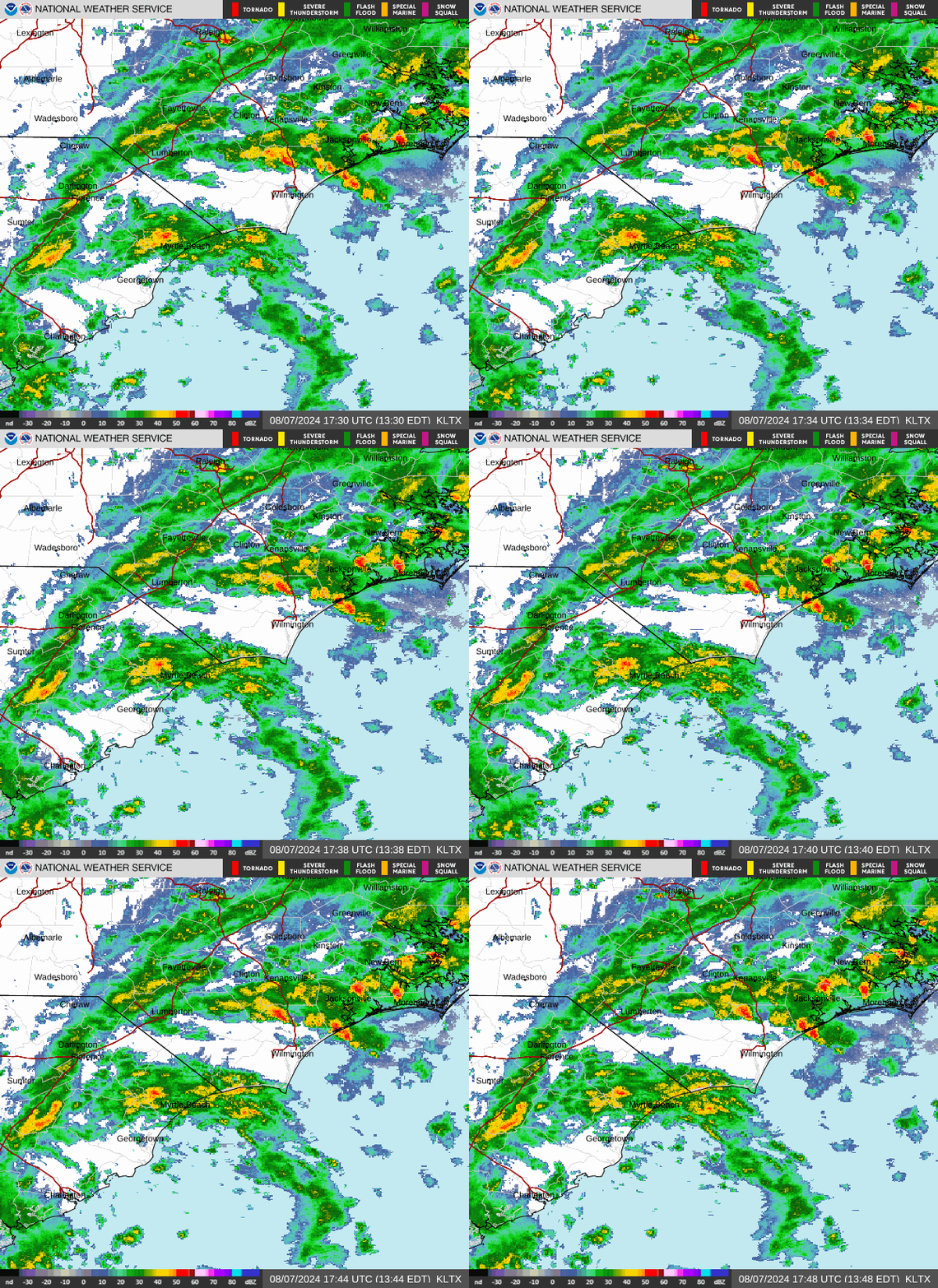
North Carolina weather radar provides real-time updates on storm activity.
Interactive map:
Enter your address to view hurricanes and tropical storms that have passed nearby.
Preparedness and Safety Measures
Although Hurricane Imelda is not expected to make landfall, officials are urging residents to stay prepared during hurricane season. Governor Josh Stein emphasized the importance of vigilance, noting that coastal flooding and life-threatening rip currents can still impact the region. He stated, “Our State Emergency Response Team remains ready to quickly respond to any needs and keep coastal residents and visitors safe.”
North Carolina Emergency Management Director Will Ray highlighted the readiness of the State Emergency Response Team, which has been positioned to handle any potential emergencies. Following the declaration of a state of emergency by Stein on Saturday, search and rescue teams and communication equipment were deployed.
Now is the time to check hurricane supplies and ensure homes are secured against potential tropical weather impacts.
Hurricane Preparedness Tips
Here are key steps to take if you live in the Wilmington area:
- Ensure you have essential supplies such as water, non-perishable food, flashlights, batteries, and a first aid kit.
- Secure windows and doors to prevent damage from strong winds.
- Stay informed by monitoring local weather updates and official alerts.
- Develop a family emergency plan, including meeting points and communication strategies.
Understanding Rip Currents
According to the U.S. Lifesaving Association, rip currents are powerful channels of water flowing away from the shore at surf beaches. These currents can carry swimmers far from the shoreline before they realize it, leading to fear and distress.
How to identify a rip current:
Look for darker, choppy water or a break in the wave pattern. Rip currents often form at low spots or breaks in sandbars. They can also be identified by a line of foam, seaweed, or debris moving seaward.
What to Do If Caught in a Rip Current
If you find yourself caught in a rip current, do not swim against the current. Instead, relax and float. The current will eventually pull you out, and you can then swim parallel to the shore or toward breaking waves. If you cannot reach the shore, attract attention by yelling and waving for help.
By staying informed and prepared, residents can better protect themselves and their communities during hurricane season.