
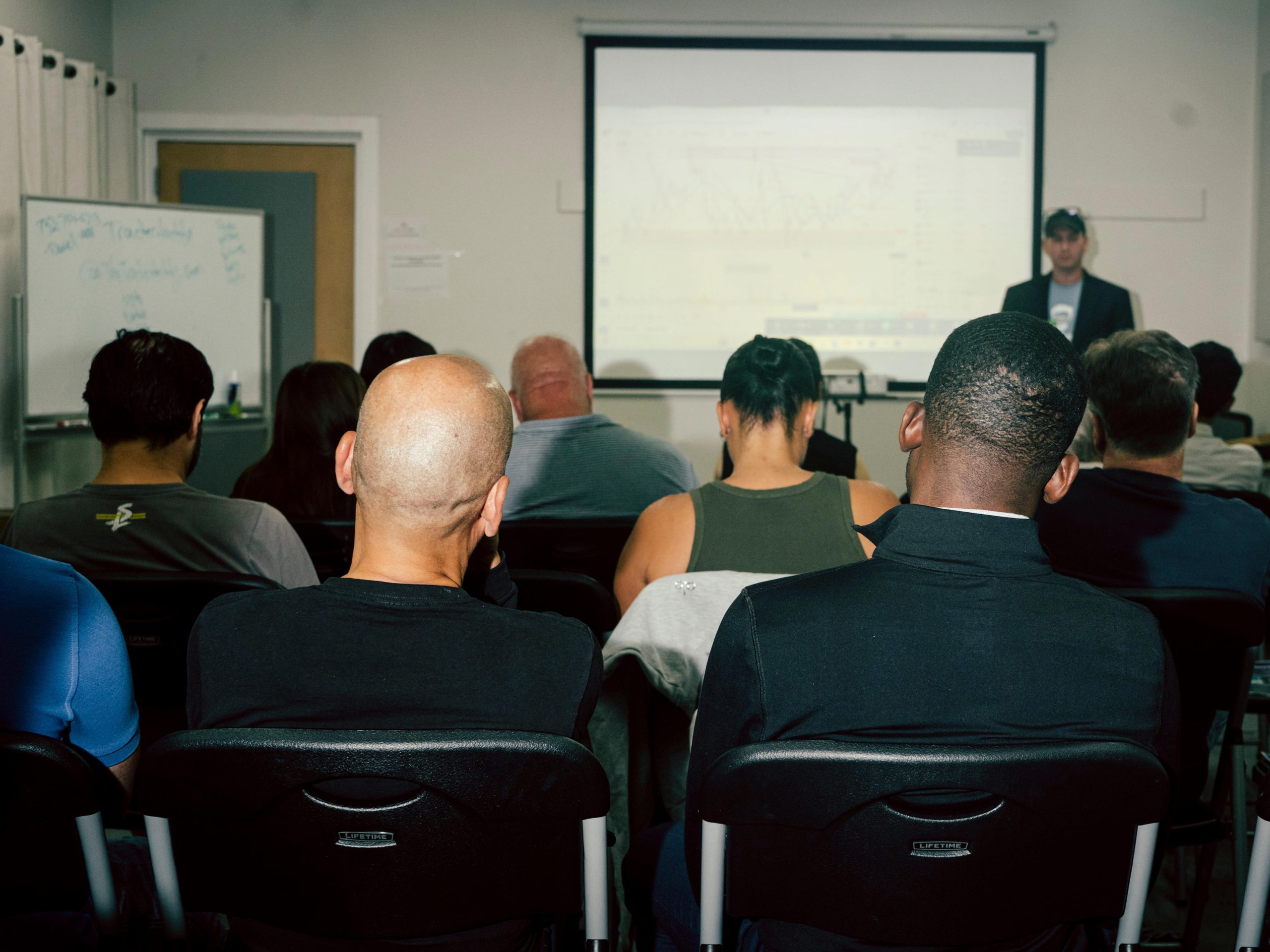
A growing trend in New York City is the rise of day trading classes, as more individuals seek to make a living through stock market investments. The interest in trading groups, classes, and coaching has increased significantly over the years. Many traders I spoke with shared their aspirations of leaving their regular jobs behind and achieving financial independence.
The image of a day trader on social media often includes a confident individual who appears to have made substantial gains in the stock market, suggesting that others can do the same. However, this portrayal doesn’t match the reality of what many traders experience. When I attended an in-person trading course hosted by TraderDaddy, a company focused on trading education and mentorship, I found a room filled with tired 9-5 workers analyzing candlestick charts and searching for their next big trade in midtown Manhattan.
Daniel Alhanti, CEO and head instructor at TraderDaddy, emphasized that there are no guarantees in day trading. Success largely depends on how hard individuals are willing to work to understand the market.
Despite the challenges, many Americans continue to pursue trading as a means to escape the traditional 9-to-5 lifestyle. Some have invested significant amounts of money into courses, coaching, and mentorship programs to increase their chances of success. These services have existed for a long time, but their popularity has surged since the pandemic-driven retail-trading boom.
According to Google Trends data from Glimpse, global search interest for “day trading class” has increased by 700% in the past quarter, reaching an all-time high this summer. Search interest in “trading coach” has risen by 325%, while interest in “day trading group” has jumped 572%. Online platforms like Coursera have also seen a surge in enrollment for trading courses, with a 213% increase from 2019 to 2024. Webull reports a 37% growth in users on its learning platform over the last three years.
Alhanti, who previously worked as a financial advisor, noted the increasing interest in trading courses and groups. He mentioned that many newcomers share similar stories: they watched trading on social media, tried to teach themselves using YouTube, and sought guidance from mentors.
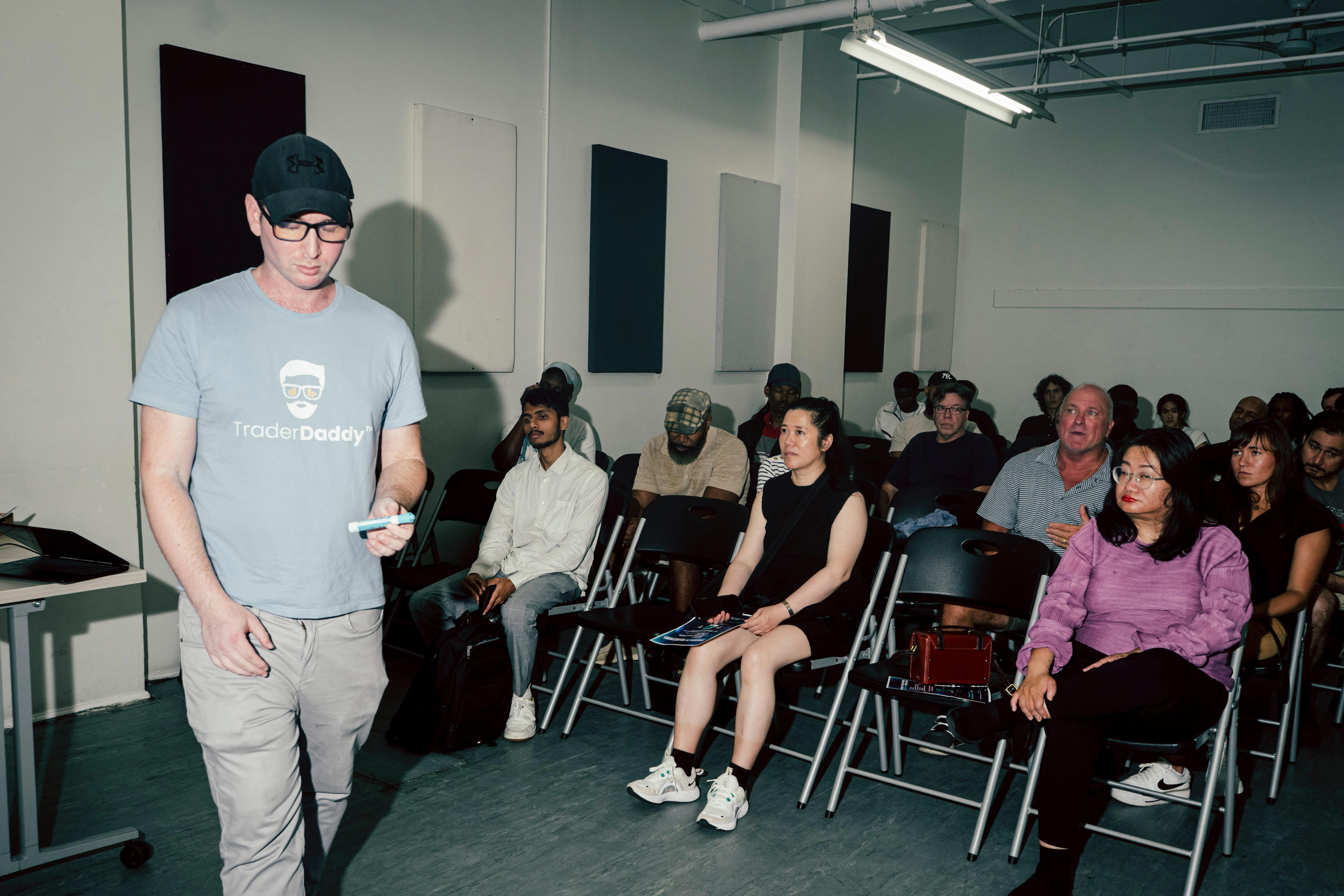
The class I attended was held in the evening and had around 30 participants, with men making up approximately three-quarters of the group. Attendees arrived just before 7 p.m. and began taking notes, creating a college lecture atmosphere.
Here’s what I learned from the night:
There were many beginners eager to start. Alhanti asked the class, “Who here is an absolute beginner?” and saw several hands raised. He then asked about crypto and option contracts, which surprised me given how many in the group appeared new to trading. Later, when asked to list the top market-moving events of 2024, the class struggled until someone mentioned the presidential election, tariffs, and the Fed rate-cutting cycle.

Attendees showed strong enthusiasm for the market. In side discussions, some traders passionately debated option contracts for Palantir and the profitability of certain trades. Gerardo Arevalo, a trader at the event, told me that the group’s primary motivation was to make money.
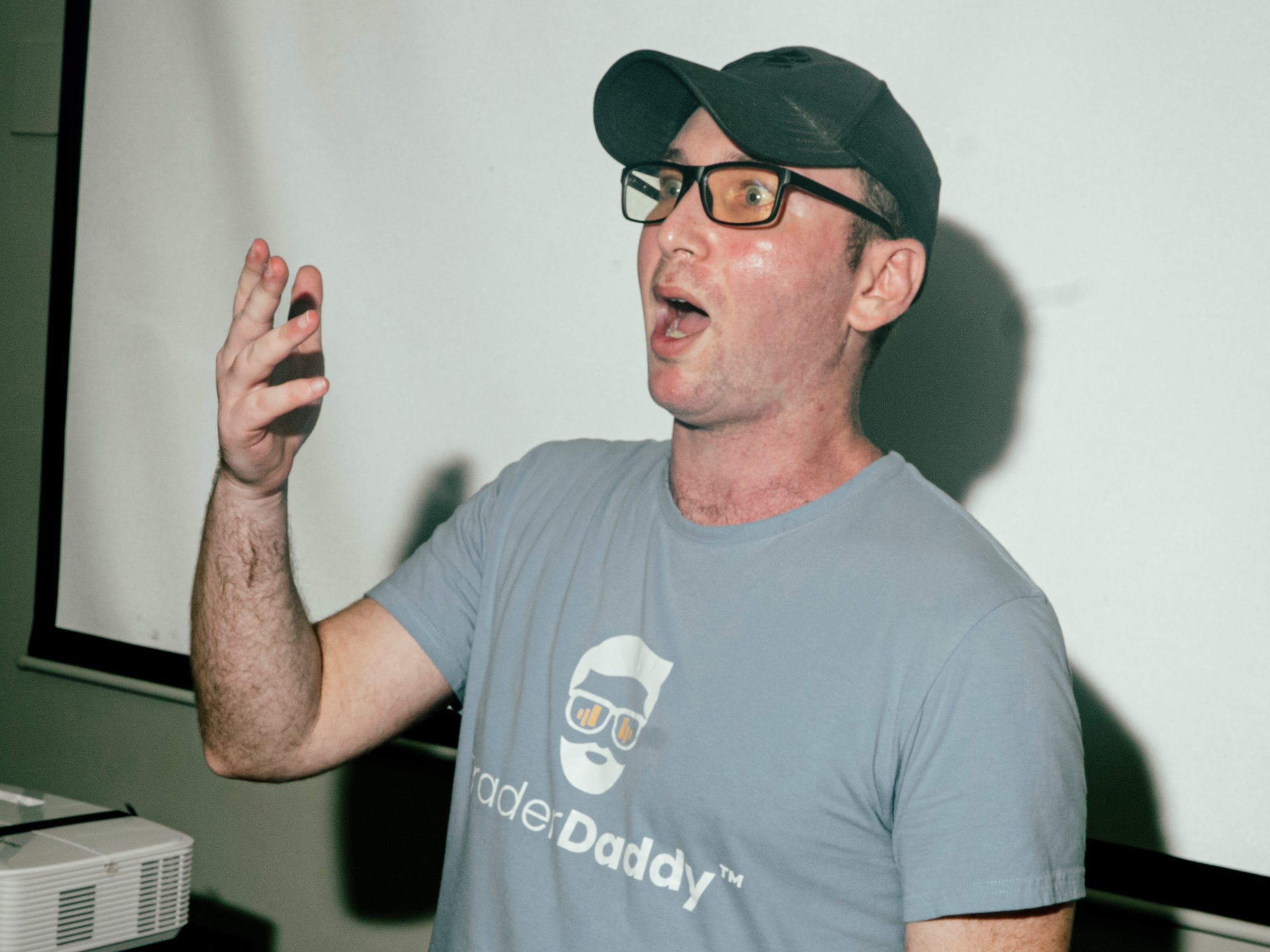
Alhanti believes he can identify successful traders based on their focus and determination. He emphasized the importance of independent thinking and technical analysis during the class. For two hours, he guided the group through candlestick charts and technical analysis for stocks like Apple, Tesla, and the S&P 500. The goal was to recognize price breakouts and buy at the right time.
Alhanti encouraged traders to become confident enough to make their own decisions rather than relying solely on his guidance. He mentioned that some traders panic after making a profit, asking him what to do next. His advice was clear: “Do not just blindly follow me.”
Many attendees expressed a desire to quit their jobs. A strong yearning for financial freedom was evident among the aspiring traders. Joshua Villas, a 23-year-old trader, spent over $900 on trading courses. He became interested in trading after a conversation with a friend, who suggested it as a path to financial freedom.
Villas, who recently lost his job as a stylist, said his end goal is to achieve financial stability. Yacoub Rahman, a 21-year-old college student, aims to become a full-time trader, believing that trading requires only a few hours a day. He spends three hours daily studying the market after completing his schoolwork, hoping to one day have time for travel.
Gerardo Arevalo, a 50-year-old trader and computer programmer, has effectively retired and now trades for a living. Alhanti feels empathy for younger traders who feel lost in their careers, particularly those seeking multiple income streams. He himself experienced the challenges of the 2008 recession, where job opportunities for young adults were scarce.
“They generally feel behind, and they don’t really know what their next steps are,” Alhanti said. “I think a lot of them are really trying to find something that will put them ahead.”