A New Approach to Supporting New Mothers
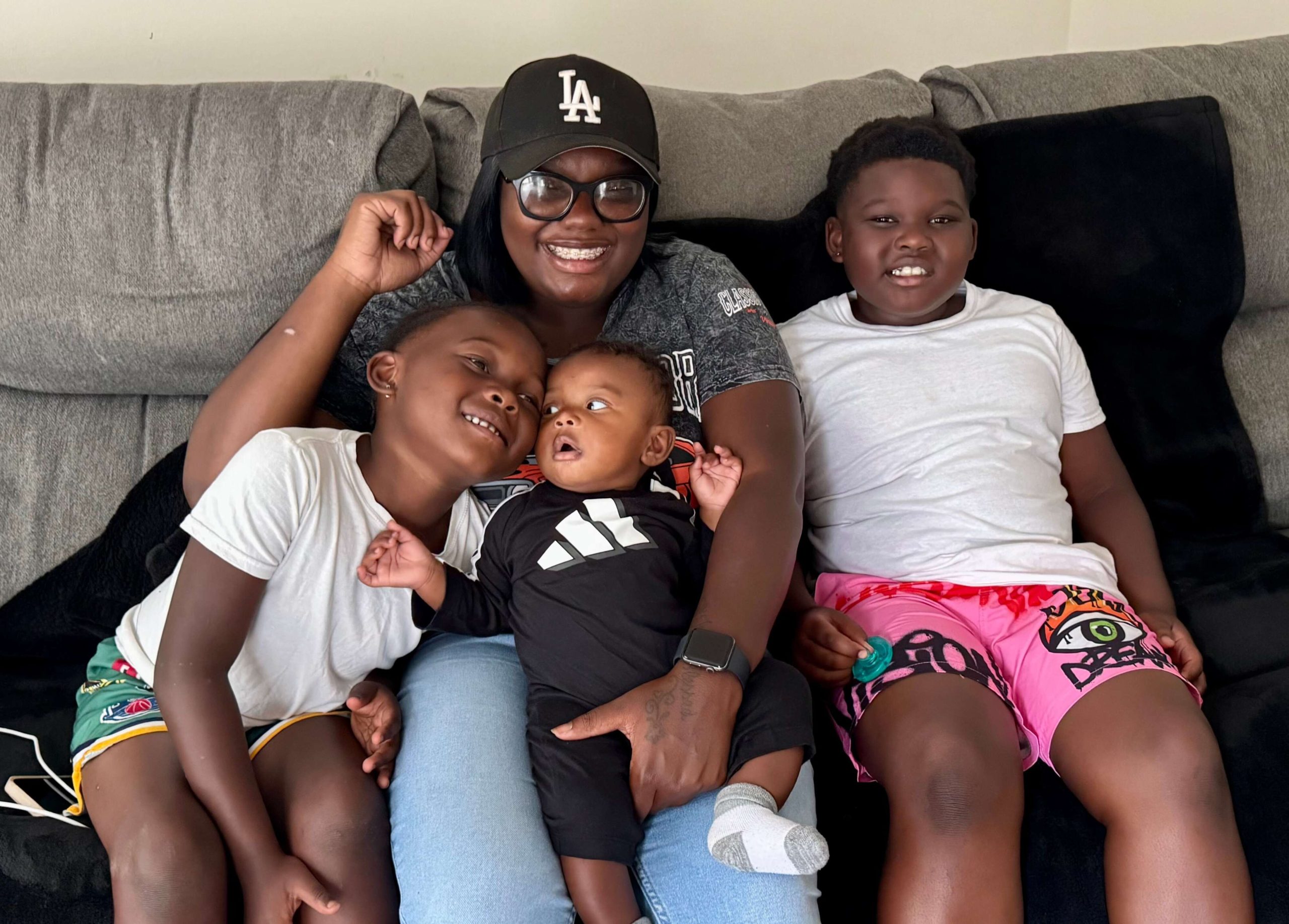
Quianna Jenkins had her first child at 19, her second at 21, and her third at 27. As a young mother, the financial strain of raising two children was immense. She moved to Kalamazoo with her longtime partner in 2021, hoping for a better future. However, it wasn’t until the birth of her third child, Keezley, on February 20 that things began to change.
Jenkins is now part of a groundbreaking program called Rx Kids, which provides mothers in Flint, Kalamazoo, and nine other Michigan communities with $1,500 in prenatal care and $500 per month for the first year of a child’s life. The program launched in Flint in January 2024 and expanded to Kalamazoo in February, offering all new mothers in the city access to its benefits.
To date, $14.273 million has been allocated to 3,342 expectant and new mothers statewide. In Kalamazoo alone, 633 families have enrolled since February, and 436 babies have been born to those families. More than $1.75 million, from a mix of private and public funding sources, has been provided to Kalamazoo families.
“I don’t worry anymore,” Jenkins said. “Without Rx Kids, I think I’d be poor, stressed out, just trying to cover the necessities. Childcare is expensive. Diapers are expensive. Rent is expensive, and after you are done paying your bills each month, you do it all again. I don’t have to stress about where we are going to get that extra money from anymore. It’s right there.”
No-Strings Attached Support
Jenkins doesn’t use the full $500 every month. She tries to save as much as possible and hopes to have $4,000 put away by 2026. Knowing that the money is available “no strings attached” has given her a newfound financial freedom.
“It has helped tremendously,” she said. “I couldn’t afford life insurance before Rx Kids.” She can also afford football equipment for her older boys, 8-year-old Keelan and 6-year-old Keedrick, and invest in furthering her own education, working toward an early childhood education degree online.
Jenkins spends her summers working at Keezley’s daycare. During the school year, she’s a paraprofessional for Winchell Elementary School. Prior to Rx Kids, after her bills were all paid, nothing was left over, she said.
An Economically Vulnerable Time
“Data shows that regardless of financial situations before pregnancy, pregnancy is a time where poverty spikes,” said Alyssa Stewart, chief community impact officer with the Kalamazoo Community Foundation. Changes in income are common, as some women are no longer physically able to do the job they did before getting pregnant or work the same amount of hours, she said.
“The other piece that is truly universal is that it costs a lot of money to have a baby. There are medical costs. There are supplies and furniture, diapers and formula,” Stewart said. “All these things that families need to be prepared to welcome their baby and to care for their baby in the first year of life.”
That isn’t even taking childcare into consideration, she added. A year of childcare in Kalamazoo costs about $12,000 on average, she said.
Immediate Results
In Rx Kids’ first year in Flint, there were zero reported evictions from participating families, said pediatrician Dr. Mona Hanna, the program’s founder and associate dean of Michigan State University’s College of Human Medicine. That’s just one example of how the program has made an immediate impact on a city that has routinely ranked among the nation’s worst for child poverty, Hanna said.
From January 2024 through Sept. 2, 2025, there have been 1,951 families enrolled in Flint’s RX Kids program with 1,788 babies born and $10.7 million prescribed. While Rx Kids is only seven months old in Kalamazoo, a similar impact is already being noticed, said Jameca Patrick-Singleton, a Flint native who serves as a YWCA Kalamazoo VP and executive director for Cradle Kalamazoo.
“What we are seeing is people are getting to prenatal appointments sooner and they are able to access transportation, pay for medication and do all those things they need to do to achieve healthy birth outcomes,” Patrick-Singleton said.
Expanding the Program
Sen. Sylvia Santana, D-Detroit, is leading the charge to expand Rx Kids statewide through Senate Bill 309. The bill passed the Senate Committee on Housing and Human Services with bipartisan support, 8 to 1, on Aug. 12.
“This cash assistance helps remove economic barriers that often prevent families from obtaining necessary items,” said Santana, a mother of three. “Additionally, the program promotes healthier pregnancies and early childhood development, which are critical for reducing long-term health disparities.”
Rx Kids is the nation’s first mother-baby cash prescription program, but it’s not a new idea, Hanna said. “Seventy percent of countries around the world have some sort of child family allowances,” she said.
The program was set up as an academic/nonprofit partnership led by MSU’s College of Human Medicine and the University of Michigan’s Poverty Solutions program. Since its 2024 launch in Flint, Rx Kids has already expanded to Kalamazoo, Pontiac, Clare County, Royal Oak Township, Hazel Park and five Upper Peninsula counties. Six more communities are scheduled to join in September, Hanna said.
The program is scalable and easy to replicate, keeping overhead costs low at the state level, she said. The take-up rate is also around 98% in the communities it has launched in, which is relatively unheard of, she said.
Investing in the Future
Rx Kids expands where there’s a need and where there’s an ability to raise matching funds, Hanna said. In Kalamazoo, over $10 million has been raised to date, guaranteeing funding for the next two years, Stewart said.
The Stryker Johnston Foundation donated $5 million to the program initially, while KCF gave $1.5 million, Stewart said. Other local funders have included the Bronson Health Foundation and United Way of South Central Michigan.
Rx Kids utilizes TANF funds in all participating communities to help supplement local municipal and philanthropic support. “Of course, if legislative efforts are successful and it is able to be implemented statewide, that would sort of take over our local philanthropic efforts,” Stewart said.
That would also mean everyone in Kalamazoo County, not just in the city limits, would be eligible. “This is the earliest, most consequential time in a family’s life,” Hanna said. “These are the months when a child’s brain is developing at lightning speed.”
They are also the times when a family is most financially vulnerable, she said. “What we are hearing from families and seeing from the data is … for the first time, they are able to breathe, to keep the lights on, to pay their rent, to put healthy food on the table,” Hanna said.
Investing money now can also save money in the long run, she said. “Studies across health outcomes, education outcomes, all confirm that investments made in families and children early in life positively impact life trajectory and decrease engagement in other programs,” Hanna said.
Early surveys in Kalamazoo and Flint have shown that the most common things money is being spent on are baby supplies, food, utilities, rent and clothing, Stewart said. “These are very basic needs and necessities for families,” she said.
Other results include improved maternal mental health, reduction in postpartum depression, improvements in birth weight and prevention of NICU stays, she said. “For me, the question isn’t whether we can afford Rx Kids, but whether we can afford not to do Rx Kids,” Hanna said. “Michigan is leading the nation here and we are now working with a dozen states that are interested in replicating what we have done.”
The program is especially important now with cuts to Medicaid, SNAP and other federal programs, she said. “It’s showing what’s possible when you invest in families from the very beginning, when you believe that helping moms helps everyone,” Jenkins said. “This isn’t about handouts. It’s about building people up.”