Ongoing Negotiations and Strategic Alliances Between the US and South Korea
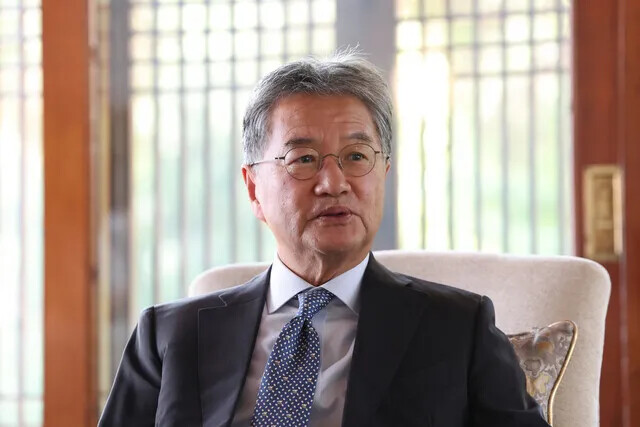
Joseph Yun, the acting US ambassador to South Korea, has emphasized that discussions between the two countries regarding tariffs are still in progress. He confirmed that current automobile tariffs will remain unchanged until all negotiations have been finalized. This statement comes amid ongoing talks about various issues, including the management of a $350 billion investment fund pledged by South Korea, increased defense spending, and modernization of the alliance.
In late July, the US agreed to reduce tariffs on Korean automobiles from 25% to 15%, but this adjustment has not yet been implemented. The ambassador noted that while the reduction is a positive step, it is part of broader negotiations that have not yet reached a conclusion.
A Strong Personal Connection Between Leaders
During an interview with the Muara Digital Team at the US Embassy in Seoul, Yun highlighted the significance of the recent summit between South Korean President Lee Jae Myung and US President Donald Trump. He described the meeting as “excellent,” emphasizing the strong personal rapport and open dialogue between the two leaders. Yun praised the ability of both leaders to clearly express the importance of their alliance, covering areas such as people-to-people connections, economic ties, and cultural exchanges.
However, he also stressed that several key issues remain under discussion. These include the management of the $350 billion investment fund, defense spending, alliance modernization, cooperation on nuclear power, and agricultural market liberalization. According to Yun, these discussions are ongoing and will need to be resolved before any formal statements can be issued.
Addressing Concerns About Trade Deficits
When asked about concerns regarding the lack of a summary document following the summit, Yun explained that the US has a significant trade deficit, which is around 60% of South Korea’s GDP. He mentioned that the US is urging its allies to help reduce this deficit, noting that the $350 billion investment from South Korea is part of these ongoing negotiations.
Yun clarified that the proposed tariff reduction for Korean automobiles from 25% to 15% will not be implemented until all related discussions are completed. He added that major trading partners like Japan and the EU are also in similar situations, with no final agreements reached on their respective tariff issues.
Balancing Trade and Fairness
The ambassador acknowledged concerns about the US’s demands on its allies, pointing out that trade deficits with South Korea and Japan are each around $60 billion to $70 billion. He argued that reducing these deficits requires market opening, particularly with allied nations.
Regarding agriculture, Yun stated that the US believes markets should be open, just as American markets are. He pointed to the importance of fairness, especially concerning digital market access. He noted that agriculture and digital sectors are key strengths for the US, making them central to future discussions.
Defense Spending and Alliance Modernization
When asked about South Korea’s potential increase in defense spending to 3.5% of GDP, Yun said that while discussions have taken place, the final decision lies with the South Korean government. He referenced the US’s request for NATO allies to increase their spending, initially to 3.5% and eventually to 5%.
Yun also addressed the Special Measures Agreement (SMA), stating that while the agreement itself may not be renegotiated, the US will explore other ways to address defense burden-sharing. He emphasized that the upcoming ROK-US Security Consultative Meeting and Military Committee Meeting will focus on strategic flexibility and alliance modernization.
Nuclear Cooperation and Regional Security
On the topic of nuclear cooperation, Yun confirmed that discussions are ongoing regarding enhanced civilian nuclear collaboration. He noted the growing demand for small and large reactors in South Korea and highlighted the country’s interest in developing a “full nuclear cycle,” which could involve some enrichment and reprocessing.
Additionally, Yun mentioned that the US views China as a principal competitor and expects South Korea to play a more active role in regional security. He indicated that strategic flexibility will be a key component of the alliance’s modernization efforts.
These ongoing dialogues reflect the complex and evolving nature of the US-South Korea relationship, with both sides working to balance economic, military, and strategic interests.