
John Fogerty’s “Legacy” Album: A Journey of Reclamation and Reconnection
John Fogerty, the legendary rock musician and founder of Creedence Clearwater Revival, recently released a new album titled Legacy: The Creedence Clearwater Revival Years — John’s Version. This project is not just a collection of rerecorded hits but a deeply personal and symbolic act of reclamation. Fogerty has long been at odds with the music industry over the rights to his own work, and this album represents a culmination of decades of struggle.
Fogerty initially considered naming the album Taylor’s Version, inspired by Taylor Swift’s efforts to reclaim her master recordings. While he didn’t end up going through with that idea, the concept resonates with his own journey. He had once unknowingly signed away the rights to his Creedence songs in the 1960s, losing control over his own creative output for nearly five decades. It wasn’t until 2023 that he finally regained ownership of the 69 songs he wrote and recorded with Creedence between 1968 and 1972.
This long battle left deep scars. Fogerty was estranged from his former bandmates and stopped releasing albums for over a decade. He even avoided performing his Creedence hits for years, feeling disconnected from the music that had defined his early career. In a 2015 interview, he described how the experience left him feeling like a “puppy with eyes wide open” when he was young, only to be forced to cover up painful memories later in life.
Honoring the Songs
The new album, Legacy, is more than just a nostalgic trip—it’s a celebration of the music that shaped Fogerty’s life. It features 20 of Creedence’s most iconic tracks, including “Proud Mary,” “Lodi,” “Green River,” and “Who’ll Stop The Rain.” These songs were once Top 10 hits and sold millions of copies. Today, they still resonate with listeners, proving their timeless appeal.
Fogerty credits his wife, Julie, for encouraging him to revisit his catalog. She saw the potential for something meaningful and helped guide the project. The result is an album that feels both familiar and fresh. Fogerty worked closely with his touring band, which includes his sons Shane and Tyler, to recreate the sound and spirit of the original Creedence recordings.
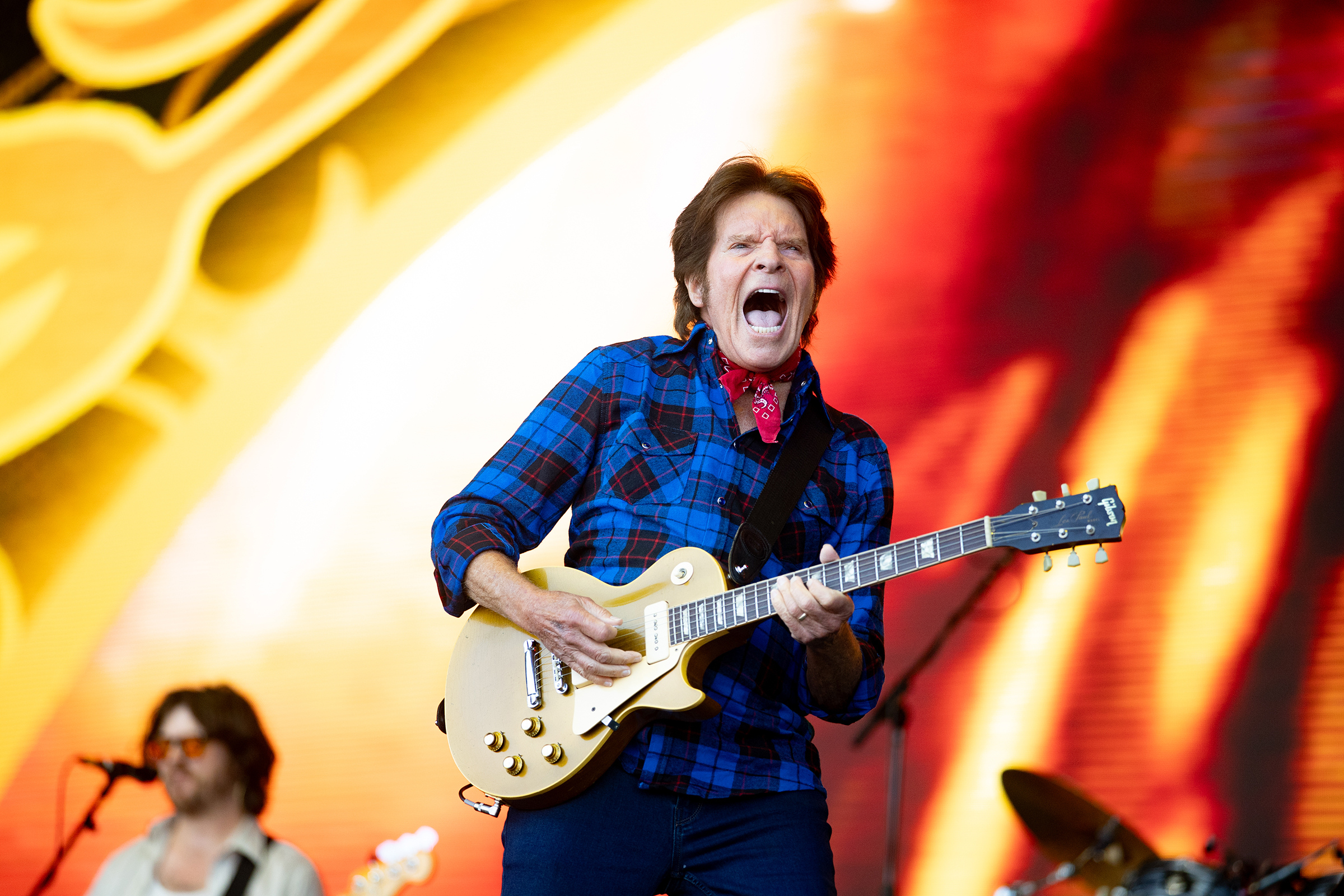
He used the same Rickenbacker Fireglo 325 guitar he played on the original tracks and kept the arrangements virtually unchanged. For Fogerty, there was no need to reinvent the music. He believes that the original versions are already perfect, and any changes would only dilute their impact.
A Voice That Has Not Faded
Despite being 80 years old, Fogerty’s voice remains as powerful as ever. He sings these classics in the same keys and with the same grit as he did 50 years ago. His vocal performance on “Proud Mary” was particularly challenging. After recording it, he realized that something was missing—his younger self had approached the song with a sense of urgency and passion that he struggled to recapture.
“I had to get back to that place where it felt like a matter of life and death,” he said. This dedication to authenticity is evident throughout the album, especially on “Fortunate Son,” one of his most powerful protest songs. Originally written in 1969, the track criticized the hypocrisy of the Vietnam War era and was later misused in a commercial, which Fogerty found deeply disappointing.
Looking Ahead
Despite the challenges of the past, Fogerty is now looking forward to the future. He is excited about writing new songs and creating fresh music. With his sons and other musicians in the band, he feels a renewed sense of purpose. He doesn’t have a specific deadline, but he’s eager to continue making music.
When asked if he plans to retire, Fogerty laughed. “I already did that a long time ago,” he said. “During the unpleasant times after Creedence, I was away from music for quite a few years, and I didn’t enjoy that. Doing Legacy was necessary for me to get where I am now.”
For Fogerty, Legacy is more than an album—it’s a statement of ownership, a tribute to his past, and a promise of continued creativity. It’s a testament to the power of perseverance and the enduring nature of great music.