What is a Lunar Eclipse?
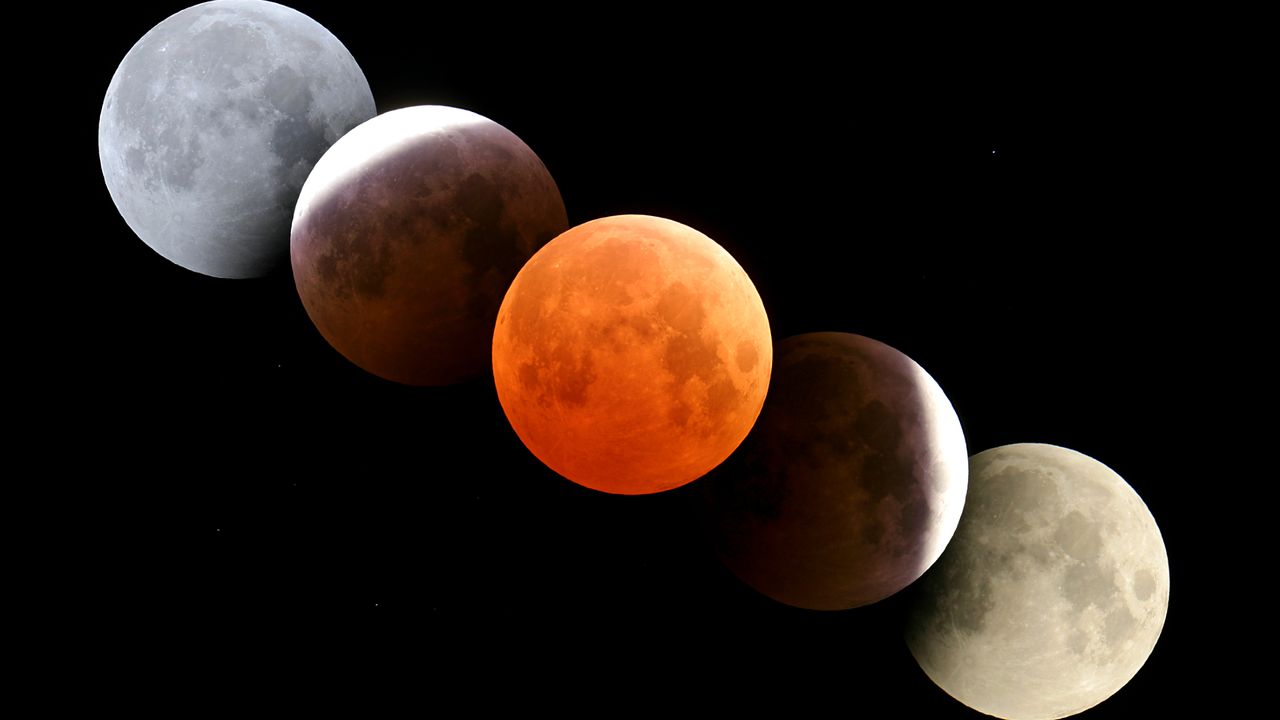
A lunar eclipse occurs when the Earth moves between the Sun and a full moon, casting its shadow on the Moon. This phenomenon happens in three main stages: the penumbral phase, where the Moon enters the lighter part of Earth’s shadow; the partial phase, when it begins to enter the darker umbra; and the total phase, where the entire Moon is within the umbra. During this time, the Moon can appear reddish-orange, which is why it’s often referred to as a “blood moon.”
When Will the March 2026 Total Lunar Eclipse Be Visible?
The total lunar eclipse on March 2-4, 2026, will be visible from Western North America, Australia, New Zealand, East Asia, and the Pacific region. According to Time and Date, only a small percentage of the world’s population will witness all phases of the eclipse, but a larger portion will see the dramatic “blood moon” phase. The best viewing conditions are expected in areas like northwest Mexico, the southwest United States, and inland Australia, where clear skies are more likely.
What Happens During the Eclipse?
The March 2026 total lunar eclipse will be the first of its kind since September 7-8, 2025, and the next one won’t occur until December 31, 2028, to January 1, 2029. During this event, the full “Worm Moon” will rise and gradually move into Earth’s umbral shadow. As it does, the Moon will dim and turn reddish-orange, creating the iconic “blood moon” appearance. The total phase, when the entire lunar surface is red, will last 58 minutes. However, the entire eclipse, including the penumbral and partial phases, will span approximately 5 hours and 38 minutes.
This eclipse will take place seven days before the Moon reaches apogee, its farthest point from Earth, making it appear at an average size.
What Time Will the Eclipse Occur in North America?
Lunar eclipses occur at the same universal time worldwide, but local times vary depending on the location. For North America, the eclipse will take place between 08:44 and 14:22 UTC on Tuesday, March 3, 2026. The total phase, or “blood moon,” will occur between 11:04 and 12:02 UTC. Here are the local times for different regions:
- Eastern Time: 6:04–7:02 a.m. EST on March 3, 2026 (the moon will set during totality)
- Central Time: 5:04–6:02 a.m. CST on March 3, 2026
- Mountain Time: 4:04–5:02 a.m. MST on March 3, 2026
- Pacific Time: 3:04–4:02 a.m. PST on March 3, 2026
- Alaska Time: 2:04–3:02 a.m. AKST on March 3, 2026
- Hawaii Time: 1:04–2:02 a.m. HST on March 3, 2026
It’s recommended to observe the Moon about 75 minutes before these times to catch the partial phases as Earth’s shadow moves across the lunar surface.
What Time Will the Eclipse Occur in the Asia-Pacific Region?
In the Asia-Pacific region, the eclipse will occur during the night of March 3-4, 2026. In some parts of Southeast Asia, totality may begin as the full moon rises, reducing the visual impact. Here are the times for totality in various locations:
- New Zealand: 12:04–1:02 a.m. NZDT on March 4, 2026
- Sydney: 10:04–11:02 p.m. AEDT on March 3, 2026
- Brisbane, Australia: 9:04–10:02 p.m. AEST on March 3, 2026
- Adelaide, Australia: 9:34–10:32 p.m. ACDT on March 3, 2026
- Darwin, Australia: 8:34–9:32 p.m. on March 3, 2026
- Perth, Australia: 7:04–8:02 p.m. on March 3, 2026
- Tokyo: 8:04–9:02 p.m. JST on March 3, 2026
- Seoul: 8:04–9:02 p.m. KST on March 3, 2026
- Beijing: 7:04–8:02 p.m. CST on March 3, 2026
- Hong Kong: 7:04–8:02 p.m. HKT on March 3, 2026
When Is the Next Total Lunar Eclipse?
After the March 2026 event, the next total lunar eclipse will occur on August 27-28, 2026, as a deep 93% partial eclipse. Then, on December 31, 2028, to January 1, 2029, a total lunar eclipse will be visible from Europe, Asia, Australia, Africa, Northern and Western North America, and other regions. Additional total lunar eclipses are scheduled for June 25-26, 2029, and December 20-21, 2029.
Additional Resources
For more information on lunar eclipses and related events, you can explore websites such as EclipseWise.com, which provides detailed predictions, and EclipseAtlas.com, which features beautiful maps of past and future eclipses. You can also check climate and weather forecasts for optimal viewing conditions on eclipsophile.com.