The Future of Automotive Testing: Mercedes-Benz’s Immendingen Proving Ground
Mercedes-Benz has unveiled a groundbreaking facility at its Immendingen proving ground, marking the opening of the most advanced light testing center in the automotive industry. This development is set to redefine how headlights, driver assistance systems, and chassis durability are tested, integrating automation, digital twins, and sustainable design practices. The new center not only represents a milestone for Mercedes but also signals a new era in global vehicle development where precision, efficiency, and ecological responsibility work in harmony.
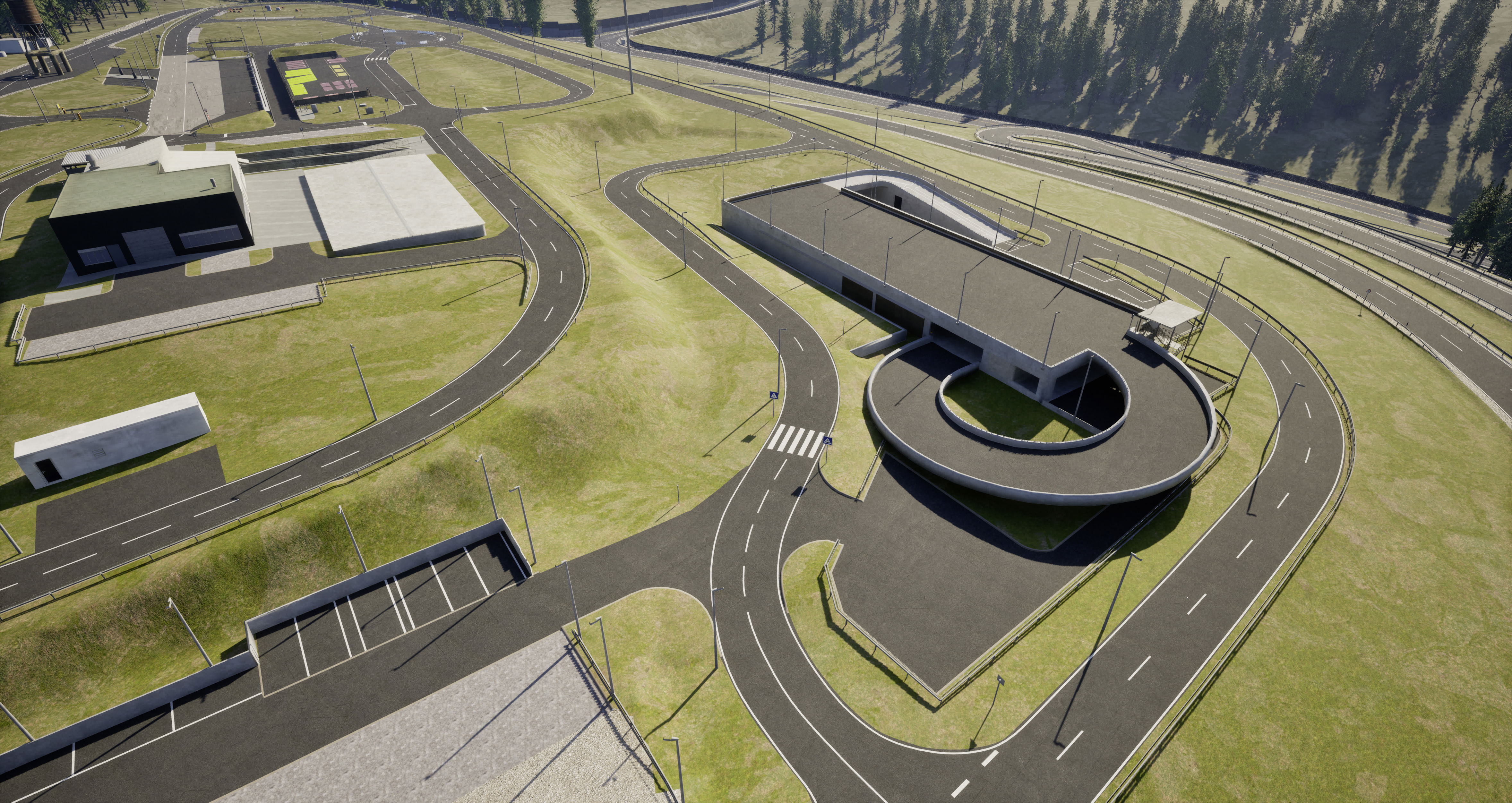
The entire Global Proving Ground Immendingen functions as a digital twin, with 30 test modules virtually replicated. This allows for early-stage simulation of test scenarios before vehicles even reach the track. By reducing the need for physical prototypes, the digital twin significantly cuts down on development time and makes the test site a crucial element of Mercedes-Benz’s digital vehicle testing strategy.
Why It Matters Now
Automakers are under increasing pressure to deliver safer, smarter, and more efficient vehicles while cutting down on development times. The new light testing center is not just a showcase; it’s a direct response to evolving regulations on vehicle lighting and autonomous systems, as well as the demands of electric vehicle integration. With the ability to conduct controlled, repeatable testing of headlights and sensor systems regardless of weather or time of day, Mercedes-Benz reduces uncertainty and accelerates readiness for global markets.
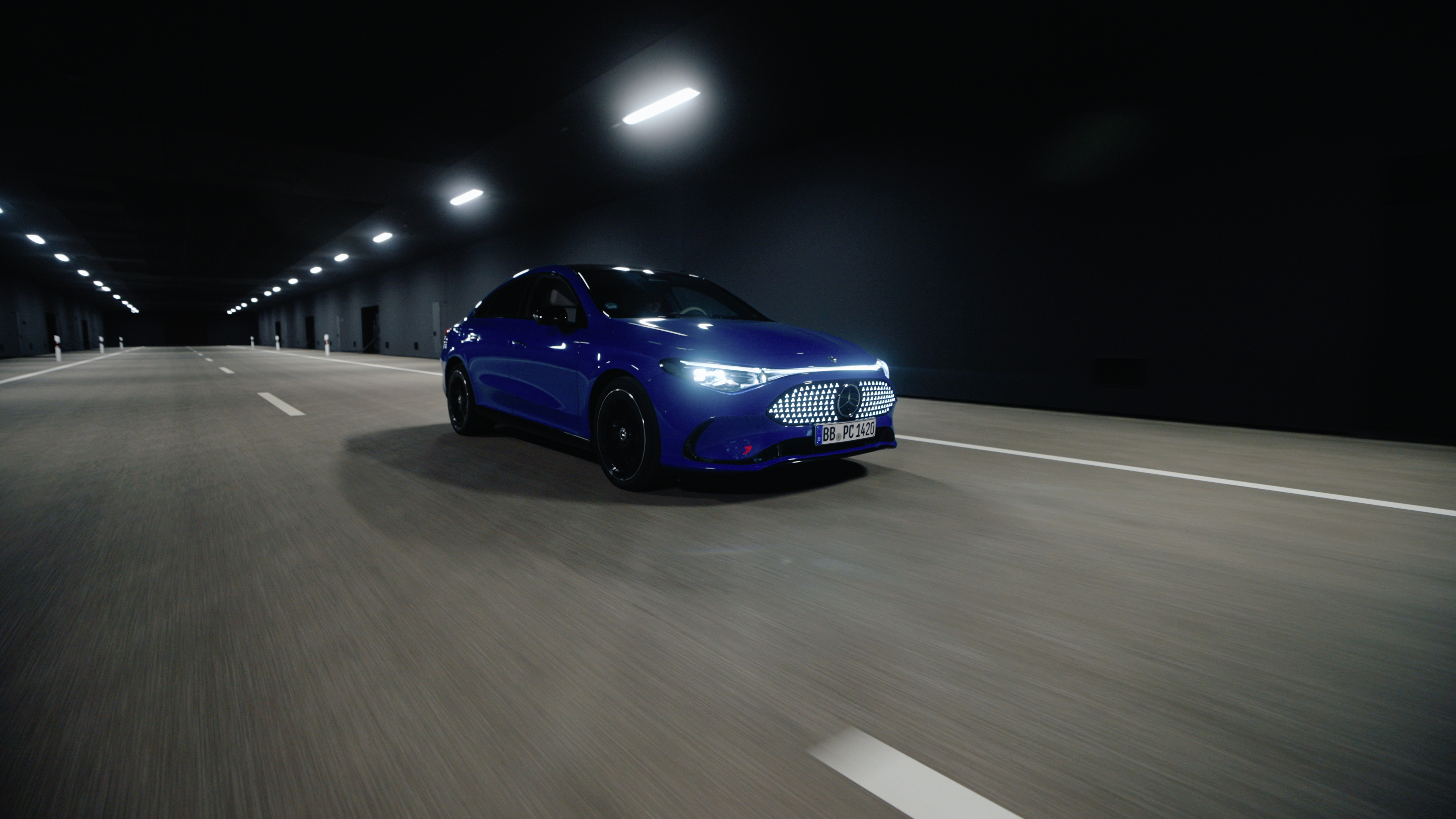
The light tunnel spans 443 feet and recreates a full country road with aged asphalt, oncoming traffic simulation, and pedestrian dummies. Up to five cars can be tested simultaneously. This level of precision is essential as headlights evolve from simple beams into adaptive, sensor-integrated systems that interact with driver-assistance features and autonomous navigation. Regulators like NHTSA and IIHS are tightening safety standards, and headlight ratings now directly impact vehicle safety scores.
Automation and Durability Testing
Automation plays a key role in the testing process. The Heide durability circuit now uses robotic drivers, eliminating variability, reducing human fatigue, and enabling round-the-clock testing. A single kilometer on this brutal track replicates 150 km of punishing real-world driving. For a brand known for engineering excellence, this ensures that every squeak, rattle, or structural weakness is identified before a customer ever touches the wheel.
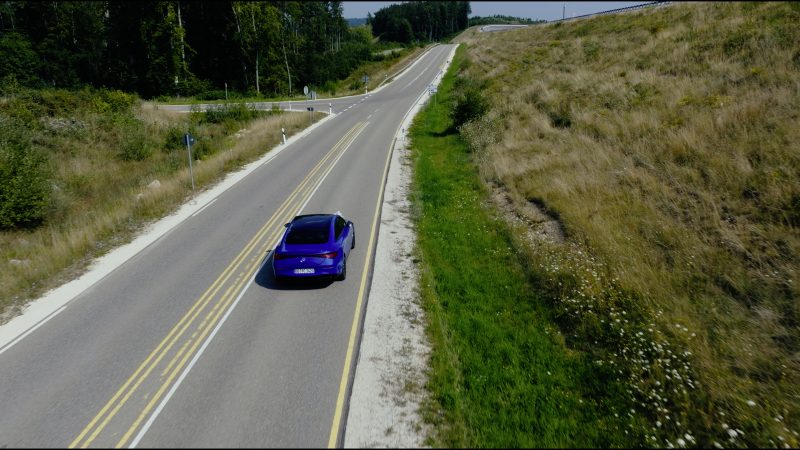
At the Immendingen proving ground, there are several kilometers of road that replicate road sections in China, including lane markings. These markings are deliberately applied to look heavily weathered, simulating real-life traffic conditions where road markings remain undamaged for only a short time. This helps train camera systems to respond realistically to the road conditions and markings typical of each country.
How Does It Compare to Rivals?
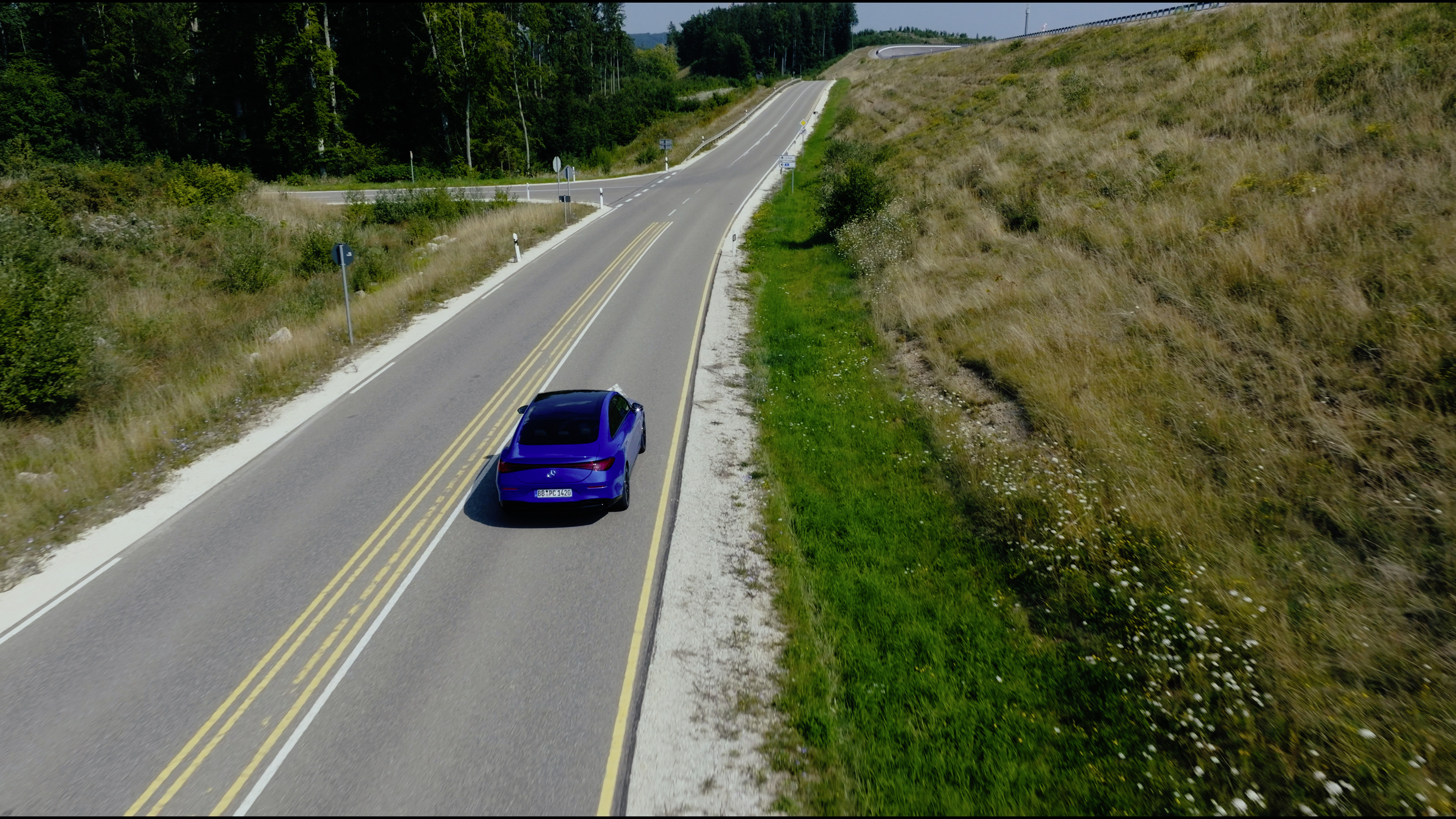
Mercedes is not the only automaker investing in digital proving grounds. Tesla has been aggressive with over-the-air updates informed by real-world fleet data, while BMW and Audi have expanded simulation labs in Munich and Ingolstadt. However, none have matched the sheer physical and digital integration of Immendingen. With over 53 miles of road surfaces representing global driving conditions, Mercedes has effectively created a miniature world where Europe, China, Japan, and the U.S. coexist on one campus.
The inclusion of a digital twin aligns Mercedes with industry-wide digitization trends. Cars are now tested thousands of miles virtually before a prototype ever touches tarmac. This reduces prototype builds, lowers emissions, and speeds up development. Compared to proving grounds in Arizona, Sweden, or Spain, Immendingen’s advantage lies in its consolidation. Apart from extreme heat or ice testing, 80 percent of real-world testing can be replicated here.
Even the ecological angle sets Mercedes apart. Sheep maintain the grounds naturally, preventing overgrowth, while llamas guard the flock. At a time when environmental scrutiny is as sharp as crash-test ratings, Immendingen doubles as a conservation zone. According to Bloomberg, automakers are increasingly judged on sustainability, not just horsepower or luxury. Mercedes is playing both sides of the equation smartly.
Who Benefits and Who Might Skip It
Make no mistake: this is not just for Mercedes engineers. The ripple effect of Immendingen extends to regulators, competitors, suppliers, and ultimately consumers. Regulators benefit from more consistent compliance data, suppliers get clearer performance feedback, and consumers receive safer, more reliable cars. Luxury buyers of the S-Class or EQS may never think about Immendingen, but the accuracy of their adaptive headlights on a rainy night owes everything to this site.
However, there is an implicit message: smaller automakers and startups cannot afford this scale of infrastructure. Rivals without such facilities will rely heavily on suppliers and public road testing, which extends development timelines. For budget-conscious brands, the Immendingen model may be out of reach. It is, in effect, an industrial moat for Mercedes, reinforcing its premium brand identity with real engineering substance.
Those looking for quick, lightweight vehicle programs may find Immendingen excessive. But if you are building vehicles where safety, luxury, and global compliance are non-negotiable, this site is not optional; it is essential.
Long-Term Significance
The Immendingen proving ground marks a turning point where physical and digital testing merge into a seamless ecosystem. Markus Schäfer, CTO of Mercedes-Benz, calls it the brand’s first fully digitized proving ground. In practice, that means test data cycles instantly from vehicles to simulations to design teams, tightening the feedback loop and trimming months off product development. The integration with AI-driven analytics ensures that lessons from today’s prototypes inform tomorrow’s consumer cars in record time.
In the long run, this facility also supports Mercedes’ electrification and autonomous vehicle ambitions. From testing EV durability on rough cobblestones to perfecting LIDAR and radar systems under artificial sun glare, Immendingen is a sandbox for next-generation mobility. The presence of more than 100 charging stations alongside traditional fuel pumps hints at the mixed-fuel transition years still ahead, but the infrastructure ensures EV development has equal footing.
As the automotive industry enters the most disruptive decade since its invention, Immendingen is not just a proving ground. It is a statement. Mercedes intends to lead in safety, sustainability, and sophistication. For consumers, that means every future Mercedes—from the humble GLA to the flagship EQS—will carry within it the fingerprints of a German hillside where sheep and robots quietly collaborate on the future of driving.