
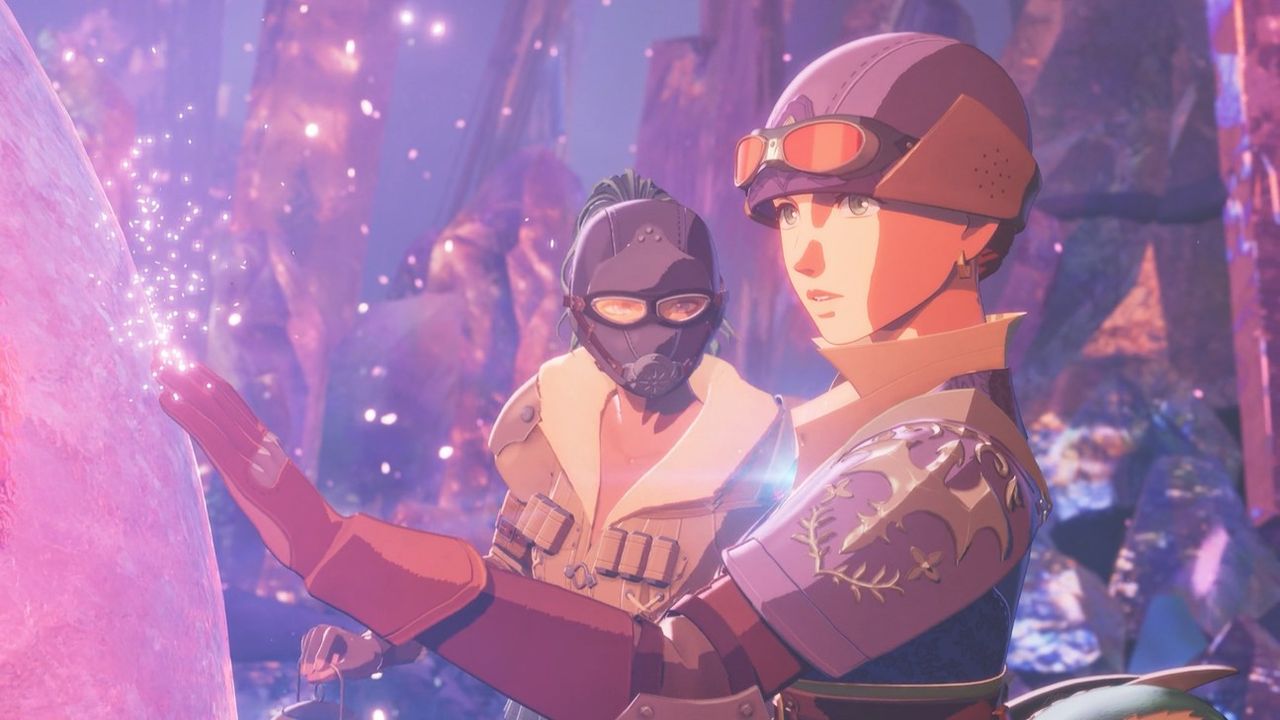
Monster Hunter Stories 3 is shaping up to be a significant evolution for the series, and it’s clear that Capcom is investing more into this RPG spin-off than ever before. While it’s hard to imagine the company completely messing up a franchise as successful as Pokémon, the combination of two of Japan’s most beloved game series—Monster Hunter and the concept of catching monsters instead of killing them—seems like a sure bet. With Monster Hunter Stories 3, Capcom appears to be giving the series the scope and budget it deserves to truly shine.
The Stories series, which casts players as young monstie riders rather than monster hunters, didn’t make its way to PC until last year, despite debuting on the Nintendo 3DS in 2016. At the time, there was potential, but the story felt aimed at a younger audience, with a rock-paper-scissors battle system that seemed to assume the market was still primarily kids. However, the latest installment seems to be taking a different approach.
During my 45-minute playthrough at TGS, Monster Hunter Stories 3 immediately set itself apart. The art style now resembles the open-world aesthetic of Nintendo’s Breath of the Wild rather than an after-school anime. The protagonist is an experienced rider rather than a tween in training, and the combat has evolved into something more dynamic. The basic triangle of rock-paper-scissors is still present, but now you can morph your fist into tools like garden shears or a boulder to land precise attacks.
The demo served as both a tutorial and a guide through the RPG party’s companion—a young rider learning the ropes. While the tutorial kept things straightforward, I was surprised by how many elements were introduced by the time I reached a boss fight:
- Determining what kind of attack a monster will use (power, speed, or technique) and outplaying it
- Swapping out your partnered monster for one with an advantageous attack type or special ability
- Switching between weapons like the bow, hammer, greatsword, and more to deal specific damage types, which different monster body parts are weak to
- Setting up combo attacks with your monster companion by using the same attack type at once
- Staggering a monster to set up team combo attacks
- Building up a kinship gauge with your monster to jump on its back and deliver a more powerful attack
- Learning how monsters change their patterns when enraged
- Understanding how monsters counter-attack when buffed by a crystalline infection, which ties into the plot
I didn’t even get to explore the larger systems like monster capturing and breeding, yet I found myself deeply engaged in each battle, analyzing every move. According to an interview with Japanese publication 4Gamer, the new combat systems are designed to reduce monotony once you learn a monster’s basic attack patterns. It feels like the possibilities for handling each battle will expand significantly as I start exploring the world freely and tracking down monsters to build my own team.
How freeform the experience will be remains to be seen. The demo was very linear, funneling me from one tutorial fight to another, with simple field puzzles like choosing the right monster to ride over a gap or climb a cliff. However, some footage shown by Capcom suggests a much more open-ended design, with large zones to explore from the back of a flying Rathalos.
While Stories 3 still looks like the younger sibling of the main Monster Hunter series, the gap is narrowing. The Wilds version disappointed longtime fans by removing too much of the friction that gave the older games their character, while adding new season and weather systems that didn’t add much value. In contrast, Stories 3 offers more weapons in battle, more varied monster behavior, and greater interactivity between monsters and the environment.
It’s unclear how well these elements will hold up over the full runtime of the game, or if the story will be engaging enough to keep players motivated. Storytelling has never been Monster Hunter’s strong suit, but there’s a sense that this could be the breakout hit for the Stories series that Monster Hunter: World was for the main games. While it may not reach the same level of success as World, which is Capcom’s best-selling game ever, it seems poised to expand beyond the niche audience of young players who enjoy Monster Hunter and JRPGs.
Monster Hunter Stories 3 might not have the meme-driven appeal of Palworld, but part of that game’s success came from the simple fact that people love survival games featuring distinct monsters. Pokémon remains the most popular Japanese RPG series of all time, yet its fanbase is growing increasingly frustrated with the visual design of recent entries. If they’re looking for a fresh start, Stories 3 seems ready to offer them a ride.