Public Perception of Poverty and Homelessness in the United States
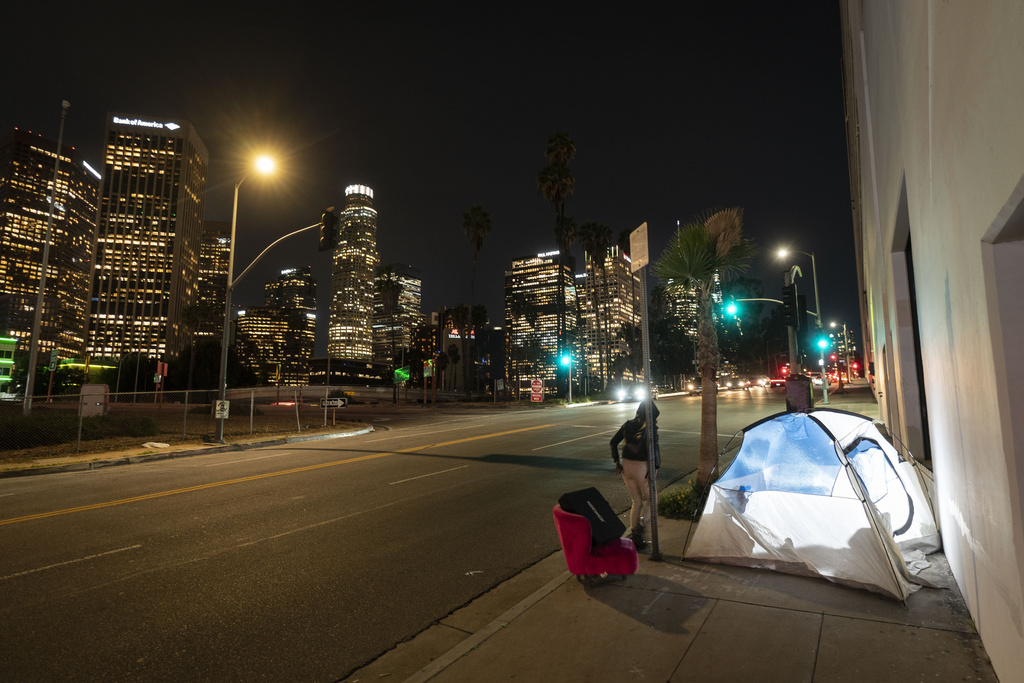
A recent poll reveals that most U.S. adults believe personal choices play a significant role in driving poverty and homelessness, while fewer attribute these issues to a lack of government support. However, the same poll also shows that just over half of respondents think the government is not spending enough on those in need. This insight comes at a time when homelessness is increasing across the country, with officials, including former President Donald Trump, pushing for the removal of encampments where unhoused individuals live.
The poll, conducted by the University of Chicago Harris School of Public Policy and the Associated Press-NORC Center for Public Affairs Research, highlights the complex views Americans hold regarding poverty and homelessness. Bruce Meyer, a professor at the University of Chicago Harris School who helped craft and analyze the poll, noted that people seem conflicted about the causes of economic hardship. He suggested that many recognize the complexity of factors leading to poverty and are willing to support both individual responsibility and government assistance.
Rising Concerns About Poverty and Homelessness
Most U.S. adults—68%—believe that poverty has increased in the country over the past 25 years, while 19% say it has remained the same, and about 12% think it has decreased. Urban residents are more likely to perceive an increase in local poverty compared to those in suburban or rural areas. For instance, Dwayne Byrd, a 60-year-old Baltimore resident, described the city’s challenges, including dilapidated buildings, dirty streets, and businesses closing down. He highlighted the struggle of people with jobs not having enough money to meet basic needs.
Despite these perceptions, federal data indicates that the rate of people living under the poverty line has actually decreased “by almost every measure” over the past 25 years. Meyer attributed this discrepancy to the visibility of unsheltered homelessness, which he believes influences public perception. He noted that while unsheltered homelessness is the most visible form of poverty, it represents only a small portion of the low-income population.
Increasing Homelessness and Its Causes
About 8 in 10 Americans say that homelessness has increased in the United States over the last 25 years, with roughly 7 in 10 believing it has increased in their state. Slightly more than half—55%—say it has increased in their own community. According to federal officials, homelessness increased by 18% last year, driven largely by a lack of affordable housing, devastating natural disasters, and a surge of migrants in several parts of the country. This rise came on top of a 12% increase in 2023, which was blamed on soaring rents and the end of pandemic assistance.
Ashlyn White, a 38-year-old Democrat from Pittsburgh, noted that she has never seen as many homeless camps as she has since the end of the pandemic. She expressed concerns about where homeless individuals would go if encampments were removed, citing full shelters as a major issue.
Support for Removing Homeless Encampments
The poll found that more Americans favor removing homeless encampments in U.S. cities than oppose it. About 43% of U.S. adults support their removal, while 25% oppose it. Roughly 3 in 10 Americans don’t have an opinion, saying they neither favor nor oppose the removal of encampments. The U.S. Supreme Court ruled last year that cities can enforce bans on people sleeping outside in public places.
Most Republicans, 64%, favor removing homeless encampments, while independents and Democrats are divided, with a substantial share expressing no opinion. Ami Tate, a 43-year-old conservative from Hesperia, California, supports removal but believes the government should also provide assistance. On the other hand, Rob Haas, a 61-year-old moderate from Fort Collins, Colorado, strongly favors encampment removals, stating that such environments are harmful to both the homeless and the community.
Divisions Over Root Causes
About 6 in 10 Americans say personal choices are a “major factor” in why people remain in poverty, while just under half say unfair systems are a major factor and about 4 in 10 blame a lack of government support. Most Republicans, 77%, say personal choices are a “major factor” in why people remain in poverty, compared with 56% of independents and 49% of Democrats.
Adam Kutzer, a 22-year-old from Cranford, New Jersey, cited examples like not paying off credit card debt or overspending as poor financial choices that can be avoided. Democrats, however, are much more likely than Republicans or independents to say lack of government support is a “major factor.”
When it comes to homelessness, most Americans see substance abuse and mental health issues as key drivers, with about three-quarters citing them as a “major factor.” Still, about 6 in 10 adults say personal choices are responsible, with a similar share blaming a lack of affordable housing.
Responsibility for Addressing Issues
A majority of Americans—54%—believe that the government is spending “too little” on assistance for those in need. This includes Tate, who thinks more money should go toward school programs and helping children in low-income communities. Americans are also more likely to think federal and state governments have a major role to play in tackling homelessness and poverty, compared with charities or very wealthy individuals.
About 4 in 10 U.S. adults say federal and state governments have “a great deal” of responsibility for addressing poverty and homelessness, compared with about one-quarter who say this about charities or very wealthy people. Tate believes state and local governments should develop action plans to help get people off the streets.