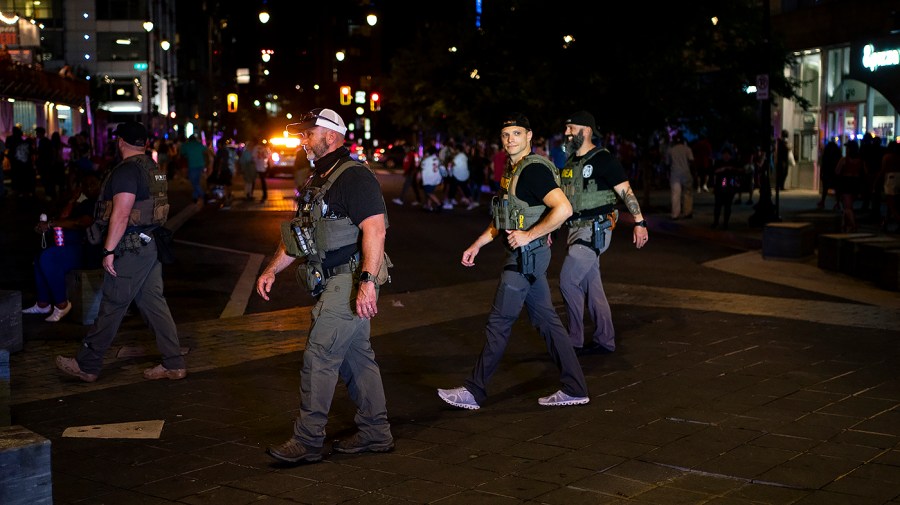
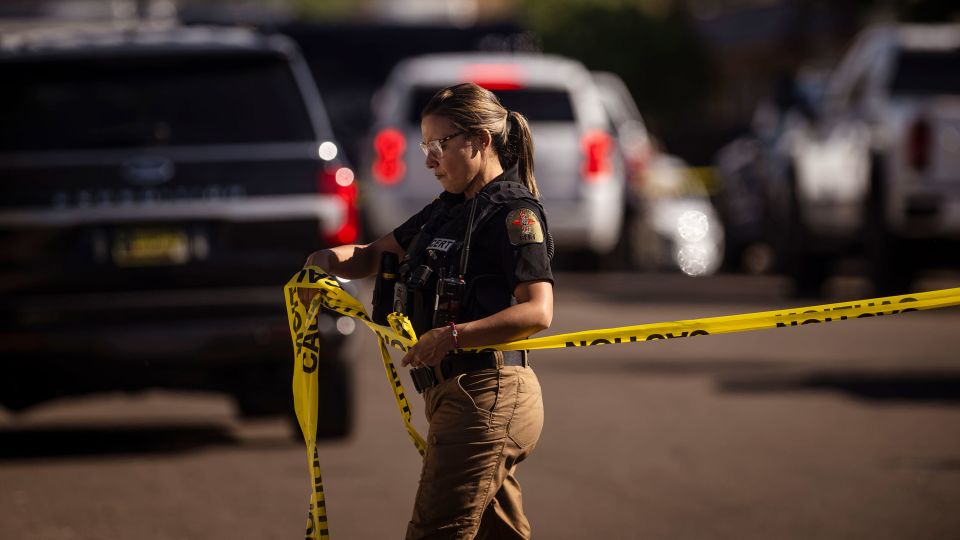
In the largest city in New Mexico, National Guard members are tuning into police radio communications, observing traffic camera feeds, and assisting with securing areas where crimes have occurred—duties that typically fall outside their usual responsibilities.
The New Mexico National Guard is stationed in Albuquerque to address what authorities have referred to as a rise in criminal activity, yet this differs from the recent federal military deployment in Washington, D.C., and earlier in Los Angeles during immigration-related protests, where troops were seen in uniform. Instead, the state’s Guard members, dressed in polo shirts, were called in by the Democratic governor.
And just last week, the governor of New Mexico announced a state of emergency in different areas of the state, granting her the authority to deploy additional troops.
Here’s how the National Guard’s deployment is unfolding in New Mexico and what it signifies.
How is the military deployment in New Mexico unfolding?
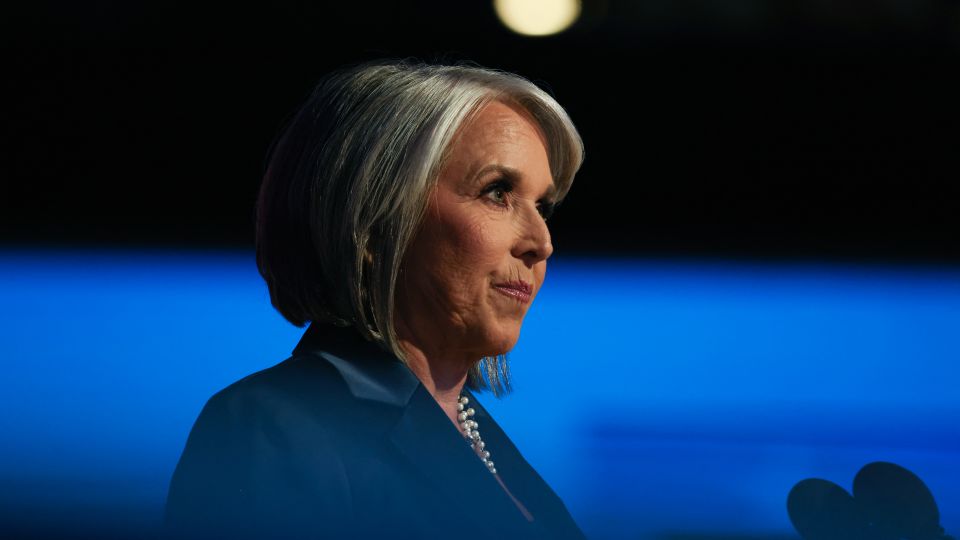
The state of emergency declaration issued by Gov. Michelle Lujan Grisham for Rio Arriba County, the city of Española, and nearby pueblos was requested by local authorities, according to her statement.
The deployment of 60 to 70 troops in Albuquerque followed an urgent appeal from the city’s police department, highlighting the “fentanyl crisis and increasing violent youth crime as pressing concerns demanding swift action.”
The latest statement is designed to assist local law enforcement in addressing a “significant surgeviolent crime, drug trafficking, and public safety threats that have ‘overwhelmed local resources.’ Rio Arriba County has the highest rate of overdose deaths in the state, according to the governor’s press release.
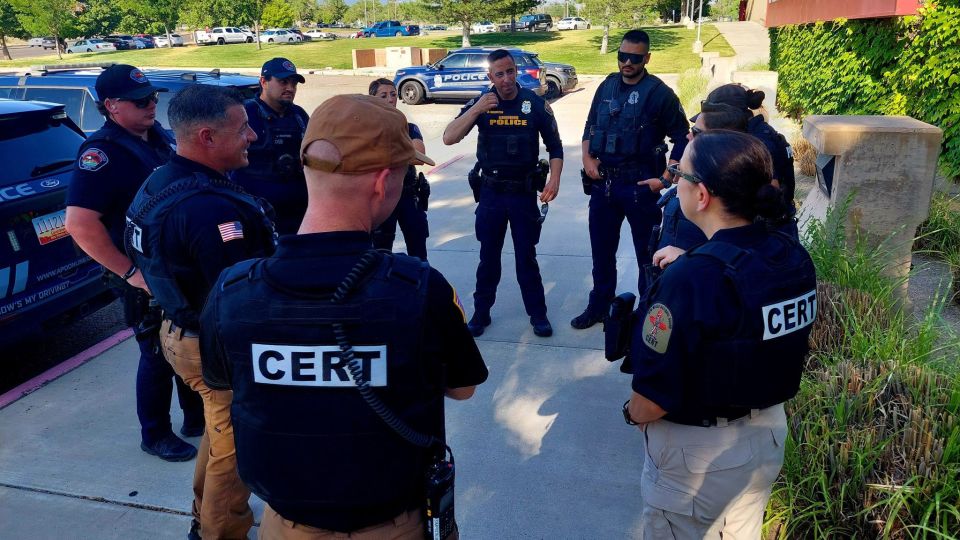
The military personnel are assisting the police with tasks that do not involve law enforcement and are unarmed, will not perform arrests, detain individuals, use force, or participate in any immigration-related activities, according to the city.
“We recognize there are worries stemming from events happening in other areas of the country, and we aim to reassure the public that in Albuquerque, the Guard’s responsibilities are well-defined and centered on assistance rather than enforcement,” Police Chief Harold Medina stated in a June press release.
The Digital Team has reached out to the Albuquerque Police Department and the New Mexico National Guard to inquire about the effectiveness of the deployment but has not received any reply.
“There is no doubt as to why the NM National Guard is providing assistance,” said Hank Minitrez, a spokesman for the New Mexico National Guard.June Facebook post.
The post detailed soldiers operating behind the scenes in police stations, as well as managing traffic and standing guard at the boundaries of crime sites when required.
Albuquerque authorities mentioned last month that they have observed “success through focused resources” in the downtown area. The city reported a 20% decrease in shootings this year compared to 2024.in a news release, a figure that aligns with data given to the Muara Digital Team by the governor’s office.
Alternative method emphasizes assistance, rather than compliance.
Grisham, a member of the Democratic Party, condemned President Donald Trump’s sending of 800 soldiers to Washington, D.C., as “excessive executive power” and stated the difference “could not be more apparent” between how her state utilized the National Guard and Trump’s approach.
The DC National Guard is directly accountable to the president, whereas a governor serves as the “commander in chief” for their state’s military forces and law enforcement agencies.
Trump has indicated he might take similar actions in other large cities governed by Democrats, even if their leaders have not requested assistance.
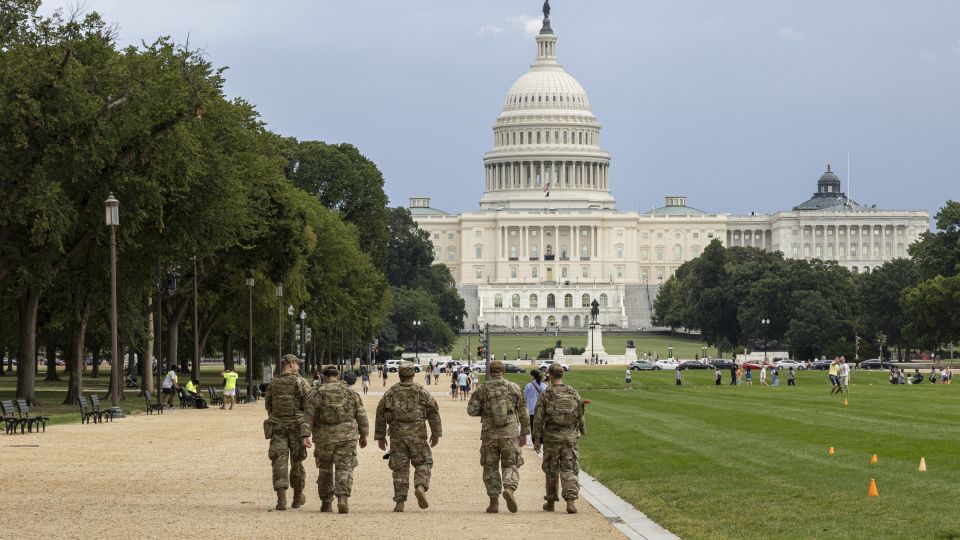
Meanwhile, on the West Coast, uncertainties remain in a legal case concerning the president’s decision to send soldiers to Los Angeles in June, when intense demonstrations took place over immigration enforcement in various areas of the city.
The visual difference between the soldiers in New Mexico and those deployed to Los Angeles and the capital highlights a variation in strategy and purpose.
The office of Grisham stated that the “main distinction” between her use of troops and Trump’s is that her directive came as a result of direct appeals from local communities. “Whereas President Trump employs the National Guard to override local authority, New Mexico unites local and state governments to truly enhance community safety,” she mentioned.
California Gov. Gavin Newsom referred to the federal involvement in his state aspurposely inflammatory.” Washington, DC, Attorney General Brian Schwalb described the president’s actions as unnecessary and highlighted that violent crime in the district has reached a certain level.30-year lows last year.
Trump stated he intended to “examine” taking measures in Chicago, New York, and Los Angeles due to their high crime levels when he revealed his plans totake controlof the police department in DC this week. It remains uncertain what exactly Trump intends to accomplish in other cities.
New York, Los Angeles, and Chicago have all experienced a continuous drop in criminal activity this year, as reported by amid-year reportfrom the nonpartisan, independent Council on Criminal Justice.
A loosely defined, brief regulation controls the federal government’s deployment of troops.
It is considered a “hazardous example” for the federal government to begin sending troops to handle local and state law enforcement issues, as they have traditionally been utilized for managing crowds, safeguarding federal property and personnel, or assisting during natural disasters, according to Jeffrey Swartz, a former National Guard member and professor emeritus at Cooley Law School.
The courts in California have not yet considered a key issue in the case filed by Newsom to prevent Trump from sending troops into the city: whether the troops breached the law.Posse Comitatus Acta legal rule from the 19th century that bans the use of the U.S. military in domestic law enforcement activities.
The three-day hearing ended last week, but the judge has not announced when he will make a decision.
When the president activates a unit or a state National Guard, they are now subject to the Posse Comitatus Act, which prohibits their use for civilian law enforcement,” stated Swartz. “He cannot approve federal troops to make arrests. That authority is exclusively held by the governor.
However, the National Guard may detain an individual in situations where there is a threat to federal property or federal personnel, he noted.
The law leaves law enforcement responsibilities to the states, but its wording is brief, which “encourages ambiguity and debate,” noted David Shapiro, a lecturer at the John Jay College of Criminal Justice.
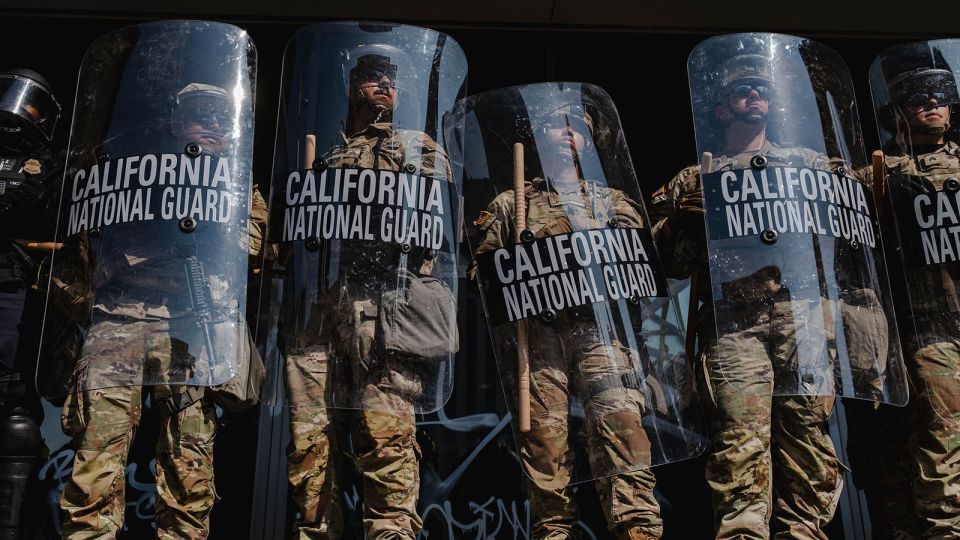
Swartz mentioned that National Guards members “aren’t fond of the notion of being on the streets and placed in a situation where they could be required to use force against other citizens.”
These individuals are citizen soldiers, not career professionals. They have careers and families,” he stated. “They enlisted to defend the nation from outside dangers, not domestic issues.
For additional updates from the Muara Digital Team, sign up for a membership atMuara Digital Team