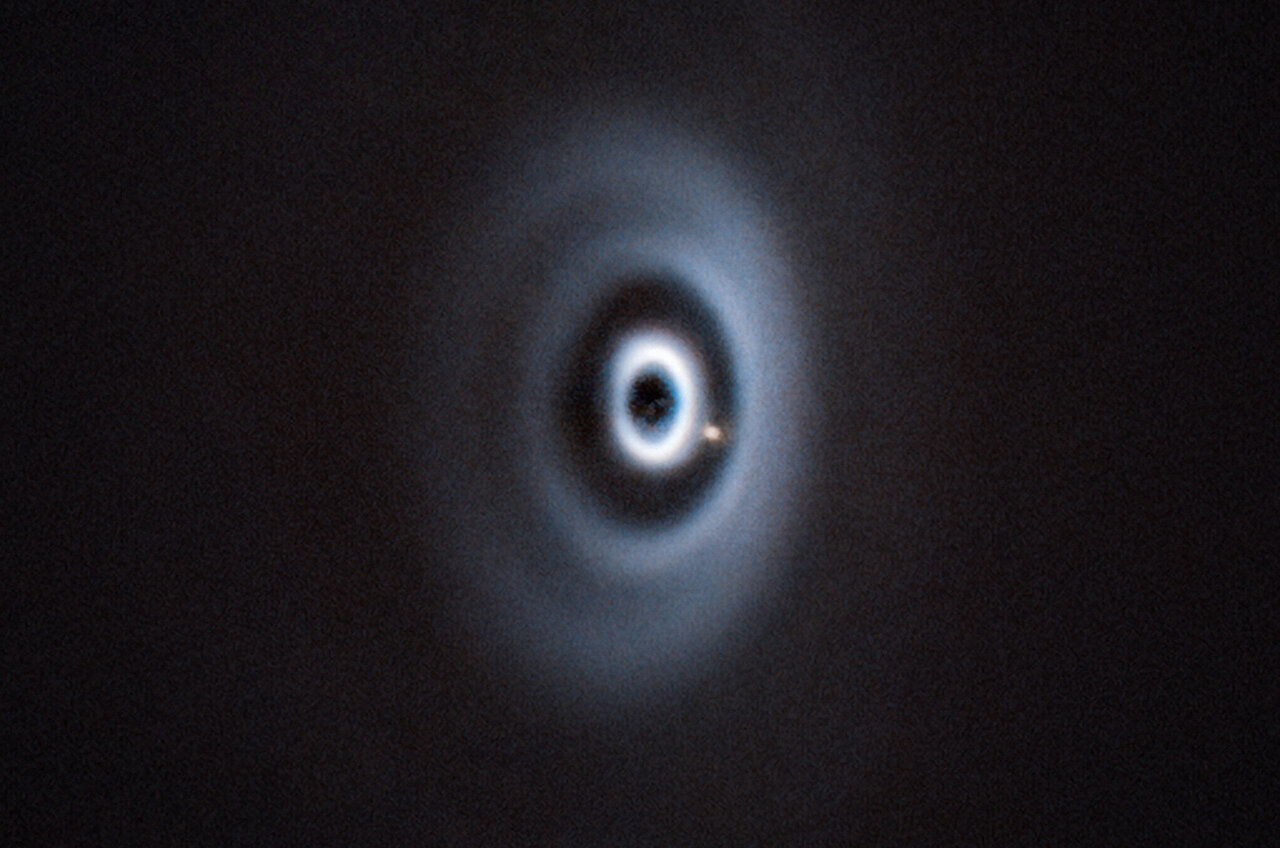
A group of global astronomers, jointly directed by scholars from the University of Galway, has uncovered a new planet in an unforeseen manner.
Subscribe to our newsletterfor the most recent science and technology news updates.
Identified during the initial phases of development around a young version of our sun, the planet is thought to be approximately 5 million years old and probably a gas giant with a size comparable to Jupiter.
The research, headed by Leiden University, the University of Galway, and the University of Arizona, has been released inAstrophysical Journal Letters.
A revolutionary finding was achieved through one of the most sophisticated observatories globally—the European Southern Observatory’s Very Large Telescope (ESO’s VLT) located in the Atacama Desert of Chile. The newly discovered planet has been called WISPIT 2b.
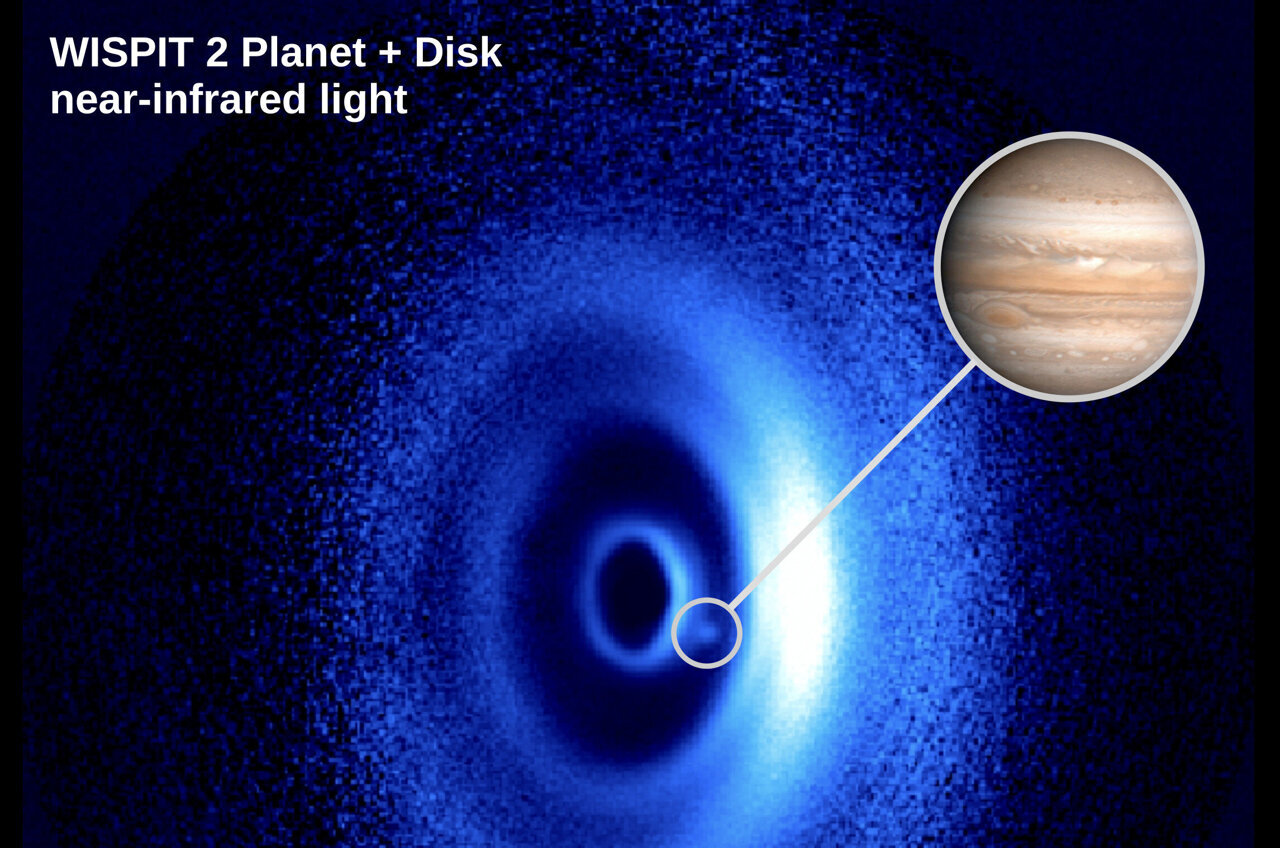
Dr. Christian Ginski, a professor at the School of Natural Sciences, University of Galway and co-author of the research, stated, “We conducted brief observations of numerous young stars—only a few minutes per object—to check if we could spot a small point of light near them that might indicate a planet. However, with this particular star, we instead discovered an entirely surprising and remarkably elegant multi-ring dust disk.”
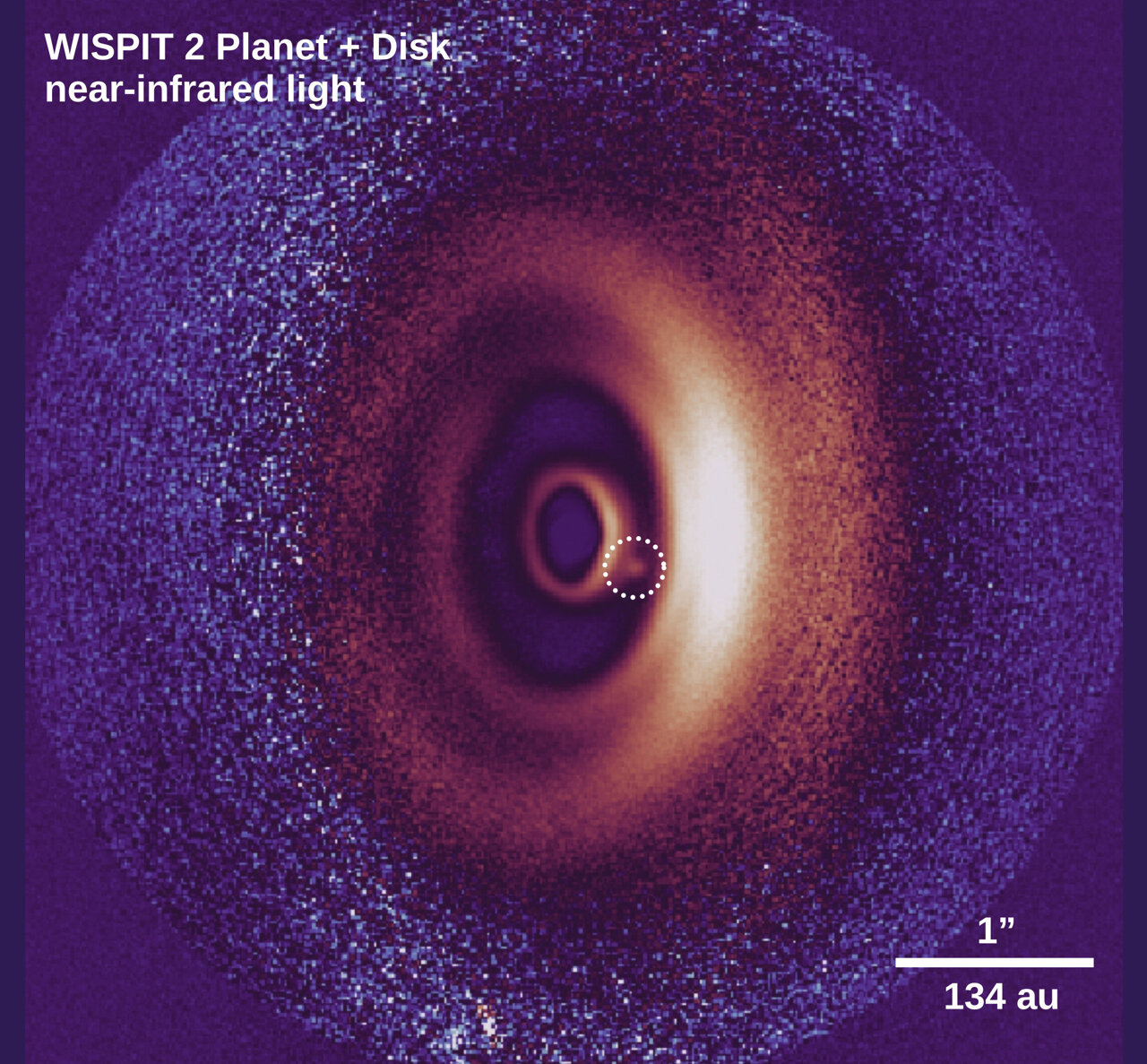
When we first observed this multi-ringed disk, we realized we needed to check if we could find a planet inside it, so we immediately requested additional observations.
This is only the second time a confirmed planet has been identified at such an early phase of development orbiting a young star similar to our sun. The first discovery occurred in 2018, made by a research group that also included Dr. Ginski.
WISPIT 2b represents the initial clear identification of a planet within a multi-ringed disk, positioning it as the perfect setting to examine the interaction between planets and disks, along with their subsequent development.
The planet was photographed using near-infrared light—the kind of imagery one might observe through night-vision goggles—because it remains warm and radiant from its early formation stage.
A group from Leiden University and the University of Galway obtained a remarkably sharp picture of the young proto-planet located within a disk gap. They also verified that the planet is revolving around its parent star.
The planet was also observed in visible light by a group from the University of Arizona utilizing a custom-built device. This observation at a particular wavelength or color of light suggests that the planet is still in the process of gathering gas while it develops its atmosphere.
WISPIT 2b was identified as part of a five-year study where the global team aimed to determine if gas giants with wide orbits are more prevalent around younger or older stars. This resulted in the surprising identification of the new planet.
Dust and gas-filled disks surrounding young stars serve as the nurseries for planets. These disks can appear very striking, featuring various structures like rings and spiral arms, which scientists think are connected to planet formation taking place inside them. The disk surrounding WISPIT 2b has a radius of 380 astronomical units—approximately 380 times the distance from Earth to the sun.
Dr. Ginski stated, “Obtaining a picture of these developing planets has been very difficult, and it offers us a significant opportunity to comprehend why the thousands of older exoplanet systems we know of vary so much and differ from our own solar system. I believe many of our colleagues who research planet formation will closely examine this system in the coming years.”
The research was directed by an early-career Ph.D. candidate, Richelle van Capelleveen from Leiden University, and supported by a group of graduate students at the University of Galway.
The study results were developed in collaboration with Dr. Ginski and three graduate students in Physics who are focusing on Astrophysics at the University of Galway.
A companion studyled by Professor Laird Close from the University of Arizona, with observations initiated following the information provided about the new disk by the team from the University of Galway and Leiden University.
van Capelleveen stated, “Finding this planet was an incredible moment—we were truly fortunate. WISPIT 2, a young version of our sun, is situated in a scarcely explored cluster of young stars, and we hadn’t anticipated discovering such an impressive system. This system is expected to serve as a reference point for many years ahead.”
Dr. Ginski stated, “We were very lucky to have these remarkable young researchers involved. These are the future astrophysicists who I believe will achieve even greater discoveries in the coming years.”
Chloe Lawlor, a Ph.D. candidate in Physics focusing on Astrophysics at the University of Galway, stated, “I am truly grateful to be part of such an intriguing and potentially career-changing discovery. WISPIT 2b, located within its formation disk, is a remarkable instance of a planet that can help test existing theories on planet formation. I believe this will serve as a significant paper, especially due to the contributions of Richelle van Capelleveen and her outstanding team.”
Jake Byrne, a graduate student pursuing his Master’s degree in Physics with a focus on Astrophysics at the University of Galway, stated, “This planet is an extraordinary find. I had a hard time believing it was an actual detection when Dr. Ginski first presented the image to me. It’s a significant discovery that is certain to generate conversation among researchers and enhance our knowledge of how planets form. Being part of such an influential project, and working with global partners, is precisely the kind of chance that early-career scientists like Chloe, Dan, and I aspire to have.”
Dan McLachlan, a graduate student pursuing his Master’s in Physics with a focus on Astrophysics at the University of Galway, stated, “From my time working in astronomy, I’ve found that it’s easy to become engrossed in a specific task and lose sight of the broader context. When you step back and consider the scale of what you’re involved in, it can be quite overwhelming. This particular project (an exoplanet direct detection) was one such example, and being part of it was truly astonishing. I am very grateful to the Physics department at the University of Galway and especially to my supervisor, Dr. Christian Ginski, for giving me the chance to take part in such an exciting endeavor.”
More information: The Astrophysical Journal Letters (2025). DOI: 10.3847/2041-8213/adf721
The Astrophysical Journal Letters (2025). DOI: 10.3847/2041-8213/adf7a5
Provided by the University of Galway
This narrative was first released onMuara Digital Team.