
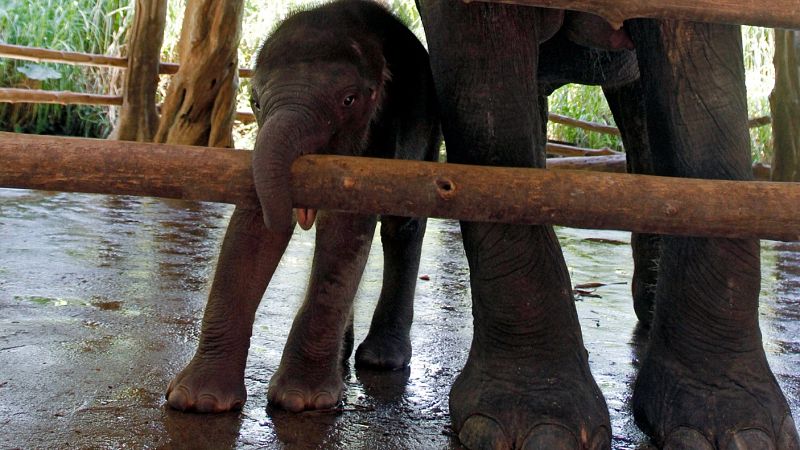
Scientists have developed a groundbreaking vaccine that offers protection to young elephants against EEHV, a deadly herpesvirus that can kill an animal within 24 hours. While young calves benefit from their mother’s immunity, this protection diminishes as they wean and grow, leaving them vulnerable to the virus. This issue is particularly significant in Asian elephants, where the virus is prevalent.
Adult Asian elephants, such as those found in the jungles of Thailand, are not at high risk from elephant endotheliotropic herpesvirus (EEHV). However, young elephants with underdeveloped immune systems face serious threats. To address this, scientists from the UK’s Chester Zoo, the University of Surrey, and the Animal and Plant Health Agency have dedicated years to creating a vaccine specifically for young elephants.
The International Union for Conservation of Nature (IUCN) classifies the Asian elephant as endangered, with fewer than 40,000 individuals remaining. Cases of EEHV-related deaths have been reported in India, Nepal, Myanmar, and Thailand. The virus also affects conservation and breeding programs in zoos worldwide.
Proof of Concept Vaccine
Elderly male elephant Aung Bo, a beloved figure at Chester Zoo in northern England, was one of three elephants involved in a proof-of-concept vaccine trial. This initiative aimed to protect young elephants during the critical period when they lose their mother’s immunity but haven’t yet developed their own.
Dr. Falko Steinbach, Professor of Veterinary Immunology at the University of Surrey and co-author of the study published in Nature Communications, explains that the vaccine does not prevent infection but helps elephants survive it by strengthening their immune response.
“The elephant herpesvirus shares similarities with herpesviruses in other species. Like humans, elephants may carry some herpesviruses latently. However, when young animals contract the virus, their immune system may not be mature enough to respond effectively, leading to severe or fatal outcomes. The vaccine was designed to prevent death and severe disease, as preventing infection itself is challenging with herpesviruses,” says Steinbach.
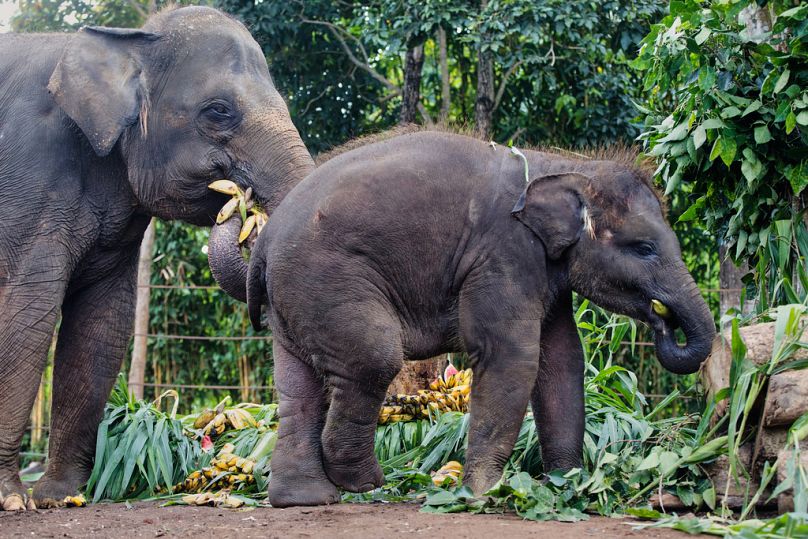
Dr. Katie Edwards, Lead Conservation Scientist at Chester Zoo and co-author of the study, emphasizes that once symptoms appear in a young elephant, it is often too late to save them. “The disease progresses rapidly into a hemorrhagic form, causing internal bleeding. Symptoms include head swelling, tongue lesions, stiffness, and lethargy. By the time clinical signs are evident, it is extremely difficult to treat the condition.”
Genotyping the Virus
Traditional vaccines are created by introducing a weakened version of the virus to stimulate the immune system. However, this approach was not feasible for EEHV because the virus cannot be cultured outside an elephant’s body.
Edwards explains that the team instead focused on the genetic sequence of the virus. “We genotyped the virus that caused the death of an elephant calf at Chester Zoo and identified parts of the virus that could stimulate the immune system. We used a heterologous vaccine approach, which involves two different delivery methods containing key viral components.”
The vaccine is administered via injection with booster doses, making it suitable for use in zoos and sanctuaries. Edwards notes that the technology used in the vaccine allows for targeted stimulation of the elephant’s immune system, a method not previously applied to these animals.
“This technology could be adapted for other species and viruses. It has the potential to address various diseases in wildlife, including elephants,” says Edwards.
Future Goals
The research team aims to further develop the vaccine so it can be used in wild elephant populations. This advancement could significantly improve the survival rates of young elephants and support global conservation efforts.