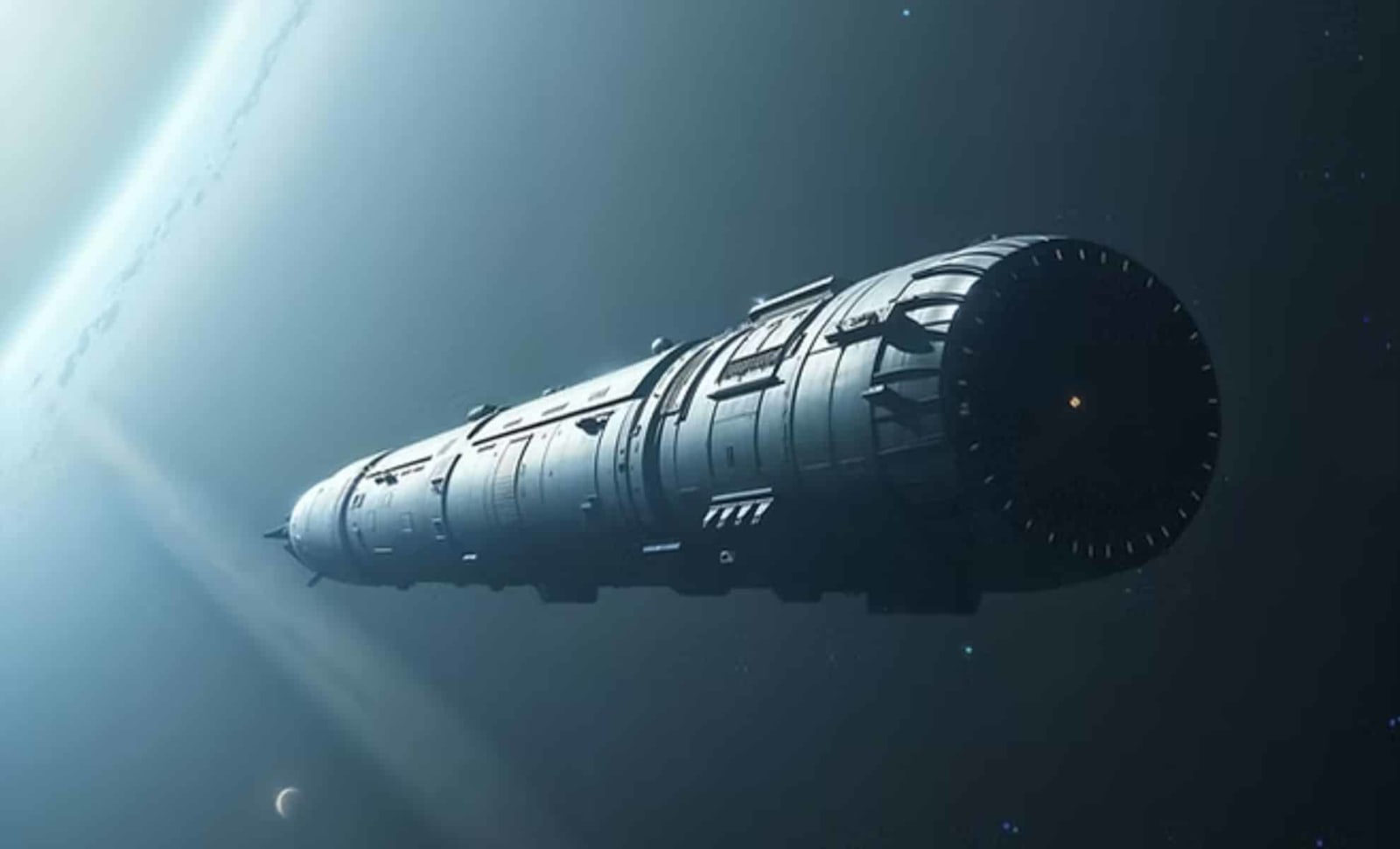
A vehicle as large as a small city might one day transport generations of humans through the vastness toAlpha Centauri, our closest stellar system, according to a comprehensive concept plan published this summer. Referred to asChrysalis, the ship would extend58 kilometersend-to-end and maintain up to1,000 peopleon a one-way, multi-century voyage — not through cryogenic sleep or hibernation, but assuccessive generationsborn and brought up in space
The idea, created by a group of engineers and designers for theProject Hyperiondesign contest, has received high acclaim for its engineering authenticity, psychological insight, and architectural complexity. Central to the concept is a compelling question: how to construct not only a vessel, but a full-fledged community capable of enduring and developing in deep space, entirely cut off from Earth forover four centuries.
“Chrysalis is more than a spaceship; it’s a dynamic ecosystem created to accommodate human minds, society, and traditions while in movement.,” the team stated in their submission, which received first prize from theInitiative for Interstellar Studies.
Massive Spinning Cylinders, Biome Domes, and Artificial Ecosystems
To mimic gravity and prevent the extensively reported health consequences of extended weightlessness — such as bone density reduction, fluid shift, and heart deconditioning —Chrysalis would generate artificial gravity through slow rotation. Its concentric cylindrical designwould enable entire living areas to rotate, generating centrifugal force strong enough to keep people grounded. Smaller vessels cannot produce this effect without leading to significant dizziness or unease, highlighting the importance of size.
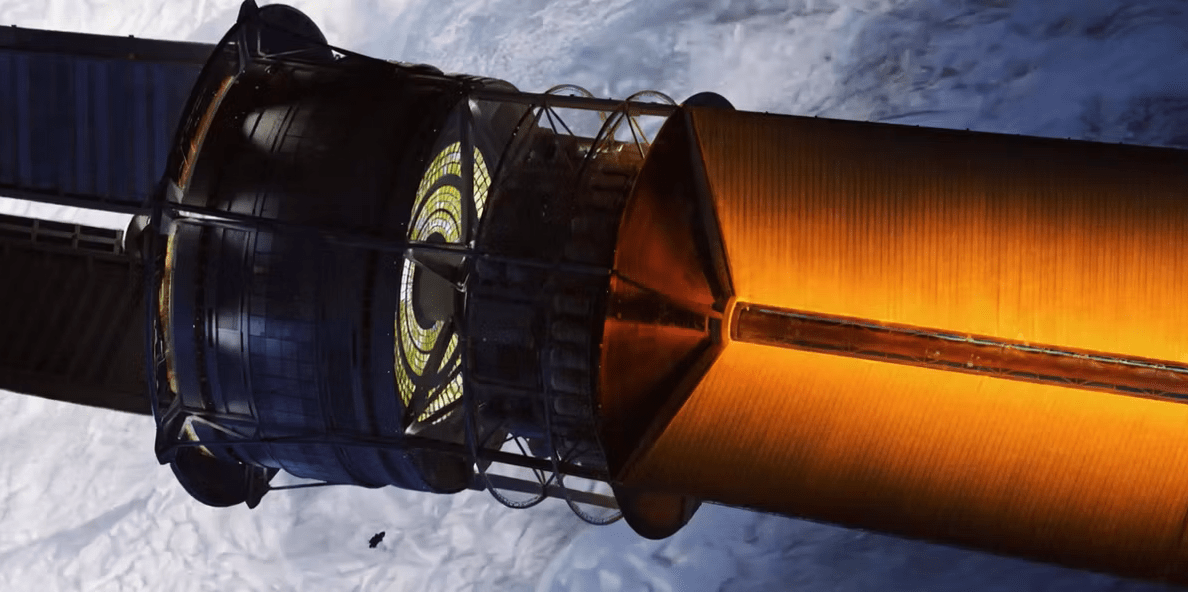
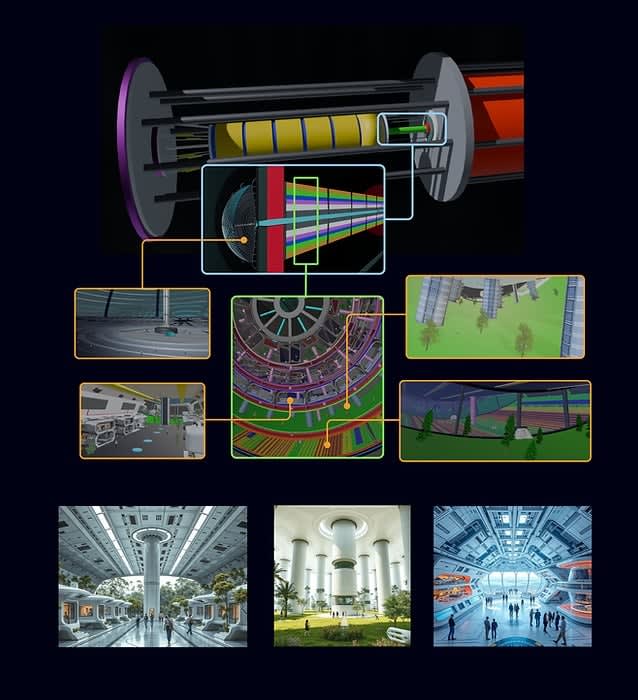
Power would come from nuclear fusion, supplying the extended energy required to operate the ship’s systems and maintain ecosystems. Within the large hull, there would bemultiple biomesmimicking Earth’s ecosystems — tropical rainforests, northern regions, and dry shrublands — all created to promote sustainable agriculture, variety of species, and mental well-being.
A notable characteristic is thecosmos dome, a 130-meter-high observation areawith glass walls oriented away from the direction the ship is traveling, providing glimpses of outer space and the distant Sun. This area would function not only as a shared space and emblematic center of the vessel but also as a location for an annual large-scale meeting.
Built in Space, Tested on Earth… in Antarctica?
Due to its immense weight – estimated at2.4 billion tons — Chrysaliswould be built not on Earth, but in space. The group suggests constructing the ship atLagrange Point 1, a region with gravitational stability located between Earth and the Moon, where building could take place using very little fuel.NASA describes L1as a perfect spot for spacecraft to “park” because of its balanced orbit.
However, before the launch, the human aspect of the mission would start on Earth — inAntarctica. Early volunteers would reside in polar environments for70 to 80 years, replicating the social, mental, and organizational difficulties of a closed and remote community. “Adaptation will be more related to culture than to biology.,” the designers mention, indicating that the true challenge is not in the ship’s design, but in its social interactions.
A genetic bank of seeds, embryos and DNAwould be with the humans on board, maintaining biological continuity and facilitating future planetary settlement. The probable location?Proxima Centauri b, a potentially habitable planet approximately4.2 light-years from Earth.
A Hypothetical Scenario — or a Glimpse into the Future?
Although there is no launch date even slightly under consideration, theChrysalisproject constitutes one of the most thorough and realistic efforts to date in examining the viability ofgeneration ships— a classic theme in science fiction, gradually moving towards speculative science. The notion has seen increased attention due to rising worries about the habitability of planets and the extended future of life on Earth.
The Hyperion contest received submissions from numerous global teams, butChrysalisdistinguished itself through its system-level integration, artistic elegance, and cultural vision. Its adaptable living spaces, AI-enhanced governance model, and flexible family arrangements present a vision of a future where humans might not only venture into space — they could potentially establish themselves there —belong to them.
Open the Youtube video
Experts recognize the challenges. Dr. John Page, a senior aerospace instructor at the University of New South Wales,explained years ago that “creating gravity by spinning demands a large size — otherwise, the sensation can be physically confusing or even dangerous.”
Nevertheless, the project’s momentum indicates an increasing fascination with space colonization beyond planetary surfaces. If Elon Musk’sStarshipsuggests imminent interplanetary movement,Chrysalisenvisions a new boundary — a future where humans reside in movement, unbound by any planet.
For further technical information, the complete proposal is available atProject Hyperion, which also provides understanding of conflicting ideas, methods for protecting against radiation, and the design of self-sustaining biological systems.
Enjoyed this article? Sign up for our free email newsletterfor captivating narratives, unique material, and up-to-the-minute updates.
For additional news similar to this, visitMuara Digital Team.