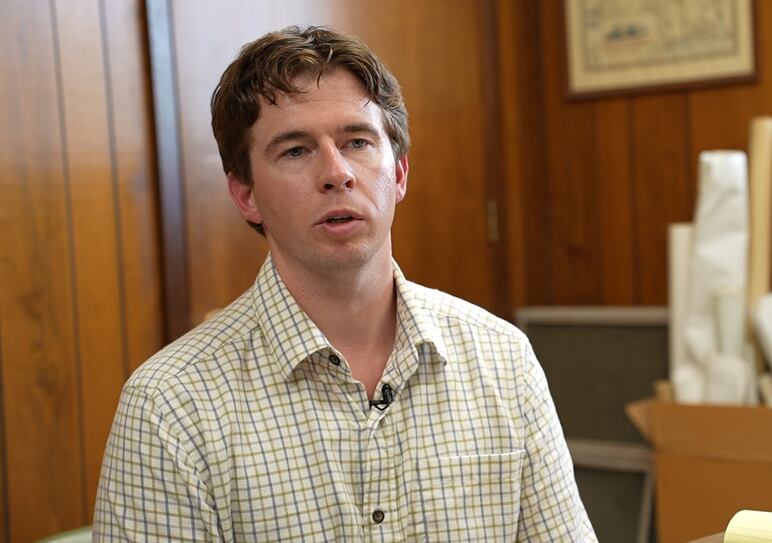
BOLTON, Miss. (WLBT) – Resting in the shade of a big oak near his house on Raymond Bolton Road, David Kazery discusses his small slice of land.
We came out here to examine a project and ended up falling in love with the property… the rolling hills, the sounds of the birds, the animals,” he said. “We have a deep affection for animals and nature, and that’s exactly what we found here.
However, Kazery is concerned that proposals for a large solar farm in the vicinity might harm that sanctuary.
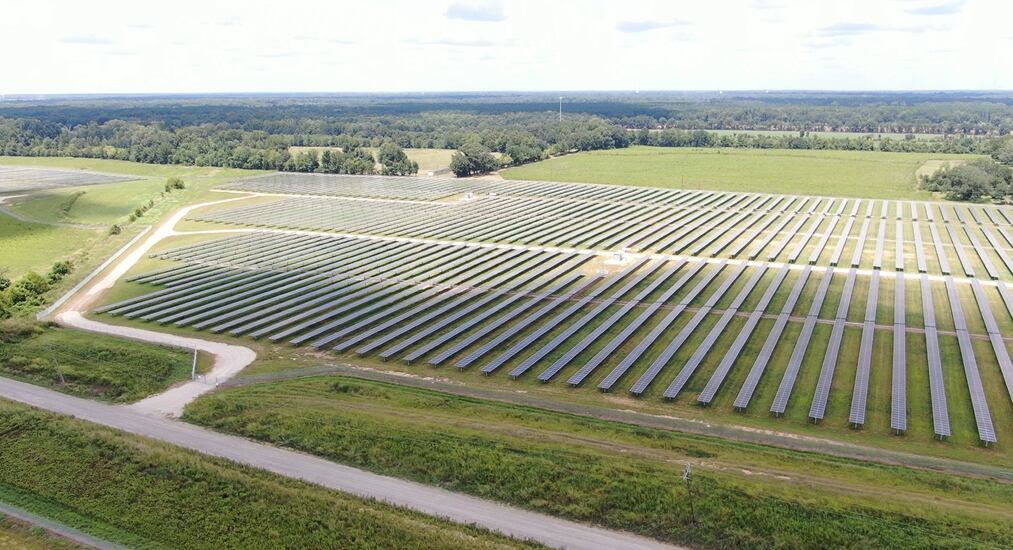
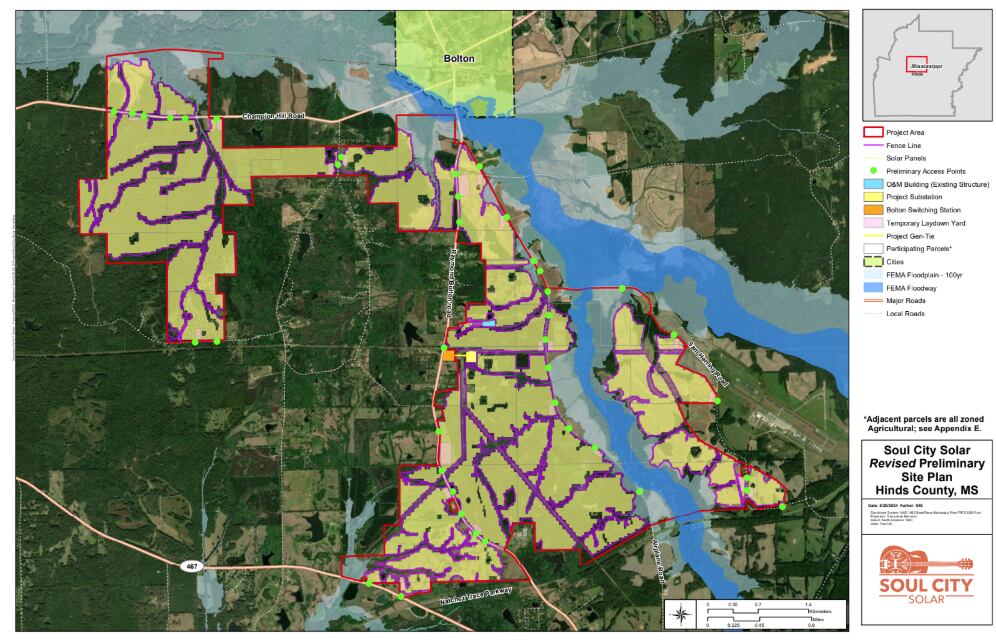
Soul City Energy intends to convert approximately 6,000 acres of land in western Hinds County into a solar farm spanning 3,900 acres.
After completion, the farm would be among the biggest, perhaps the biggest, in the state.
The Hinds County Board of Supervisors approved the plan last year. This decision was subsequently confirmed by the Hinds County Circuit Court and is currently being reviewed by the Mississippi Supreme Court.
[READ: Despite public protests, the biggest solar facility in the state is set to be located in Hinds County.]
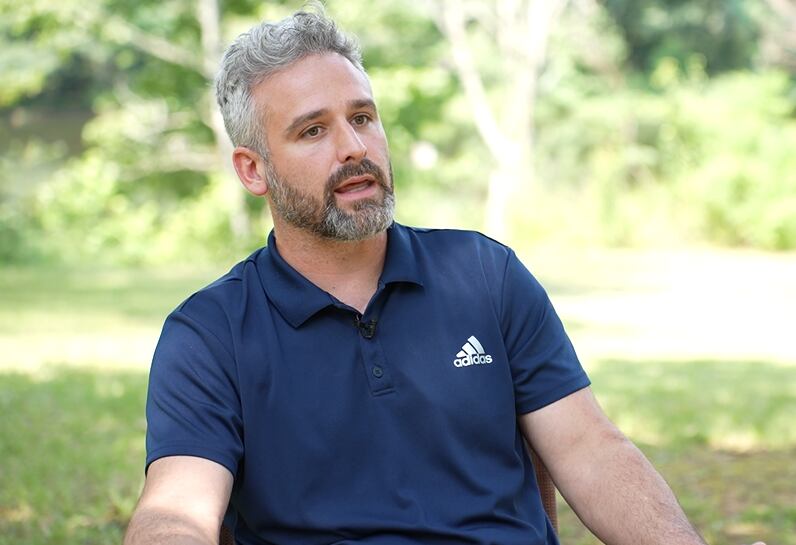
Kazery is concerned about the ecological effects of the farm, especially the thousands of solar panels linked to the project and their durability in harsh weather conditions.
Cadmium, lead, nickel, and other substances. Chemicals will start to leak, and they don’t remain in one place. They spread out. They’ll flow downhill,” he stated. “When the first hailstorm occurs, or the first tornado damages those panels, there will be a cost, and I don’t want to bear it.
I support solar power. I really appreciate renewable energy sources. However… I don’t want them located near my home.
In recent years, solar power facilities have gained significant visibility throughout the Magnolia State.
As of September 2025, nearly two dozen dots are spread across Mississippi’s landscape, according to Cleanview.co, with 10 of them built in 2024.
A similar number of additional ones are currently being developed, as shown by the Mississippi Public Service Commission’s September consent docket.
Solar initiatives in the PSC September docket:
- Fiddle Falls Solar LLC – Pontotoc County
- Lowndes Solar LLC – Lowndes County
- Sabre Solar LLC – Holmes County
- Soul City Energy LLC – Hinds County
- Shubuta Creek Solar LLC – Jasper County
- CPV Jugfork Solar LLC – Lee and Union Counties
“It benefits the economy. It generates employment. It helps individuals save money… It’s a positive outcome for taxpayers. It’s a benefit for the public,” stated Louie Miller, the state director of the Mississippi Chapter of the Sierra Club.
[READ: Approximately $2 billion worth of solar initiatives are planned for Mississippi, according to records.]
The chapter strongly supports solar energy within the state and filed a lawsuit against the Mississippi Public Service Commission in 2024 following changes to its “distributed generation” policy.
This regulation encourages consumers to install solar panels, which can lower their total energy expenses. It was brought back earlier this year as part of an agreement with the local chapter.
[READ: Mississippi Sierra Club takes legal action against the Mississippi Public Service Commission]
Miller states that solar energy contributes to a more varied power grid and serves as a buffer against changing natural gas prices. He also refers to it as a “choice of freedom” matter.
“One of the most remarkable tales I’ve ever come across was from a man in Jackson County, who resided in a double-wide trailer and remarked, ‘Gosh, ever since I installed solar panels on my roof, I’ve had enough money to cover my bass boat payment,’” he shared. “That’s Mississippi.”
Miller dismisses concerns such as Kazery’s as “nonsense.”
That’s just empty fear-mongering pushed by the utilities who aren’t fond of the project, and I believe we all know who those are,” he stated. “Solar power is clean. It’s clean energy… there’s no significant downside to it.

Officials from the Lauderdale County School District state they have not observed any negative aspects of the approximately two-acre solar installation built behind Northeast Middle School.
The 688-panel system was put in place in 2022 and has helped the district save $150,000 on energy expenses, as stated by Superintendent John Mark Cain.
He mentioned that funds have been redirected back into the area.
I wish I could say, ‘We’re setting it aside for a specific project,’ but we’re no different from anyone else. We deal with pressures caused by rising costs,” he stated. “So, we basically reinvest it… That simply means we’re offering more to our students and our staff.
Cain mentioned that the district received minimal resistance from locals, particularly once they recognized the possible cost reductions.
The most important factor was the location… Ensure it complied with regulations and codes. Also, make sure we were treating the land properly, considering its appearance,” he said. “We were trying to figure out if we wanted it here or in front, and ultimately, it was about ensuring we had sufficient space.
Jeremy Smith, the operations director for the Lauderdale County School District, mentions that the site is fairly simple to manage.
We come out here. We mow the grass. We inspect everything. We keep it treated for weeks and that kind of thing,” he said. “So, it’s quite self-managed internally. Not only the upkeep but ensuring… that it’s producing what it’s supposed to.
Regarding the panels, Smith said to 3 On Your Side that they are remarkably resistant to weather conditions.
We do experience hail in this region, and I’ve never noticed any damage on the panels,” he stated. “That surprises me, particularly regarding the hail, since we reside in an area with unpredictable weather… Therefore, they must be extremely durable.
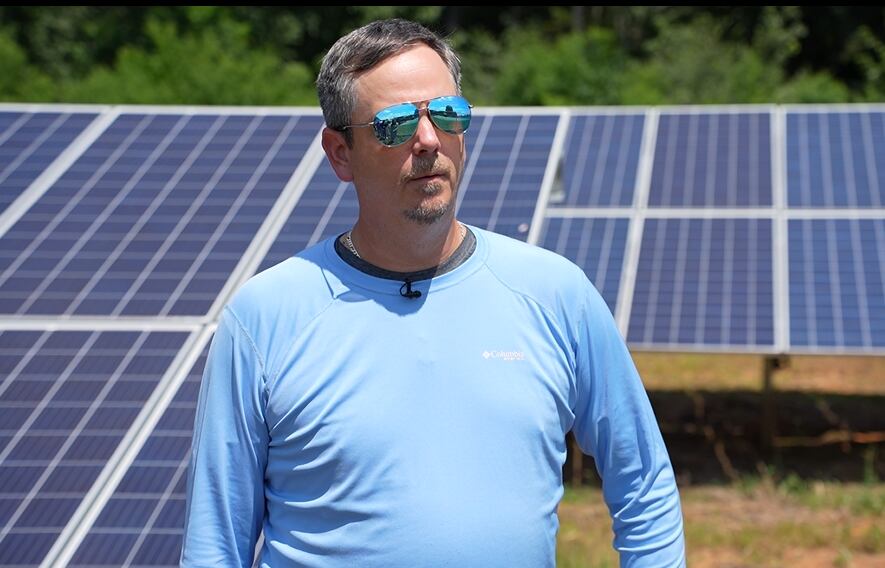
How secure are solar farms? We consulted the Mississippi Department of Environmental Quality and discovered that only four complaints were submitted against solar facilities in Madison, Rankin, and Scott Counties over the past two years.
And each of these occurred at the Pearl River Solar Park near Morton. Records indicate that all four complaints were connected to its construction, not its operation.
A facility spanning approximately 1,400 acres became operational in July 2024 and produces 175 megawatts of energy, sufficient to supply over 1,700 households. The PSC approved the project in 2021.
An inspection by the MDEQ at the location on July 16 that year found “no clear infractions.”
MDEQ inspection report by aswarren77
Chris Hawk, a senior development manager at Apex Clean Energy, the Charlottesville, Virginia-based company supporting the Hinds County project, mentions that there have been several “misconceptions” regarding Soul City’s plan.
It won’t be a single large 3,964-acre area covered with solar panels and a single vast field enclosed by a big fence,” he said. “Instead, there will be several smaller sections of solar panels that are safeguarded and bordered on the outside by wildlife corridors.
Hawk explored 3 On Your Side during a tour that lasted over an hour, traversing the 6,000-acre site by car, including a small gravel road flanked by cornfields on either side.
“So, a 25-foot distance from their property line to our project fence and our facilities… A 25-foot buffer from the current road rights-of-way, and inside those buffers, we have actually agreed to preserve all the existing trees and plants,” he said.
Court documents show that Apex will also plant trees and additional greenery at specific locations, in case any trees are removed prior to the start of the project.
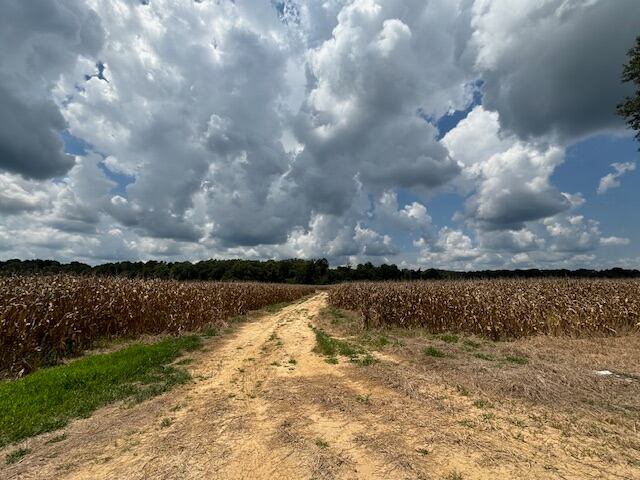
Hawk, on the other hand, highlighted the developers’ choice to establish over a dozen “wildlife corridors,” enabling deer and other animals to reach their habitats, food sources, and water.
Several of them are actually linked to the floodplain,” he stated. “We are not constructing near streams or floodplains.
At a public meeting held by the PSC in August, Jill Mastrototaro, the Audubon Mississippi Policy Director, stated that the project “will have minimal effects on any of the environmental issues” raised by critics.
During the same hearing, Miller stated that Apex had “exceeded typical business practices.”
From his perspective, Hawk stated that Apex would comply with all local, state, and federal regulations throughout the construction and operation of the facility.
If given the go-ahead, the $700 million Soul City project is expected to produce 396 megawatts, sufficient to supply power to 95,000 households. This electricity will then be fed into a current switching station managed by Entergy Mississippi.
Apex has not yet secured a buyer for that energy source. Hawk mentions the company probably intends to wait until just before construction begins to sell it, allowing market conditions to influence the price.
In its own right, Entergy currently operates a 100-megawatt solar power plant located in Sunflower County. This facility became operational in 2022.
In April, the utility released a call for proposals seeking 250 megawatts of renewable energy, potentially from newly constructed sources like solar and wind farms.
It was uncertain whether Entergy received any replies to that inquiry. Representatives from the utility chose not to provide comments for this article.
At the Solar Summit last year, Mississippi Power was already acquiring 158 megawatts of electricity from solar suppliers and had entered into contracts to purchase another 370 megawatts.
Mississippi Power chose not to provide any comments for this article.
Kazery, on the other hand, remains optimistic that the Mississippi Supreme Court will halt the Soul City project from proceeding.
Everyone who voted for this doesn’t reside here… They don’t care that it’s not near their home,” he stated. “In a lovely, charming hometown like Raymond and Bolton… It’s hard to believe, and it’s unfortunate that we’re even discussing this.
Want additional WLBT news delivered to your email?Click hereto sign up for our newsletter.
Notice a spelling or grammatical error in our story? Pleaseclick hereto notify them and add the title of the article in your message.