A Significant Incident in NATO Airspace
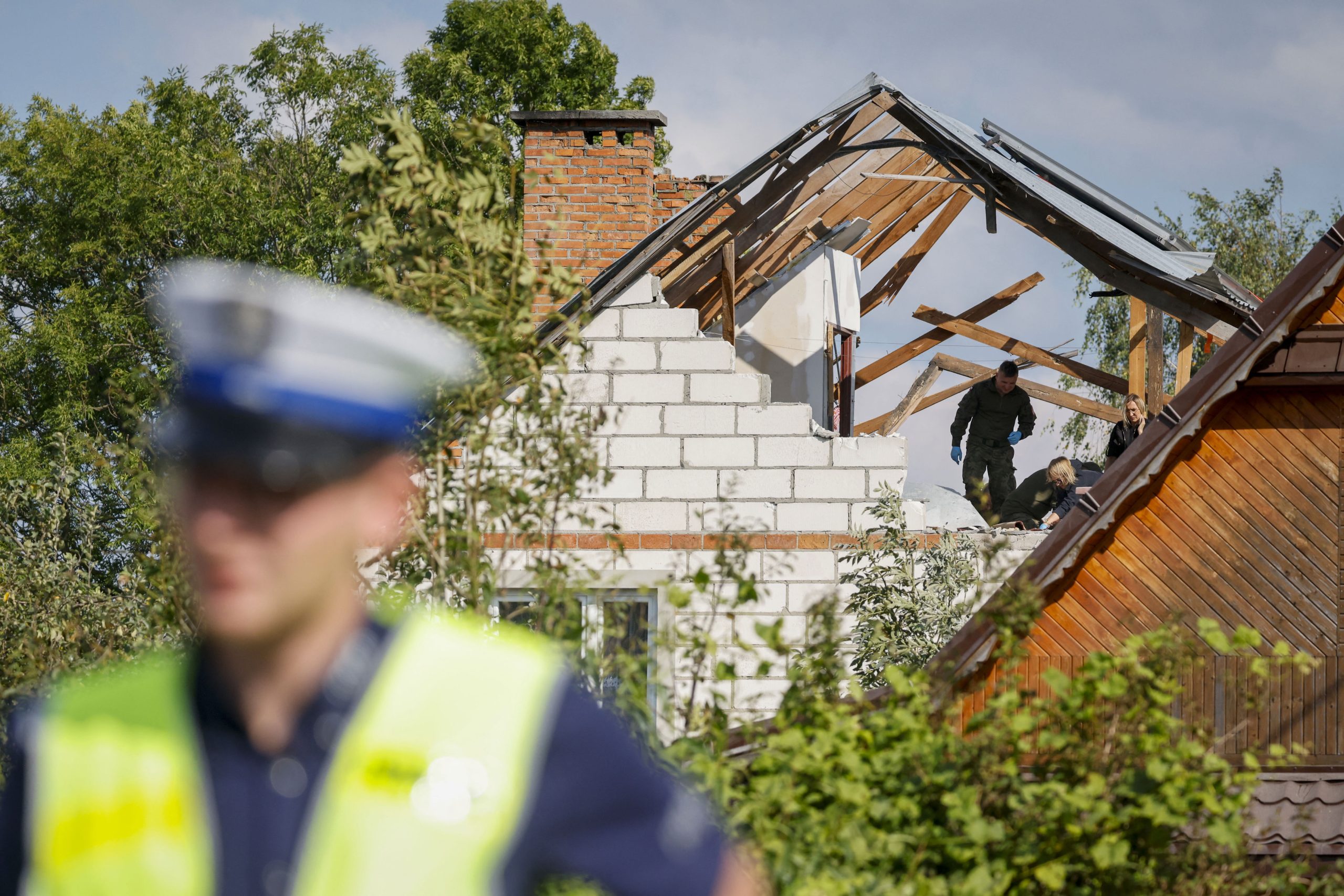
On Monday, nineteen suspected Russian drones entered Polish airspace, prompting a joint operation involving Polish, Dutch, and Italian aircraft as well as German Patriot missiles. This marked the first time that NATO militaries had fired shots during the Russian war in Ukraine and the first time that NATO aircraft have engaged potential threats in allied airspace. The incident has raised concerns about the growing risks of escalation in the region.
This was not the first time that Russian aircraft and weapons have crossed into NATO territory. Over the course of the three-and-a-half-year war, Russia’s campaign of drone and missile strikes targeting Ukrainian cities and infrastructure has intensified. Fragments of Russian drones have repeatedly landed in Romania, a NATO member that borders Ukraine. In 2022, two people were killed in Poland by a Ukrainian air defense missile that veered off course, with initial media reports suggesting it was Russian.
However, Polish authorities have emphasized that this incident is different. They are treating it as a deliberate provocation rather than an accident. Radoslaw Sikorski, Poland’s deputy prime minister and foreign minister, stated, “When one or two drones does it, it is possible that it was a technical malfunction. In this case, there were 19 breaches, and it simply defies imagination that that could be accidental.”
Germany’s defense minister, Boris Pistorius, agreed that the drones were “clearly set on this course” to reach Poland. NATO Secretary General Mark Rutte noted that while a full assessment is ongoing, “whether it was intentionally or not, it is absolutely reckless. It is absolutely dangerous.”
Article 4 Activation and Security Concerns
Poland has invoked NATO’s Article 4, which provides for joint consultation among allies when the security or territorial integrity of one is threatened. While this step is short of the more severe Article 5, which calls for mutual defense, the Polish government is not downplaying the stakes. Prime Minister Donald Tusk stated that while Poland is not at war, “This situation brings us the closest we have been to open conflict since World War II.”
The missiles that crossed into Poland caused property damage but no injuries. They were reportedly a mix of Shaheds — Iranian-designed attack drones used extensively by Russia — and Gerberas, a cheaper Russian variation often used as decoys. Some analysts suggest that at least some of the drones likely crashed on their own rather than being shot down.
Context and Possible Motives
The incursion occurred amid a massive Russian overnight attack on Ukraine involving 415 drones. Experts like Samuel Bendett from CNA noted that Ukrainian countermeasures and electronic warfare systems, along with Russia’s command and control errors, have sometimes caused these drones to veer off course and crash in neighboring countries. However, the sheer number of drones entering Poland was highly unusual.
The Russian foreign ministry issued a vague denial, accusing Polish authorities of spreading myths to aggravate the Ukrainian crisis and asserting that the attack did not include any targets in Poland.
Defense commentators have speculated that the incident may have been an effort to probe NATO’s air defense systems, which are considered one of the alliance’s weak points. “UAVs of that kind are exactly the type of weapons to be used for either probing attacks or any other type of strikes to see how your adversary reacts,” Bendett noted.
Strategic Implications and Regional Tensions
The timing of the incident has also raised questions, coming ahead of planned war games known as Zapad 25 in Belarus, which borders Poland, Latvia, and Lithuania. Analysts like Philip Bednarczyk from the German Marshall Fund suggested that the timing might have been intentional, though it remains unclear whether it was a coincidence or a calculated move.
The incident could also be a means for Moscow to highlight the risks of continuing support for Ukraine, especially as 26 countries have committed to providing postwar security guarantees. Poland, however, is not among them, citing the need for its troops to defend itself.
Political and Military Responses
Poland, along with the Baltic countries, has been a strong supporter of aid to Ukraine, hosting many Ukrainian refugees. However, there are signs of “Ukraine fatigue” in Polish politics as the war continues. Baseless accusations have circulated online that Ukraine allowed the drones to enter Poland to raise the stakes of the war for Western countries. Sikorski urged people to rely on government sources and vetted media outlets.
Russia has been accused of conducting a “gray zone” or hybrid warfare campaign in Europe, including acts of sabotage, misinformation, and cyberattacks. If the drone incursion was deliberate, it would be the most dramatic example yet of this strategy.
Policy Responses and Future Challenges
The immediate policy response to the incident and the activation of Article 4 is not yet clear. NATO commanders have stated that there have been no changes to the alliance’s force posture. However, the incident is likely to reinforce calls to strengthen defense on NATO’s eastern flank, including the concept of a “drone wall” to monitor potential threats.
The incident has also led to renewed calls from within Ukraine, including from President Volodymyr Zelenskyy, to develop a joint drone and missile shield. European governments have previously been wary of using their air forces to shoot down drones and missiles over western Ukraine due to the risk of escalation.
Broader Implications and Global Reactions
Poland’s defense analyst Konrad Muzyka argued that while Poland’s armed forces are now among the most capable in Europe, they remain underprepared to counter the large-scale employment of inexpensive unmanned systems. The incident comes a week after Poland’s recently elected President Karol Nawrocki concluded a White House visit, where President Trump pledged continued US support for Poland.
Despite the positive tone of the visit, reporting suggested that the US has cut some security assistance for countries along Russia’s border. Sikorski appeared to be directing some of his messaging at Washington, saying, “the Kremlin is again mocking President Trump’s peace efforts.”
Trump’s response to the events was brief, stating, “What’s with Russia violating Poland’s airspace with drones? Here we go!”
Conclusion: Not World War III, But Growing Risks
The incident underscores how the increasing reliance on drones as a battlefield weapon can have both stabilizing and destabilizing effects. Even if this was a deliberate Russian action, NATO leaders are not eager to start World War III over a drone. However, the risks of escalation remain, as Putin knows that he can take greater risks with unmanned systems than with manned aircraft. As the war in Ukraine continues, the potential for a NATO-Russia conflict involving actual humans only grows more serious.